
AESCHYLUS; E.D.A MORSHEAD [TRANSLATOR],.
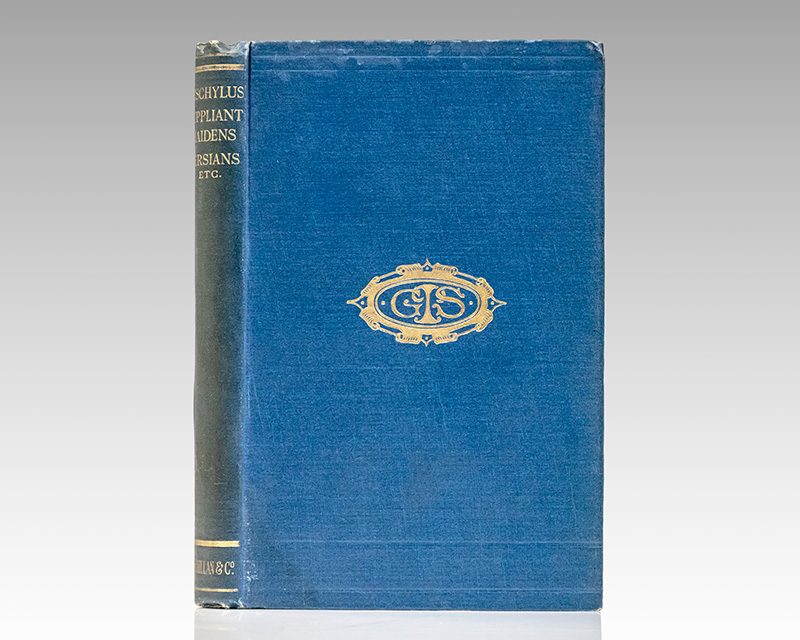
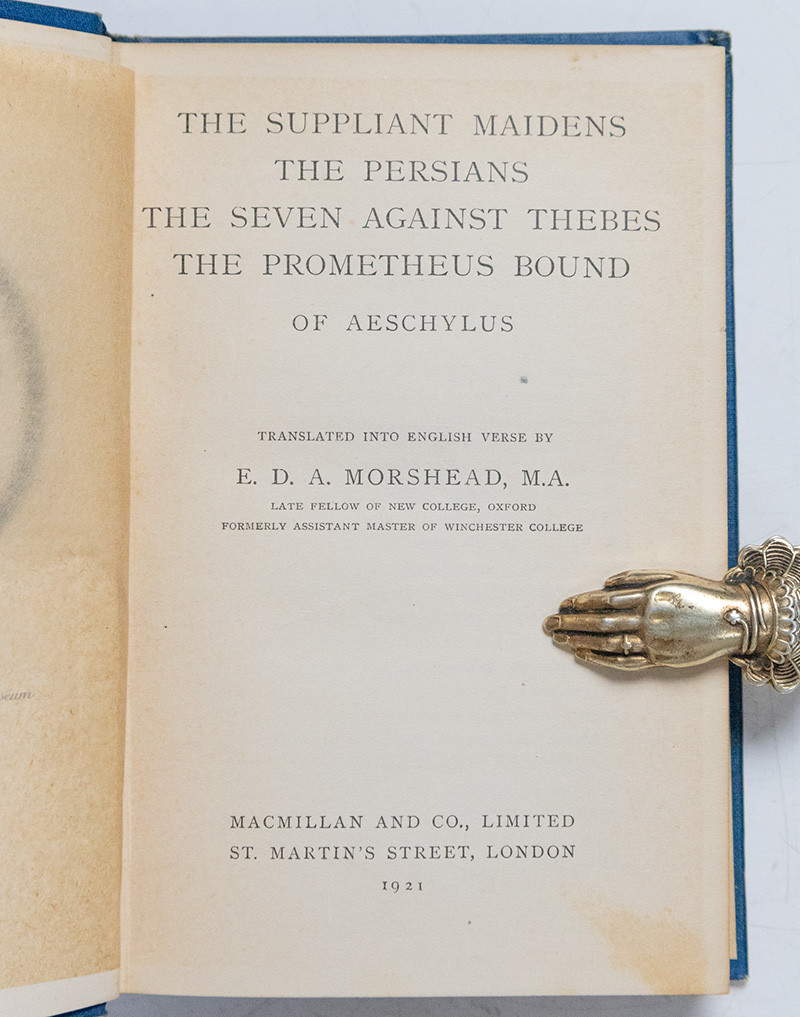
The Suppliant Maidens, The Persians, The Seven Against Thebes, and The Prometheus Bound of Aeschylus.
London: Macmillan and Co., Limited , 1921.
$75.00
In Stock
Item Number: RRB-151787
+$450
First Edition of E.D.A. Morshead's Translation of Four Plays of Aeschylus
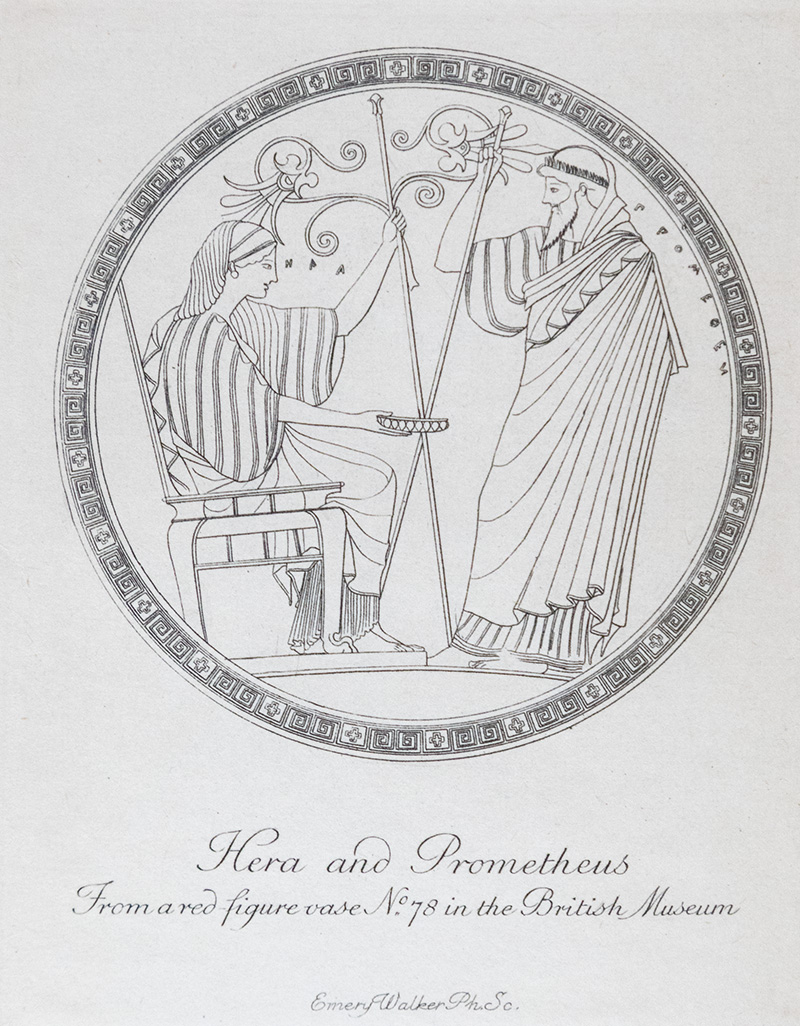
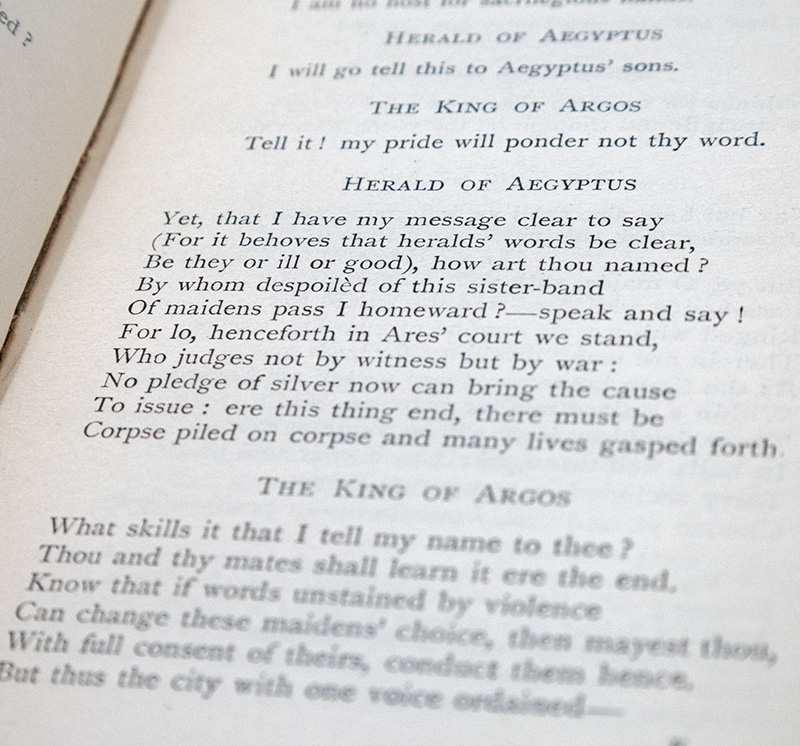
First edition, early printing of the Golden Treasury Series of four ancient Greek tragedies by Aeschylus. Duodecimo, original publisher's blue cloth with gilt titles and tooling to the spine and front panel, tissue-guarded frontispiece. In very good condition. Translated into English verse by E.D.A Morshead. Ownership signature to the front free endpaper.
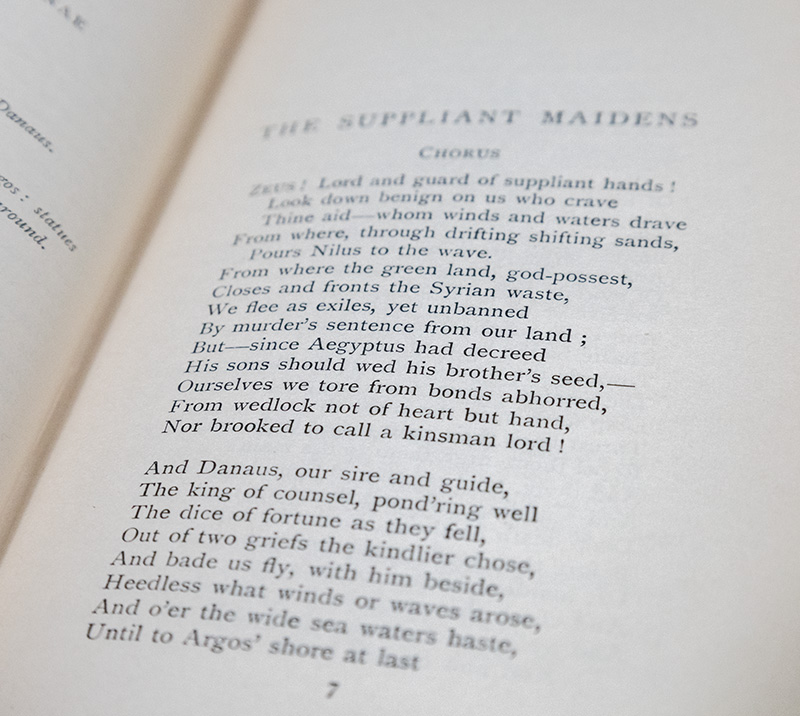
Aeschylus (c. 525–456 BCE) is widely regarded as the father of Western tragedy and the first of the three great Athenian dramatists whose work survived antiquity — the others being Sophocles and Euripides — and his innovations in theatrical form were so fundamental that Aristotle credited him with transforming drama itself by introducing the second actor, thereby enabling genuine dialogue and conflict rather than the exchange between a single actor and the chorus that had characterized the form before him. Of the estimated seventy to ninety plays Aeschylus composed across his long career, only seven survive in complete form, among them four works of particular consequence: The Suppliant Maidens, widely considered the earliest surviving Greek tragedy, presents the fifty daughters of Danaus fleeing forced marriage to their Egyptian cousins and seeking asylum in Argos, raising enduring questions about the rights of suppliants, the obligations of rulers, and the competing claims of divine and human law. The Persians (472 BCE), the only surviving Greek tragedy drawn from contemporary history rather than myth, dramatizes the aftermath of the Greek victory at Salamis as witnessed from the Persian court — a work of extraordinary imaginative sympathy that transforms military triumph into meditation on the catastrophic consequences of hubris and imperial overreach. The Seven Against Thebes (467 BCE) completes an earlier trilogy on the House of Oedipus, tracing the fratricidal war between Eteocles and Polynices with a stark dramatic power that anticipates Sophocles' later treatments of the same material. Prometheus Bound, presenting the Titan Prometheus chained to his rock as a figure of defiant intellectual heroism, suffering divine punishment for having given humanity fire and the arts of civilization, and engaging Zeus himself in a contest of wills whose terms have echoed through Western literature from Milton to Shelley and beyond.
The Suppliant Maidens, The Persians, The Seven Against Thebes, and The Prometheus Bound of Aeschylus.
$75.00
In Stock