
BUXTON, Thomas Fowell.
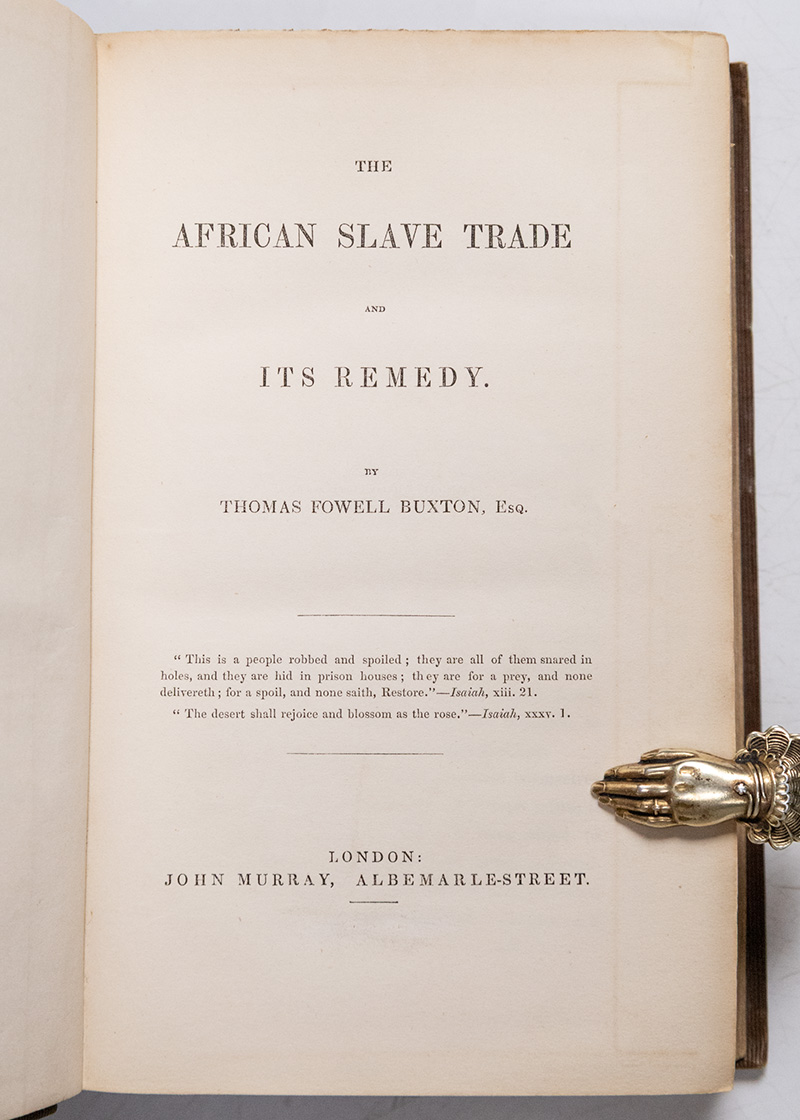
The African Slave Trade and its Remedy.
London: John Murray , 1840.
$600.00
In Stock
Item Number: RRB-152032
+$450
First Expanded and Revised Edition of Thomas Fowell Buxton's The African Slave Trade and its Remedy; The First to Include the Remedy
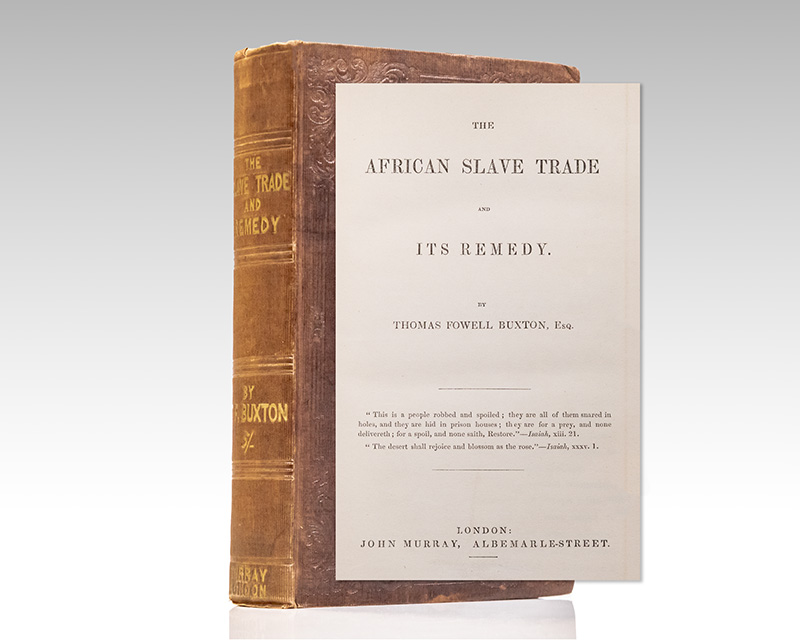
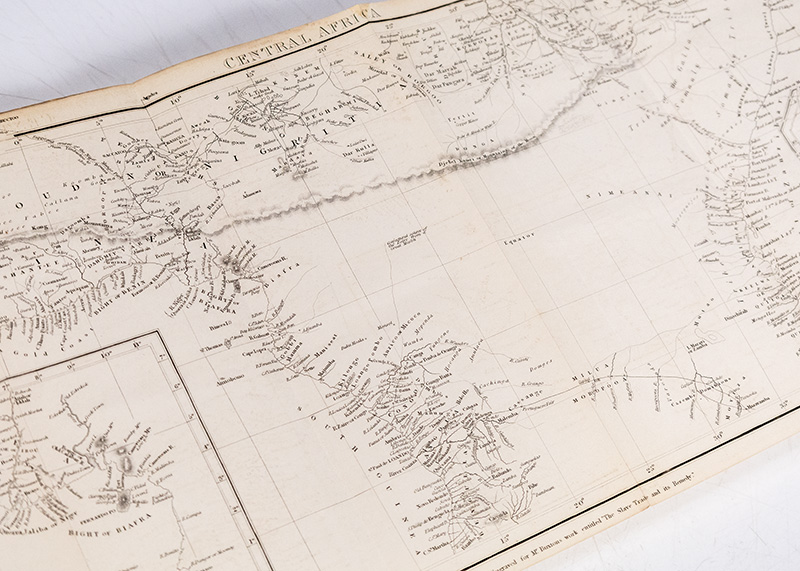
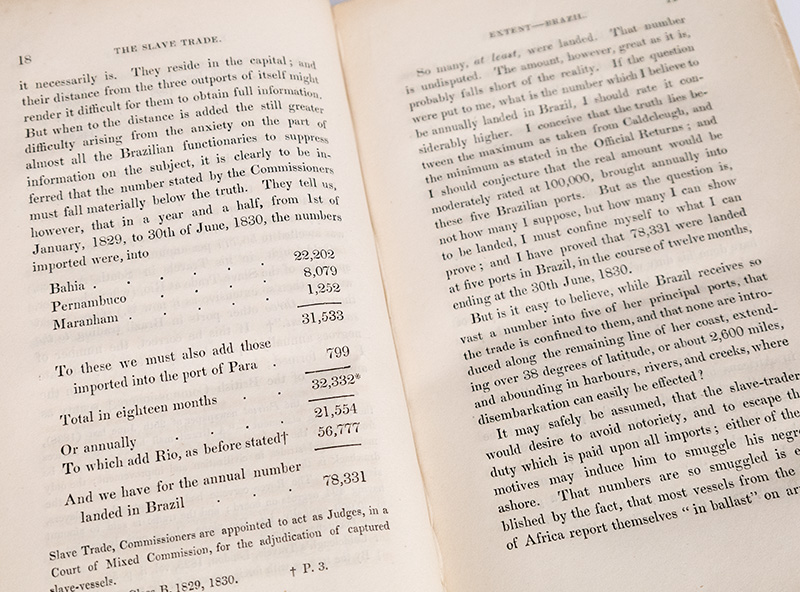
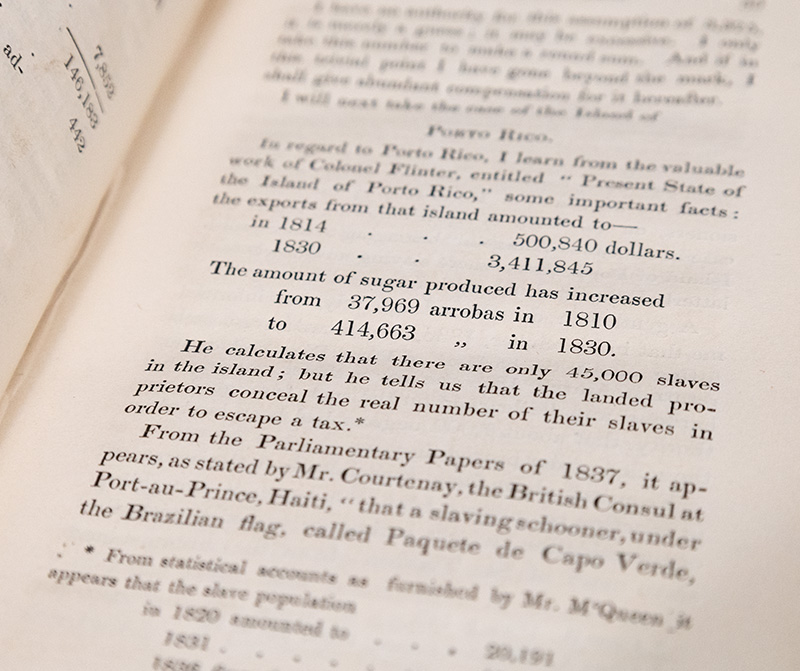
First expanded and revised edition of British abolitionist Sir Thomas Fowell Buxton's powerful indictment of the transatlantic slave trade and the first edition to incorporate his influential Remedy, preceding the first American printing. Octavo, original publisher's blind-stamped brown cloth with gilt titles to the spine, pages uncut and some partially unopened, issued with the 14-page "Prospectus of the Society for the Extinction of the Slave Trade and for the Civilization of Africa" preceding the title page, illustrated with a large folding map of Central Africa. In very good condition, inscription to the front free endpaper.
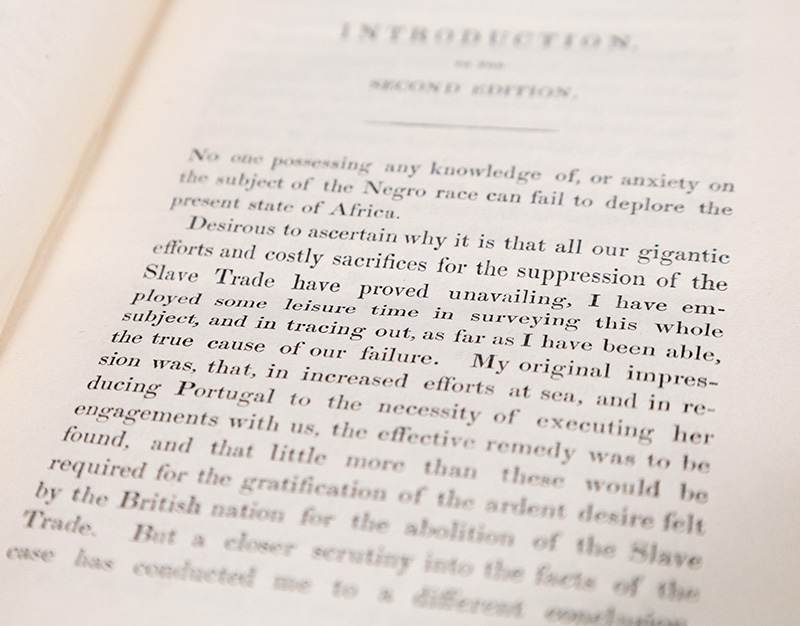
A Quaker and Member of Parliament, Thomas Fowell Buxton (1786-1845) was selected by William Wilberforce in 1824 to carry forward the parliamentary cause of abolition. Where Wilberforce had argued in 1789 that Britain must "make reparation to Africa... by establishing a trade upon true commercial principles," Buxton revived and extended that vision a half-century later, founding the African Civilization Society in July 1839 to advance it. The present 1840 expanded edition is the first to bring Buxton's diagnosis of the trade together with his proposed remedy in a single volume, uniting two of the most consequential abolitionist texts of the period. In the opening sections, Buxton documents the persistence and intensification of the trade despite decades of British effort, observing that twice as many human beings had become its victims as when Wilberforce and Clarkson first took up the cause. The Remedy portion then advances his central argument: that the agricultural colonization of West Africa and the cultivation of legitimate commerce offer the only durable means of suppressing the slave trade, by demonstrating the superior value of the African "as a laborer on the soil" rather than "as an object of merchandise." Buxton's synthesis crystallized contemporary thought on the relationship between abolition and African development more systematically than any prior work, and his conviction that the suppression of the slave trade required the establishment of legitimate commerce became the conventional wisdom in mid-nineteenth-century Britain. Among those who absorbed his vision was a young, then-unknown medical student named David Livingstone, who attended the 1840 meeting of the African Civilization Society at which Buxton first publicly announced his remedy - an encounter widely credited with shaping Livingstone's lifelong commitment to African travel and missionary endeavor.
The African Slave Trade and its Remedy.
$600.00
In Stock