
CHANNING, William E.; Harriet Martineau.
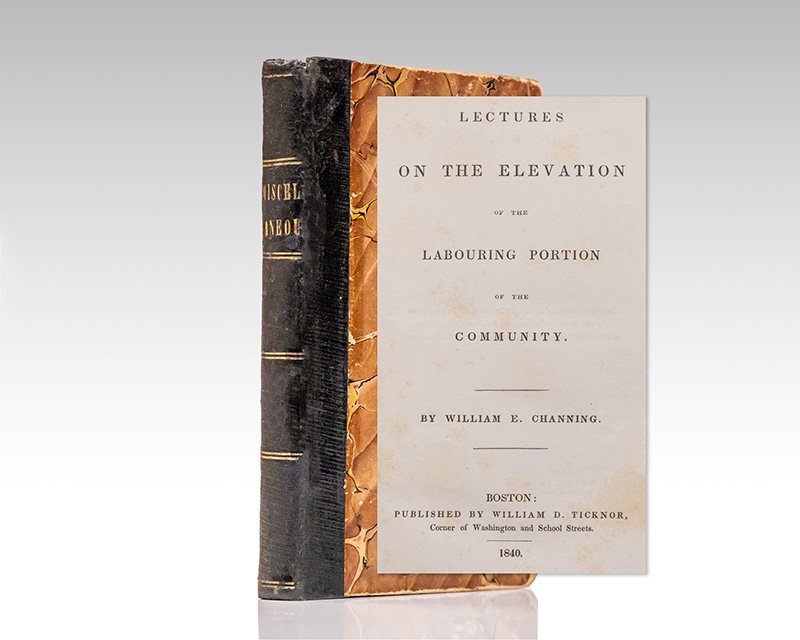
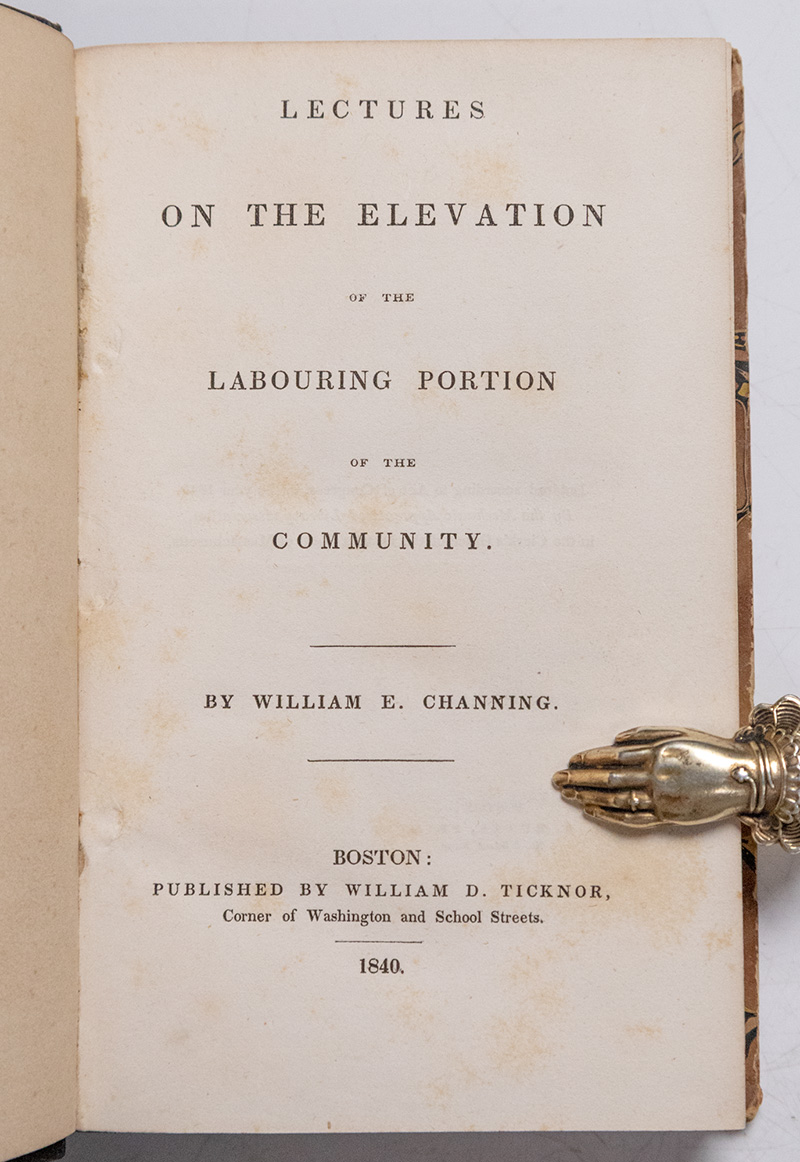
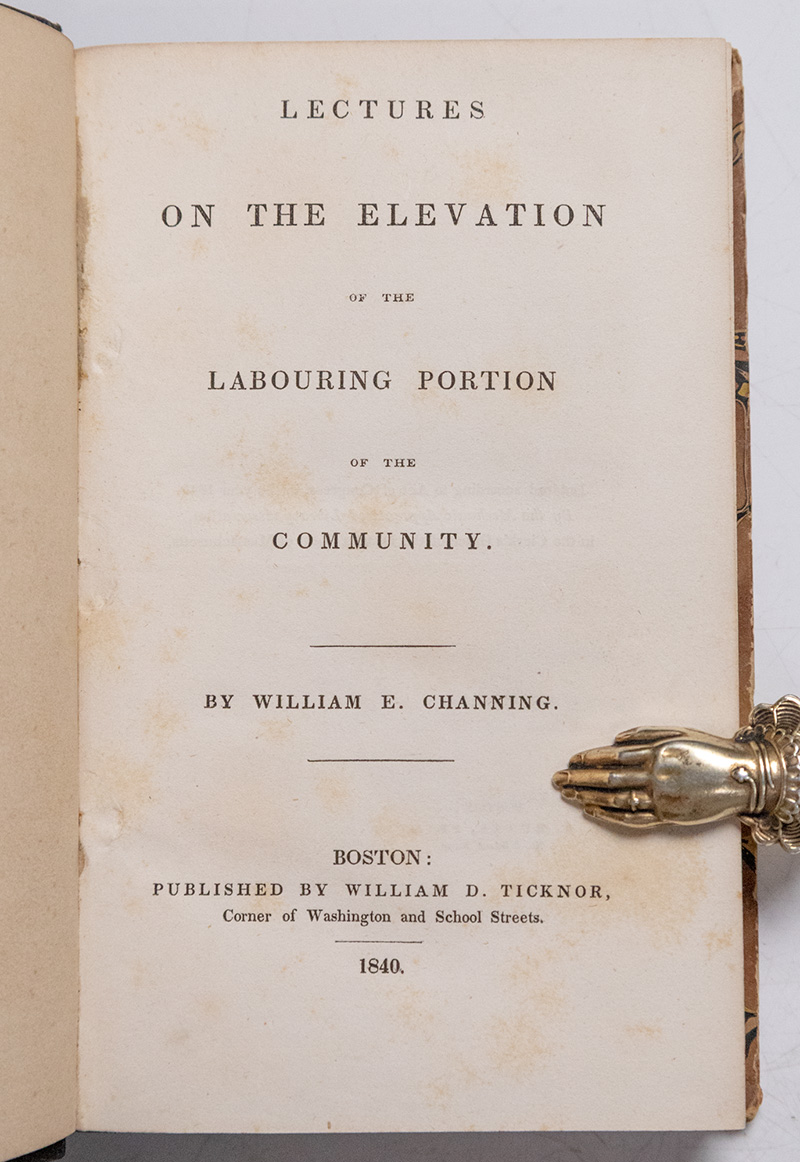
Lectures on the Elevation of the Labouring Portion of the Community.
Boston: Published by William D. Ticknor , 1840.
$475.00
In Stock
Item Number: RRB-152019
+$450
First Edition of William E. Channing and Harriet Martineau's Lectures on the Elevation of the Labouring Portion of the Community
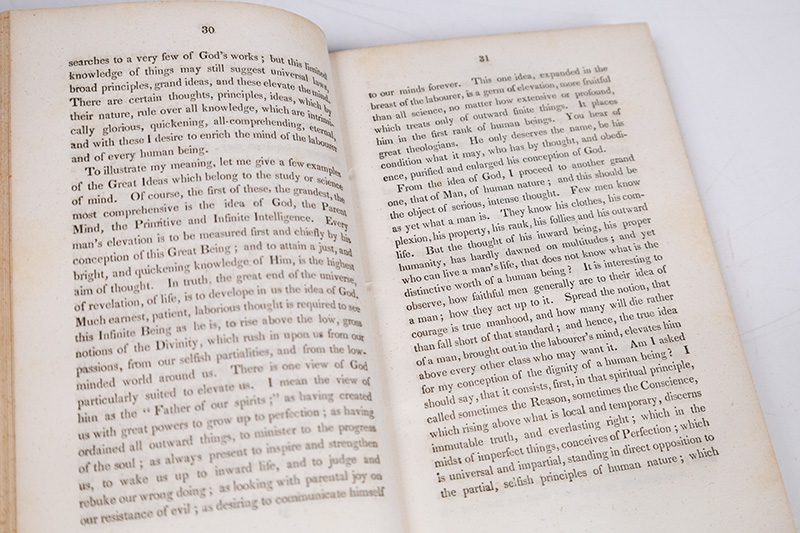
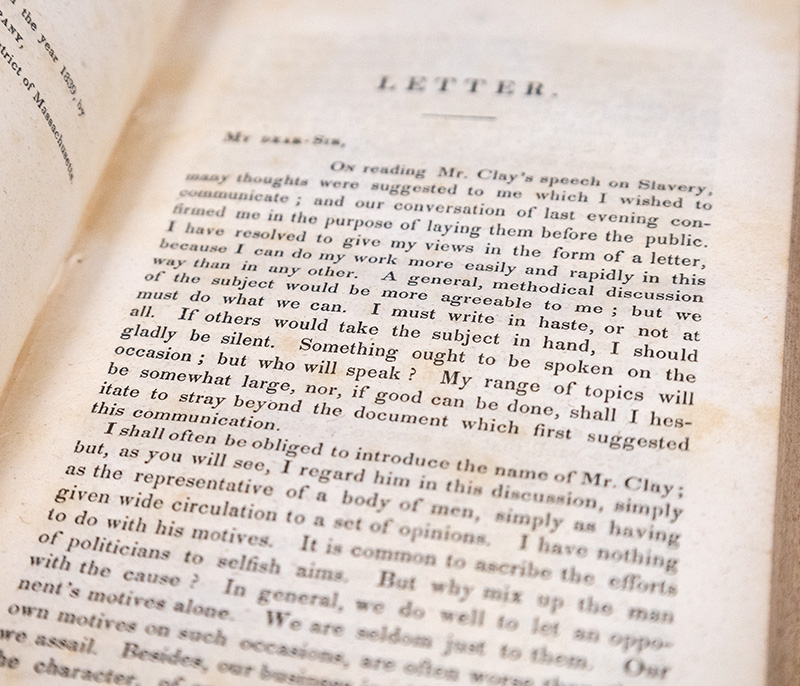
First edition of this collection of three important essays on slavery, the poor, and social change, written by Channing and Martineau, two major Unitarian reformers. Duodecimo, bound in nineteenth century half black sheep over marble covered boards with gilt titles and tooling to the spine, all edges red speckled. In very good condition.
Lectures on the Elevation of the Labouring Portion of the Community (1840) is a foundational work of American social reform literature by William Ellery Channing (1780-1842), the foremost Unitarian preacher and theologian in the early nineteenth century United States, whose articulate and impassioned advocacy for human dignity, intellectual self-improvement, and the rights of the laboring classes made him one of the most consequential moral voices of the antebellum era. Born in Newport, Rhode Island, educated at Harvard, and ordained in 1803 at the Federal Street Church in Boston where he served for nearly four decades, Channing embraced human dignity and freedom of will and devoted considerable energy to social reform causes including temperance, the alleviation of poverty, and education, with his work influencing figures as prominent as Senator Charles Sumner, educator Horace Mann, and mental health advocate Dorothea Dix. The lectures argue with characteristic eloquence that the elevation of working people requires not merely material improvement but the cultivation of intellectual and moral capacity, placing Channing squarely within the tradition of liberal Protestant social reform that would shape the trajectory of American progressive thought throughout the nineteenth century. The volume's connection to Harriet Martineau (1802-1876) is a significant point of intellectual and bibliographic distinction: the English social theorist, economist, and ardent abolitionist who had visited the United States in 1836 and 1837 and produced her landmark Society in America (1837) was among Channing's most engaged transatlantic readers and correspondents, with her commitment to abolitionism and her thorough exploration of American political, religious, and social institutions placing her in direct and sustained intellectual dialogue with Channing's reform agenda at a moment when the two shared a common platform in the Anglo-American abolitionist and social reform networks of the 1830s and 1840s.
Lectures on the Elevation of the Labouring Portion of the Community.
$475.00
In Stock