
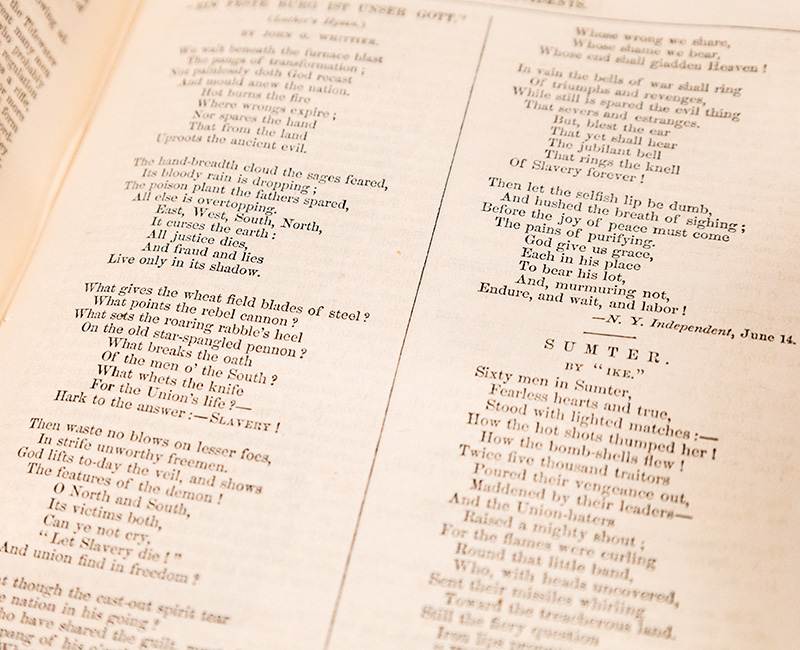
STEPHENS, Alexander. Edited by Frank Moore.
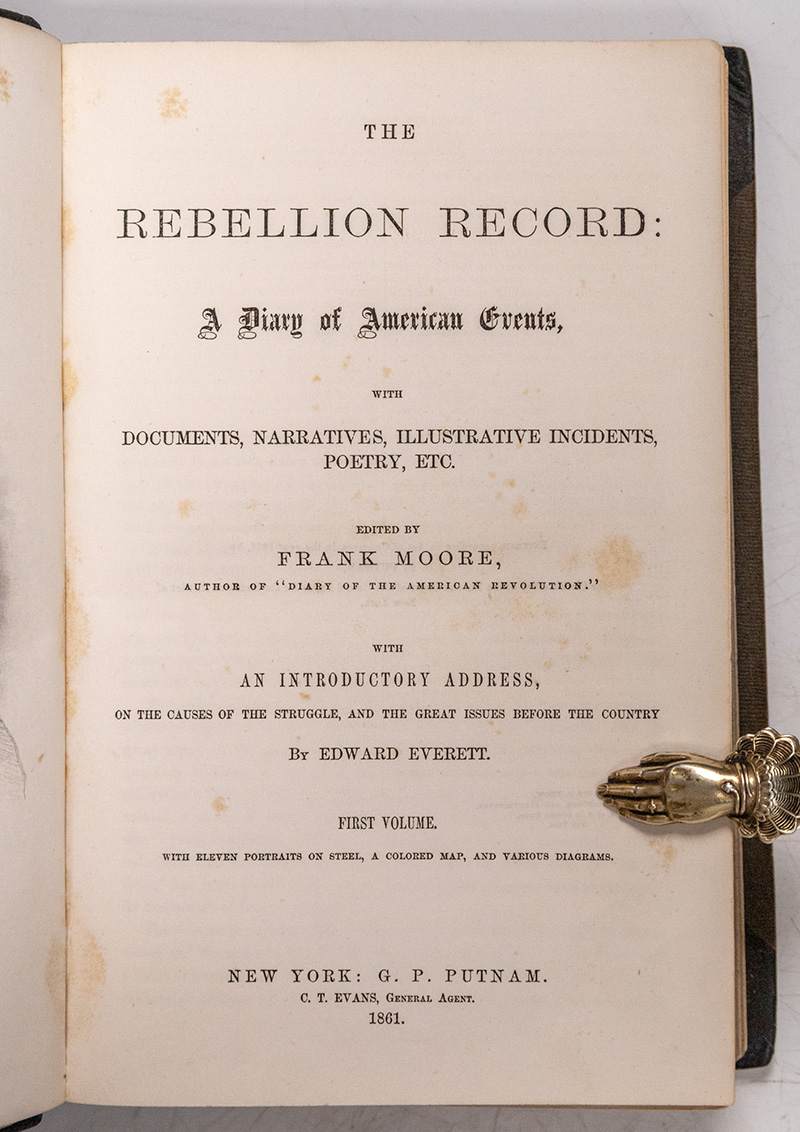
Cornerstone Speech. IN: The Rebellion Record: A Diary of American Events, with Documents, Narratives, Illustrative Incidents, Poetry, Etc.
New York: G. P. Putnam , 1861.
$7,500.00
In Stock
Item Number: RRB-152083
+$450
MARCH 21, 1861 CORNERSTONE SPEECH capiatlize each major word3:41 PMClaude responded: "The Gettysburg Address of the Confederate South": First Publication in Book Form of Alexander Stephens' Infamous March 21, 1861 Cornerstone Speech"The Gettysburg Address of the Confederate South": First Publication in Book Form of Alexander Stephens' Infamous March 21, 1861 Cornerstone Speech
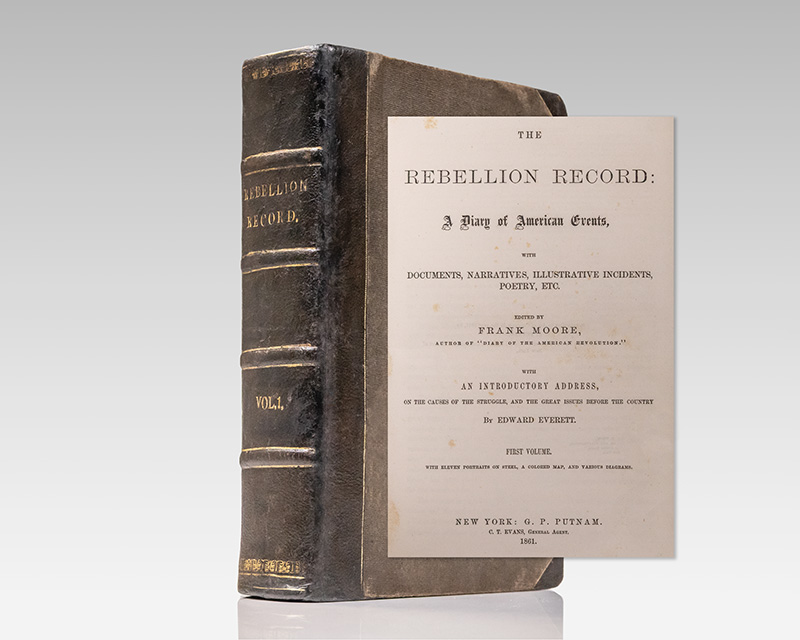
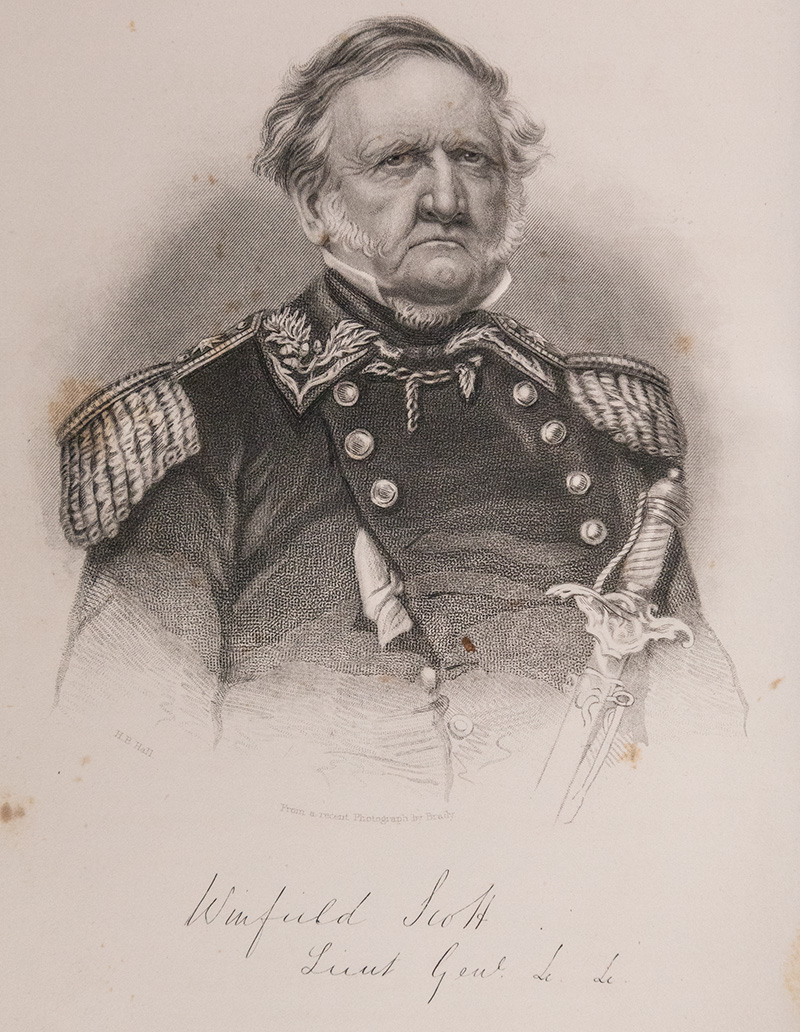
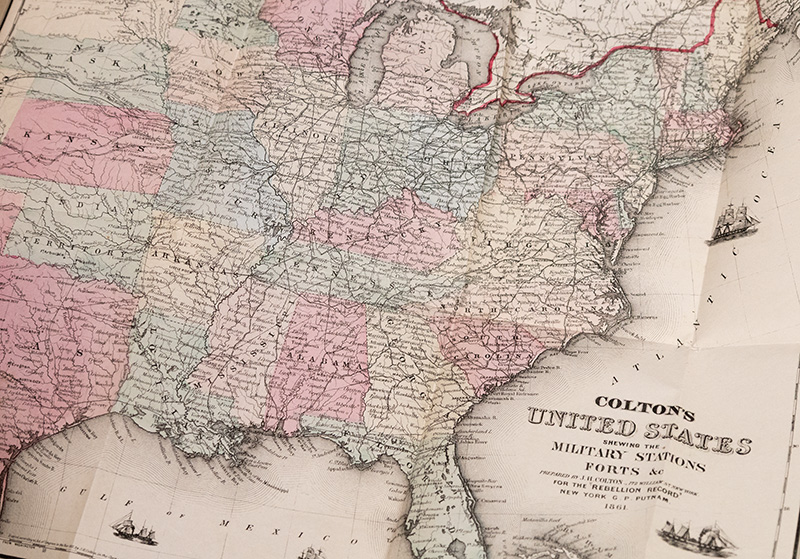
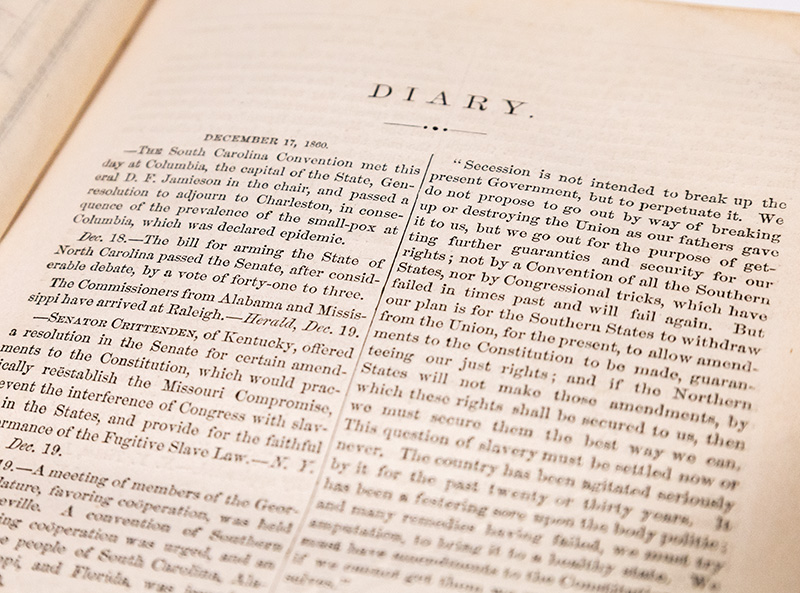
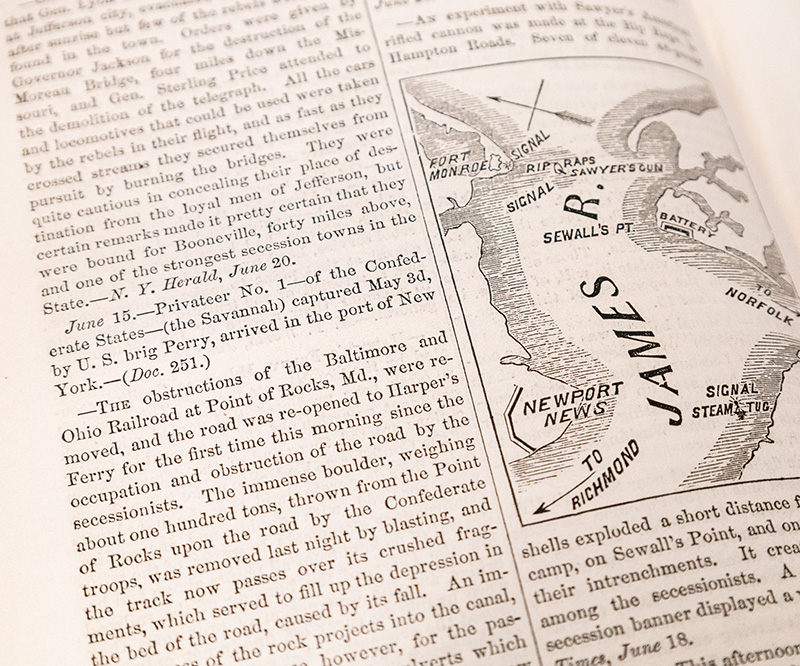
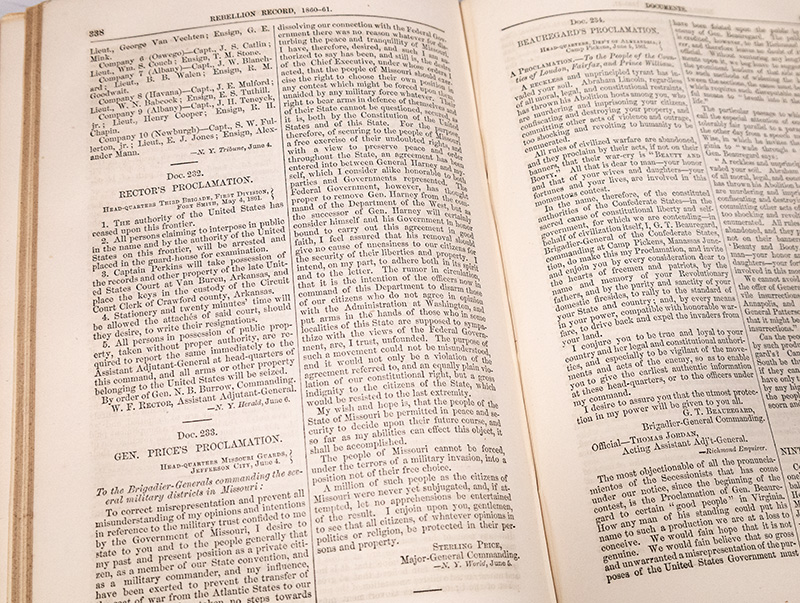
Rare first printing in book form of Stephens' extemporaneous March 21, 1861 Cornerstone Speech delivered in Savannah shortly before Fort Sumter, published the same year, presenting a reporter's transcription from a Savannah newspaper, with Stephens calling the U.S. Constitution "a compact built on sand" and declaring the Confederate Constitution a "cornerstone" that rests on "the great truth that the negro is not equal to the white man, that slavery... is his natural and normal condition." Thick octavo, bound in contemporary three-quarter black morocco with gilt titles and raised bands to the spine, steel-engraved frontispiece portrait of General Winfield Scott and full-page portraits of Lincoln, Jefferson Davis, McClellan and others, together with full-page, folding, and in-text illustrations and maps, and large color folding map of "Colton's United States Shewing the Military Stations, Forts &c. Prepared by J.H. Colton... for the 'Rebellion Record." Bound without portraits of Stephens and Beauregard, as often. Featuring hundreds of pages with early printings of major Civil War documents, addresses, reports, general orders, resolutions, ordinances of secession, newspaper accounts, and much more. Speech in "Documents and Narratives": 44-49. In very good condition. Interior generally fresh with light scattered foxing.
Soon after the secession of key southern states and the inauguration of Lincoln, and mere weeks before Fort Sumter, Alexander Stephens, vice president of the newly formed Confederacy, extemporaneously delivered his infamous Cornerstone Speech in Savannah on March 21, 1861. With no official printed version known to exist, this first publication in book form relies on the transcription by a local reporter that appeared in the Savannah Republican. Stephens began his controversial speech by calling the birth of the Confederacy "one of the greatest revolutions in the annals of the world." To historian Harry Jaffa, "Stephens' speech, more than any other, is the Gettysburg Address of the Confederate south... No utterance of the time reveals more fully the inner truth about the impending conflict... According to the new enlightenment proclaimed by Stephens, Washington's supposed enlightenment, reflected in the Declaration of Independence, was itself an 'age of ignorance and superstition'.... This remarkable address conveys, more than any other contemporary document, not only the soul of the Confederacy but also of that Jim Crow South that arose from the ashes of the Confederacy" (New Birth of Freedom, 216-23). The main subject of the Cornerstone Speech was the Confederate Constitution, which, Stephens declared, 'has put to rest forever all the agitating questions relating to our peculiar institution, African slavery as it exists amongst us'... The national Constitution, Stephens argued, 'rested upon the assumption of the equality of races,' but it was a compact built on sand. By contrast, he asserted, the Confederacy's 'new government is founded upon exactly the opposite idea; its foundations are laid, its cornerstone rests, upon the great truth that the negro is not equal to the white man, that slavery—subordination to the superior race—is his natural and normal condition'" (Grant, "Slavery Debate" in Gray & Robinson, Companion to the Literature, 76). Later, "from his Fort Warren prison cell in Boston harbor in the summer of 1865, Stephens claimed he had been misquoted... 'The reporter's notes, which were very imperfect, were hastily corrected by me,' Stephens insisted, 'and were published without further revision and with several glaring errors'... If the Savannah reporter had misquoted Stephens, so had an Atlanta journalist just eight days earlier. On March 13, 1861 the Atlanta Southern Confederacy carried a lengthy report on a speech Stephens had delivered in that city the previous evening. The climax of the vice president's address came when he affirmed that the framers of the Confederate Constitution had 'solemnly discarded the pestilent heresy of fancy politicians, that all men, of all races, were equal, and we made African inequality and subordination, and the equality of white men, the chief corner stone of the Southern republic'" (Dew, Apostles of Disunion).
Cornerstone Speech. IN: The Rebellion Record: A Diary of American Events, with Documents, Narratives, Illustrative Incidents, Poetry, Etc.
$7,500.00
In Stock