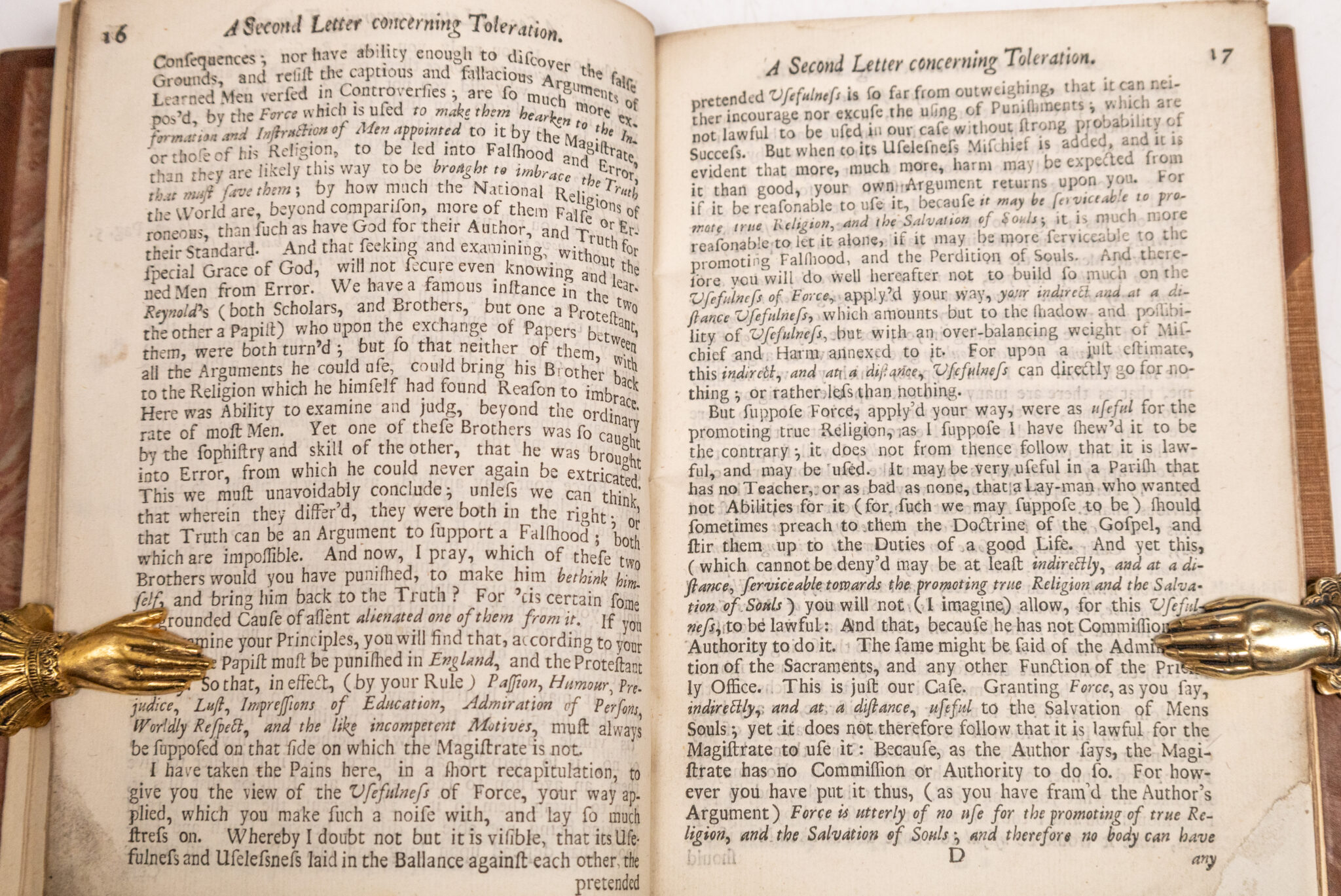
LOCKE, John.
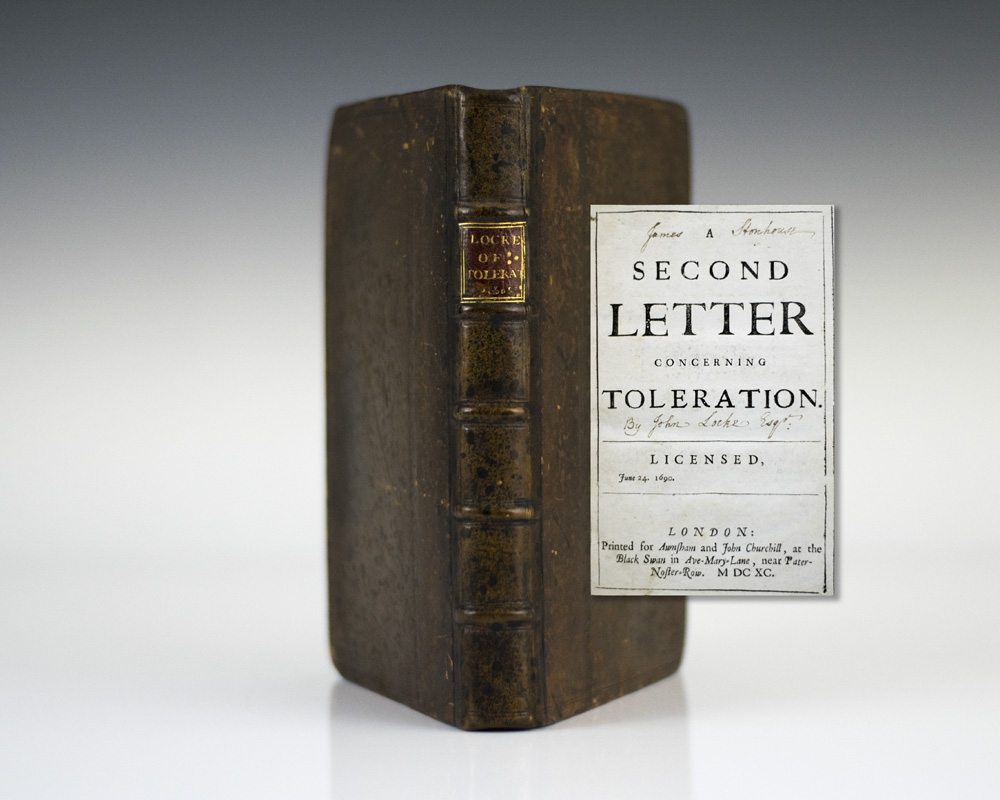
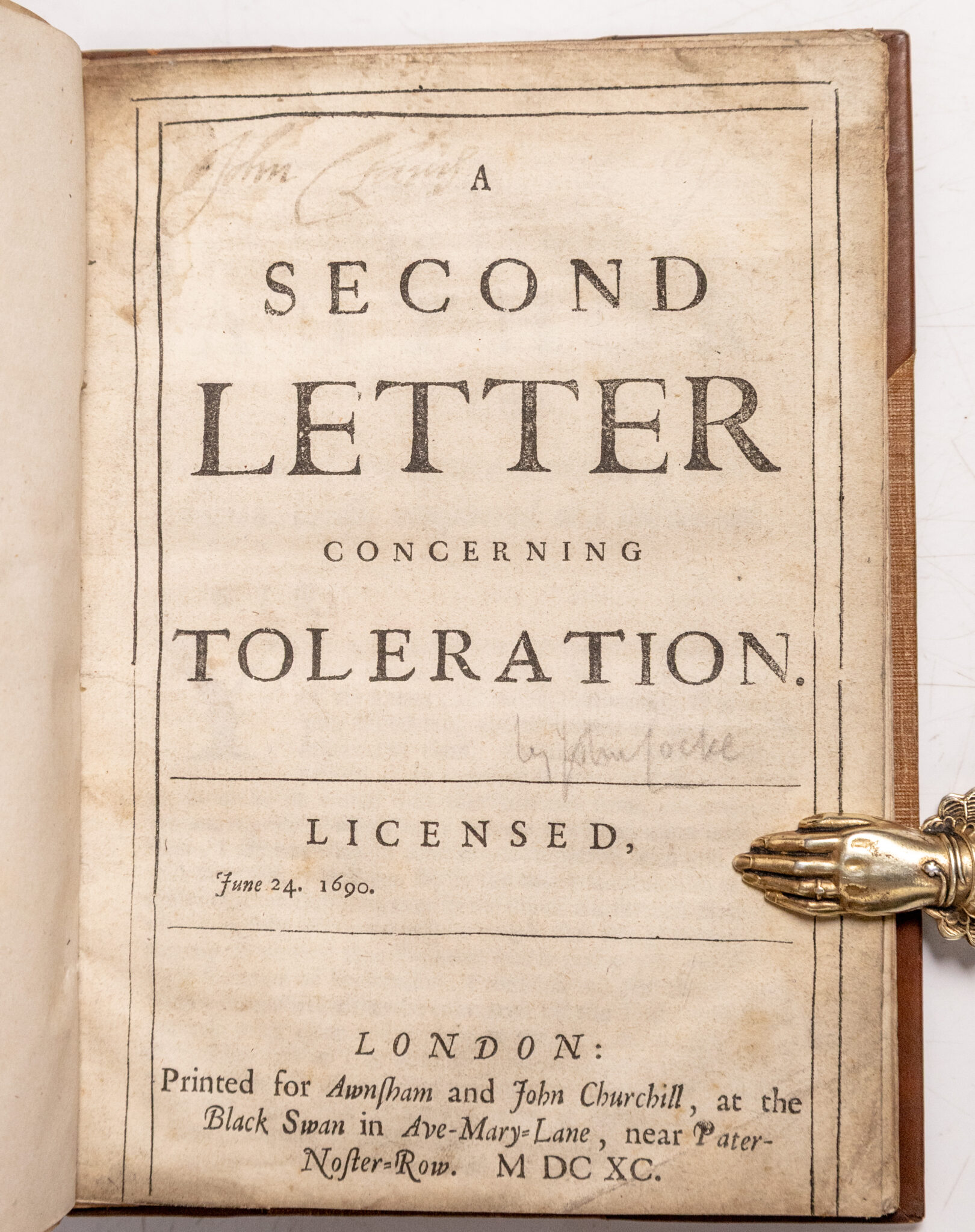
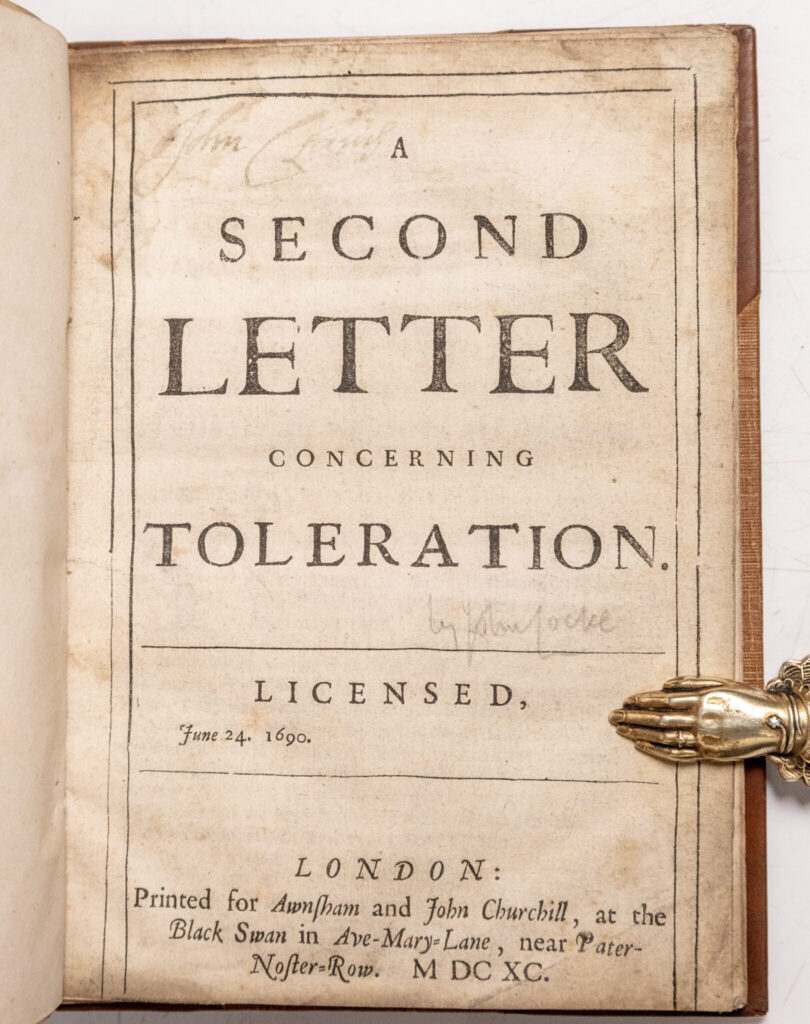
A Second Letter Concerning Toleration.
London: Printed for Awnsham and John Churchill, at the Black Swan in Ave-Mary Lane , 1690.
$25,000.00
In Stock
Item Number: RRB-151201
+$450
"The basis for the principles of democracy": Rare First Edition of John Locke's A Second Letter Concerning Toleration
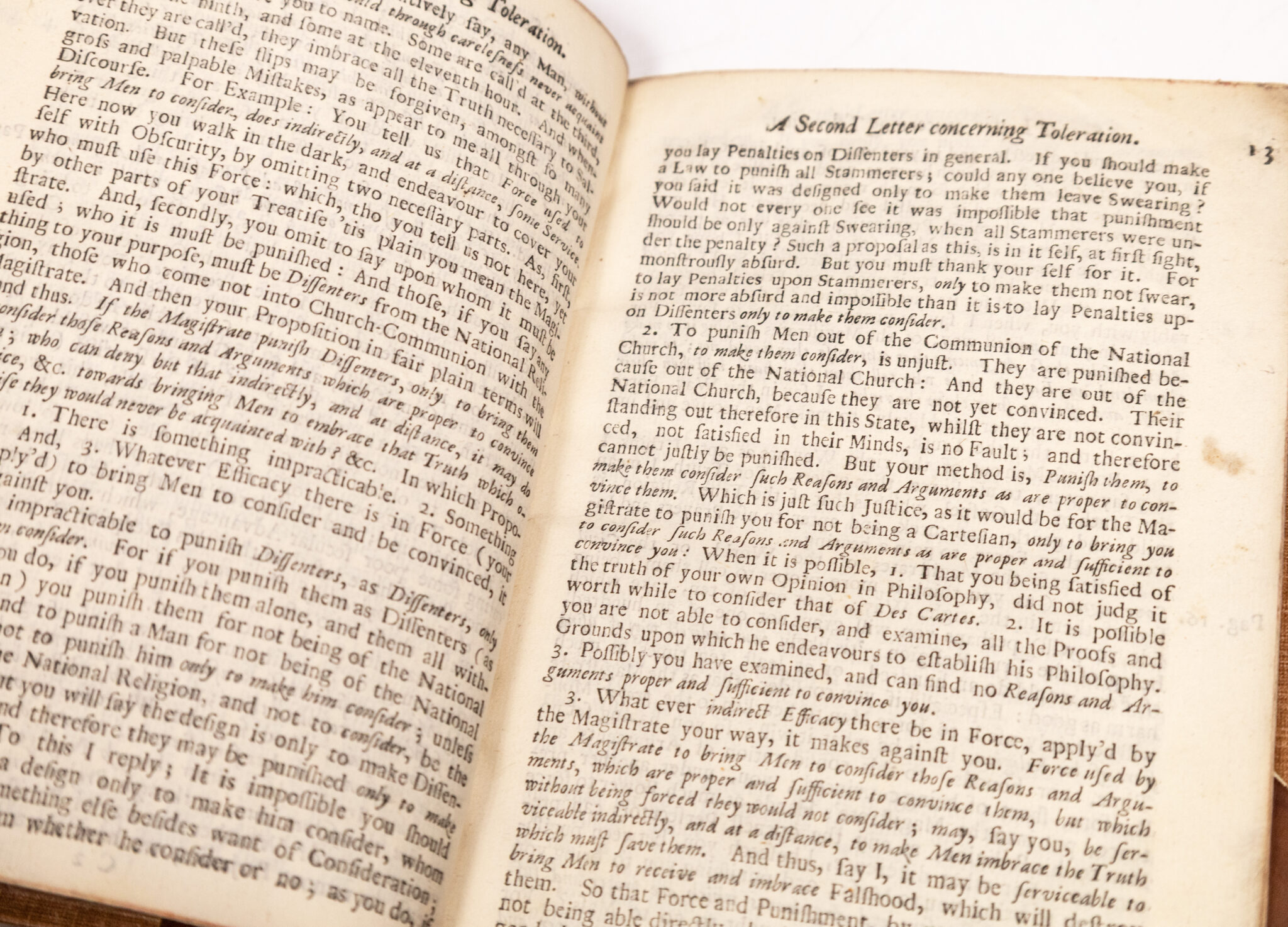
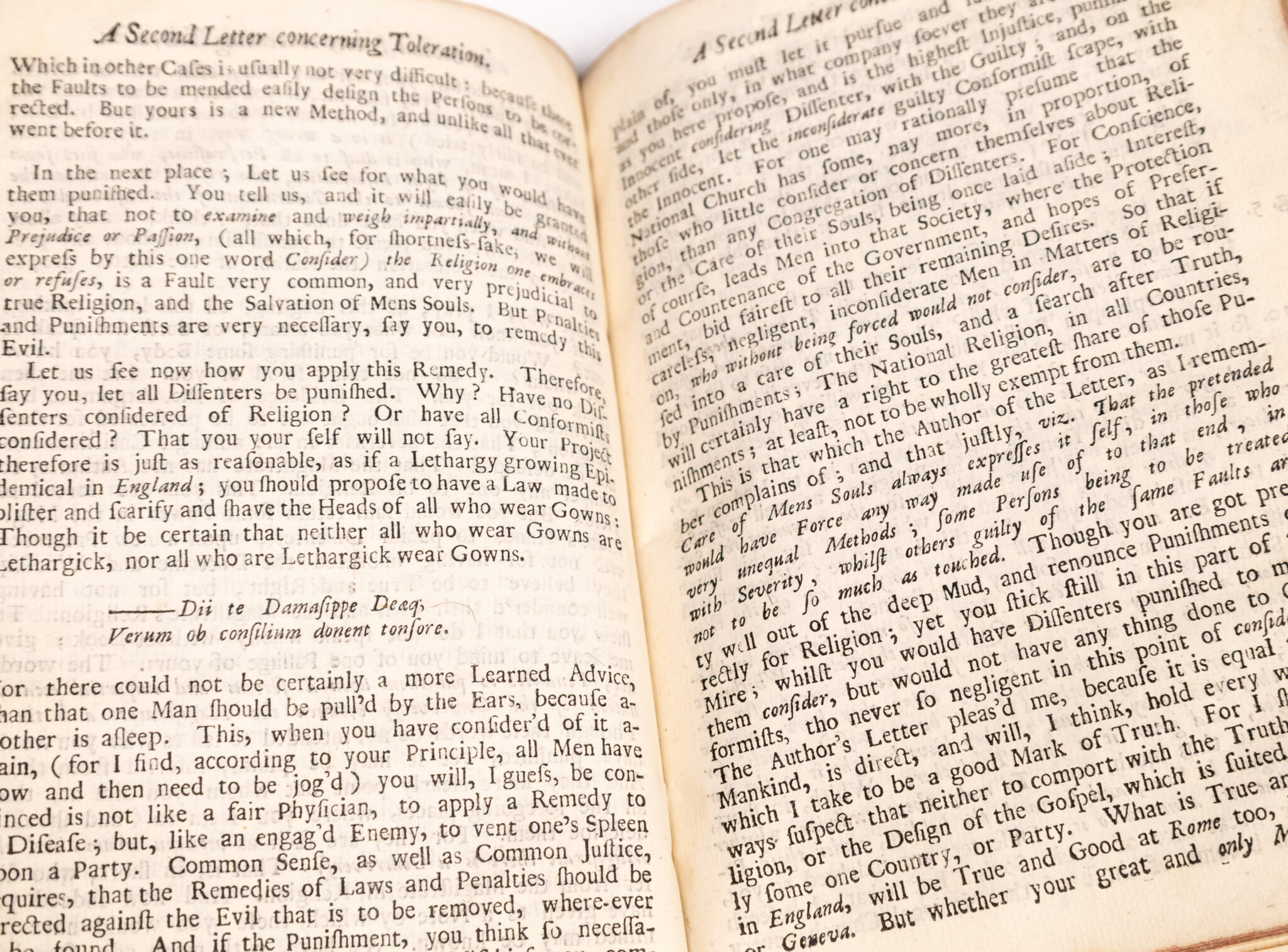
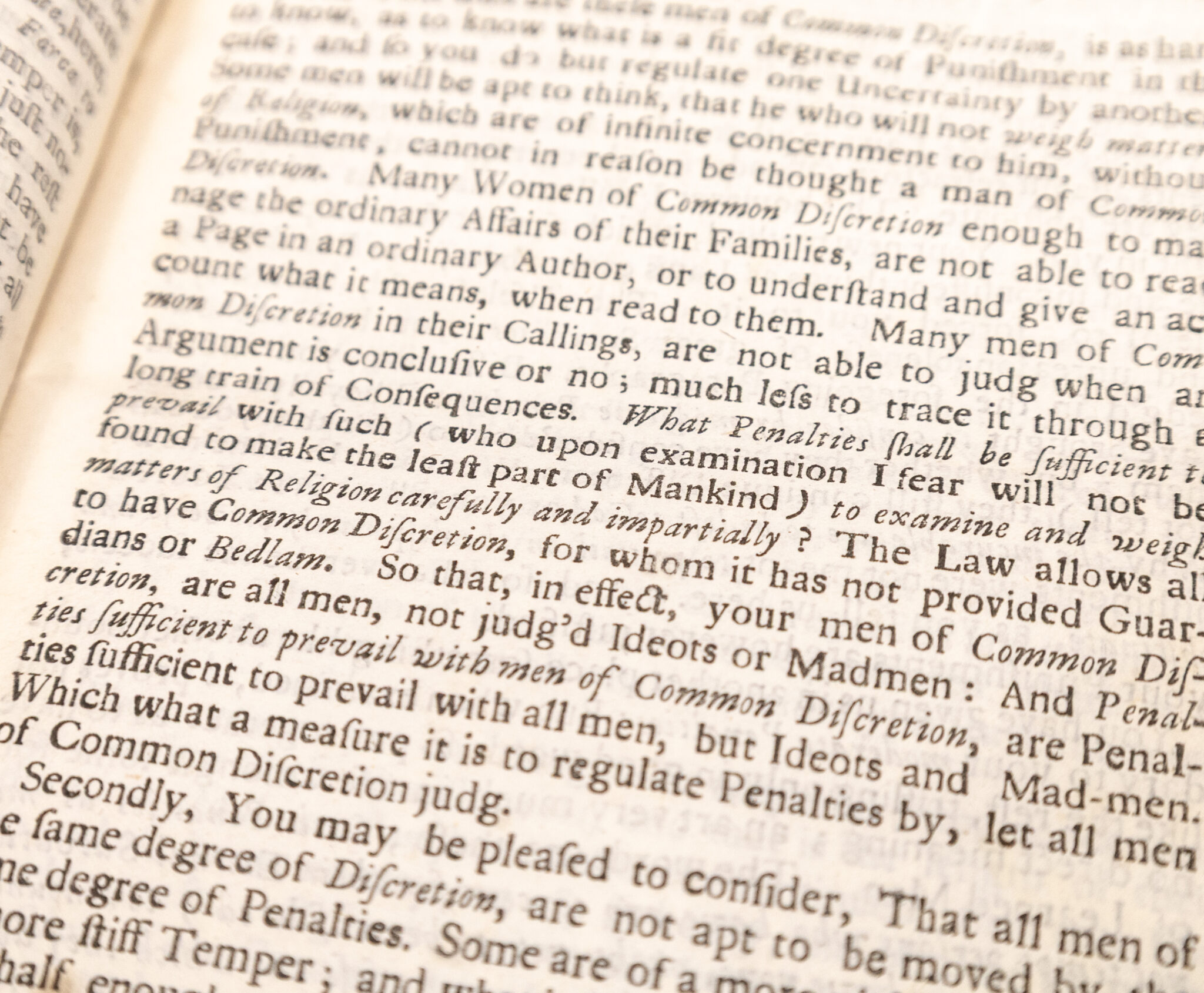
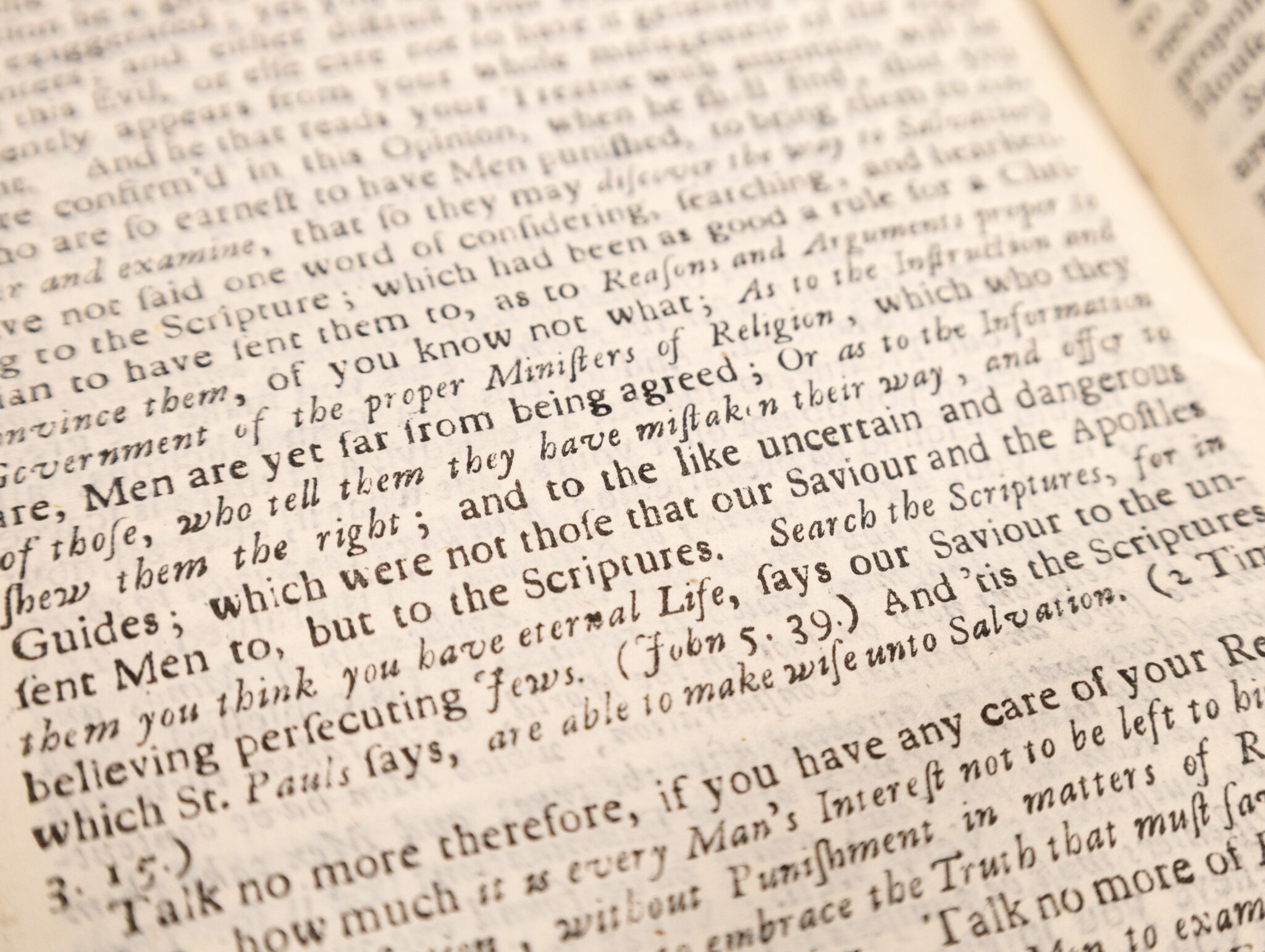
First edition of John Locke's landmark second Letter of Toleration, a profound influence on Jefferson, Madison and the architecture of the American Constitution on freedom of religion. Octavo, bound in three quarter calf with gilt titles to the spine, marbled endpapers. In very good condition, paper repair to lower corner D1, faint early ink ownership inscription to title page. Rare.
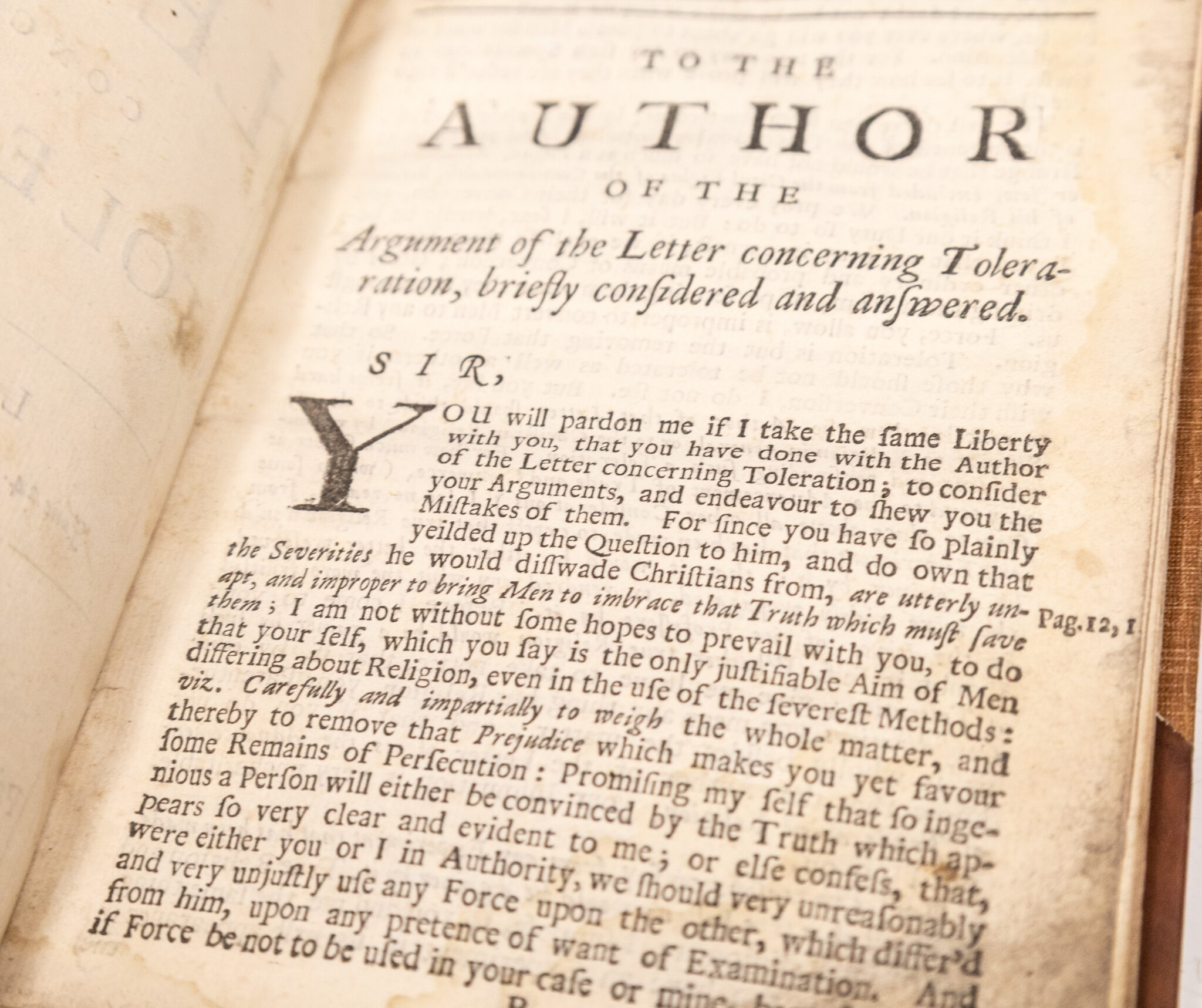
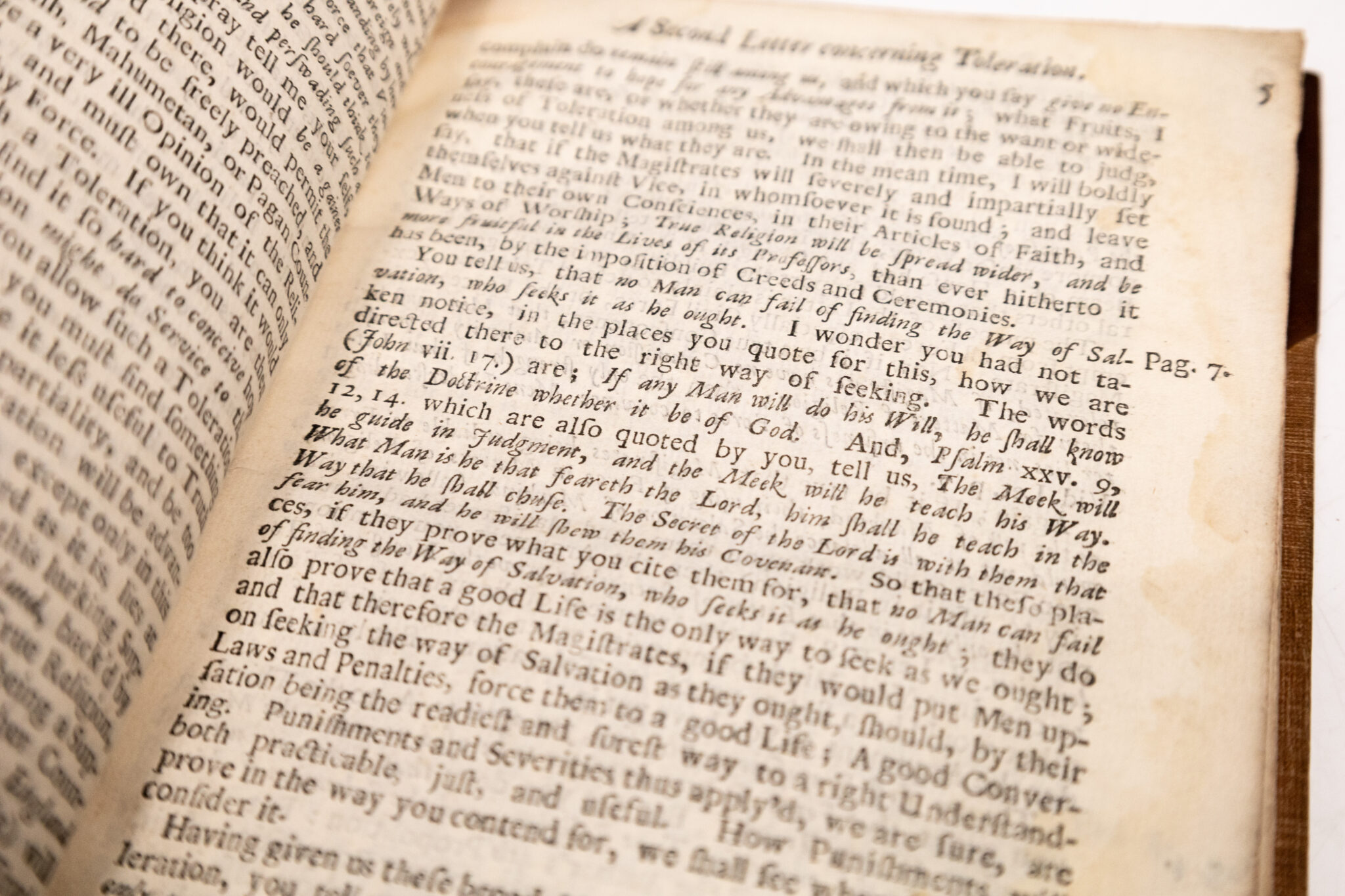
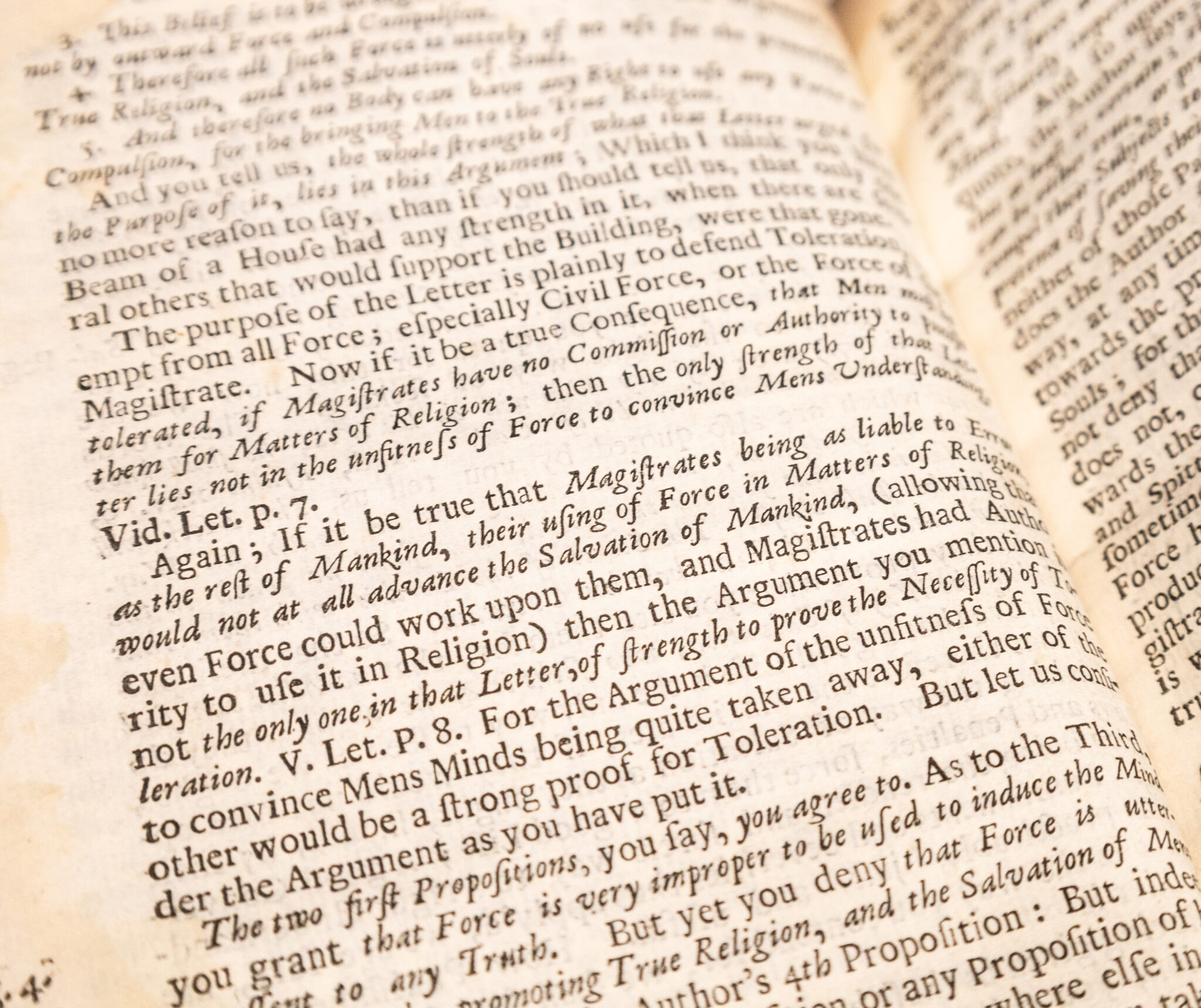
John Locke’s Letters on Toleration (1689–1692) articulate one of the most influential defenses of religious toleration in Western political thought. Written in the aftermath of the religious conflicts that followed the Reformation and England’s own civil strife, Locke’s argument became foundational for modern liberal constitutionalism—especially principles later reflected in First Amendment doctrines such as free exercise of religion and the separation of church and state. Locke's idea of toleration has been described as "one of the defining topics of political philosophy… a way of thinking about First Amendment rights such as the free exercise of religion and the wall of separation between church and state" (Williams and Waldron, Toleration, 1). Jefferson and Madison, in particular, "grounded their commitment to freedom of conscience on the foundation laid by Locke in his Letter Concerning Toleration," which Locke wrote in Latin (Epistola de Tolerantia) in 1685, while in exile in Holland (Ravitch & Witeritti, Making Good Citizens, 245). Soon after publication of Locke's first Letter in the virtually unobtainable 1689 English edition, he was anonymously caught up in a heated debate with Jonas Proast, whose 1690 Argument of the Letter Concerning Toleration quickly prompted Locke to reply the same year with A Second Letter Concerning Toleration. Locke continued developing his philosophy with "the largest work in the exchange, A Third Letter for Toleration, almost ten times the lengthy of his original Letter… In recent years… the Locke-Proast controversy has attracted more attention than ever before"—marking a seminal "divide between two conceptions of politics" (Vernon, Career of Toleration, 3-6).
A Second Letter Concerning Toleration.
$25,000.00
In Stock
Other Books by this Author
![The Works of John Locke [Including: An Essay Concerning Human Understanding, Some Thoughts Concerning Education, Some Considerations of the Consequences of Lowering the Interest, and Raising the Value of Money, An Essay for the Amendment of the Silver Coin, Some Thoughts Concerning Education, Etc.]](https://raptis.bvbeta.com/wp-content/uploads/2026/01/RRB-149219.jpg)