Infinite Jest Turns 30: How a 1,000-Page Novel Became a Mirror for Modern Life.
When Little, Brown published Infinite Jest on February 1, 1996, it arrived already mythologized — a 1,079-page novel with nearly 400 endnotes, written by a thirty-three-year-old from central Illinois who had spent four years on a book his editors privately feared was either genius or magnificent self-indulgence. Three decades later, that question has been settled. Infinite Jest is a classic. It is also, more than ever, a diagnosis.
The novel is set in a near-future America where the calendar has been subsidized — years named after corporations — and a film so entertaining that viewers lose the will to do anything except watch it is circulating with lethal effect. In 1996, this read as dark satire. Now it reads as description. The smartphone, the algorithm, the autoplay queue, the infinite scroll — the infrastructure of compulsive engagement that Wallace could only gesture toward has become the ambient condition of daily life. His central terror was not that we would be enslaved by entertainment, but that we would choose it: freely, repeatedly, gratefully.
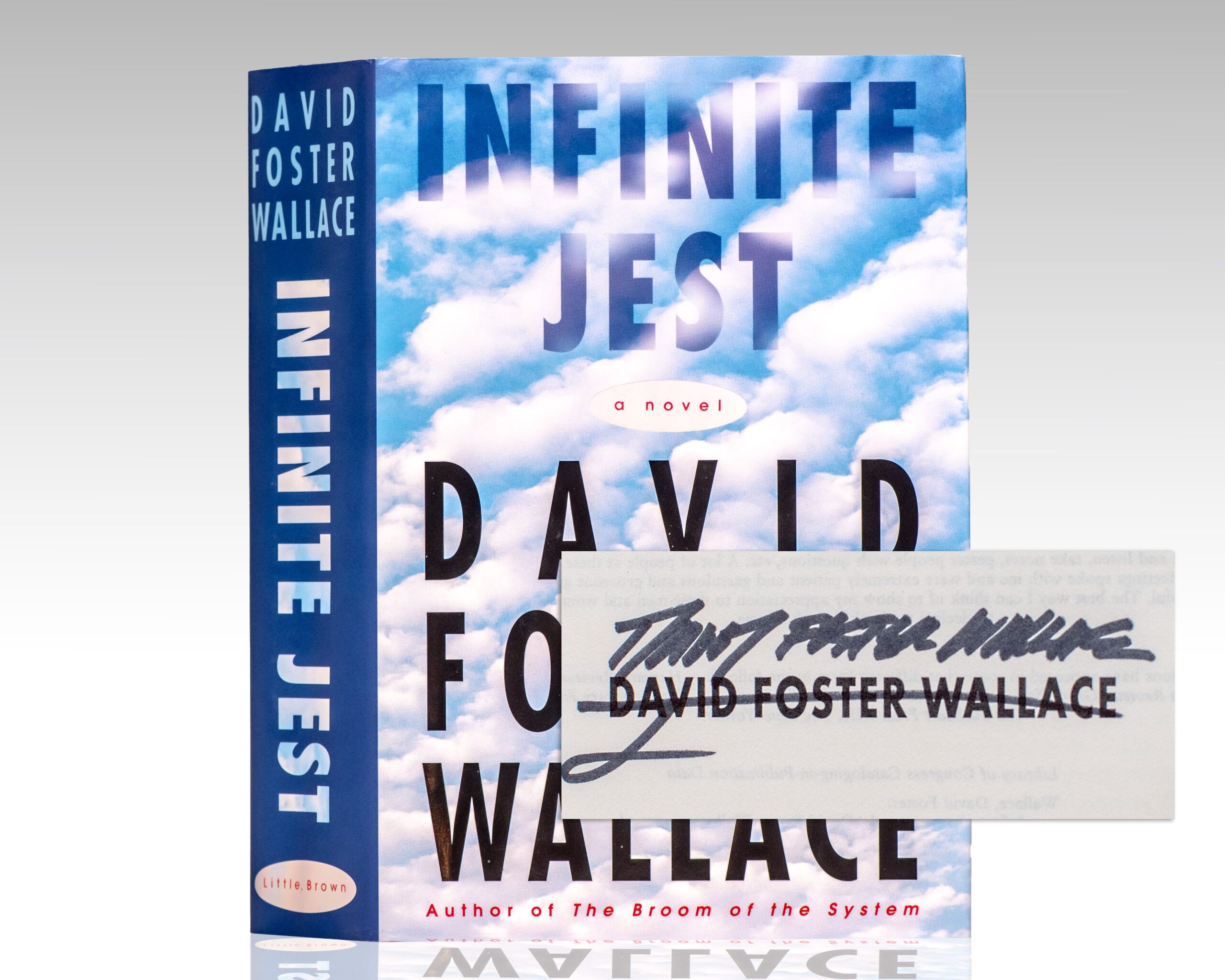
First edition of Infinite Jest; signed by David Foster Wallace
“Attention is itself a form of care — this is the faith that animates every one of the novel’s thousand pages.” The novel’s structural difficulty — its length, its endnotes, its refusal of conventional chronology — has always functioned as a formal argument. The work demands something from you in order to tell you something about demand. Wallace’s prose stages the mind’s actual behavior: its associative leaps, its reluctance to commit to a single feeling, its compulsive self-qualification. He was not difficult for the sake of difficulty. He was difficult because he believed that genuine attention, genuinely rendered, resists simplification. The contemporary reader arrives at the novel after years of conditioning by media environments designed to minimize sustained attention. Overcoming that conditioning is part of what the novel is about.
Beneath the formal ambition is something quieter. Infinite Jest is, at bottom, a novel about loneliness — the specific loneliness of people too intelligent or too wounded to allow themselves to be known — and about the possibility, always uncertain, always costly, of connection. Don Gately, the recovering addict at the novel’s moral center, is its beating heart precisely because he is the least armored by intellect. He wants to be good, finds it hard, keeps trying. Wallace meant this entirely, without irony. Thirty years on, that earnestness still lands.
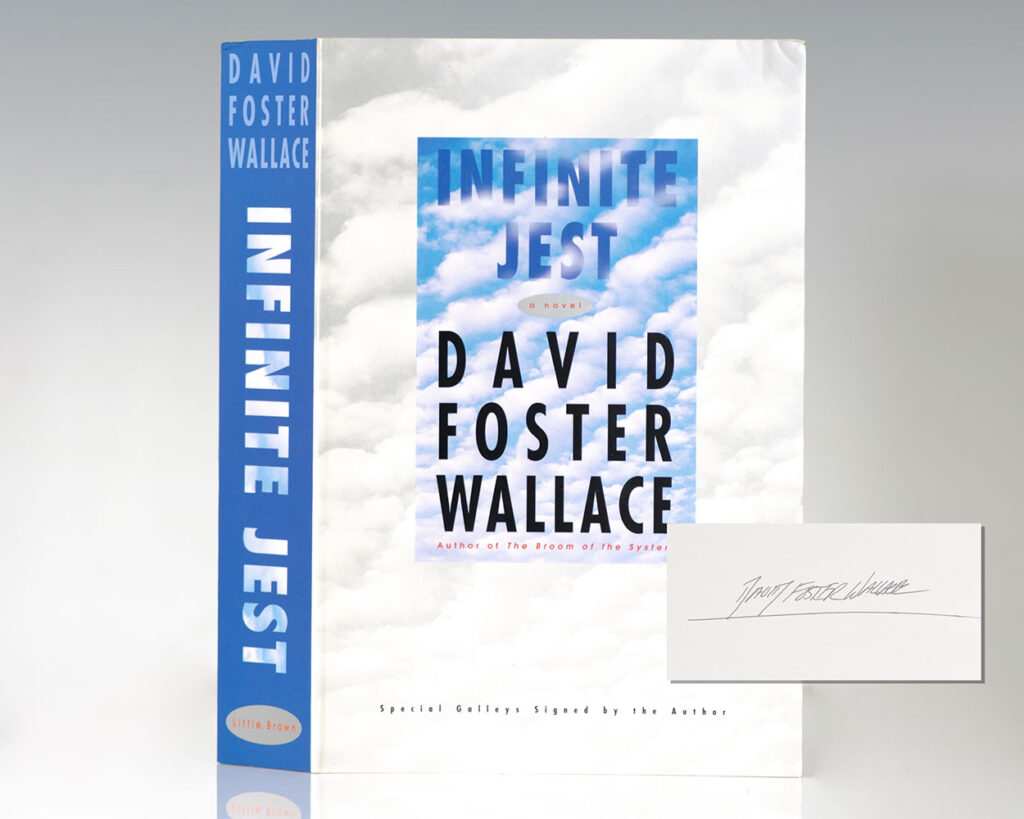
Rare uncorrected proof of Infinite Jest; signed by David Foster Wallace
What thirty years has clarified is that the novel’s most enduring achievement is not its satire but its tenderness. Wallace loved his characters in the way serious novelists must: with clear eyes and without sentimentality. He believed that fiction’s capacity to make us attend to lives other than our own is not a decorative thing but something close to necessary. Reading Infinite Jest in 2026 — in an attention economy Wallace did not live to see fully built — that belief feels less like literary faith and more like urgent instruction.
For those who wish to own the work as its first readers encountered it, we invite you to browse the David Foster Wallace first editions currently held in our collection here.
In the spring of 2026, PBS’s Emmy Award-winning Made With Love series turned its attention to a question that has rarely felt more timely: in a country marking the 250th…
On May 14, 2026, Raptis Rare Books and Churchill Cigar Company had the extraordinary privilege of hosting legendary musician, musical director, and rock icon Mark Rivera for an…
May 18, 2026 BY VALERIE STAGGS FLORIDA WEEKLY CORRESPONDENT Inside Raptis Rare Book Store on Worth Avenue, stacks of FOX News Commentator Dana Perino’s new book, “Purple…
Join our growing list of satisfied clients who have leveraged
our multi-cloud and hybrid cloud strategies to achieve greater
agility and efficiency in their operations.