FITZGERALD, F. Scott.
The Great Gatsby.
New York: Charles Scribner's Sons , 1925.
We're sorry, this item has sold.
+$450
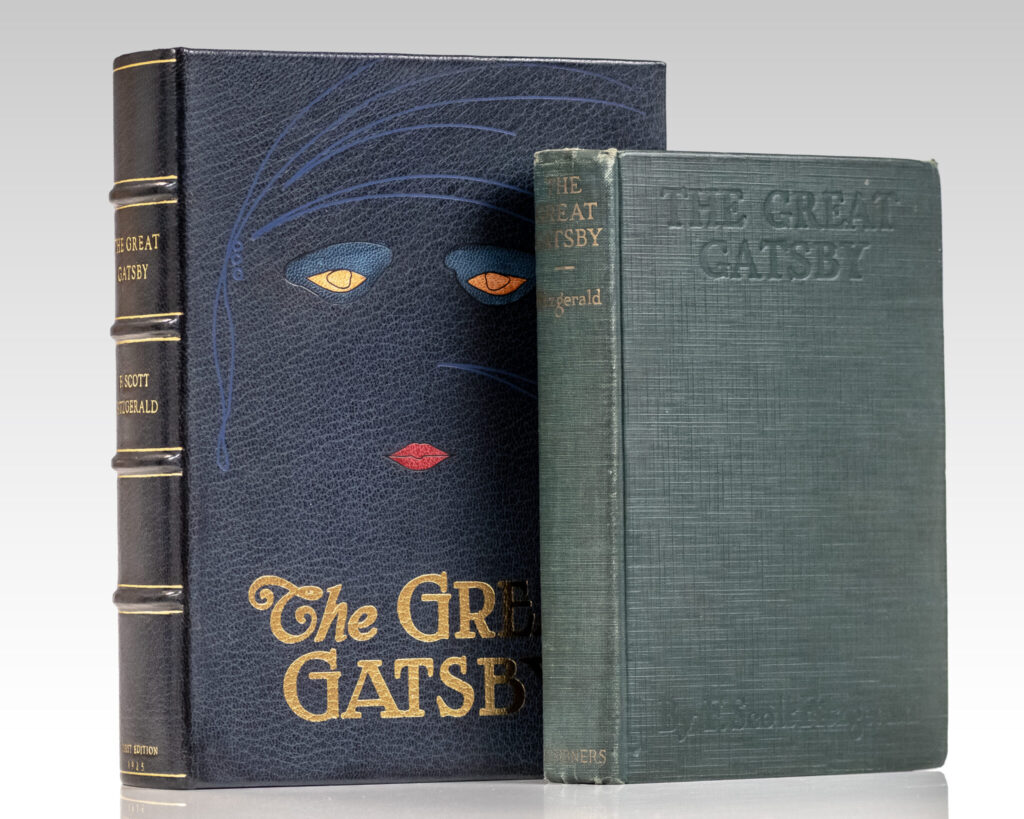
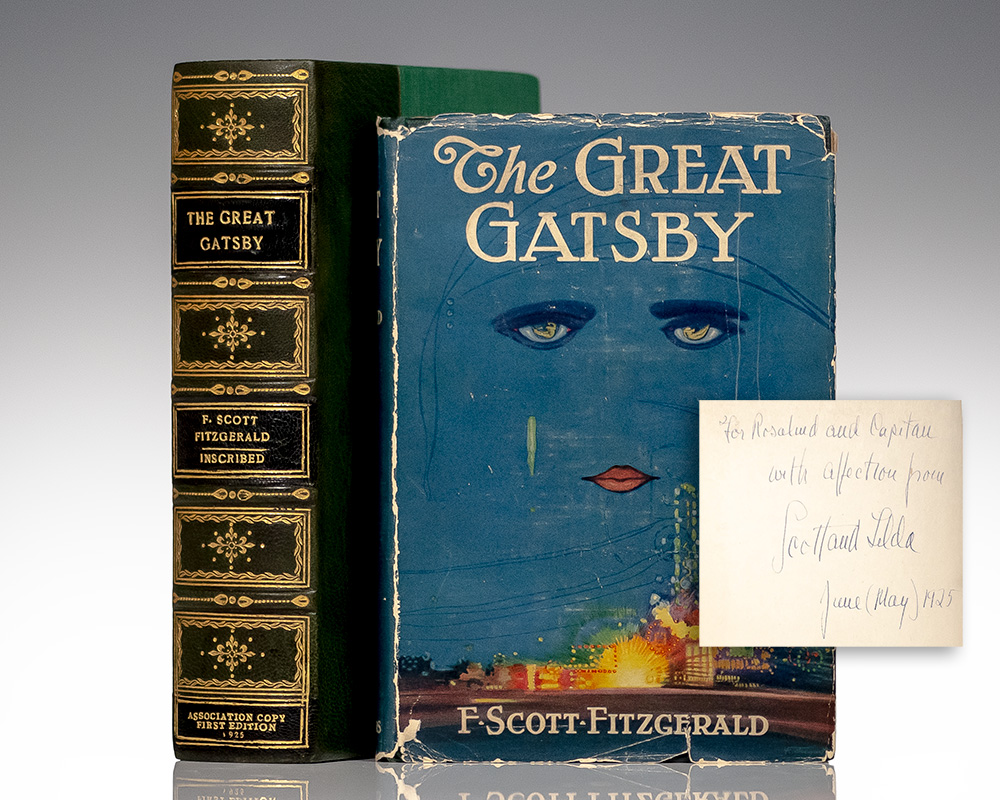
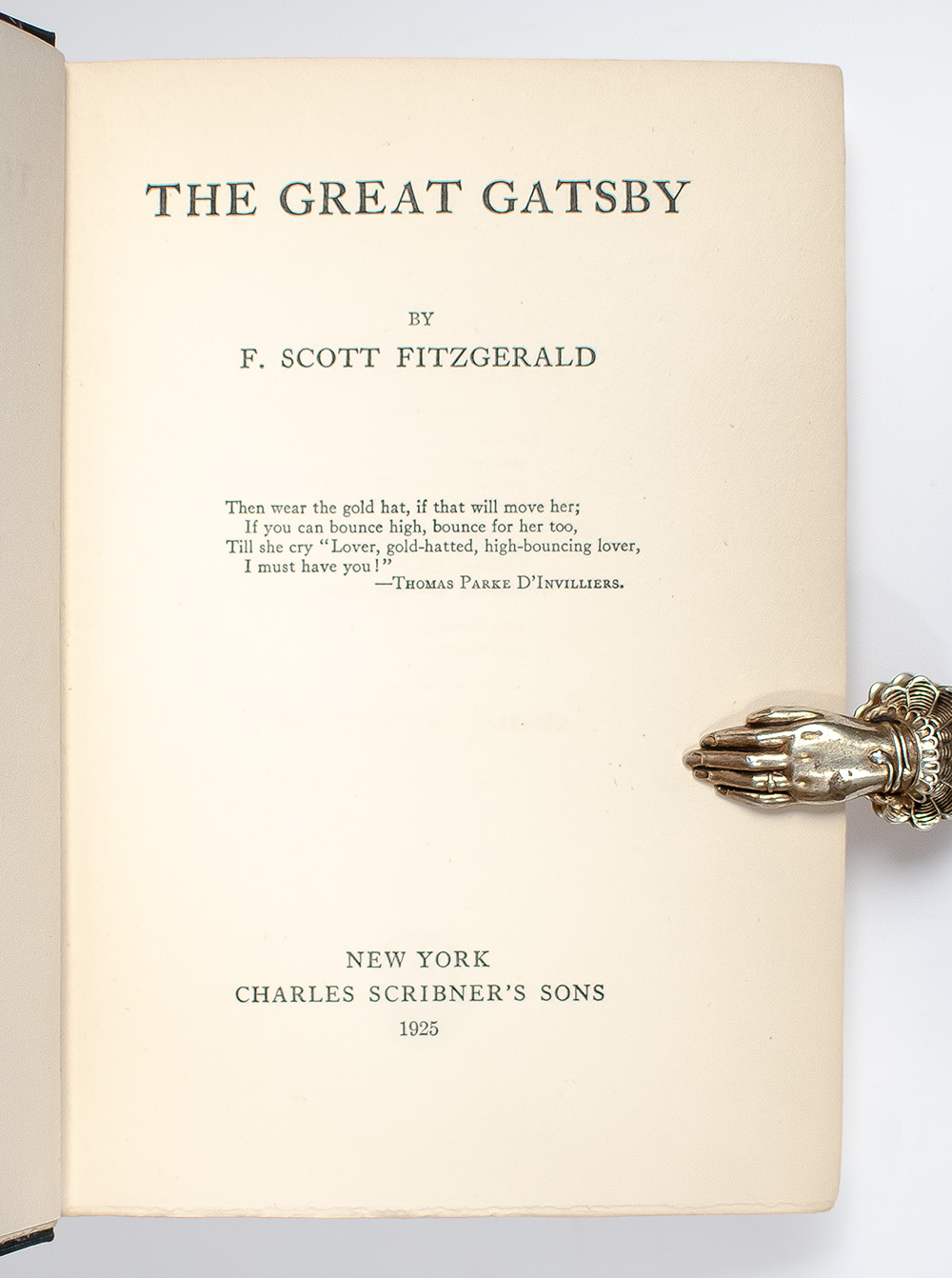
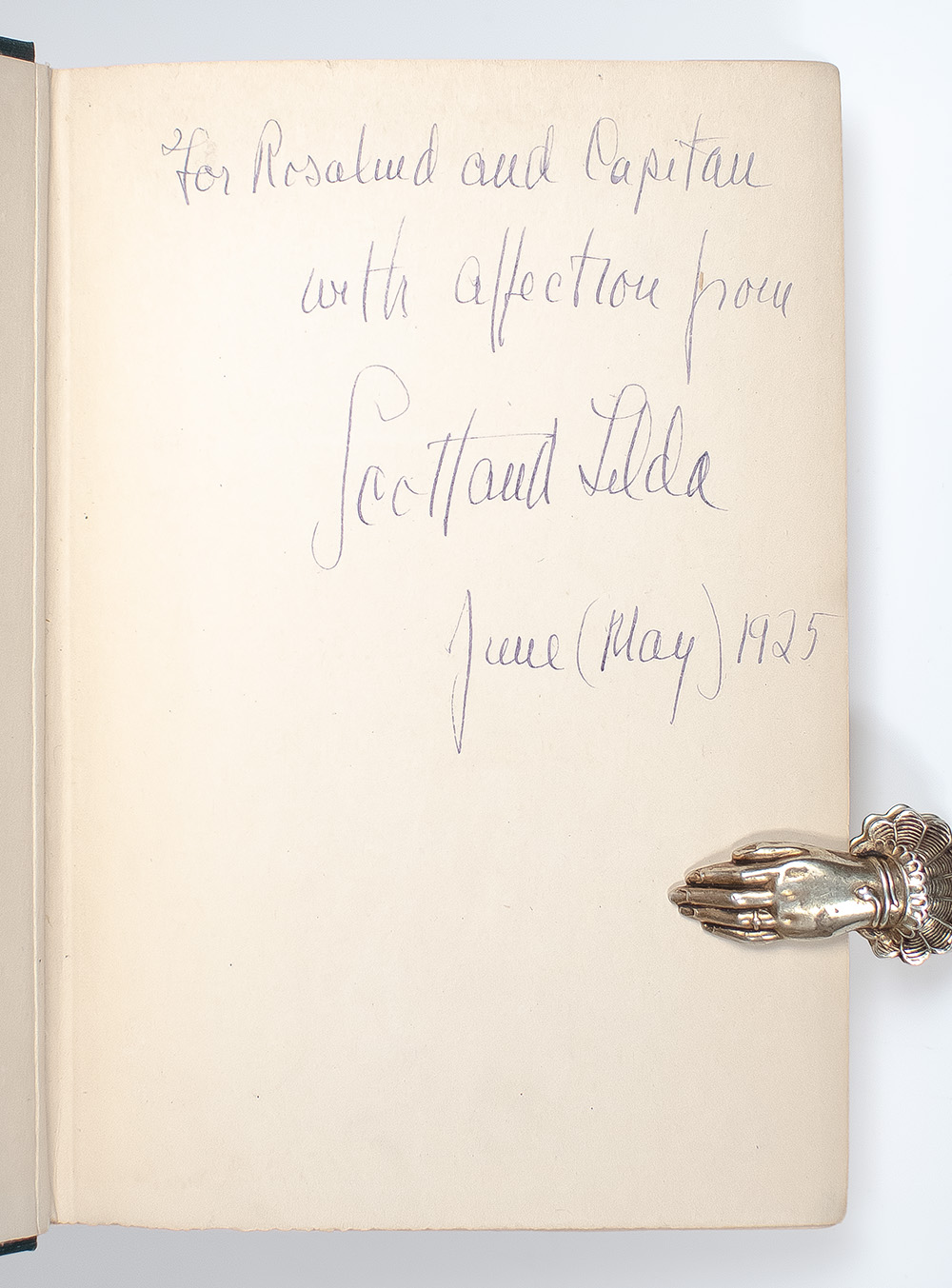
FIRST EDITION, FIRST ISSUE, ASSOCIATION COPY OF THE GREAT GATSBY; INSCRIBED BY F. SCOTT FITZGERALD TO HIS SISTER-IN-LAW IN THE YEAR OF PUBLICATION AND IN THE SCARCE ORIGINAL FIRST ISSUE DUST JACKET
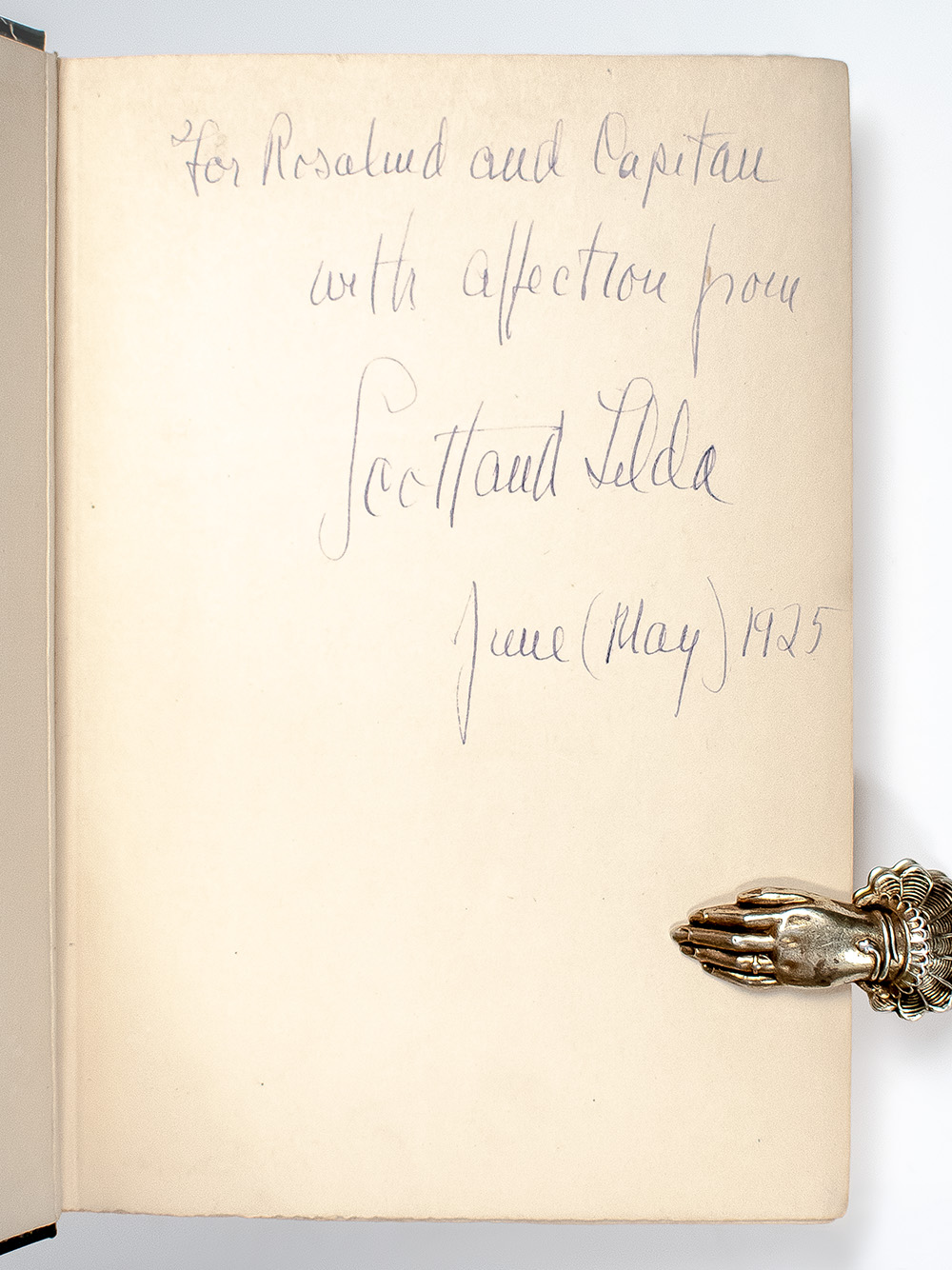
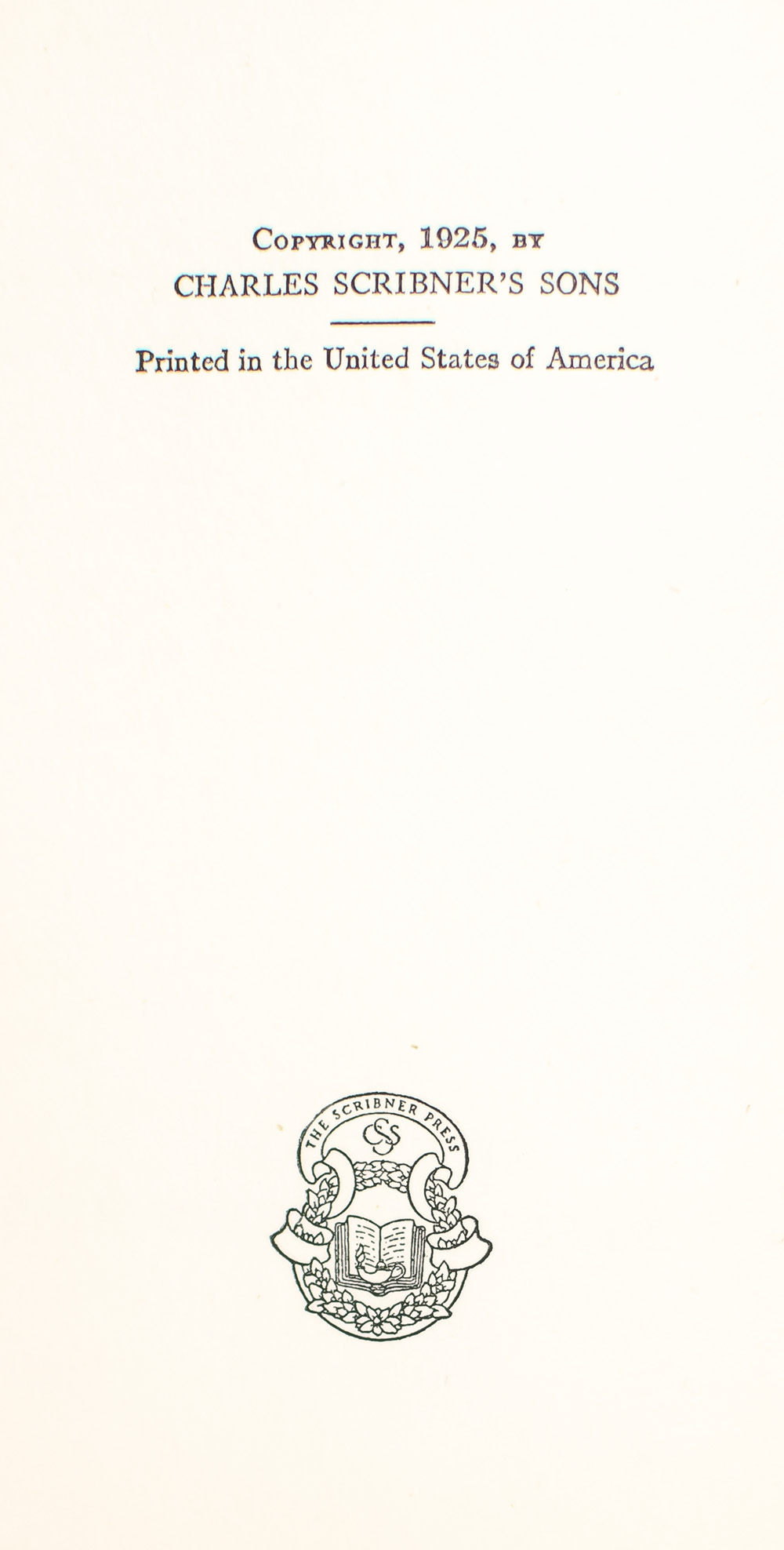
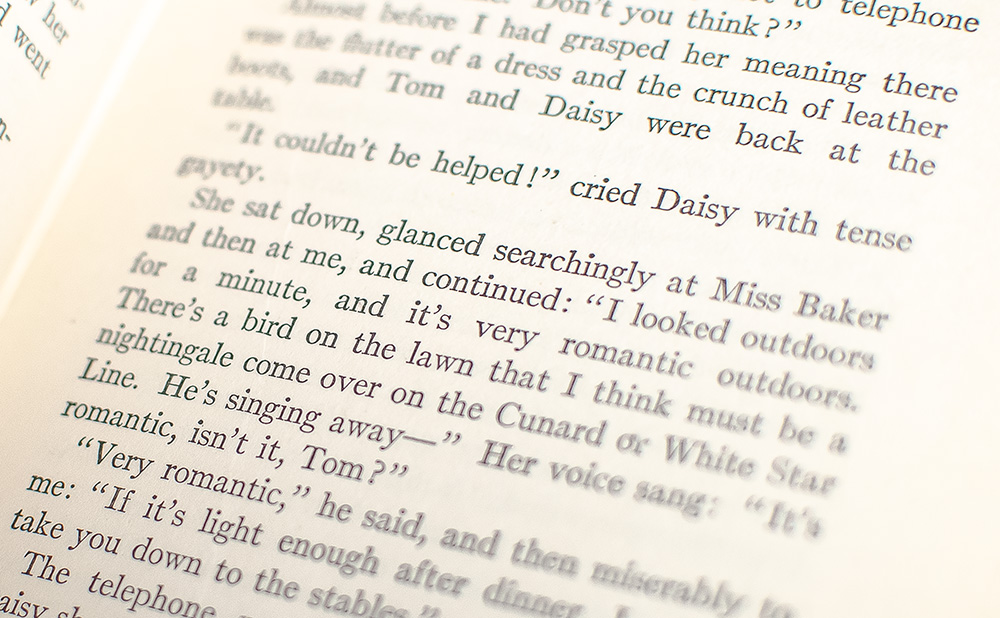
First edition, first printing of Fitzgerald's masterpiece, inscribed by Fitzgerald to Zelda's sister and her husband Newman Smith in the year of publication and in the exceptionally rare first issue dust jacket. Octavo, original dark green cloth with gilt titles to the spine. First printing with "chatter" on p. 60, line 16; "northern" on p. 119, line 22; "it’s" on p. 165, line 16; "away" on p. 165, line 29; "sick in tired" on p. 205, lines 9-10; and "Union Street station" on p. 211, lines 7-8. Association copy, inscribed by the author on the front free endpaper in the year of publication, "For Rosalind and Capitan with affection from Scott and Zelda June (May) 1925."
During their extended stay in Europe from 1924 to 1925, F. Scott and Zelda Fitzgerald lived and traveled in several parts of France and Italy, including the French Riviera (notably Saint-Raphaël and Antibes), Paris, Rome, and the island of Capri. They were residing on the island of Capri—an isolated yet fashionable retreat in the Bay of Naples—at the time of The Great Gatsby’s publication on April 10, 1925, having temporarily withdrawn from the social pressures of the Riviera and the literary scene in Paris. While on Capri, Fitzgerald, still awaiting delivery of the published novel, sent Scribner’s a series of personalized inscriptions written on loose slips of paper to be affixed into presentation copies for fellow writers such as Sinclair Lewis, H. L. Mencken, Carl Van Doren, and Van Wyck Brooks (see Letters, ed. Bruccoli, pp. 156–158). By the time of this inscription to Rosalind and Capitan, Fitzgerald had access to an actual copy of the first edition.
Fitzgerald’s relationship with his wife Zelda's sister and brother-in-law, Rosalind Sayre Smith and her husband, Judge Newman "Cap" Smith, was complex. Fitzgerald had long harbored resentment toward Cap, who had vehemently opposed his courtship of Zelda. A Southern aristocrat and a judge, Cap’s adherence to Southern traditions and his sense of familial duty made him an imposing figure in Zelda’s life, and his disapproval of Fitzgerald’s unconventional, somewhat bohemian lifestyle only fueled the tension between them. Moreover, Zelda's sister, Rosalind had been an active participant in discouraging the relationship from the outset. She viewed Fitzgerald as an unsuitable match for her sister, citing his lack of social standing and financial stability, as well as his uncertain future as a writer. This dynamic between Fitzgerald and the Smiths was fraught with familial tension and class-based animosities, much like those explored in Fitzgerald's work. Nevertheless, by 1925, tensions had eased enough to justify this gesture of literary diplomacy. That he now had access to a physical copy of the novel underscored a shift not only in Fitzgerald’s circumstances but in the novel’s initial circulation. Bruccoli A11.1.a; Connolly, The Modern Movement 48.
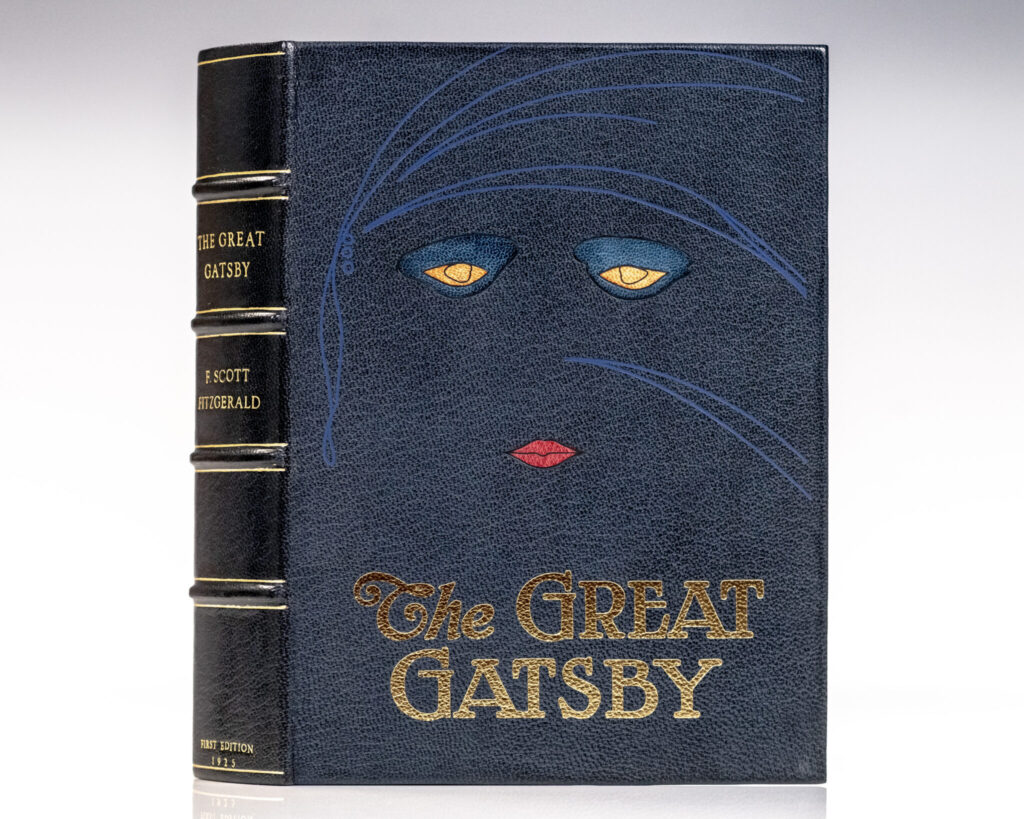
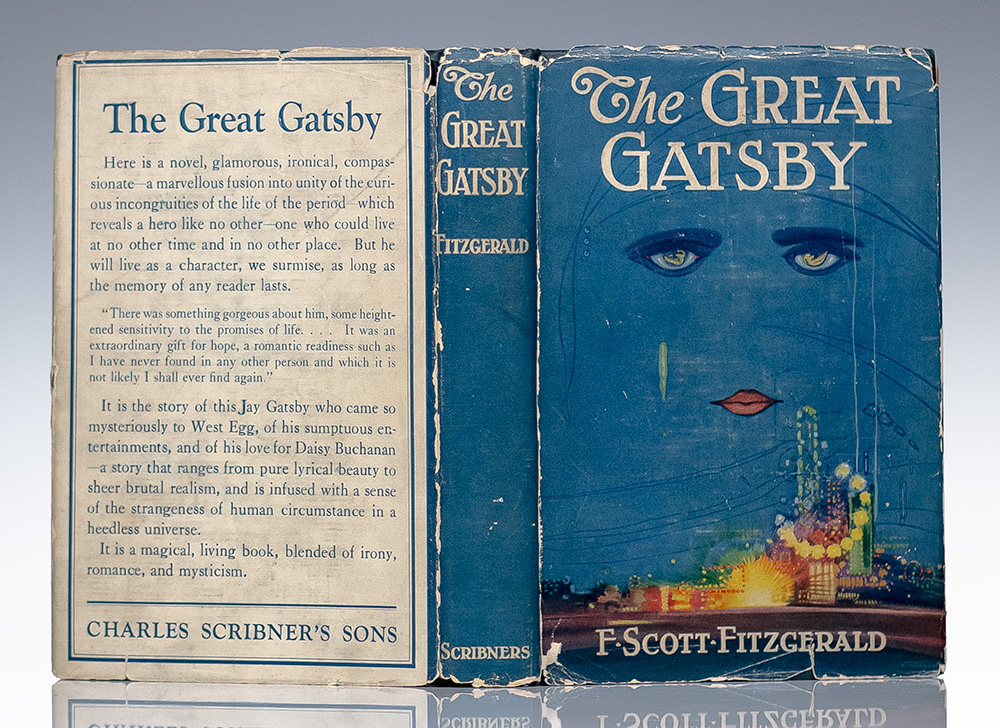
The iconic dust jacket design for The Great Gatsby, created by Francis Cugat in 1924, has become an integral part of the novel’s identity, despite being designed before Fitzgerald had completed the manuscript. Commissioned by Scribner's Sons, Cugat was given minimal direction, relying instead on his understanding of the novel’s themes—wealth, excess, and the disillusionment of the American Dream. Featuring a striking, ethereal likeness of a woman’s face with large, captivating eyes set against a blue night sky filled with city lights, the jacket painting evokes the image of Dr. T.J. Eckleburg’s billboard in the novel, symbolizing the moral decay of society, while the vibrant city lights suggest the allure and emptiness of Gatsby’s world. Fitzgerald reportedly reacted positively to the design, feeling that it captured the essence of his novel, even before its completion.
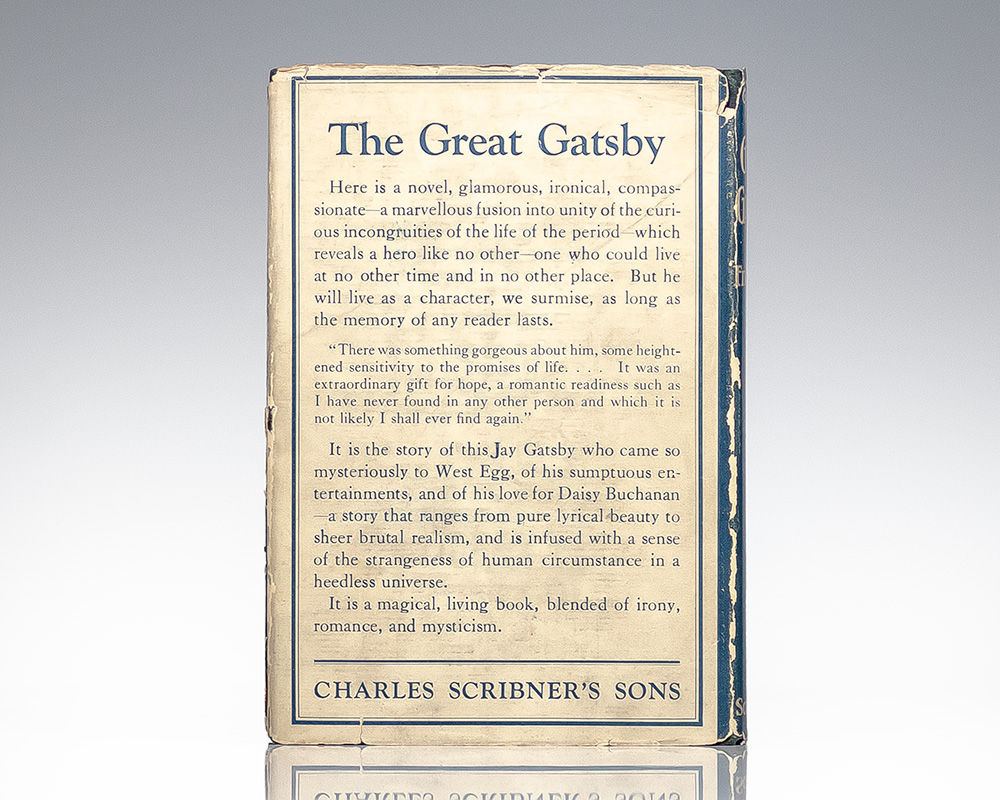
Near fine in a very good first issue dust jacket, with the lowercase "j" in "jay Gatsby" on the back panel, corrected in ink. Jacket art by Francis Cugat. Housed in a custom half morocco and folding chemise slipcase. An outstanding association copy, exceedingly rare with a contemporary presentation inscription and in the scarce first issue dust jacket; perhaps the most iconic dust jacket of the 20th century.
In 1922, F. Scott Fitzgerald declared his intention to write "something new—something extraordinary and beautiful and simple and intricately patterned." This vision materialized in The Great Gatsby, a novel that would become not only Fitzgerald’s finest work but also the definitive literary achievement for which he is best remembered. With its portrayal of the Jazz Age in all its excess, extravagance, and moral decay, The Great Gatsby captured the spirit of the Roaring Twenties and provided a poignant exploration of the American Dream's contradictions. The novel’s intricate narrative, beautiful prose, and profound themes elevated it to a status far beyond its initial reception. Although it was not immediately recognized as a masterpiece, it eventually became a permanent fixture in American literature and culture. It has been celebrated as one of the most important works in the canon of American fiction. Literary critic Cyril Connolly hailed The Great Gatsby as one of the six best American novels, noting that it "remains a prose poem of delight and sadness which has by now introduced two generations to the romance of America, as Huckleberry Finn and Leaves of Grass introduced those before it" (Modern Movement 48). Through its vivid depiction of the 1920s, The Great Gatsby continues to resonate with readers and remains a crucial work for understanding both the historical period it depicts and the broader themes of aspiration, love, and disillusionment in the American experience. Fitzgerald's ability to blend beauty, complexity, and simplicity in a single narrative ensures that The Great Gatsby endures as an essential part of the American literary tradition. After World War II, The Great Gatsby steadily gained popularity and became a staple of American high school curricula. Today, it is widely regarded as a literary classic and is often considered a contender for the title of the "Great American Novel." In 1998, the Modern Library editorial board named it the best American novel of the 20th century and the second-best English-language novel of the same period. The novel has inspired numerous stage and film adaptations, including four film versions. Two notable adaptations include the 1974 version starring Robert Redford and Mia Farrow, and Baz Luhrmann's 2013 film featuring Leonardo DiCaprio, Tobey Maguire, and Carey Mulligan. Fitzgerald's granddaughter praised Luhrmann’s adaptation, remarking that "Scott would be proud."
The Great Gatsby.
$975,000.00
Out of Stock
Other Books by this Author