
ELIOT, T.S. [Allen Tate].
The Waste Land.
“He who was living is now dead We who were living are now dying With a little patience": First Edition of T.S. Eliot's The Waste Land; from the Library of Poet and essayist Allen Tate
New York: Boni & Liveright, 1922.
$14,000.00
In Stock
Item Number: RRB-149678
* Custom Clamshell Boxes are hand made by the Harcourt Bindery upon request and take approximately 60 days to complete
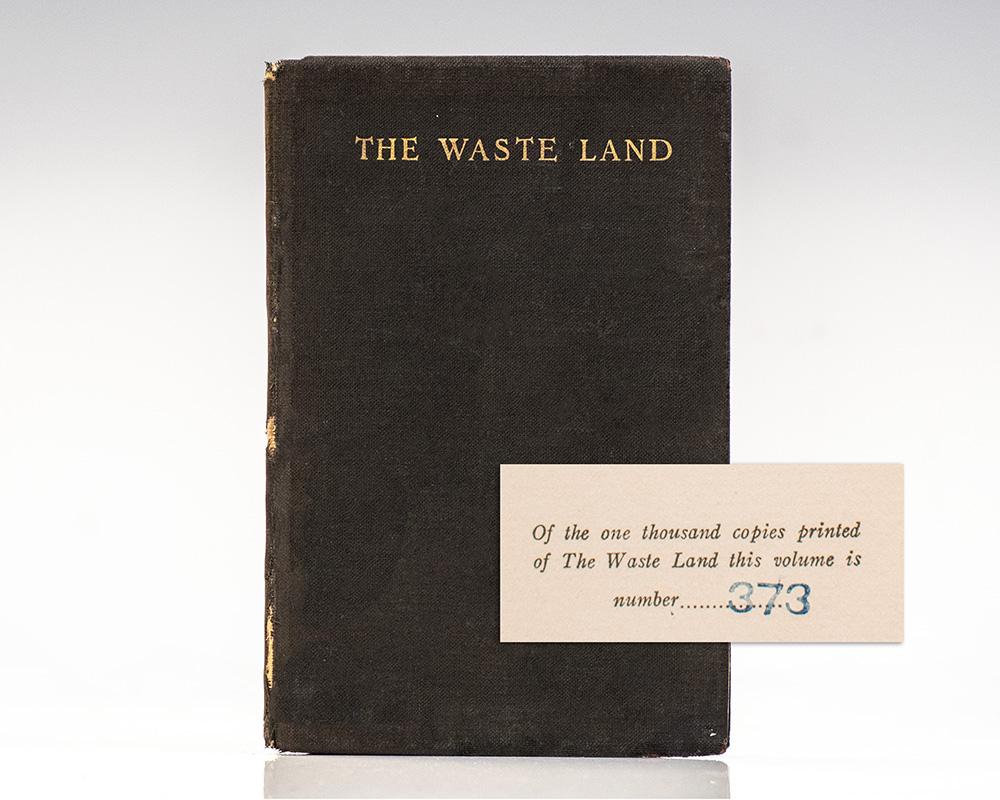
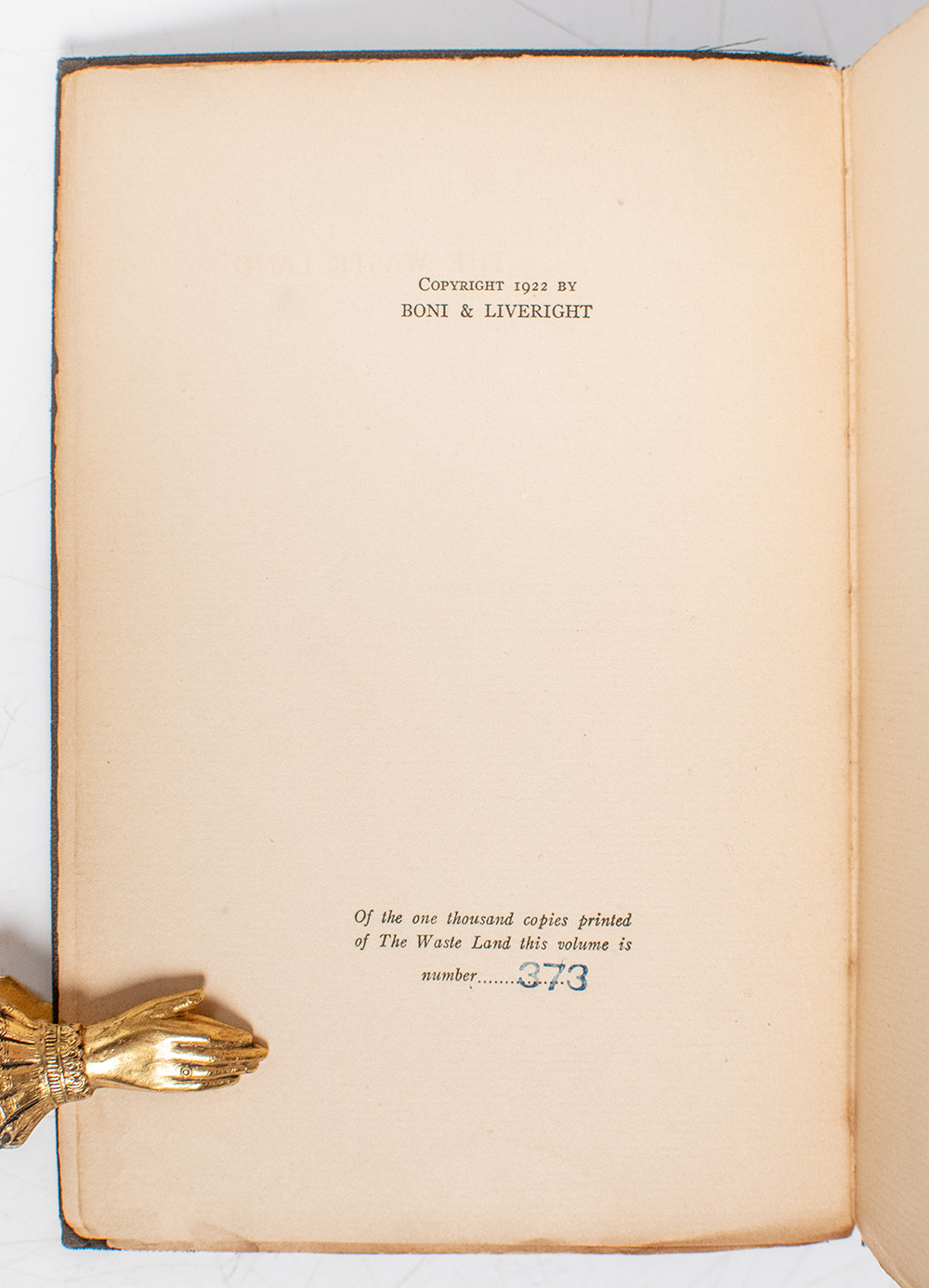
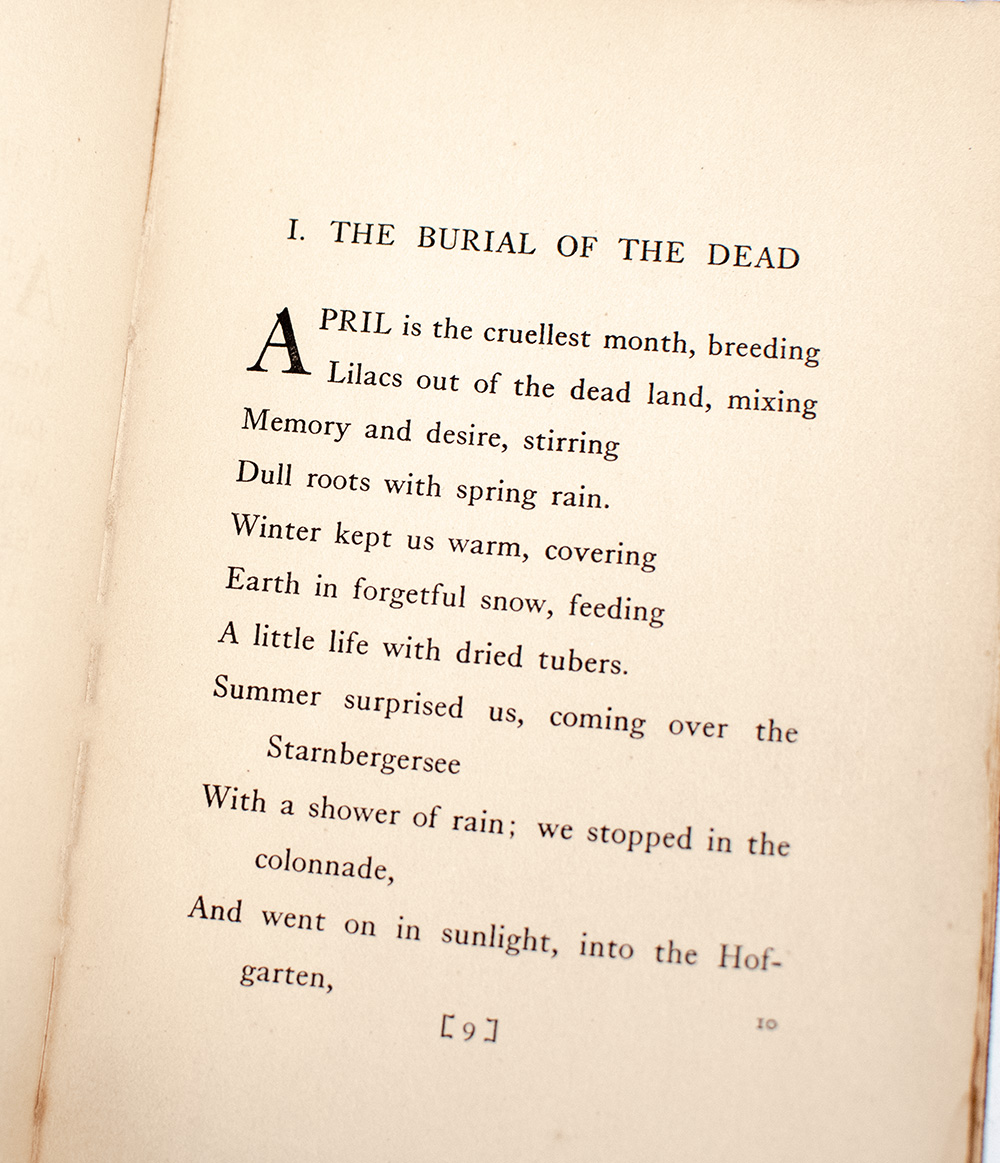
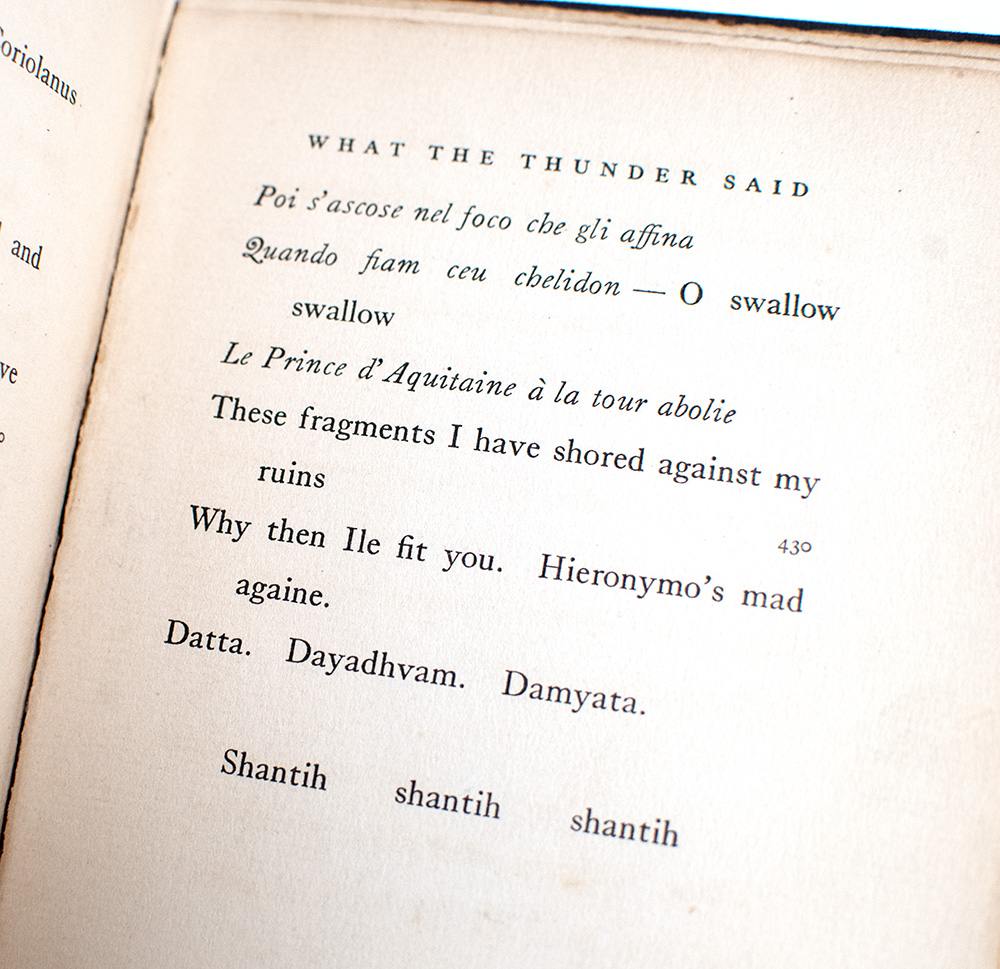
First edition, first issue of one of the most influential works of the 20th century, from the library of poet Allen Tate. Octavo, original black flexible cloth, lettered in gilt. One of one thousand copies, this is number 373. Contains the word "mountain" spelled correctly on page 41, "water" without the 'a' on page 22, and the 5 mm limitation statement. Ownership signature in fountain pen of Allen Tate to the front free endpaper and dated March 1922. Allen Tate was a poet, essayist, United States poet laureate, critic, and prominent member of the Southern Agrarian movement, held a deep and enduring admiration for T. S. Eliot, whose modernist poetics profoundly shaped Tate’s own literary and critical sensibilities. Their first meeting in 1928 initiated a friendship that spanned more than three decades, marked by intellectual exchange and mutual respect within the transatlantic modernist community. Following Eliot’s death, Tate honored his legacy through the edited volume T. S. Eliot: The Man and His Work (1966), a collection of essays that reflects both his critical acuity and his personal regard for Eliot as a defining figure of twentieth-century literature. In very good condition with rubbing to the extremities. From the collection of Allen Tate and annotated throughout in pencil with the occasional inked notation. An exceptional association.
The Waste Land expresses with great power the disillusionment and disgust of the period after World War I. In a series of fragmentary vignettes, loosely linked by the legend of the search for the Grail, it portrays a sterile world of panicky fears and barren lusts, and of human beings waiting for some sign or promise of redemption. The depiction of spiritual emptiness in the secularized city--the decay of urbs aeterna (the "eternal city")--is not a simple contrast of the heroic past with the degraded present; it is rather a timeless, simultaneous awareness of moral grandeur and moral evil. The poem initially met with controversy as its complex and erudite style was alternately denounced for its obscurity and praised for its modernism.
The Waste Land.
$14,000.00
In Stock
Other Books by this Author