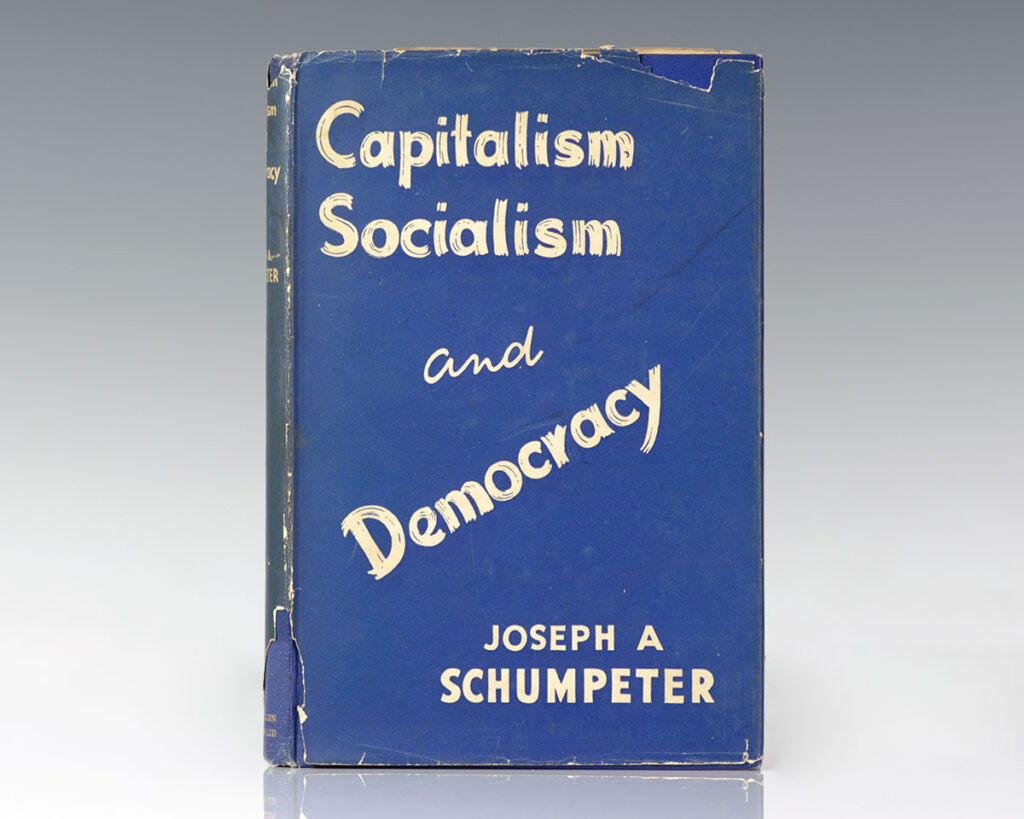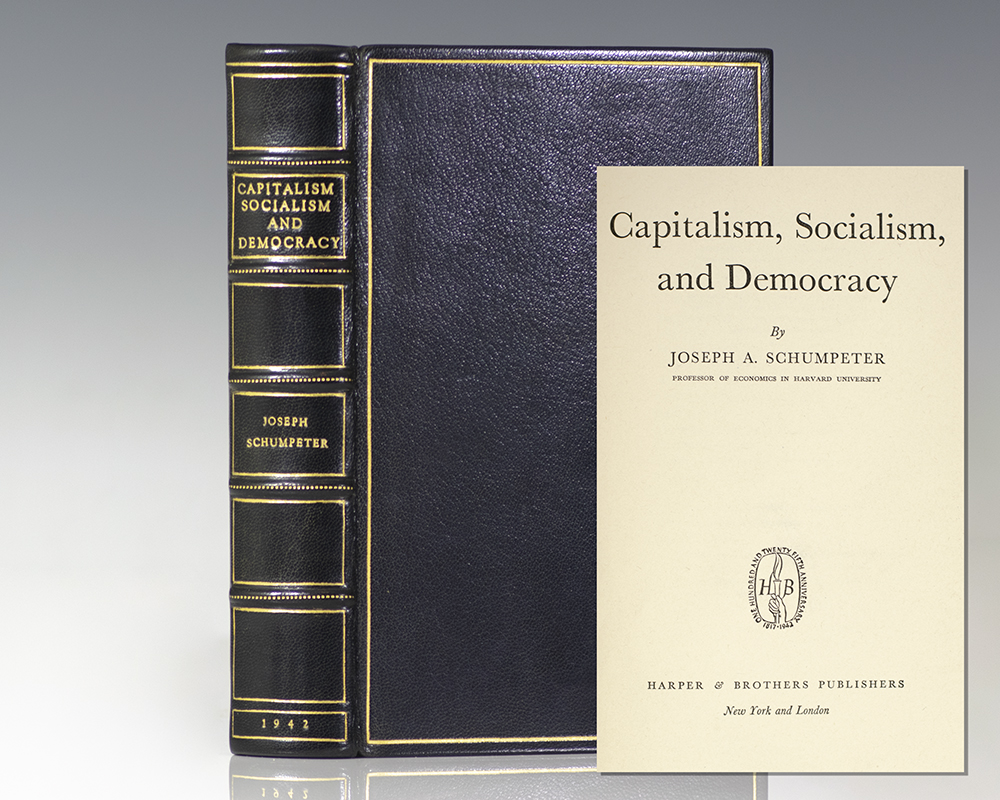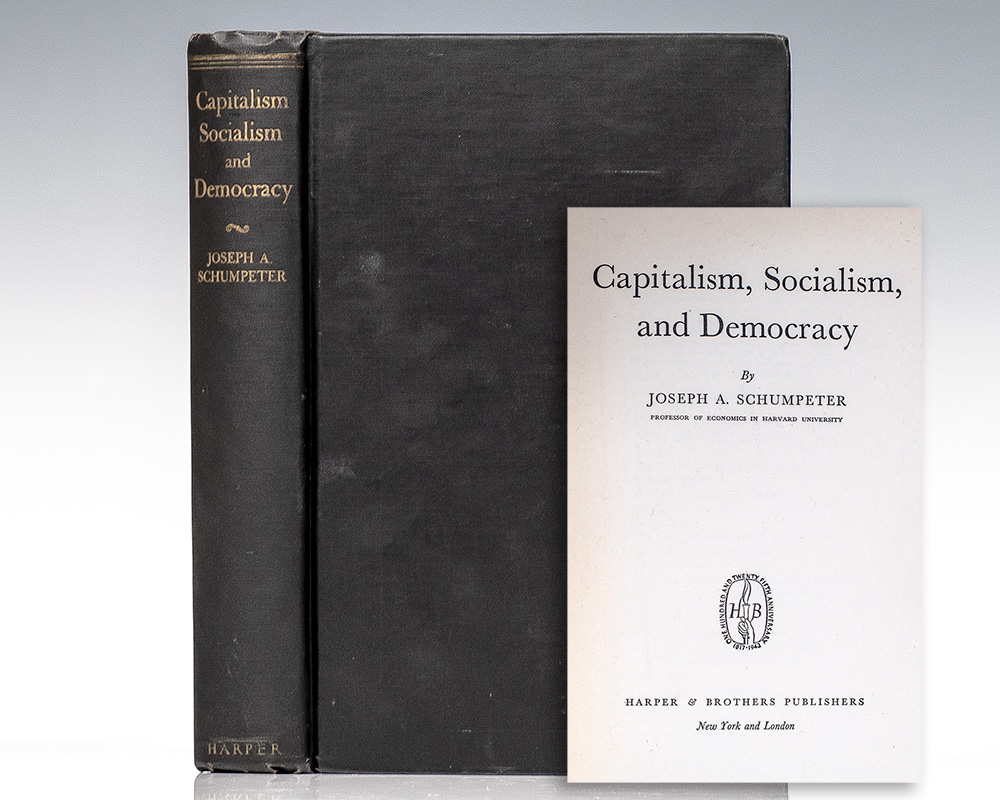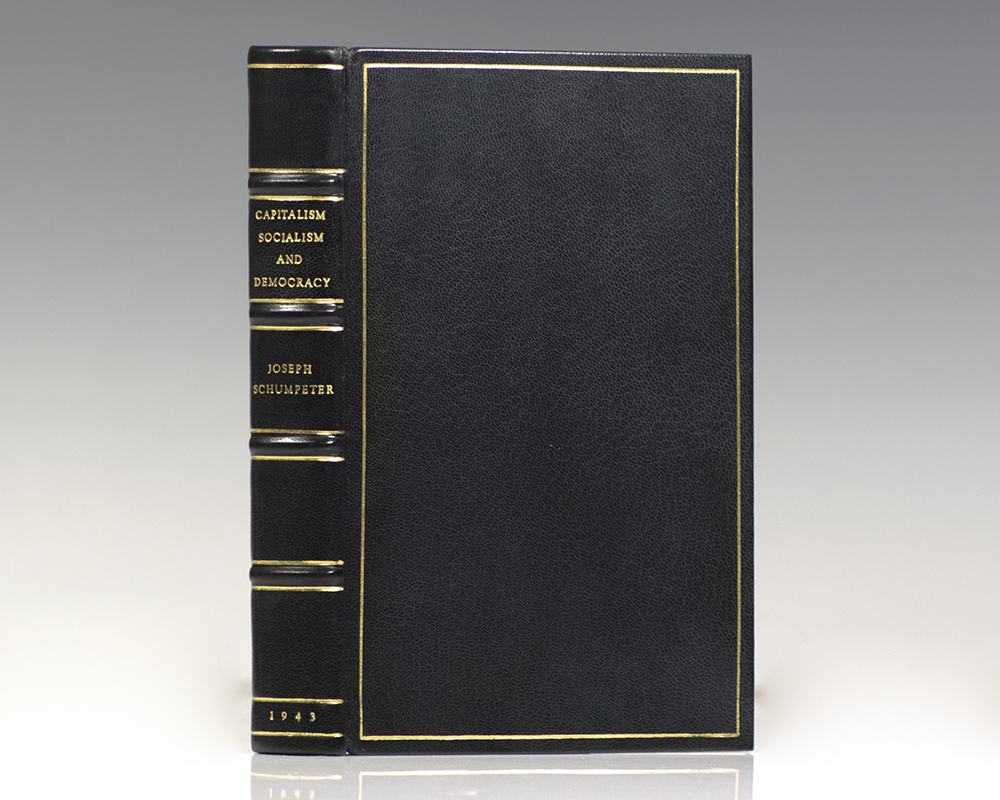
SCHUMPETER, Joseph.
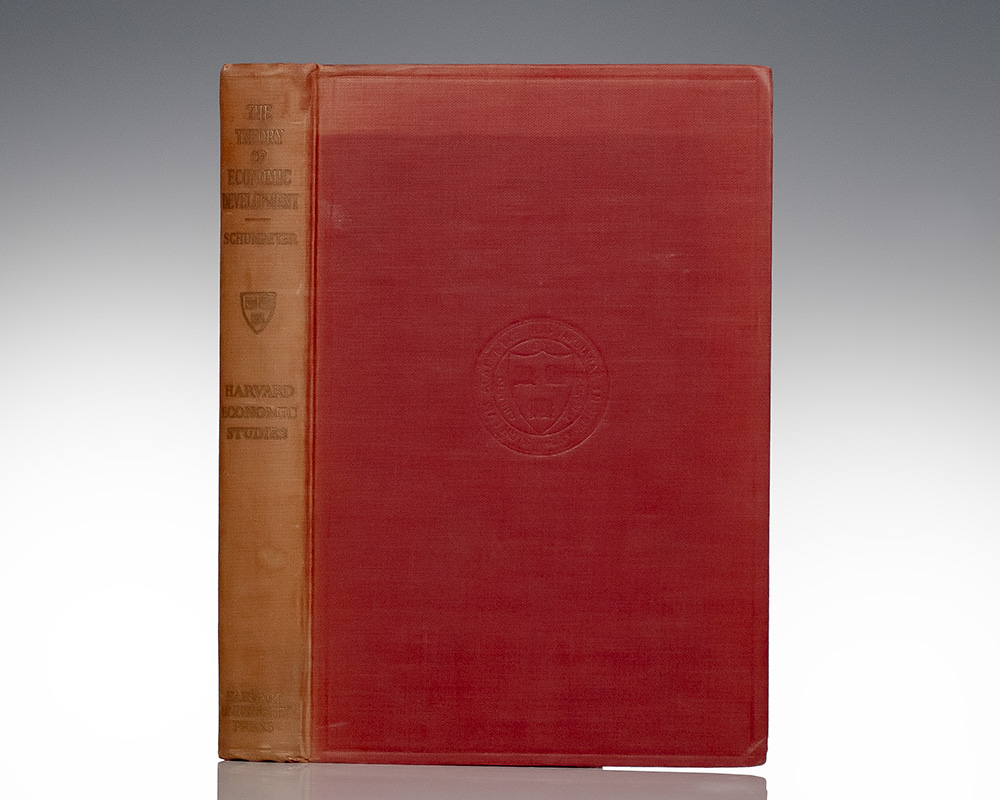
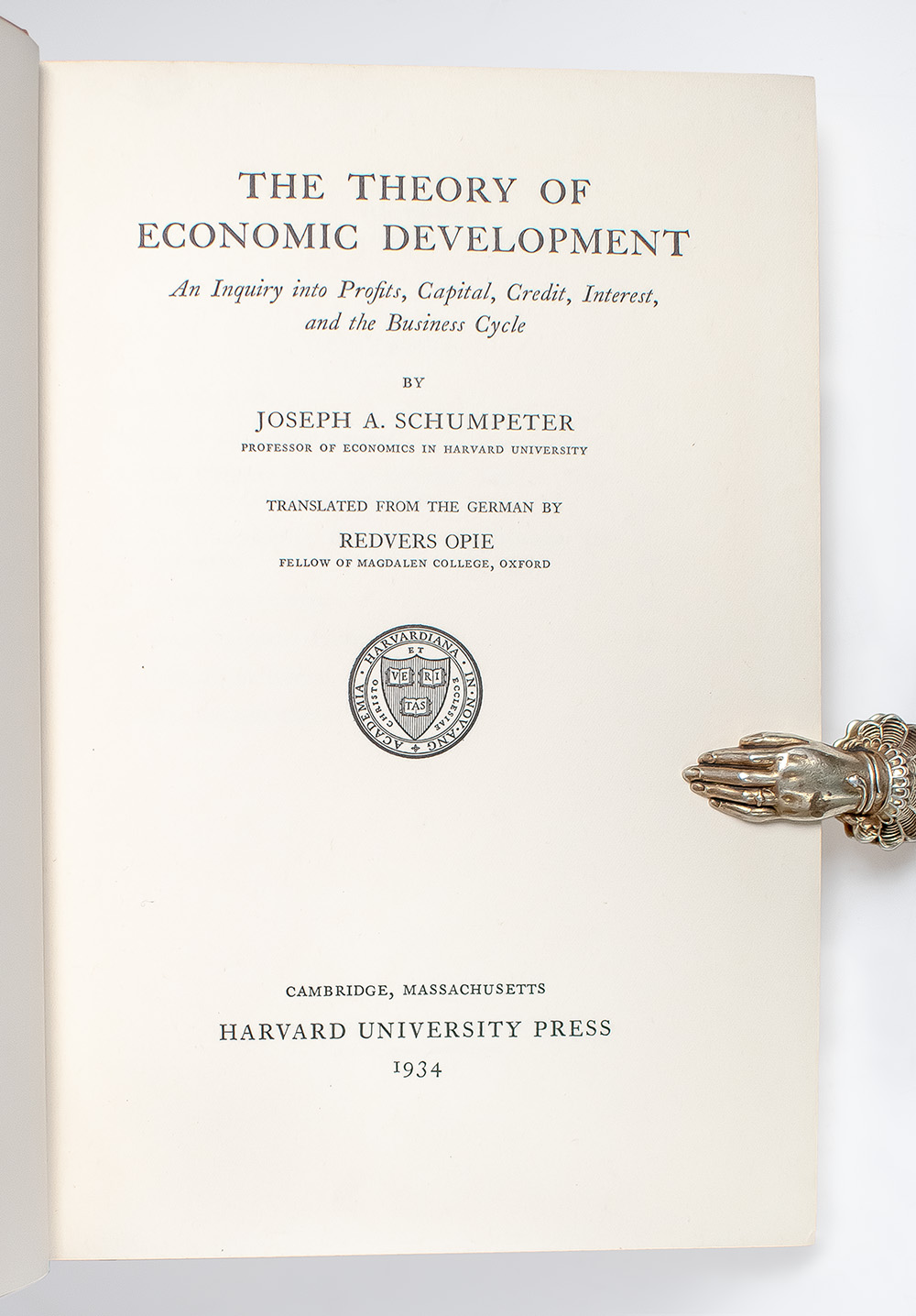
The Theory of Economic Development. An Inquiry into Profits, Capital, Credit, Interest, and the Business Cycle.
Rare First Edition of Joseph Schumpeter's The Theory of Economic Development; From the Library of Tom E. Davis
Boston: Harvard University Press, 1934.
$750.00
In Stock
Item Number: RRB-148613
* Custom Clamshell Boxes are hand made by the Harcourt Bindery upon request and take approximately 60 days to complete
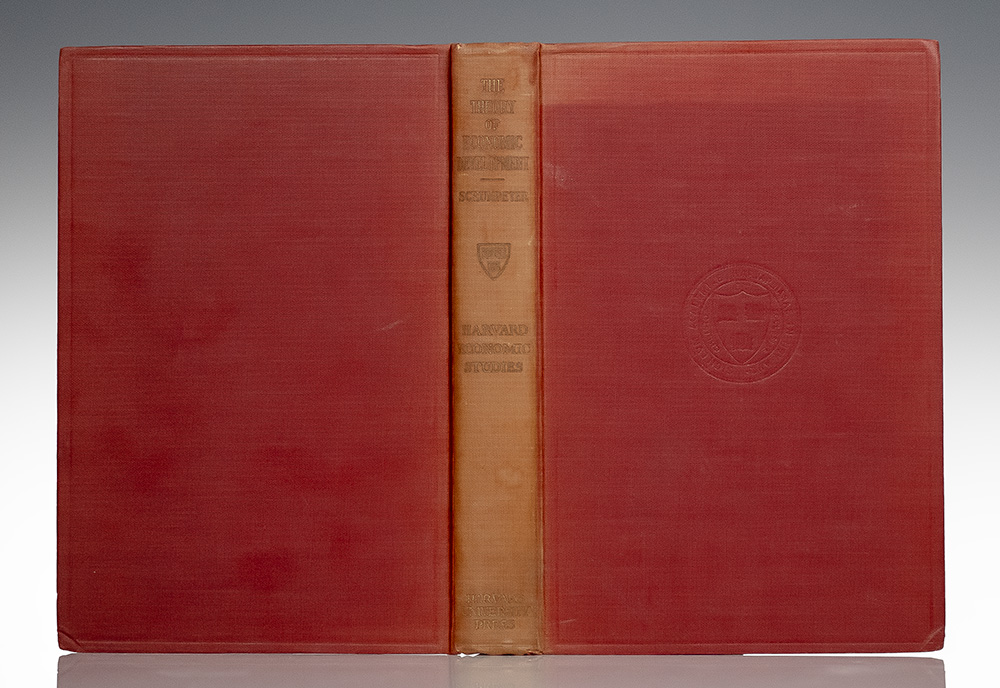
First edition of the economist's classic work, the author's earliest substantial version of what came to be known as the Schumpeterian system. Octavo, original cloth. In very good condition, toning to the spine. From the library of economist Tom E. Davis, with his name to the front free endpaper. Davis was a economics professor and chair of the economics at Cornell University and was an expert on economic development in Latin America. First editions are uncommon.
The work contains among the clearest statements of Schumpeter's radical conception of "circular flow", the business cycle, and the role of the entrepreneur. This translation features a new preface by the author. The Theory of Economic Development has been judged as Schumpeter's "most innovative work" (ANB). In it, Schumpeter "replaced Marx's greedy, bloodsucking capitalist by the dynamic innovating entrepreneur as the linchpin of the capitalist system, responsible not just for technical progress but the very existence of a positive rate of profit on capital. Distinguishing between 'inventions' and 'innovations', he stressed the fact that scientific and technical inventions amount to nothing unless they are adopted, which calls for as much daring and imagination as the original act of discovery by the scientist or engineer. Furthermore, the 'innovations' that count for economic progress consist of much more than the new machines that capture popular attention: they take the form of new products, new sources of supply, new forms of industrial and financial organization just as much as of new methods of production. The capitalist earns 'interest', but the entrepreneur earns 'profit' and without the dynamic change created by the entrepreneur, the rate of profit would soon fall to zero. His theory of the entrepreneur has ever since been the starting point for every subsequent discussion of entrepreneurship" (Blaug, pp. 215-16). This work was published as Volume XLVI in the Harvard Economic Studies series. Redvers Opie, the translator, was a personal friend of the author and a son-in-law of F. W. Taussig. Swedberg S.003. Mark Blaug, Great Economists before Keynes, 1985).
The Theory of Economic Development. An Inquiry into Profits, Capital, Credit, Interest, and the Business Cycle.
$750.00
In Stock
Other Books by this Author