
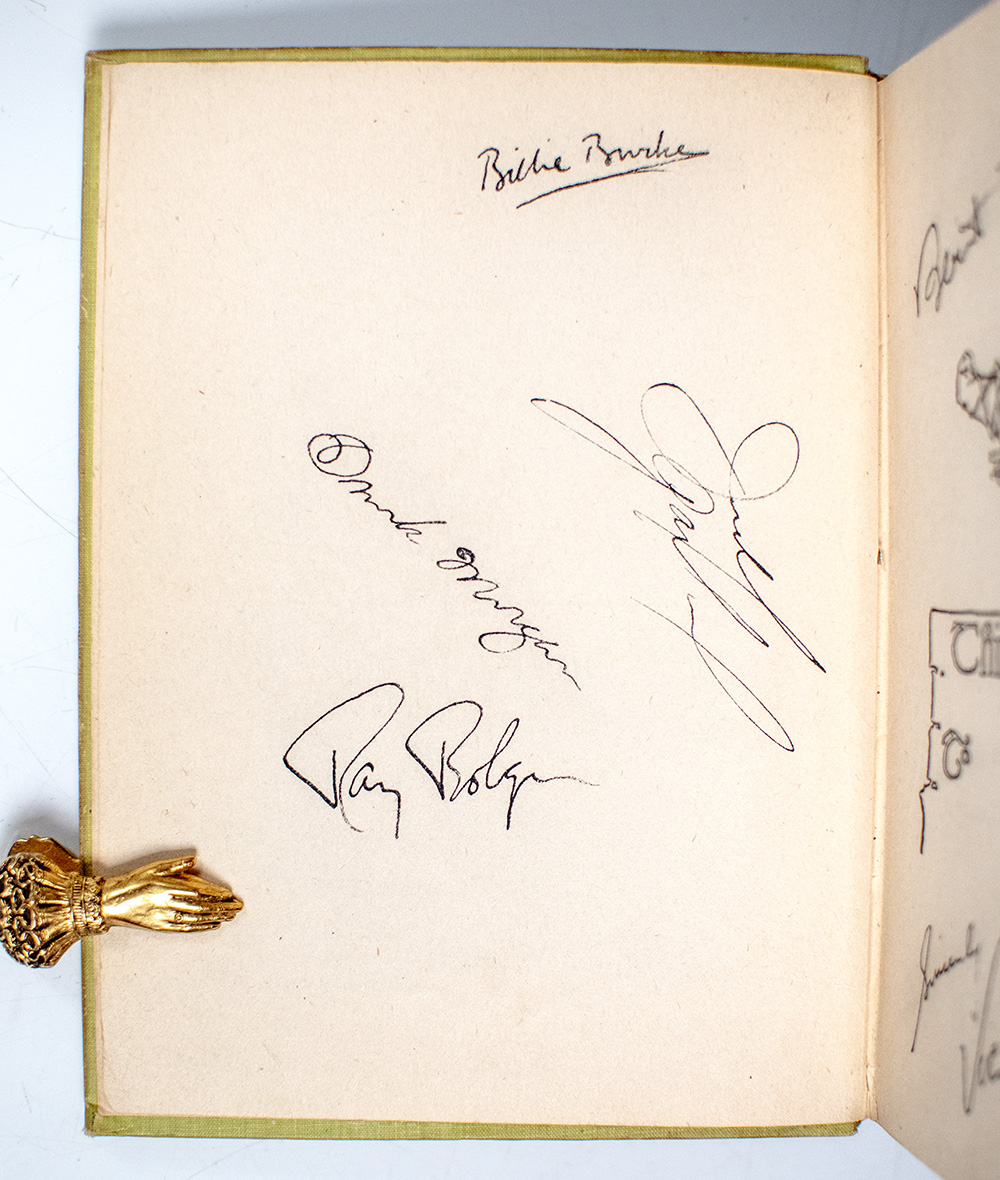
BAUM, L. Frank. Illustrated by John R. Neill. [Judy Garland; Billie Burke; Ray Bolger; Frank Morgan; Bert Lahr; Margaret Hamilton; Jack Haley; Victor Fleming.
The Magic of Oz.
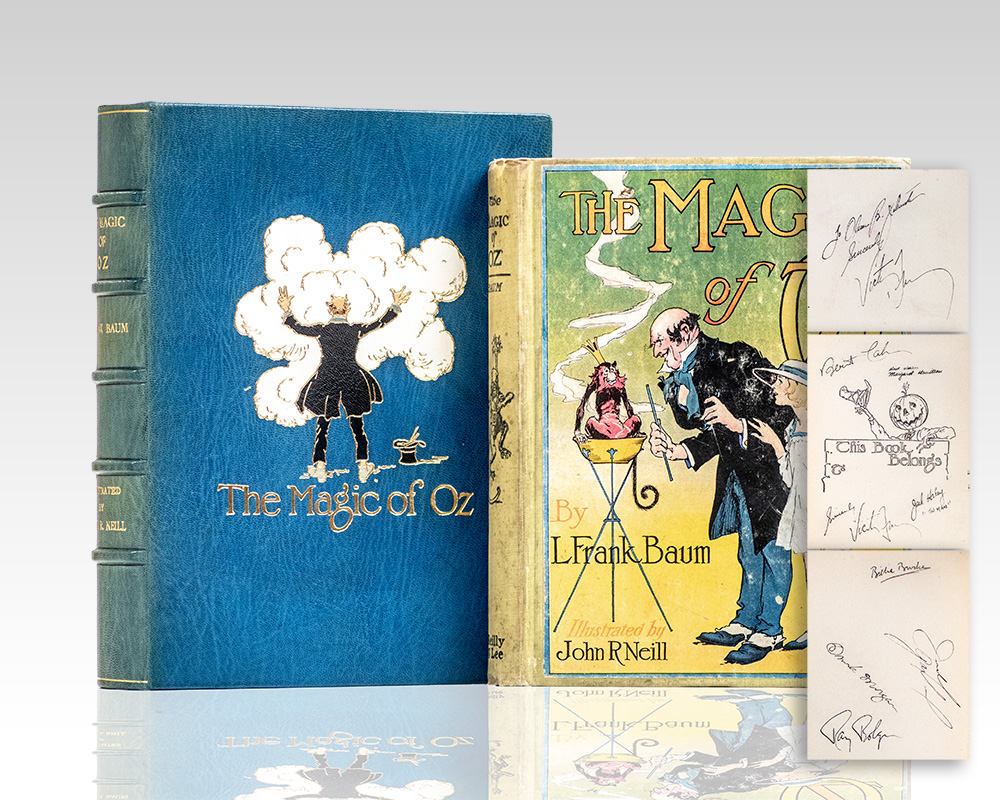
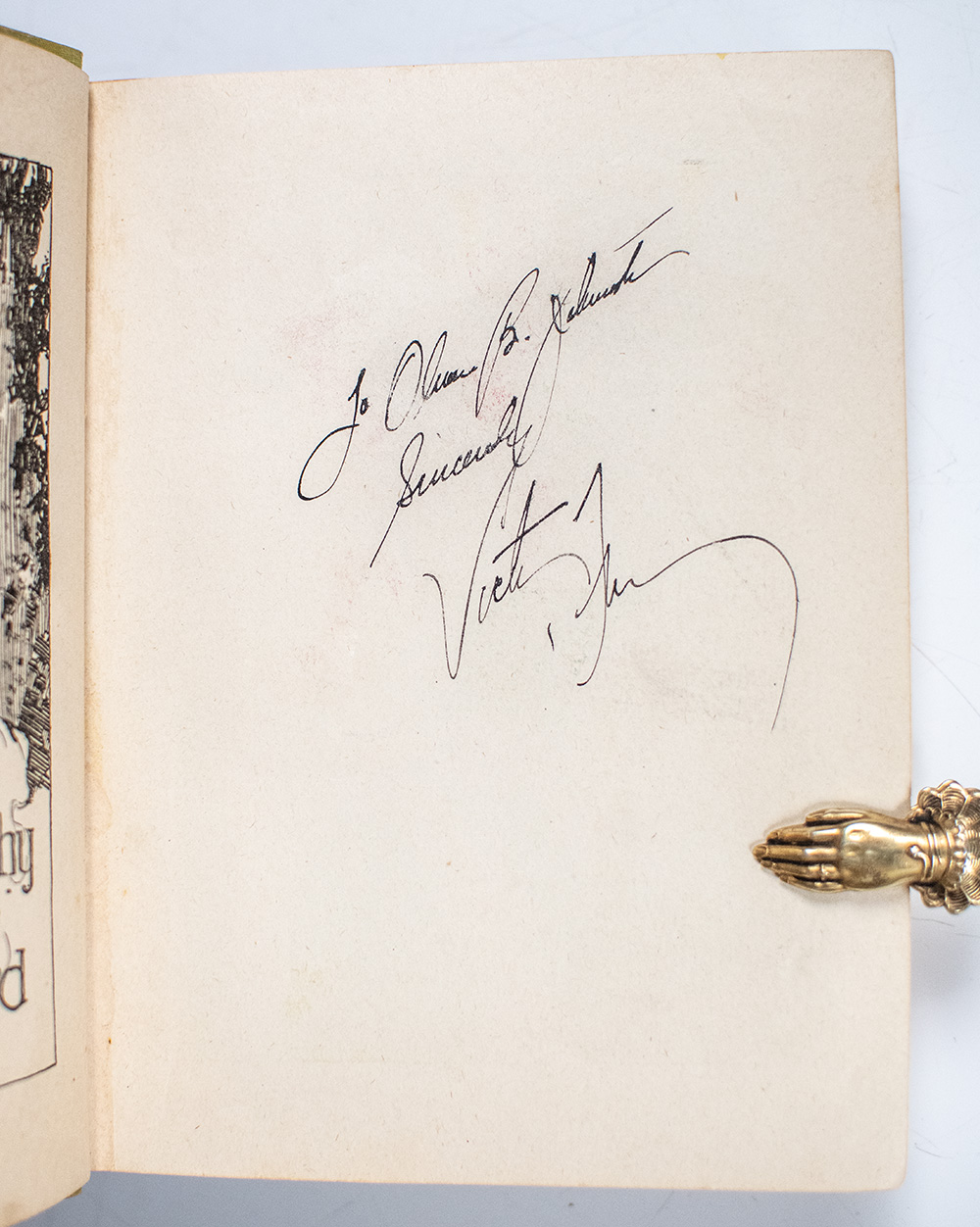
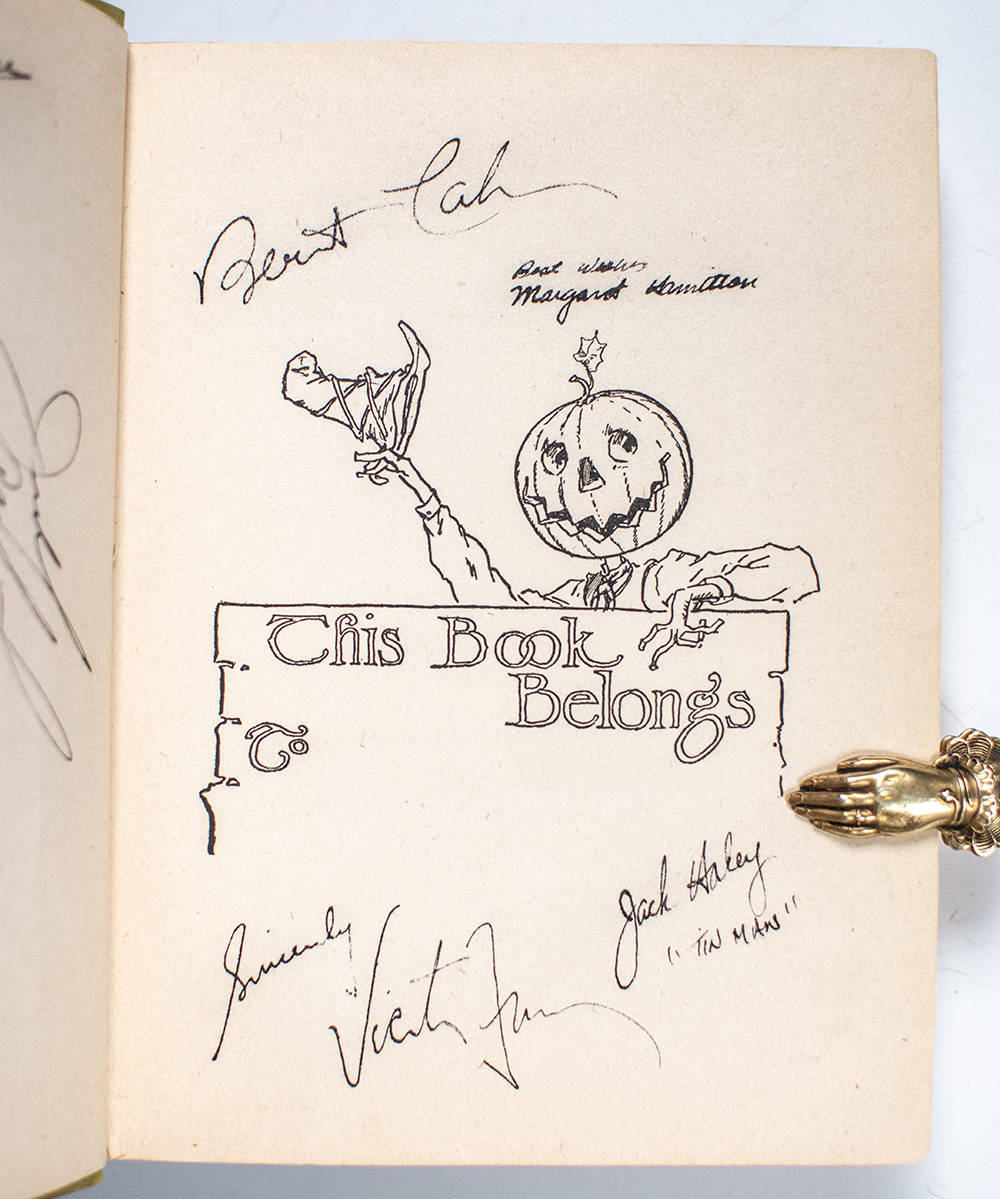
First edition, first printing of L. Frank Baum's The Magic of Oz; signed by seven leading members of The Wizard of Oz film cast including Judy Garland
Chicago: The Reilly & Lee Co, 1919.
$65,000.00
In Stock
Item Number: RRB-149586
* Custom Clamshell Boxes are hand made by the Harcourt Bindery upon request and take approximately 60 days to complete
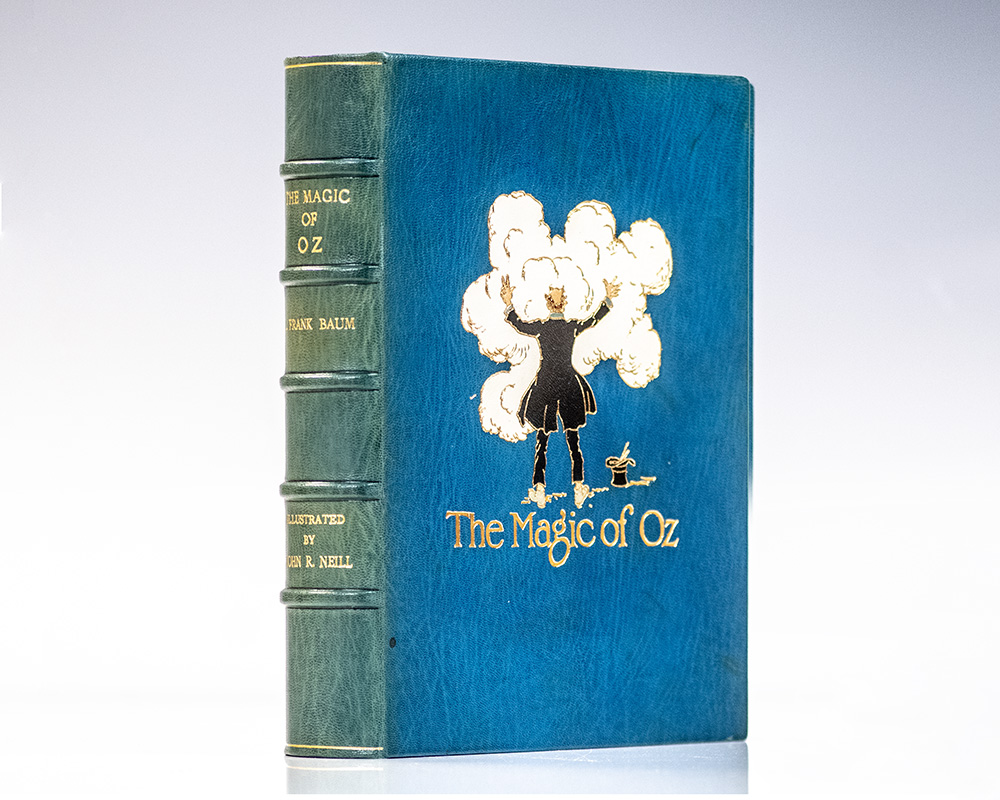
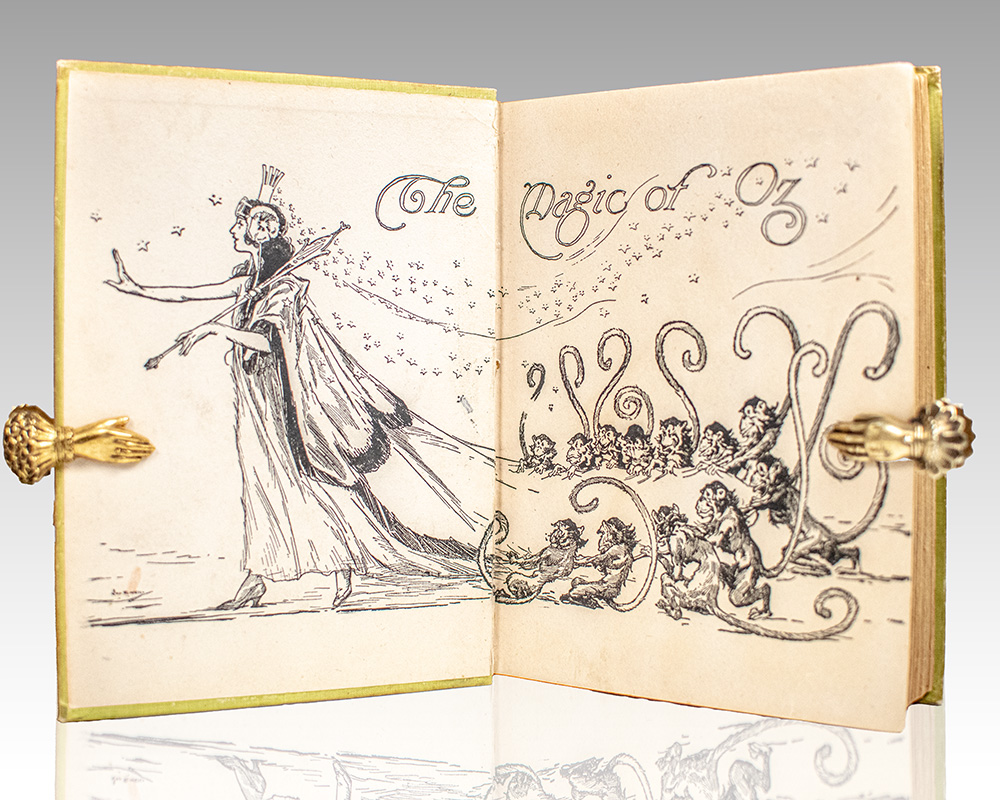
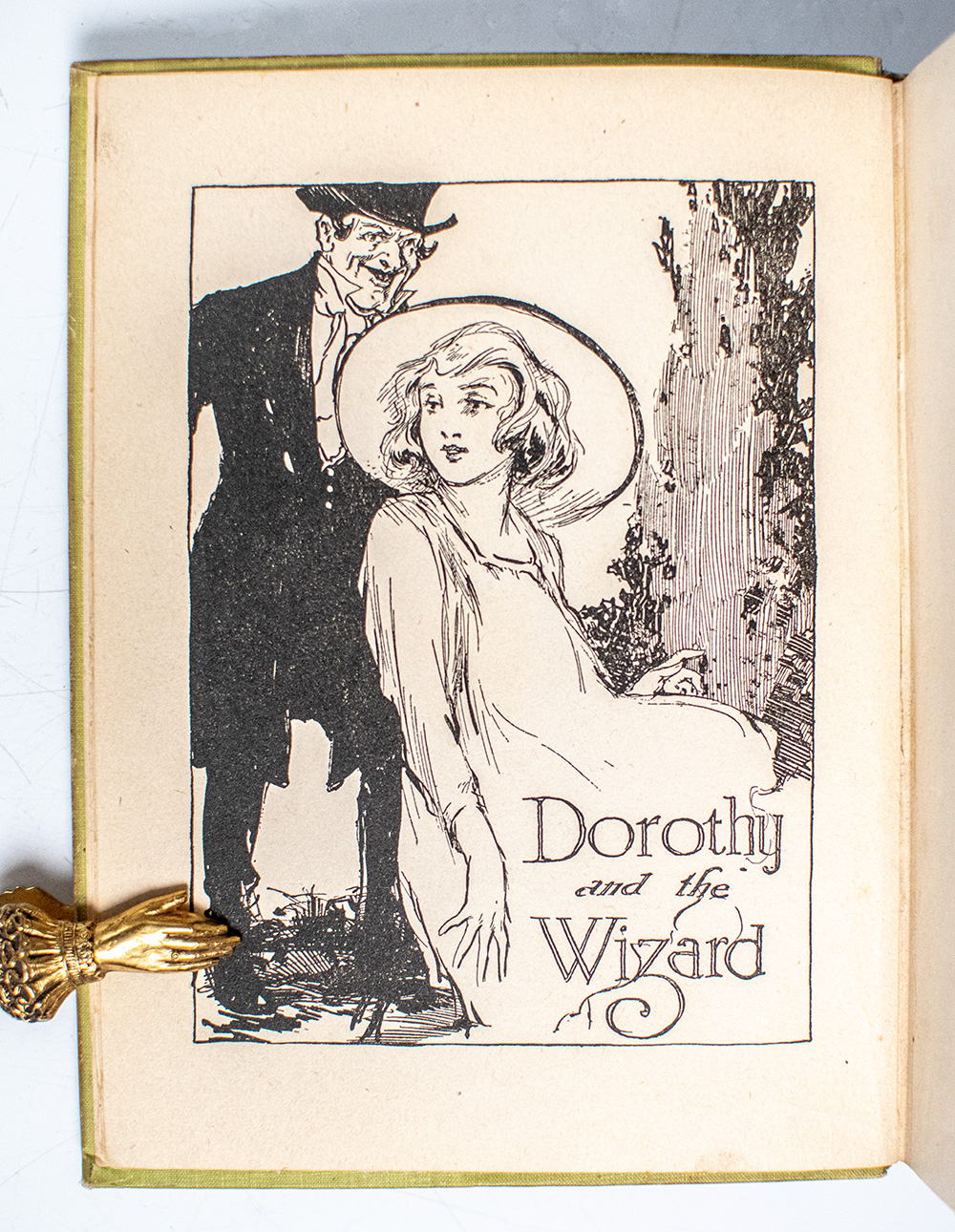
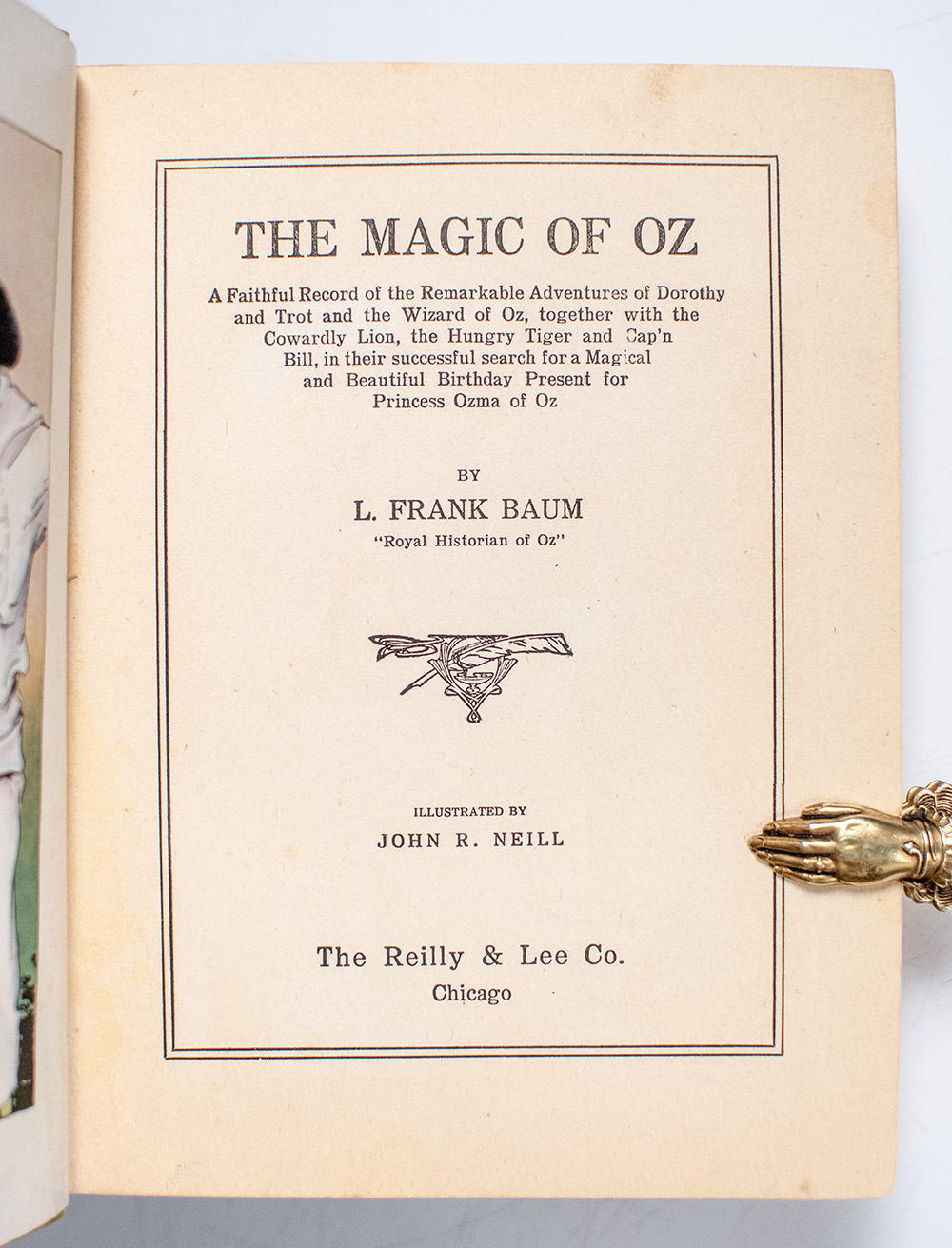
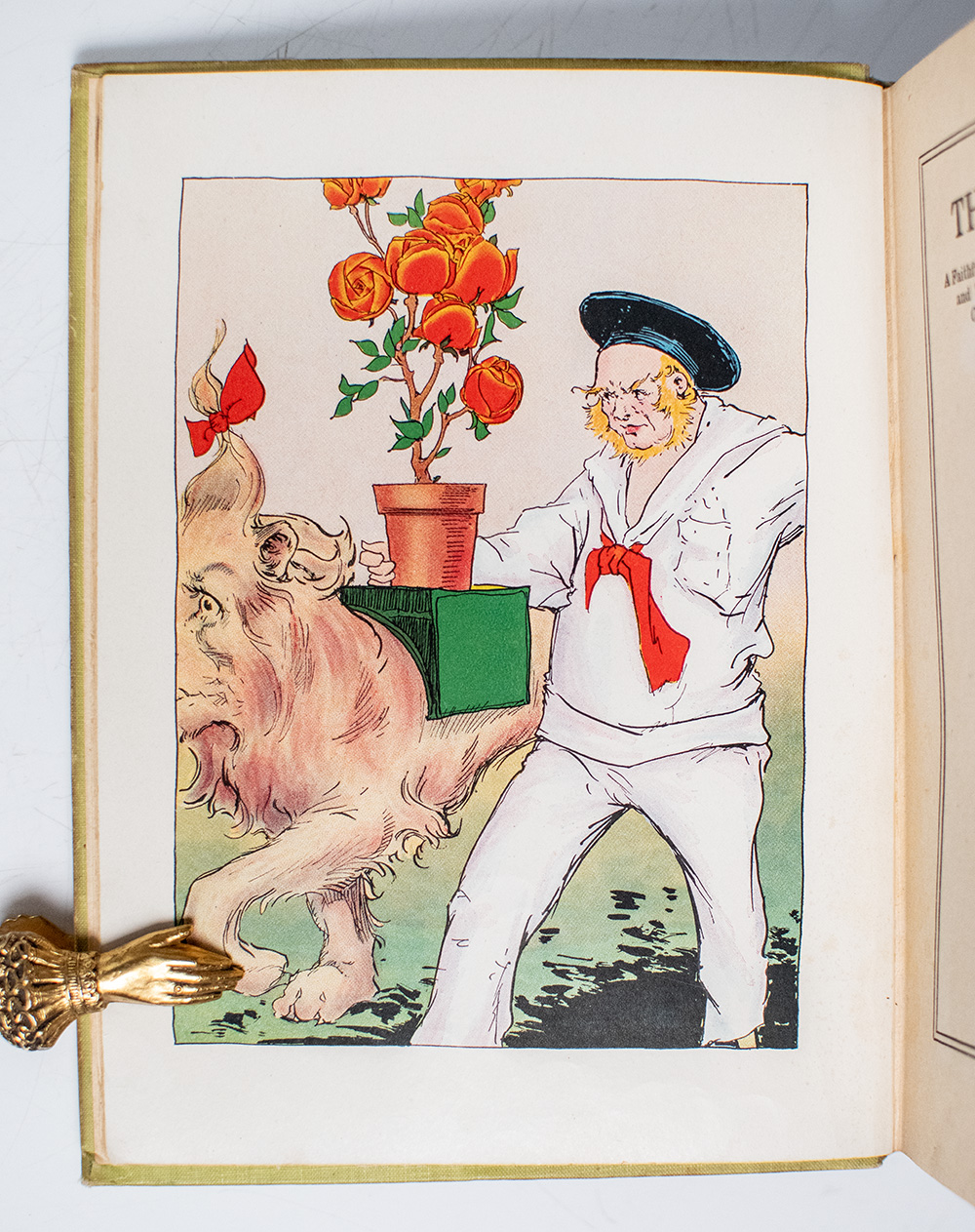
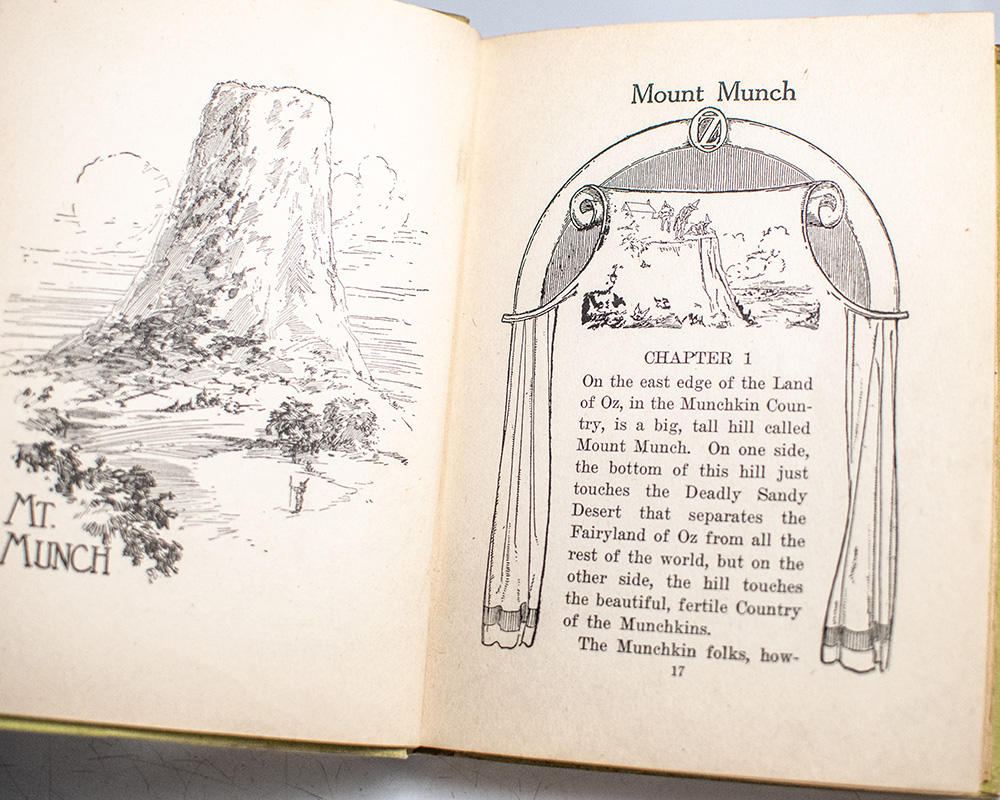
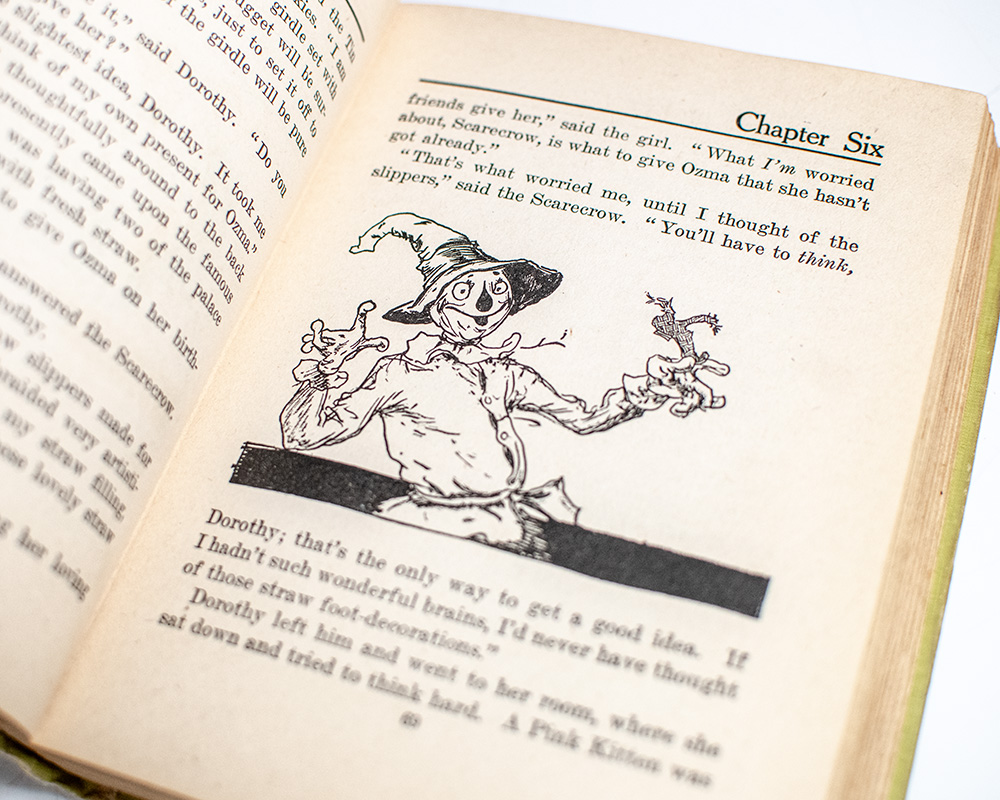
First edition, first printing of this classic work in L. Frank Baum’s celebrated Oz series, the last of the series to appear during Baum’s lifetime, as he passed away shortly before its release in 1919. First printing with the verso of the ownership page listing Baum titles through The Tin Woodman of Oz. Octavo, original publisher's full lime green cloth with pictorial label affixed to front board, spine stamped in black with "Reilly" of the publisher's imprint measuring 7/8 in., black-and-white pictorial endpapers, illustrated with frontispiece and 9 colored plates by John R. Neill. Signed by seven leading cast members from The Wizard of Oz (1939) film Judy Garland (1922-1969), Billie Burke (1884-1970), Ray Bolger (1904-1987), Frank Morgan (1890-1949), Bert Lahr (1895-1967), Margaret Hamilton (1902-1985), Jack Haley (1897-1979), and director Victor Fleming (1889-1949), additionally inscribed by Fleming on frontispiece verso. The 1939 film adaptation The Wizard of Oz, directed by Victor Fleming and produced by Metro-Goldwyn-Mayer, was revolutionary in its visual and technical achievements. While it was not the first color film, it was among the earliest and most influential to use Technicolor as a deliberate artistic device rather than a novelty. The dramatic shift from the sepia-toned realism of Kansas to the vibrant, multicolored world of Oz symbolized Dorothy’s passage from ordinary life into the realm of imagination and self-discovery. This use of color served both aesthetic and thematic purposes, illustrating the emotional and psychological contrasts between confinement and freedom. The film’s combination of groundbreaking visuals, memorable music, and universal moral lessons elevated it beyond a children’s fantasy, turning it into a defining moment in cinematic history. The Wizard of Oz thus demonstrated how emerging technologies could be harnessed to deepen narrative meaning and create enduring cultural myths. In very good condition, lacking plates opposite pp. 48 & 236 (though it seems they were never inserted to begin with). Housed in a custom full morocco clamshell box by Asprey with pictorial morocco onlays. An exceptional example, rare and desirable signed by seven members of the groundbreaking cinematic masterpiece including Judy Garland.
The Magic of Oz.
$65,000.00
In Stock
Other Books by this Author