


WELLS, H.G. [Rebecca West].
The Autocracy of Mr. Parham: His Remarkable Adventures in this Changing World.
London: William Heinemann, 1930.
We're sorry, this item has sold.
+$500
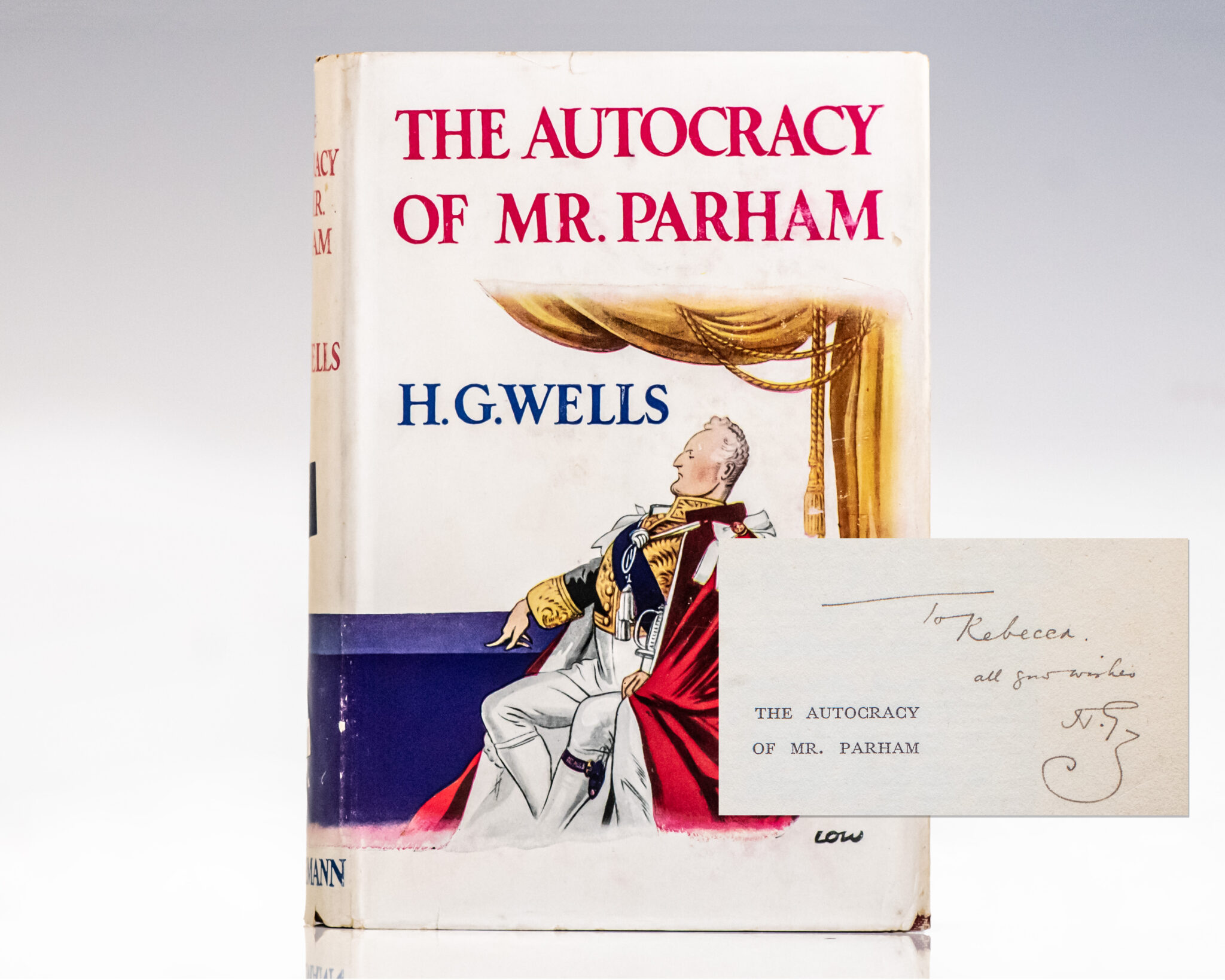
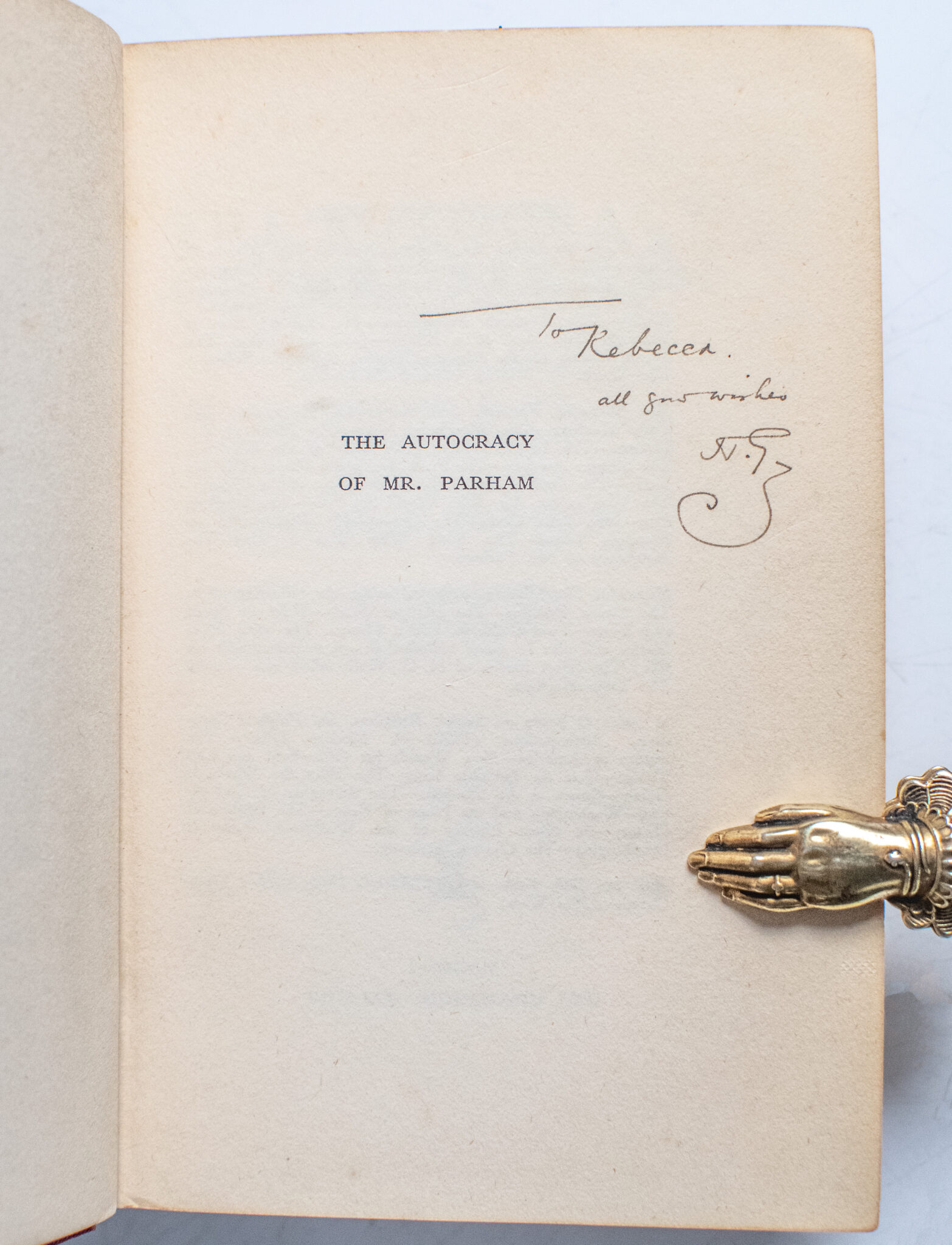
H.G. Wells' The Autocracy of Mr. Parham: His Remarkable Adventures in this Changing World; Inscribed by Him to Fellow Writer and Lover Rebecca West
First edition, early printing of this novel which was praised by Bertrand Russell, inscribed by him to lover and fellow writer Rebecca West. Octavo, original cloth, with 10 illustrations by David Low. Association copy, inscribed by the author, "To Rebecca all good wishes H. G." Rebecca West and H.G. Wells Rebecca West and H.G. Wells had a passionate, decade-long affair that produced a son, Anthony, and significantly impacted both their lives and careers; she was a young, rising feminist writer when they met, and he was a famous, married author, with their relationship ending due to incompatible goals, though they remained friends, and West went on to become a major literary figure herself. Near fine in a near fine dust jacket with light rubbing. An exceptional association.
Published in London by William Heinemann in 1930, The Autocracy of Mr. Parham: His Remarkable Adventures in This Changing World is one of H. G. Wells’s most pointed political satires and a strikingly prescient fable of the European temptation toward dictatorship on the eve of the fascist decade. The novel’s protagonist, Mr. Parham, is a vain, conservative, and faintly ridiculous Oxford don of middling achievement who has long nursed the private conviction that he, if given the chance, could set the world to rights. His chance arrives in the form of a séance organized by his wealthy industrialist patron Sir Bussy Woodcock, at which Parham is possessed by what he takes to be the Master Spirit of Europe, and awakes to find himself the Lord Paramount of Britain, poised to lead the nation into a glorious new imperial war. What follows is Wells at his most mischievous and most serious at once: a sustained satirical demolition of the whole mentality of great-power nationalism, delivered through the increasingly frantic adventures of a man whose dream of command collapses on contact with the modern world of mass politics, modern weapons, and the ungovernable energies of ordinary people. Written as Mussolini’s Italy was entering its second decade and Hitler’s National Socialists were about to break through at the German polls, the book was accompanied in its first edition by the superb political caricatures of David Low, whose line drawings of Parham in his various dictatorial poses remain among the most memorable illustrations in any Wells first edition. First printings in the original cloth and in the original dust jacket have become uncommon, and the novel stands today as one of the most unjustly neglected of Wells’s later works and one of the earliest serious literary warnings against the authoritarian turn that was about to engulf Europe.