

FRANKLIN, Benjamin.[Jonathan Williams].
Philosophical and Miscellaneous Papers.
London: C. Dilly, 1787.
$200,000.00
In Stock
Item Number: RRB-152822
+$500
Exceptionally Rare First Edition, Presentation Copy of Benjamin Franklin's Philosophical and Miscellaneous Papers; Inscribed by Benjamin Franklin to His Grand-Nephew Jonathan Williams
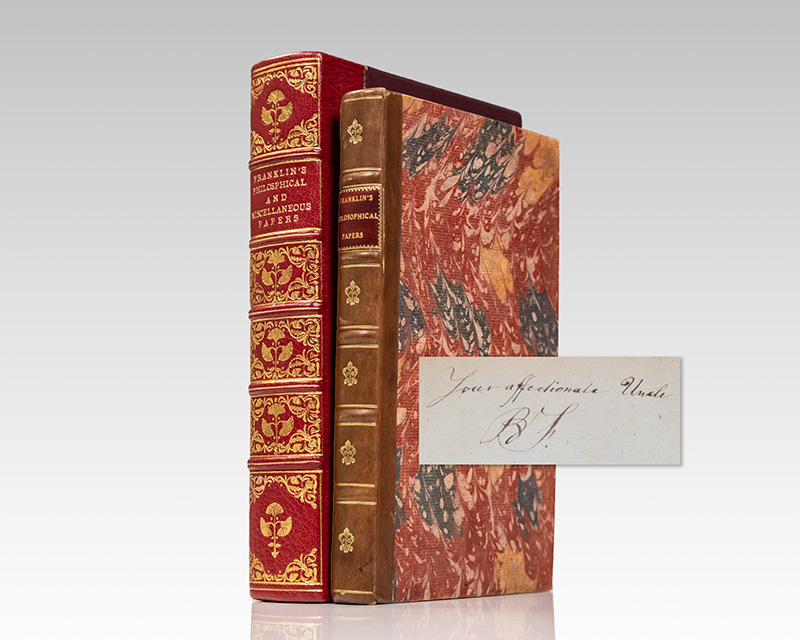
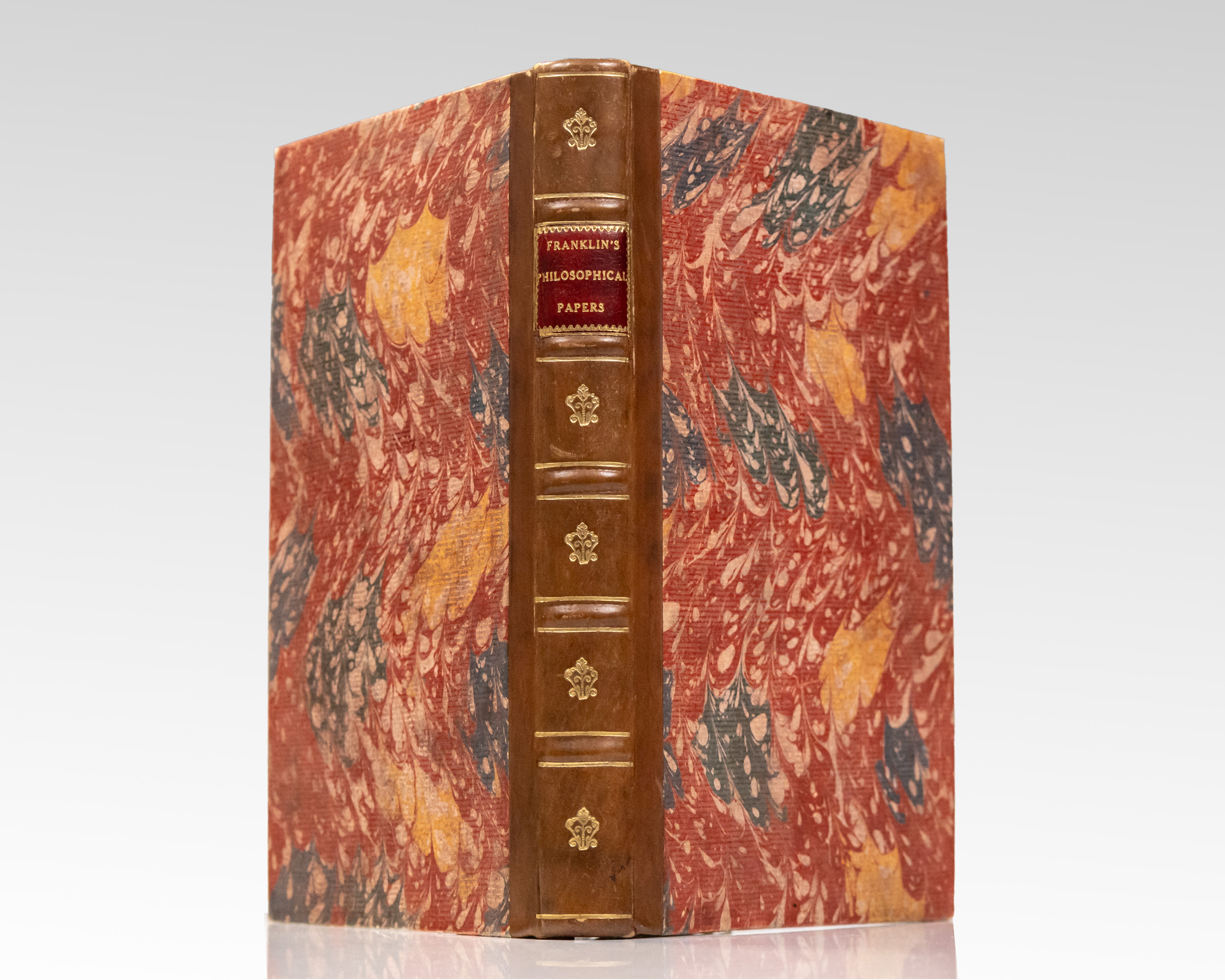
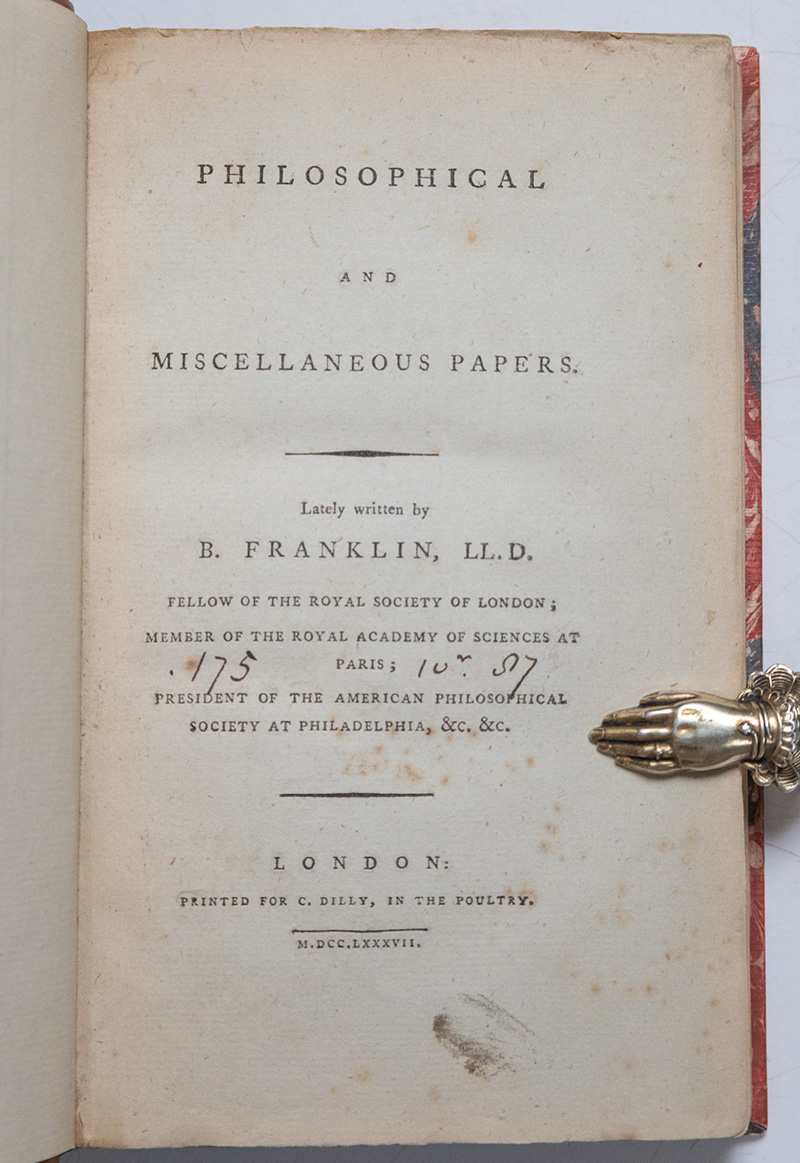
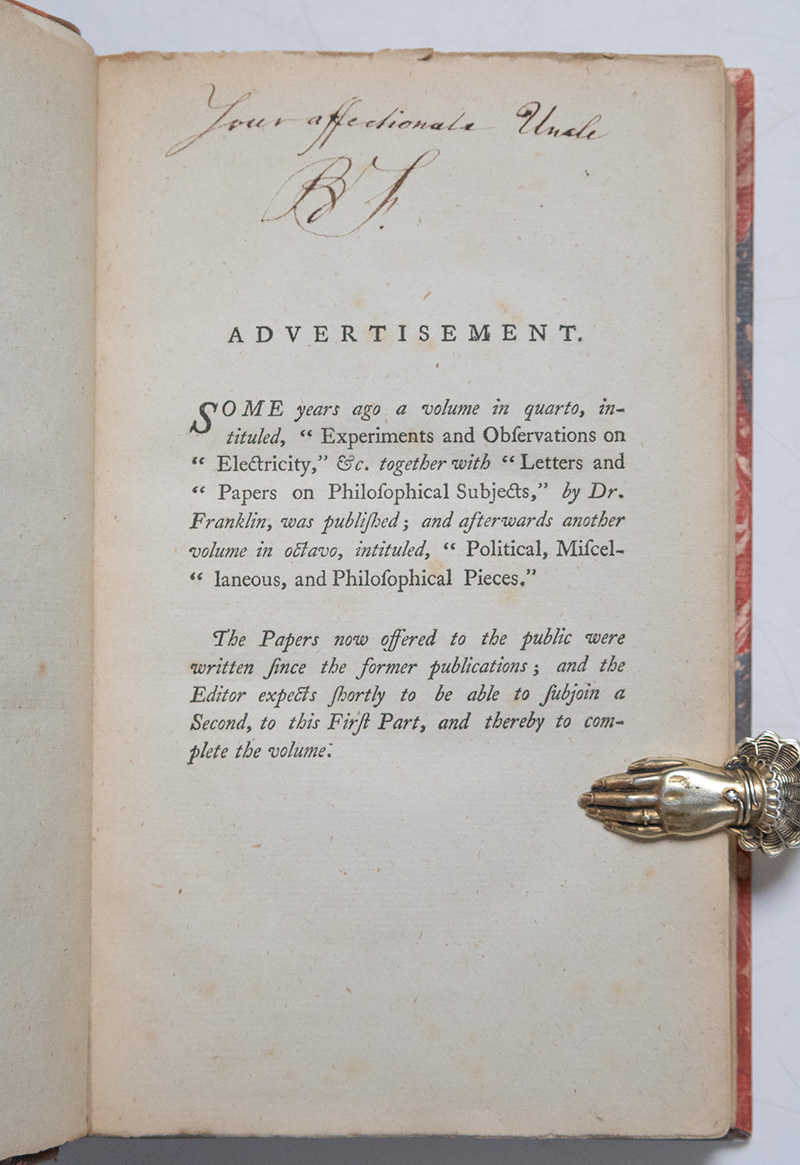
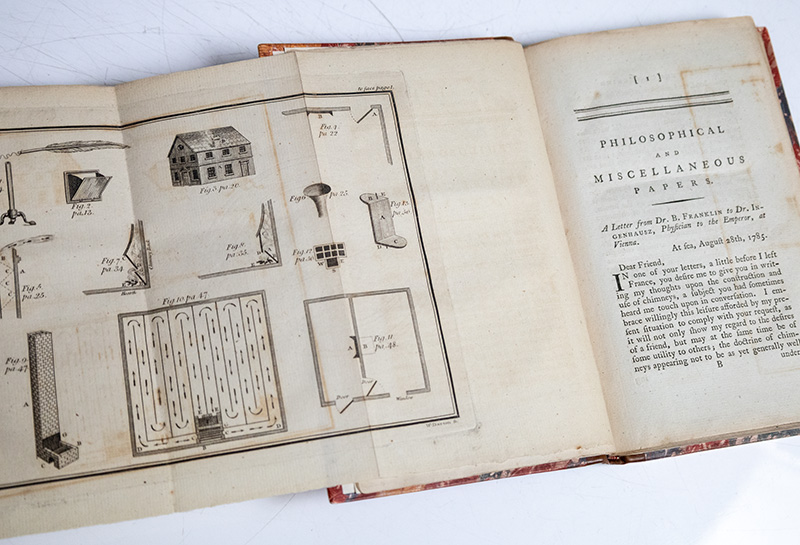
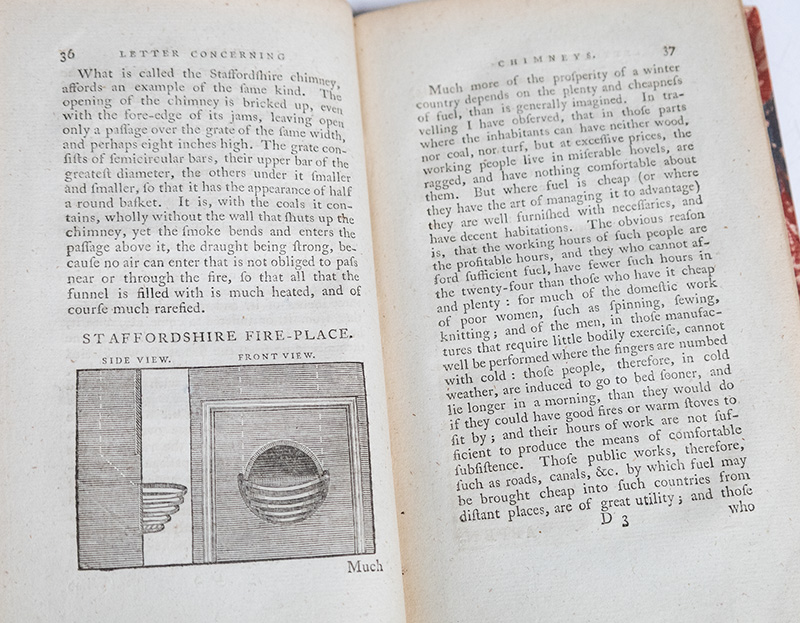
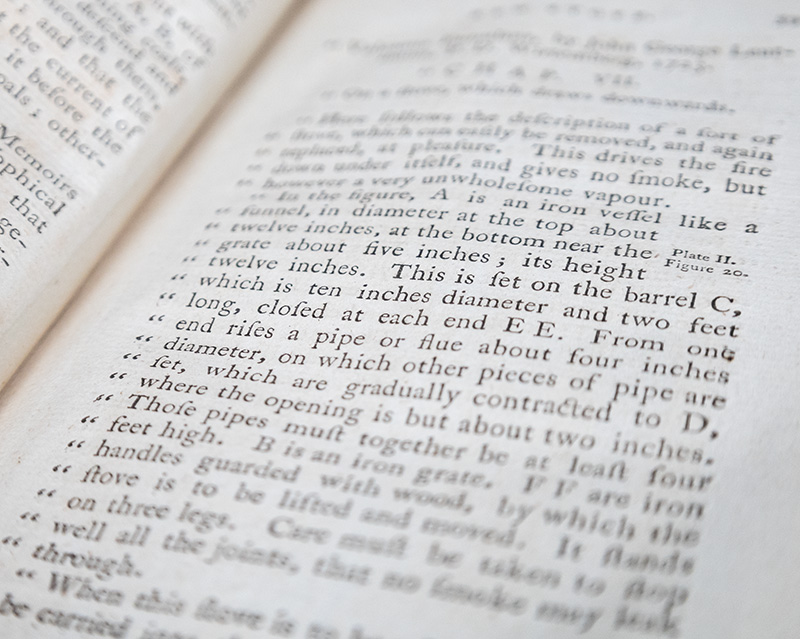
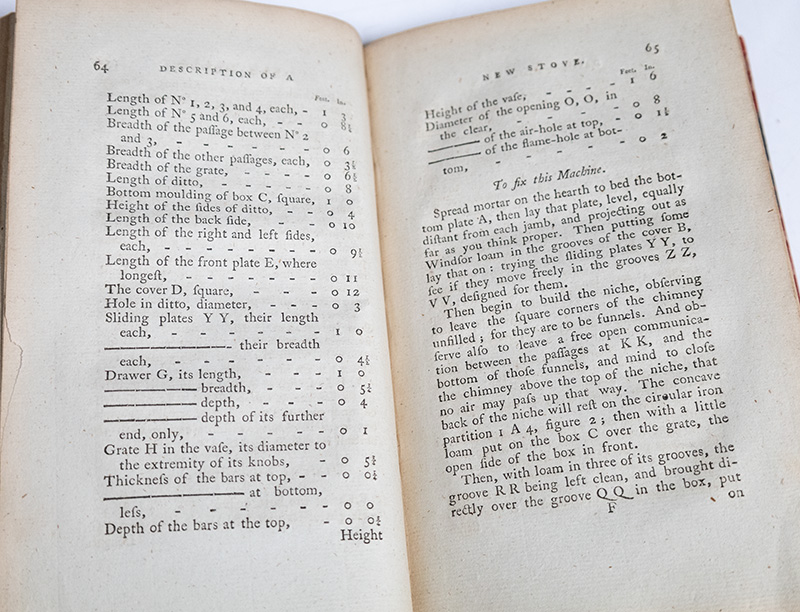
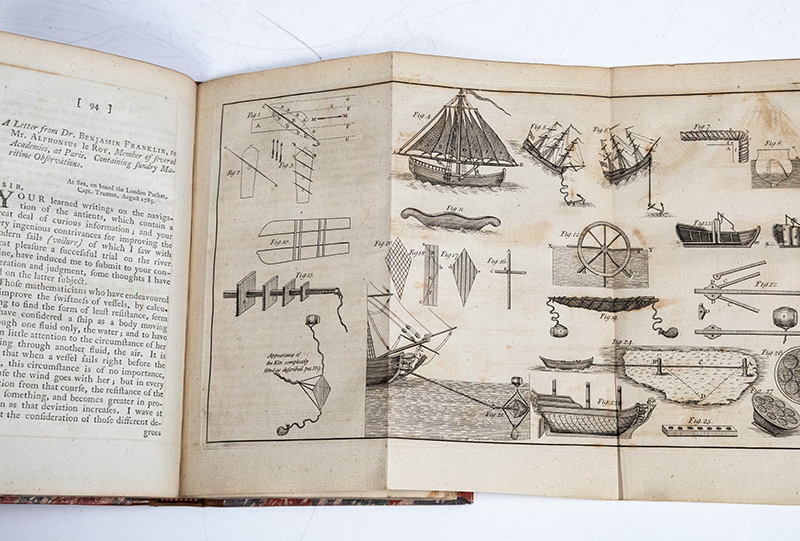
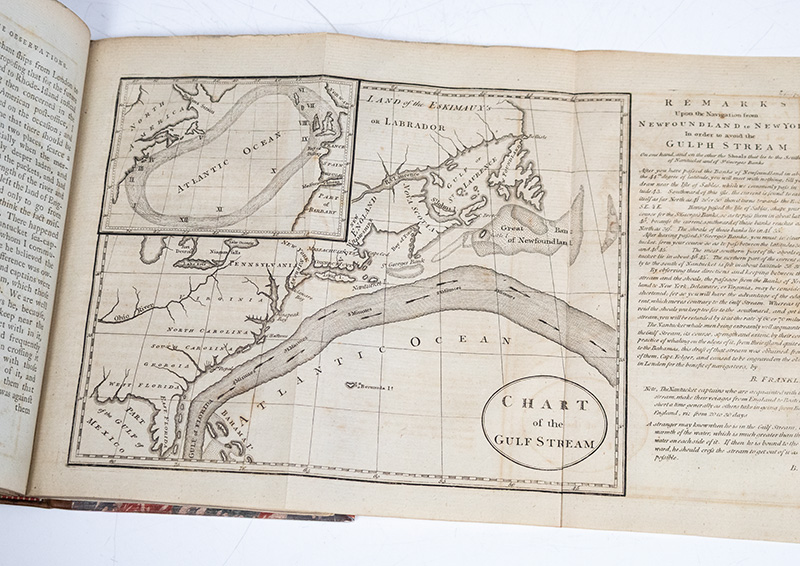
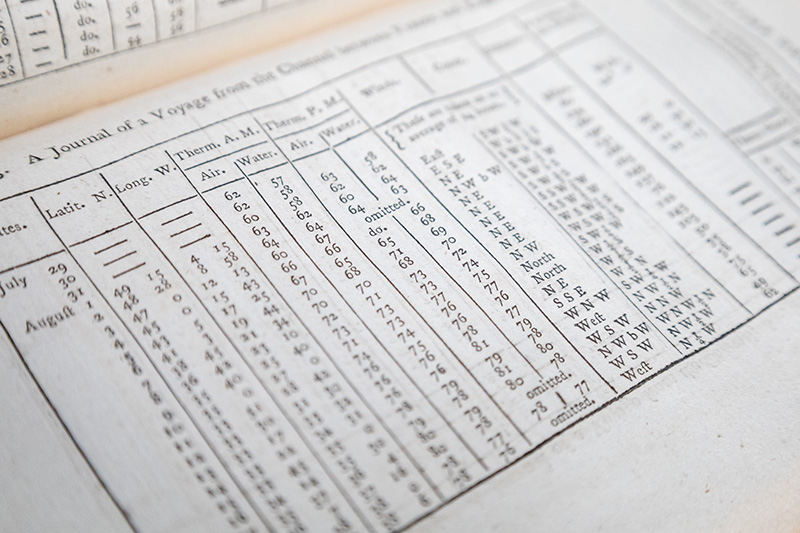
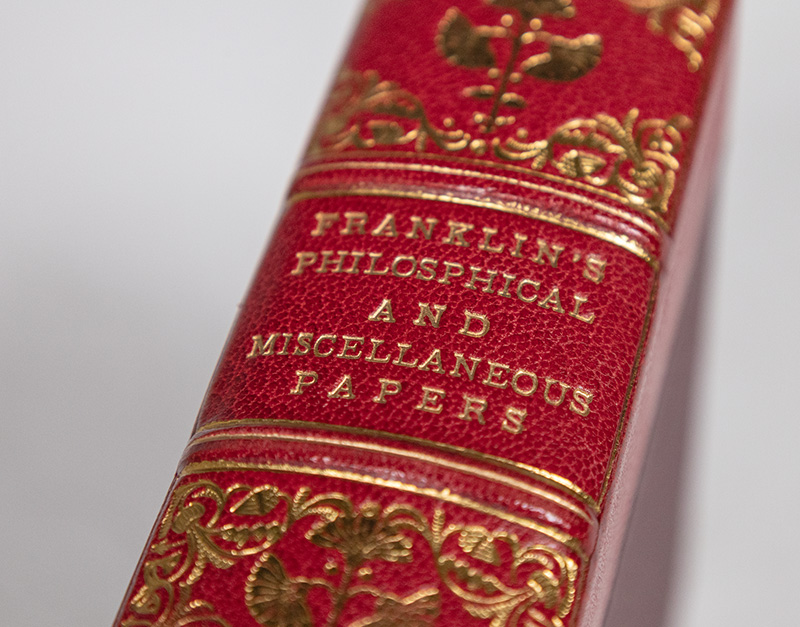
First edition of the final collection of Benjamin Franklin’s writings published in his lifetime, a rare presentation copy inscribed by Franklin to his grand-nephew. Octavo, bound in half calf over marbled boards with gilt stamping and ruling to the spine in six compartments within raised bands, morocco spine label lettered in gilt, advertisement leaf and four folding plates including the celebrated folding chart of the Gulf Stream and depictions of the Franklin stove. Presentation copy, inscribed by Benjamin Franklin on the advertisement leaf, “Your affectionate Uncle BF,” to his grand-nephew Jonathan Williams, who served for many years as Franklin’s trusted assistant in England and France and returned with him to America in 1785. Franklin had taken the young Williams under his wing during his years as America’s envoy in London and Paris, entrusting him with his correspondence and affairs and coming to regard him with genuine affection. Writing to his niece, Williams’s mother, Franklin marveled that so young a man could remain, in a city as full of amusements as London, “as attentive to business, as diligent in it, and keeping as close at home till it was finished, as if it had been for his own profit" (Papers 18:55–56). The two remained close for the rest of Franklin’s life, a bond the warm inscription in this volume captures perfectly. Williams went on to become a scientist of note, an officer of the American Philosophical Society that Franklin had helped to found, and the author of an 1799 treatise on thermometrical navigation inspired by Franklin’s Gulf Stream studies. From the distinguished science library of Haskell F. Norman with his bookplate to the pastedown, subsequently acquired by renowned Americana collector Jay Snider with his small bookplate above Norman's. ESTC T59394; Ford 380; Howes B328; Norman 834; Sabin 25562. In near fine condition, with some offsetting from the plates. Edited by Edward Bancroft. Housed in a custom half morocco slipcase, gilt, with chemise. A superb association copy, uniting Franklin with the grand-nephew who was among his most trusted companions.
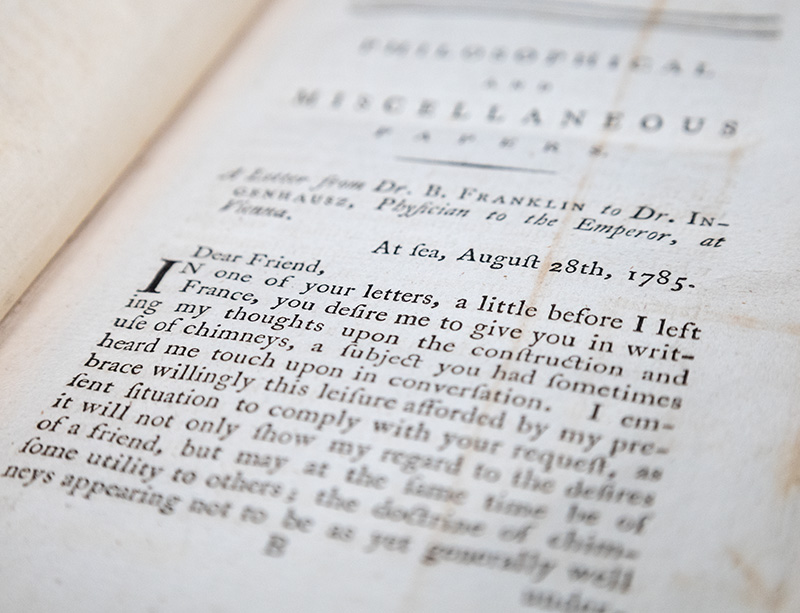
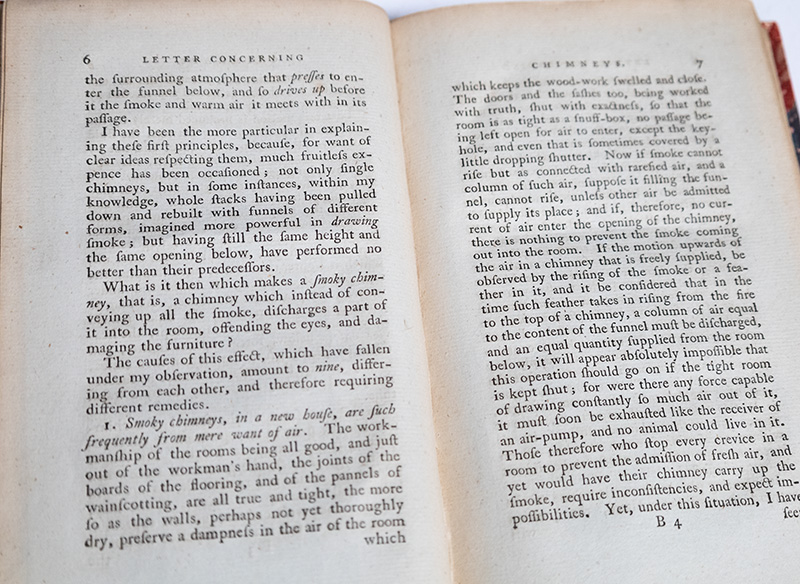
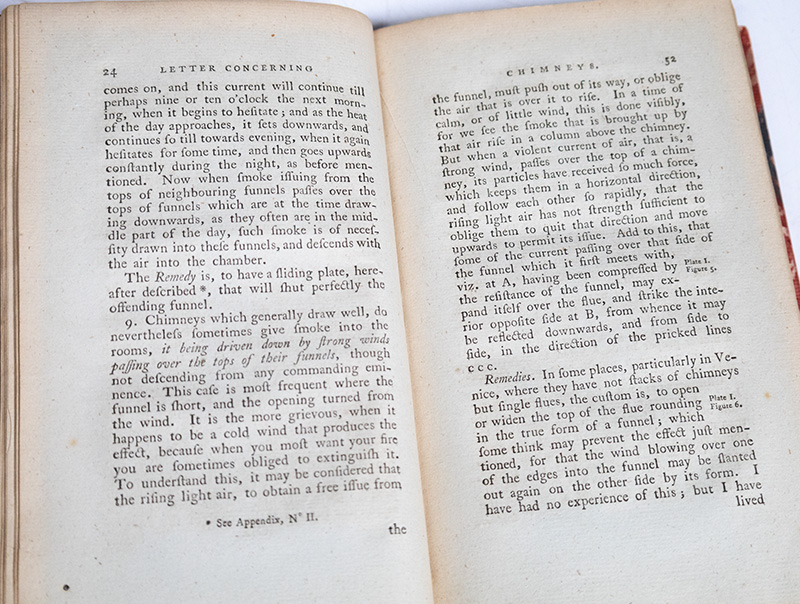
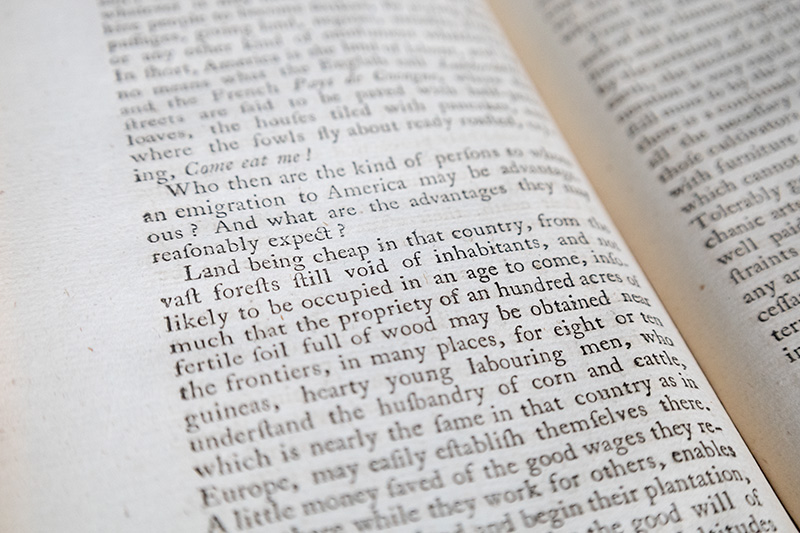
One of the most versatile and celebrated figures of the eighteenth century, Benjamin Franklin, printer, scientist, inventor, writer, and statesman, gathered together in this collection the philosophical and practical writings of his later years. Published in London in 1787 and edited by Edward Bancroft, it stands as the last collection of Franklin's works to appear in his lifetime. The advertisement leaf preceding the table of contents explains that the papers gathered here were written since Franklin's earlier collections, the quarto Experiments and Observations on Electricity and the octavo Political, Miscellaneous, and Philosophical Pieces, and records that the editor expected "shortly to be able to subjoin a Second, to this First Part, and thereby to complete the volume." That promised second part never appeared, leaving the present work the final gathering of Franklin's writings published in his lifetime. The collection ranges widely across Franklin's political and scientific concerns alike. Among its contents is "Information to Those Who Would Remove to America" (1784), one of the clearest statements of his conviction that American society should rest upon the virtues of its middling classes, alongside his 1785 letter to Benjamin Vaughan on privateering. Its scientific papers include his account of a new stove for the burning of pit-coal, his observations on the causes and cure of smoky chimneys, and his description of the Franklin stove. Most celebrated among its contents are Franklin's maritime observations, accompanied by the famous folding chart of the Gulf Stream, one of the earliest such charts to be widely published. Franklin turned even the study of the ocean to patriotic purpose, and his chart inspired others to speak of the current in political terms: in 1790 Thomas Paine pronounced the French Revolution "as fixed as the Gulf Stream," while Jonathan Williams, the recipient of this very copy, declared its waters as distinct as "the colors of red, white and blue." Together, these papers bring Franklin the scientist and Franklin the champion of the new American republic between a single pair of covers, offering a fitting summation of a career that moved with equal ease between the laboratory and the halls of statecraft.
Philosophical and Miscellaneous Papers.
$200,000.00
In Stock