CARR, Lucien [Helen Weaver] [Jack Kerouac].
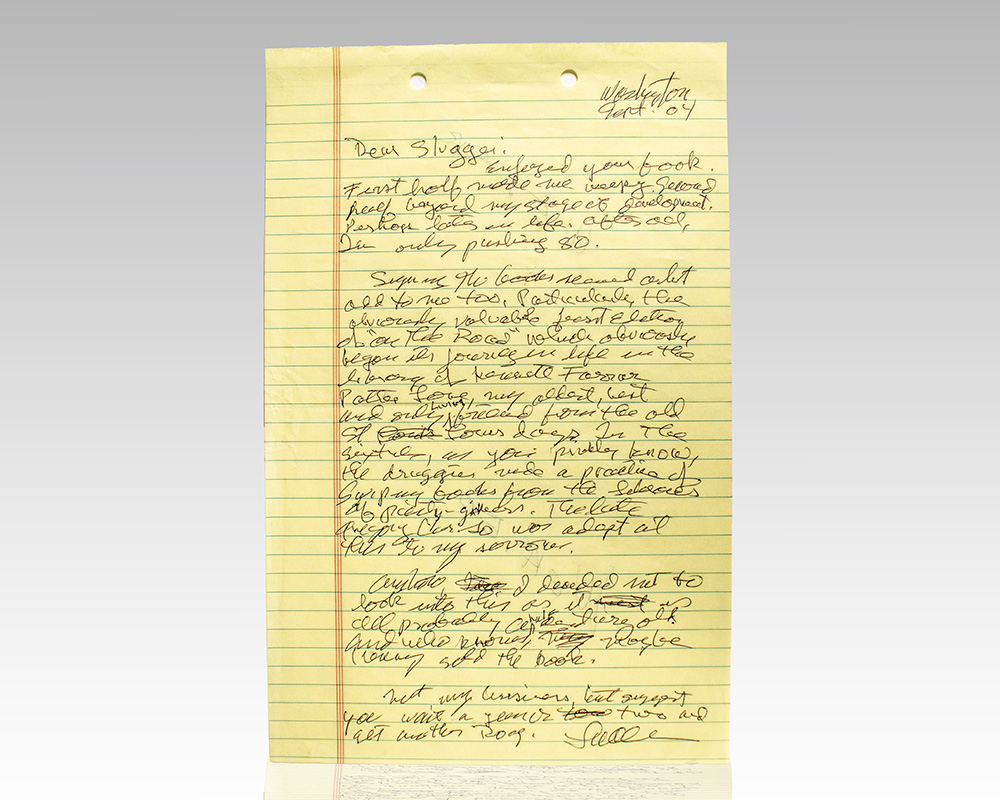
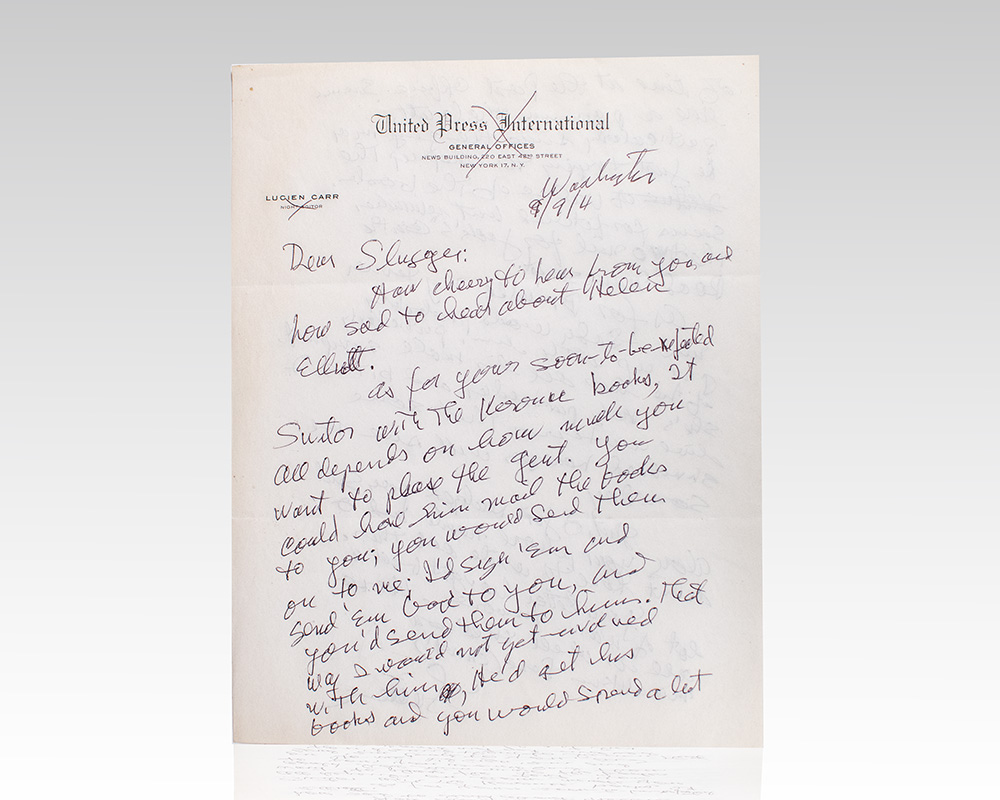
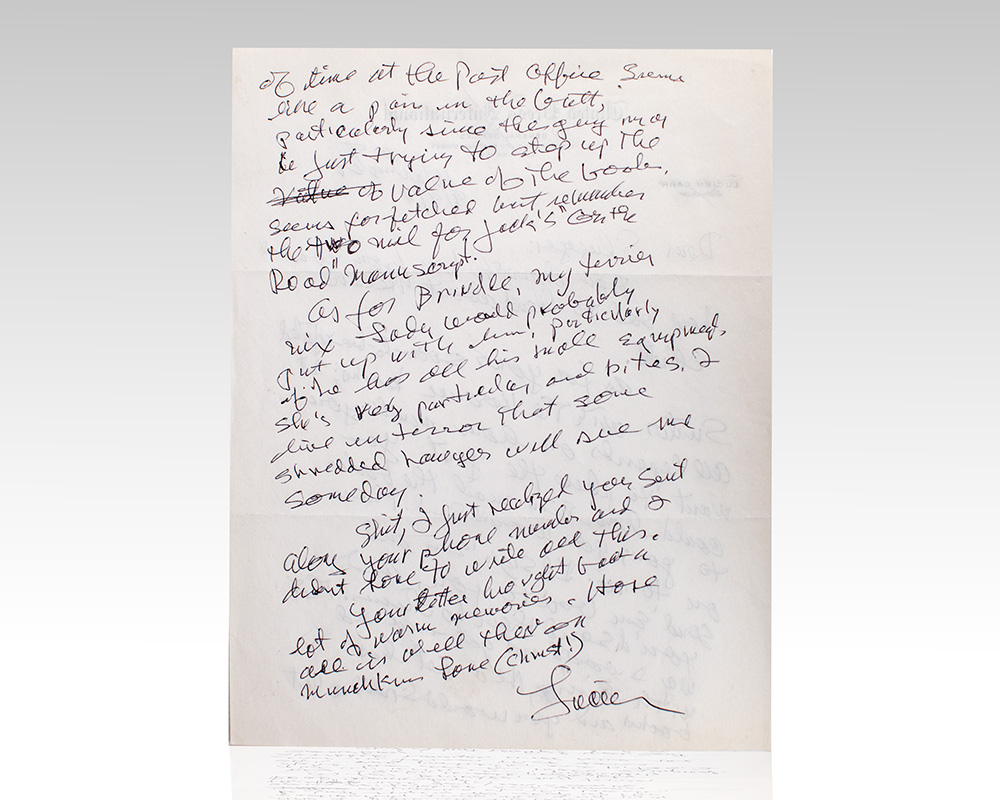
Lucien Carr Autograph Letter Signed to Helen Weaver.
Rare Original Autograph Letter Signed by Lucien Carr to Jack Kerouac’s Girlfriend Helen Weaver
* Custom Clamshell Boxes are hand made by the Harcourt Bindery upon request and take approximately 60 days to complete
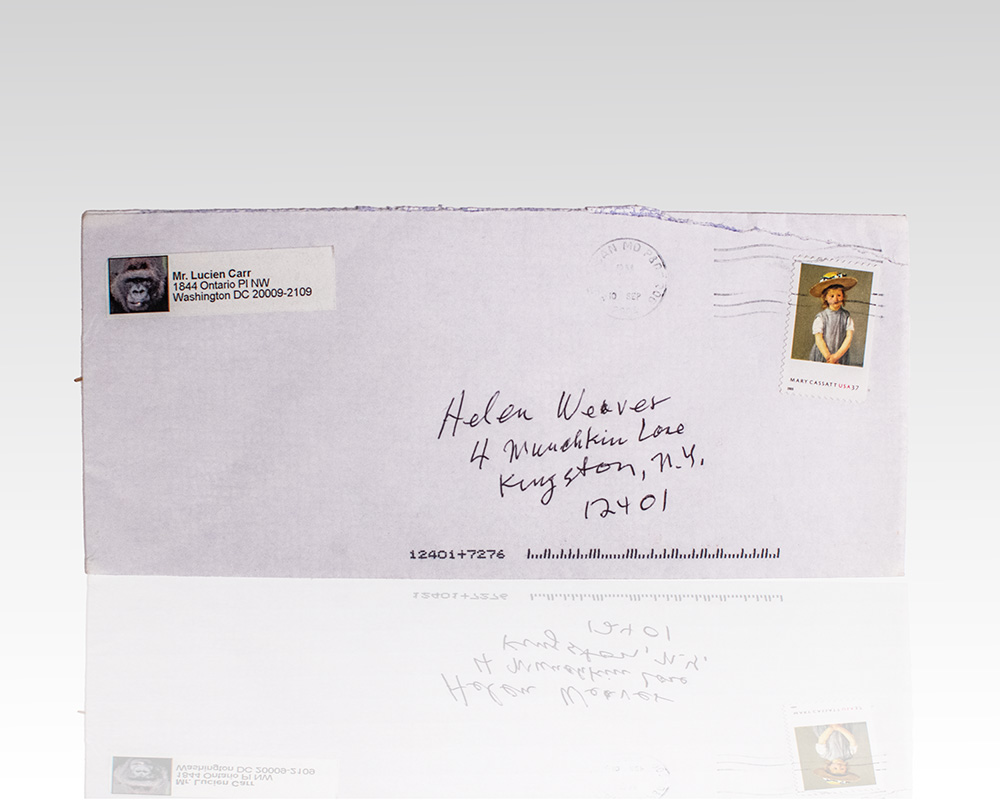
Autograph letter signed by American journalist and editor Lucien Carr. Two pages, handwritten to Jack Kerouac’s former girlfriend Helen Weaver on United Press International stationery and dated "9/9/4", regarding the signing of Kerouac books. The letter reads in part, "Dear Slugger: How cheery to hear from you, and how sad to hear about Helen Elliott. As for your soon-to-be-rejected suitor with the Kerouac books, it all depends on how much you want to please the gent. You could have him mail the books to you; you would send them on to me. I'd sign em and send em onward to you, and you'd send them to him. That way I would not yet...with him, he'd get his books and you would spend a lot of time at the post office. Seems like a pain in the butt, particularly since the guy may be just trying to step up the value of the books. Seems far fetched but remember the two mil for Jack's "On the Road" manuscript...Love Lucien." The recipient, Helen Weaver, was Kerouac’s girlfriend from 1956 to 1957, and was given the nickname “Slugger” by Carr after a scuffle between her and Kerouac at her apartment. In near fine condition with light toning and mail folds. The piece measures 8.5 inches by 11 inches. Accompanied by the original mailing envelope addressed in Carr's hand.
Lucien Carr (1925–2005) occupies a pivotal, if often oblique, position in Beat studies as a social catalyst and archival presence rather than a major published author. At Columbia University in the mid-1940s, Carr helped consolidate what became the core New York Beat circle by introducing Jack Kerouac and Allen Ginsberg to one another and connecting them to William S. Burroughs, a formative act of networking that shaped subsequent collaborations and literary mythmaking. Although Carr published little and later pursued a career in journalism, his influence persisted through his presence in fictionalized accounts by Beat writers and in memoirs by contemporaries, marking him as a central interpersonal catalyst in the movement’s formation rather than a peripheral figure. Carr appears in Jack Kerouac’s The Town and the City (1950) in a thinly fictionalized form, reflecting Kerouac’s early practice of transforming members of his social circle into novelistic figures.
Lucien Carr Autograph Letter Signed to Helen Weaver.
Out of Stock