WASHINGTON, George.
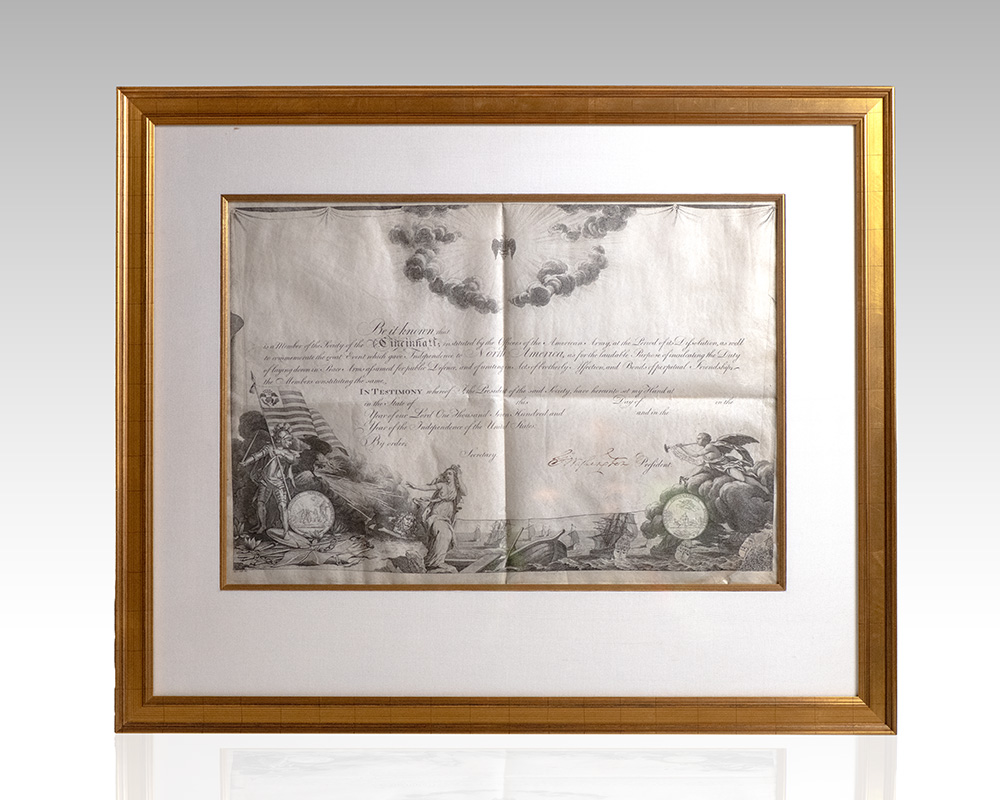
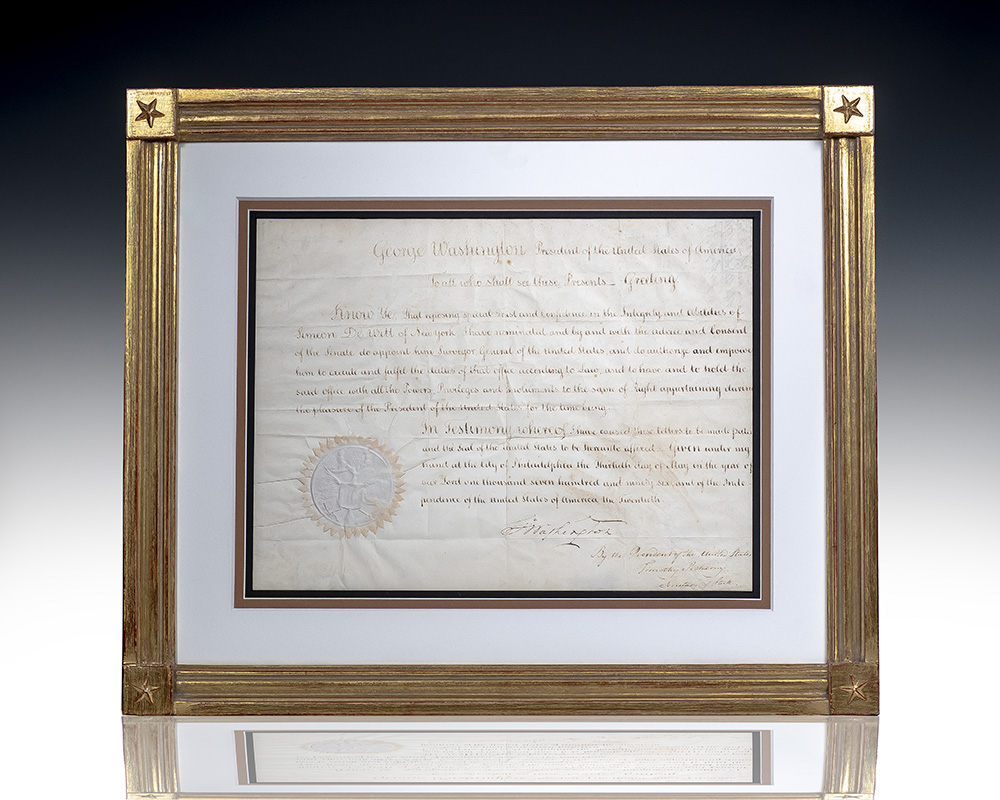
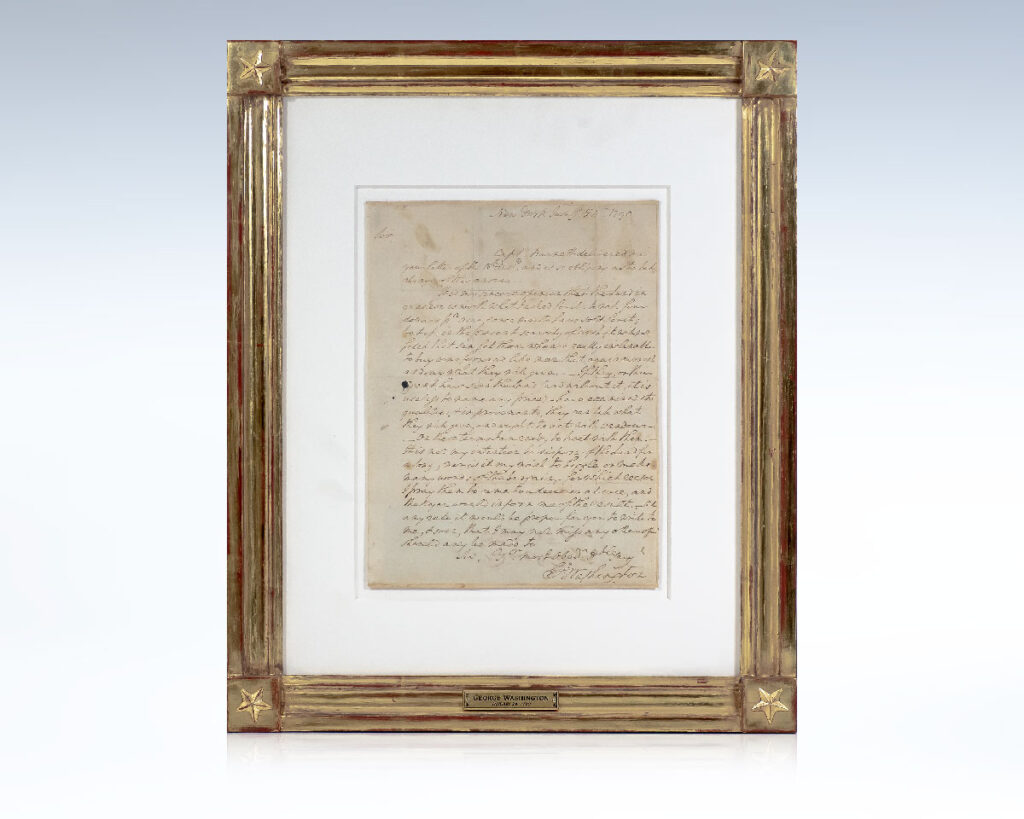
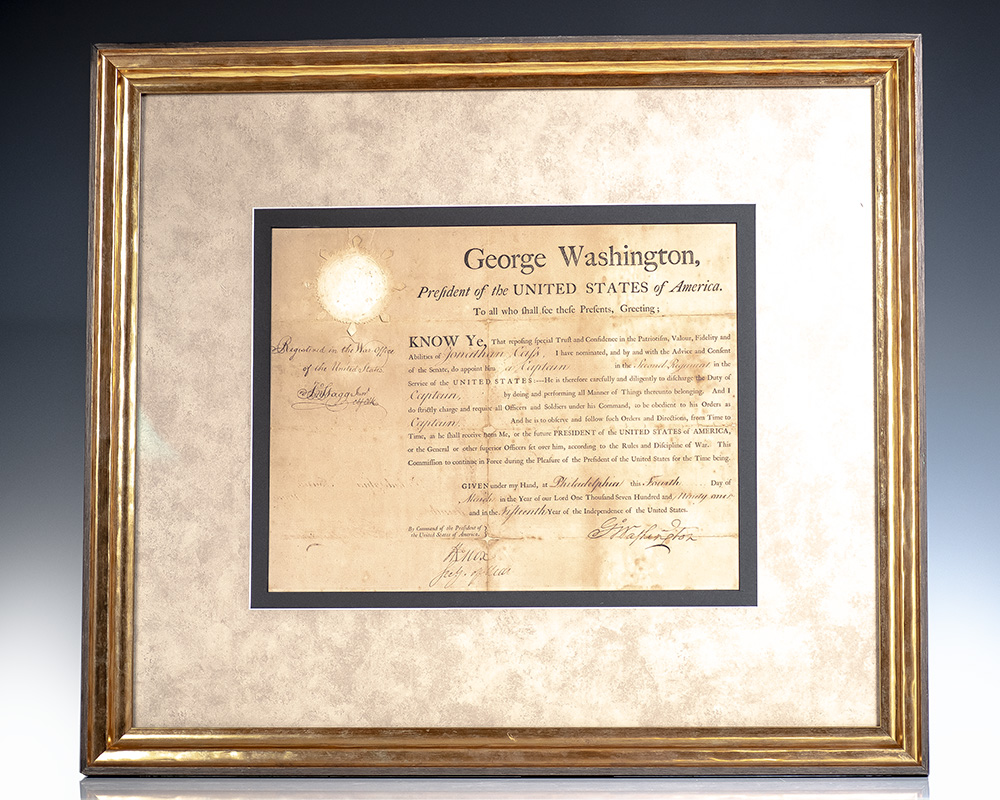
George Washington Signed Military Commission.
Rare 1791 American Military Commission signed by President George Washington
$28,000.00
Out of Stock
Item Number: RRB-143534
* Custom Clamshell Boxes are hand made by the Harcourt Bindery upon request and take approximately 60 days to complete
United States military commission signed by George Washington as the first president of the United States of America on March 4th 1791. One page, partially printed, the commission appoints Jonathan Cass "a Captain in the Second Regiment in the Service of the United States." Signed by George Washington, "Go Washington" as the first President of the United States and countersigned by Henry Knox as the first Secretary of War. The appointee, Revolutionary War soldier Jonathan Cass responded to the April 1775 Lexington Alarm and served with George Washington at Bunker Hill. He was subsequently appointed as an officer in the New Hampshire Continental Line and fought in numerous actions through the entire Revolutionary War including Trenton, Princeton, Brandywine, Germantown, Monmouth and the siege of Yorktown. A founding member of the New Hampshire Society of the Cincinnati, he left his home in Exeter to return to military service as a captain in the newly added second regiment of the US Army in 1791, serving with distinction in Anthony Wayne’s Indian campaigns, during which he was promoted to major in 1793. He resigned in 1800 and settled with his family on 4000 acres of military bounty land in the Muskingum Valley of present-day Ohio. His son, American statesman Lewis Cass, was the Democratic nominee for President in 1848. In very good condition, retaining the original white paper seal. Separations at foldes, laid down to board. Double matted and framed. The entire piece measures 25 inches by 22 inches. A significant Washington appointment from a famed soldier and officer of the American Revolution.
In July of 1775, General George Washington arrived in Cambridge to assume command of the new Continental Army and direct the ongoing campaign at Boston. General Gage was eventually recalled to London to answer for the outcome of the battle. General Howe, the field commander at Bunker Hill, assumed command. Howe was unwilling to repeat another disaster he witnessed first-hand at Bunker Hill, and Washington lacked the supplies to mount any offensive. Thus the siege of Boston stalled into a stalemate. It would not be until the March of 1776 that the siege came to an end. After acquiring over fifty pieces of artillery from Fort Ticonderoga during the winter, General Washington ordered men to fortify Dorchester Heights to the south of Boston overnight. This position proved even more formidable than the one at Charlestown, and Howe ultimately decided to evacuate Boston entirely. The event at Dorchester Heights ended the campaign at Boston, but the war would continue for another seven years.
George Washington Signed Military Commission.
$28,000.00
Out of Stock
Other Books by this Author