
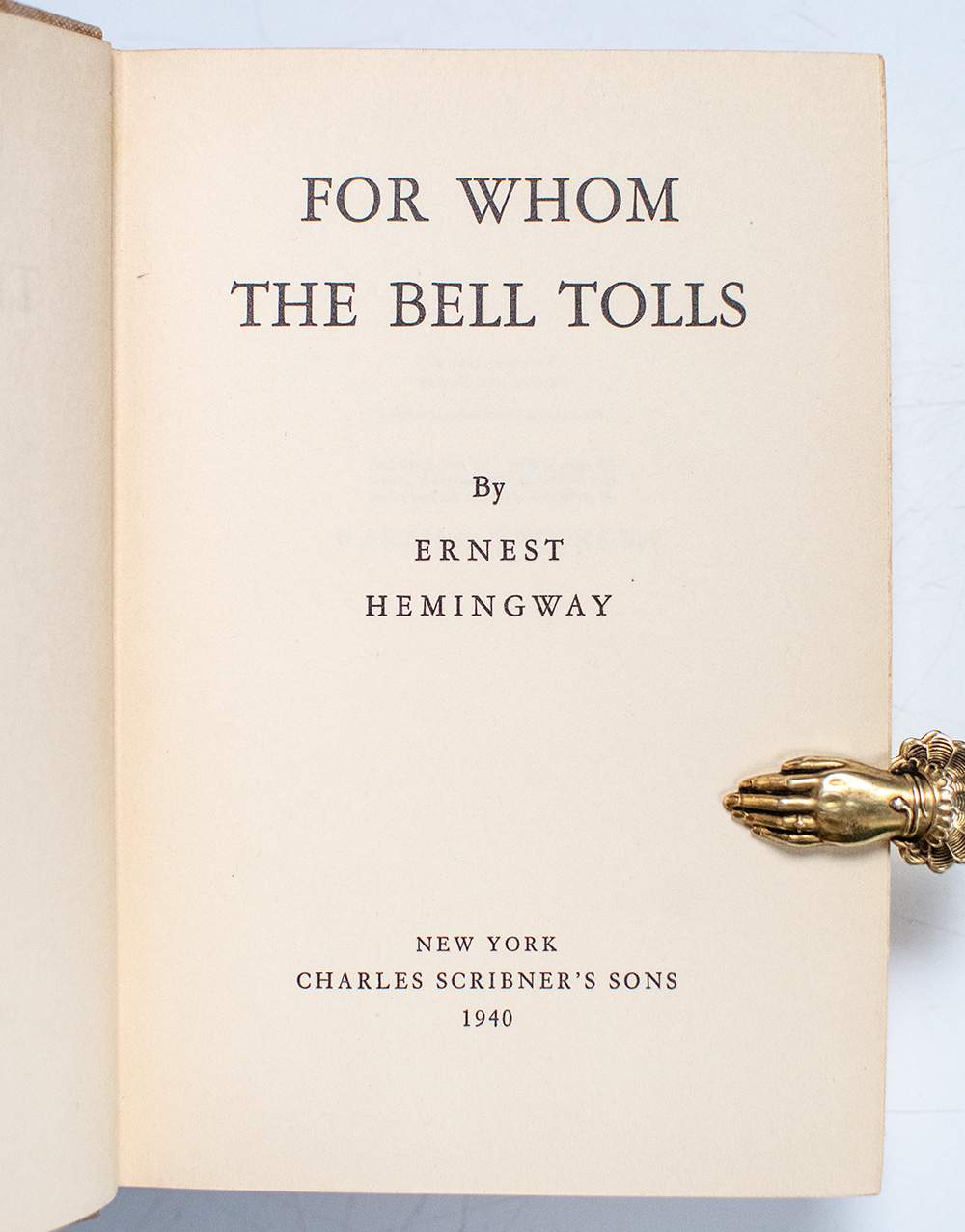

HEMINGWAY, Ernest.
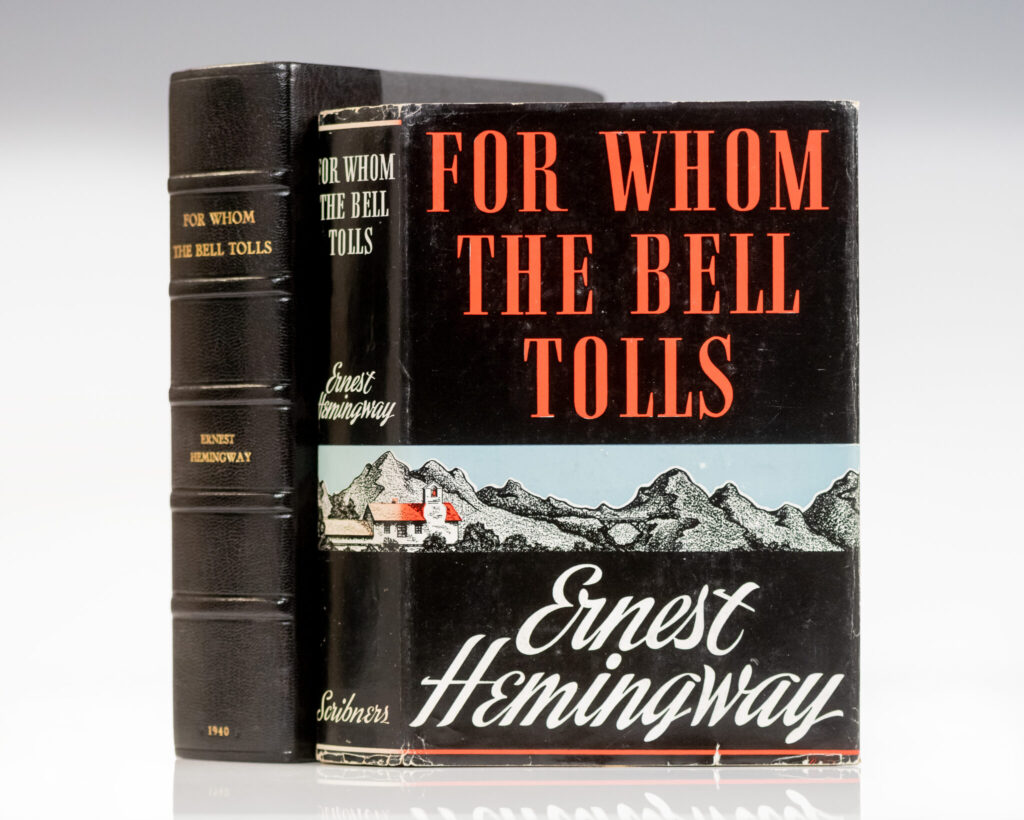
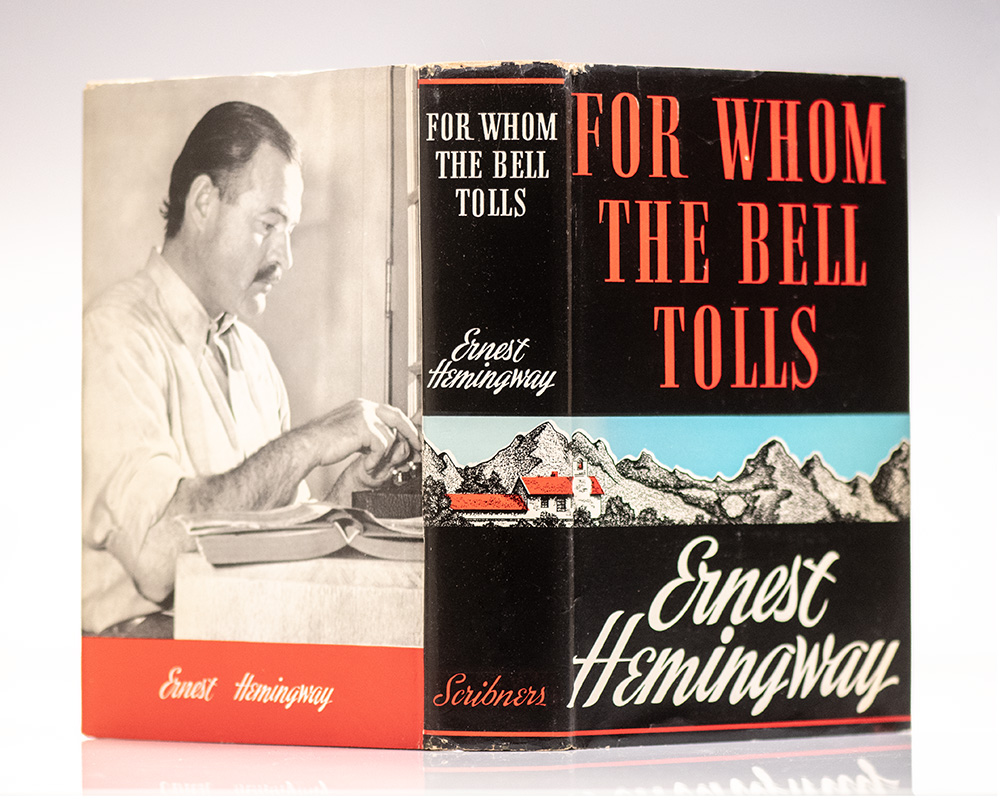
For Whom the Bell Tolls.
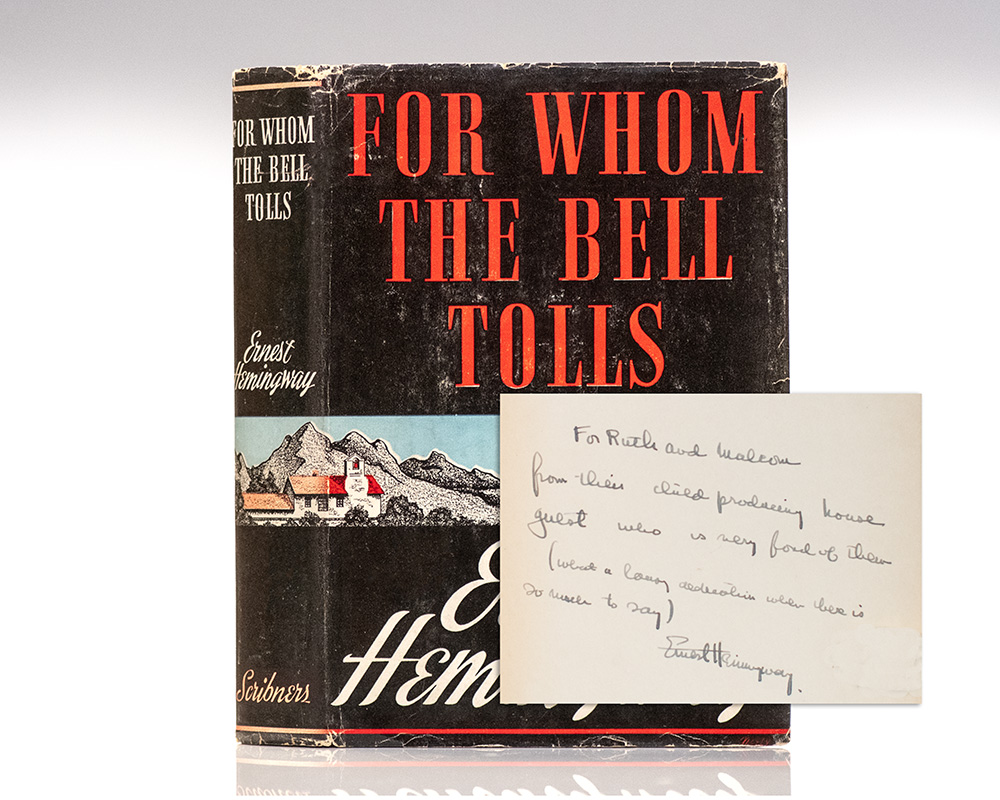
"For Ruth and Malcolm, from their child producing house guest who is very fond of them": Rare Association Copy of For Whom the Bell Tolls; inscribed by Ernest Hemingway to his cousin Ruth Lowry
New York: Charles Scribner's Sons, 1940.
$17,500.00
In Stock
Item Number: RRB-149834
* Custom Clamshell Boxes are hand made by the Harcourt Bindery upon request and take approximately 60 days to complete
First edition, early printing of Hemingway's third novel, a tragic exploration of love, duty, and the futility of war. Octavo, original publisher's cloth. Association copy, lengthily inscribed by Ernest Hemingway to his cousin on the front free endpaper, "For Ruth and Malcolm, from their child producing house guest who is very fond of them (what a lousy dedication when there is so much to say) Ernest Hemingway." The recipients, Ruth White Lowry (1884–1974) and her husband William Malcolm Lowry (1884–1953), were longtime residents of Kansas City, Missouri, and integral members of Ernest Hemingway’s extended Midwestern family. Ruth, the daughter of William White and Mary Hall White, was a first cousin of Grace Hall Hemingway, the author’s mother. This made her Ernest’s first cousin once removed, though their families were close enough that Hemingway referred to her simply as “Cousin Ruth.” The White and Hall families had deep Midwestern roots—Ruth was educated in Kansas City and was part of the city’s civic and cultural life throughout the early twentieth century. When Hemingway and his second wife, Pauline Pfeiffer, returned from Paris to the United States in 1928, they came to Kansas City for the birth of their first child, Patrick Hemingway, who was delivered at St. Mary’s Hospital on June 28 of that year. The Hemingways stayed with Ruth and Malcolm Lowry at their Kansas City home both before and after the delivery. Pauline returned to the same house three years later, in November 1931, for the birth of their second son, Gregory Hancock Hemingway, while Ernest shuttled between Kansas City and Key West during the final stages of Death in the Afternoon. The Lowrys’ hospitality offered Hemingway a familial refuge far from the expatriate world of Europe and the growing celebrity that attended his literary success. The relationship between the two families endured for decades. Letters and family recollections describe Ruth as a warm, maternal presence in Hemingway’s life—a relative he could trust with his young family during periods of upheaval. The Lowry household thus occupies a unique place in Hemingway’s biography: it was the setting for the births of both of his sons with Pauline, and the site of rare domestic calm amid his restless movements between continents. Copies inscribed to members of the Lowry family remain among the most significant Hemingway association copies, linking the author’s private life in the American Midwest to his public identity as one of the central figures of twentieth-century literature.
For Whom the Bell Tolls.
$17,500.00
In Stock
Other Books by this Author

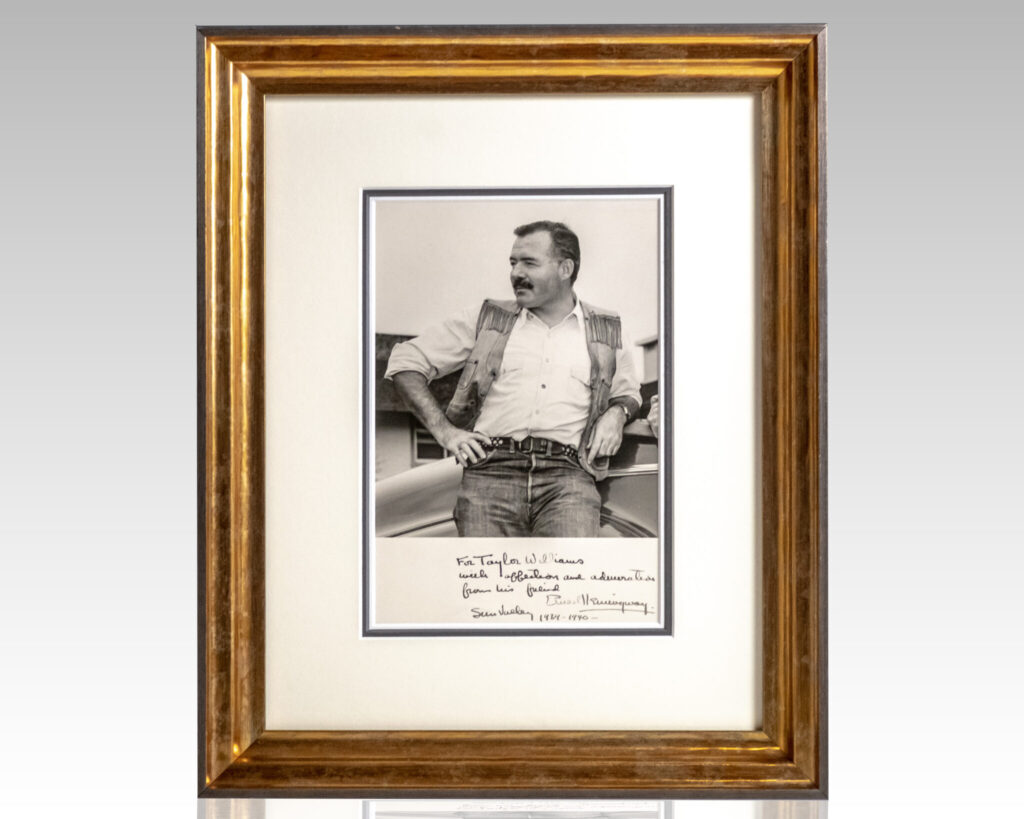
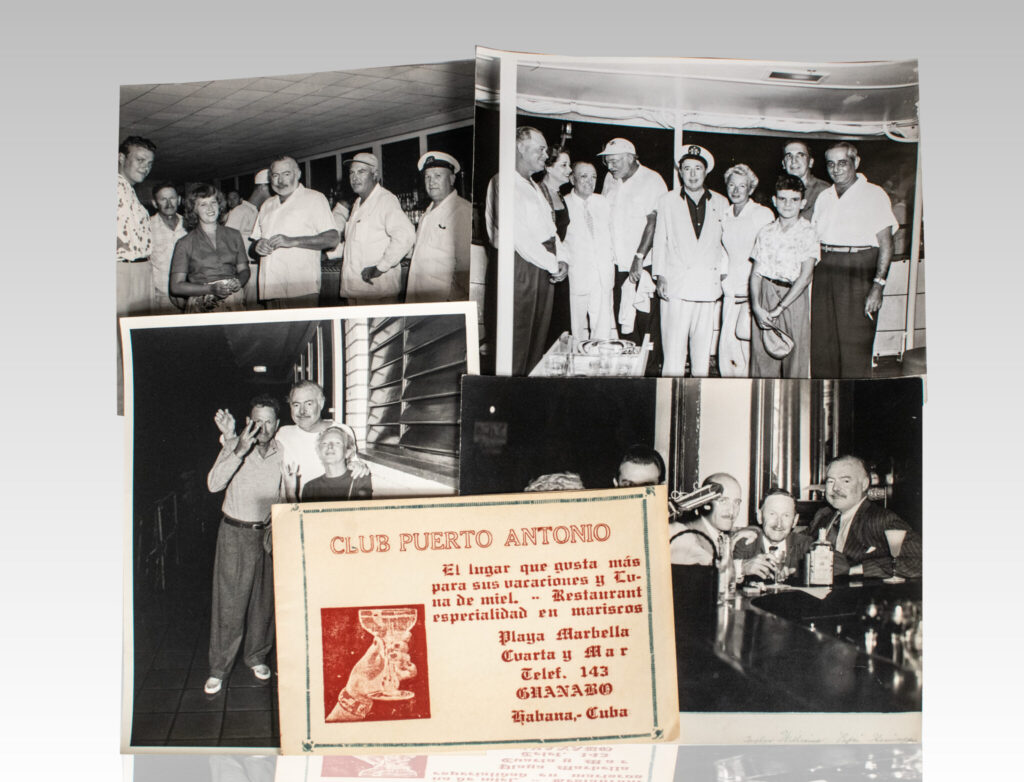
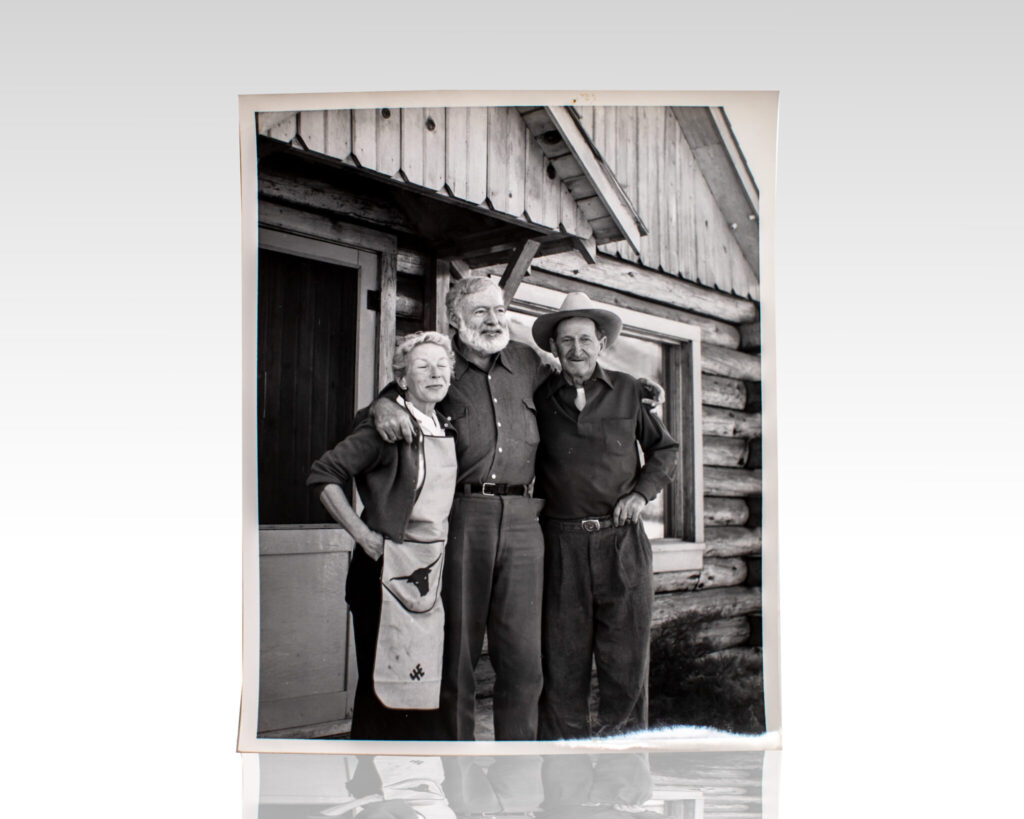
![Taylor Williams Typed Letter Recollecting About Ernest Hemingway. [with] Ernest Hemingway Photographs.](https://raptis.bvbeta.com/wp-content/uploads/2026/01/RRB-150090-scaled-1-1024x820.jpg)
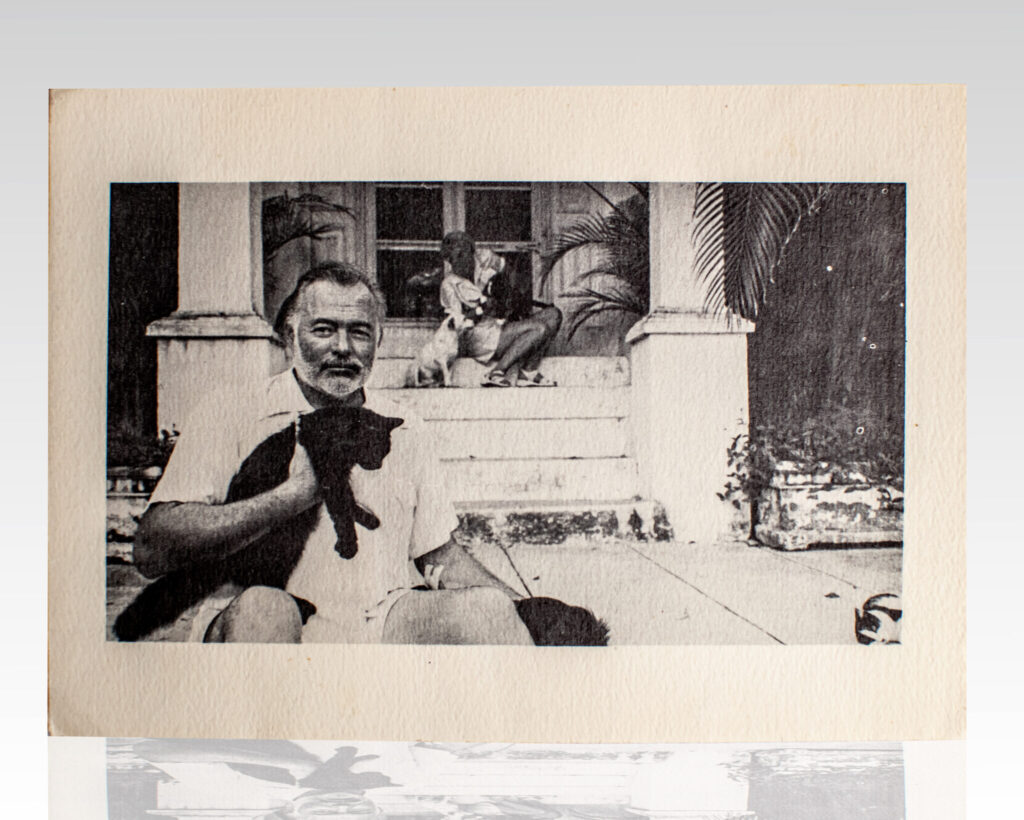
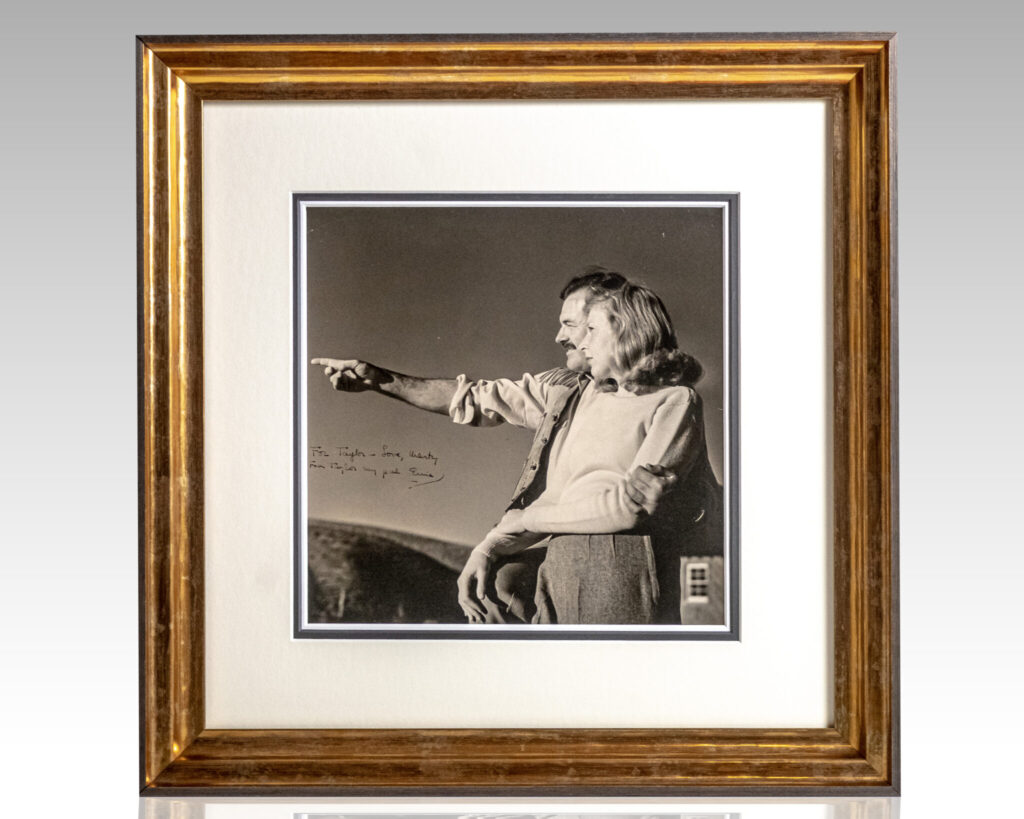
![Ernest Hemingway Signed Photograph. [with] Mary Hemingway Typed Letter Signed.](https://raptis.bvbeta.com/wp-content/uploads/2026/01/RRB-150055-scaled-1-1024x819.jpg)
![The Fifth Column and the First Forty-Nine Stories. [Including: The Snows of Kilimanjaro, The Short Happy Life of Francis Macomber, The Capital of the World, Old Man at the Bridge, Up in Michigan].](https://raptis.bvbeta.com/wp-content/uploads/2026/01/RRB-146570.jpg)