



TURNER, John Kenneth [John F. Kennedy].
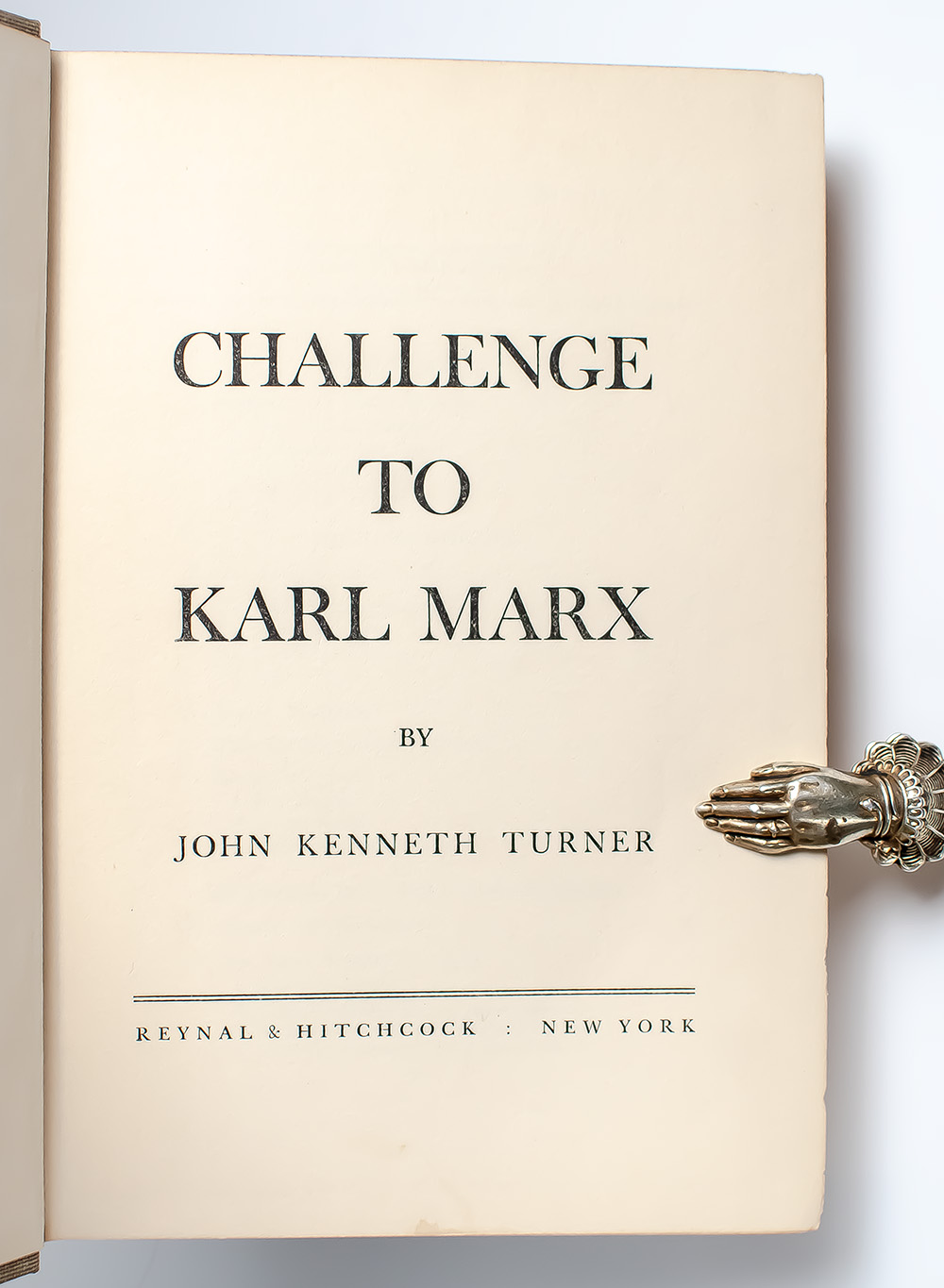
Challenge to Karl Marx.
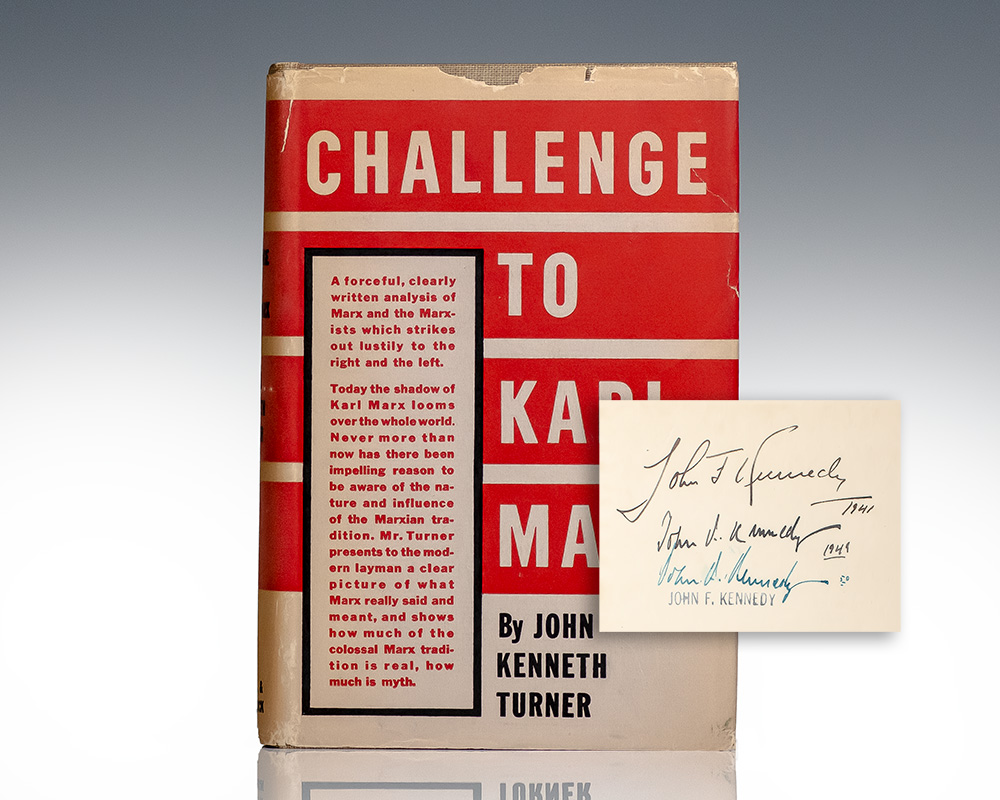
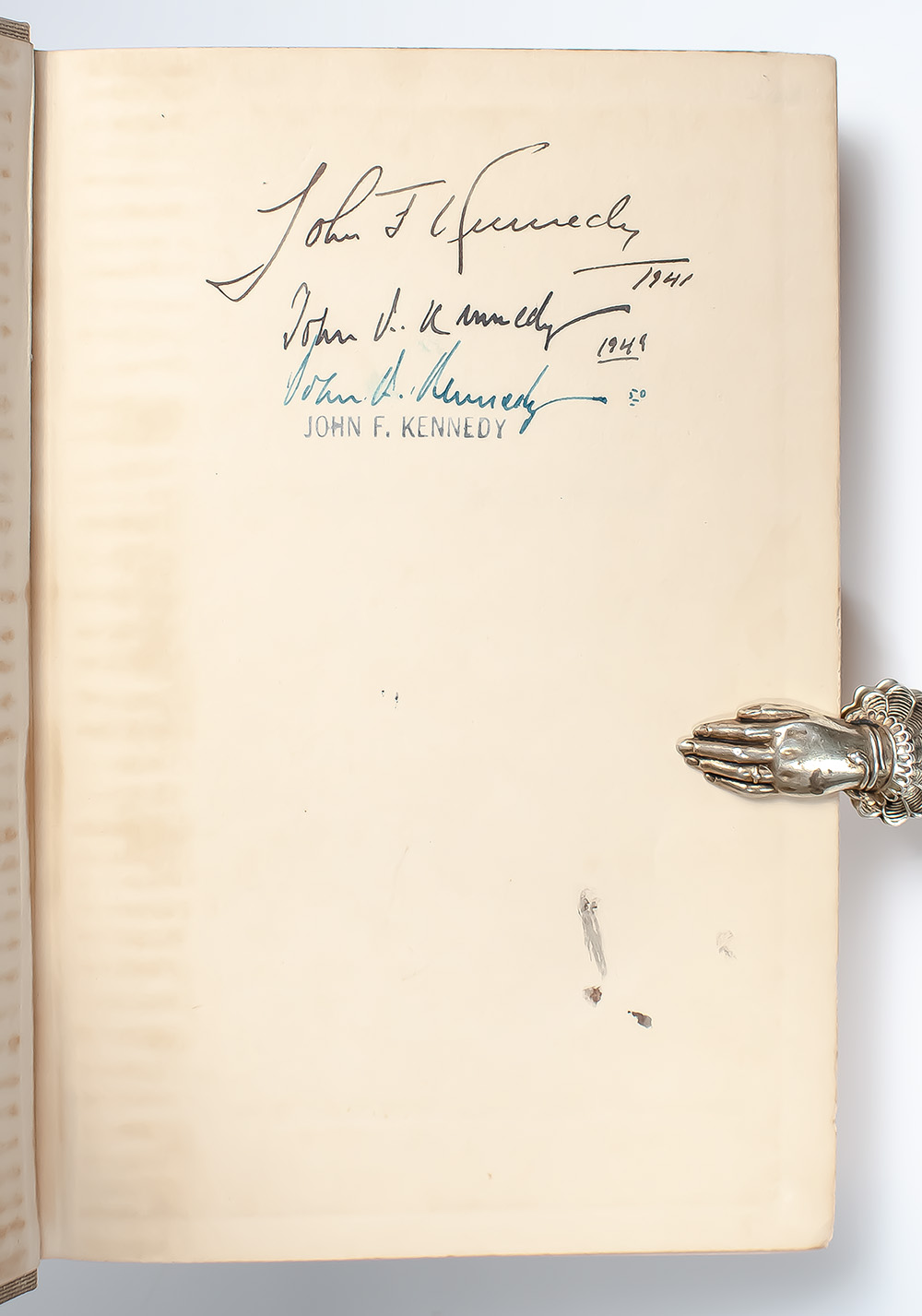
First Edition of John Kenneth Turner's Challenge to Karl Marx; JOHN F. KENNEDY'S PERSONAL COPY SIGNED BY HIM ON THREE SEPARATE OCCASIONS AND WITH HIS ANNOTATIONS THROUGHOUT
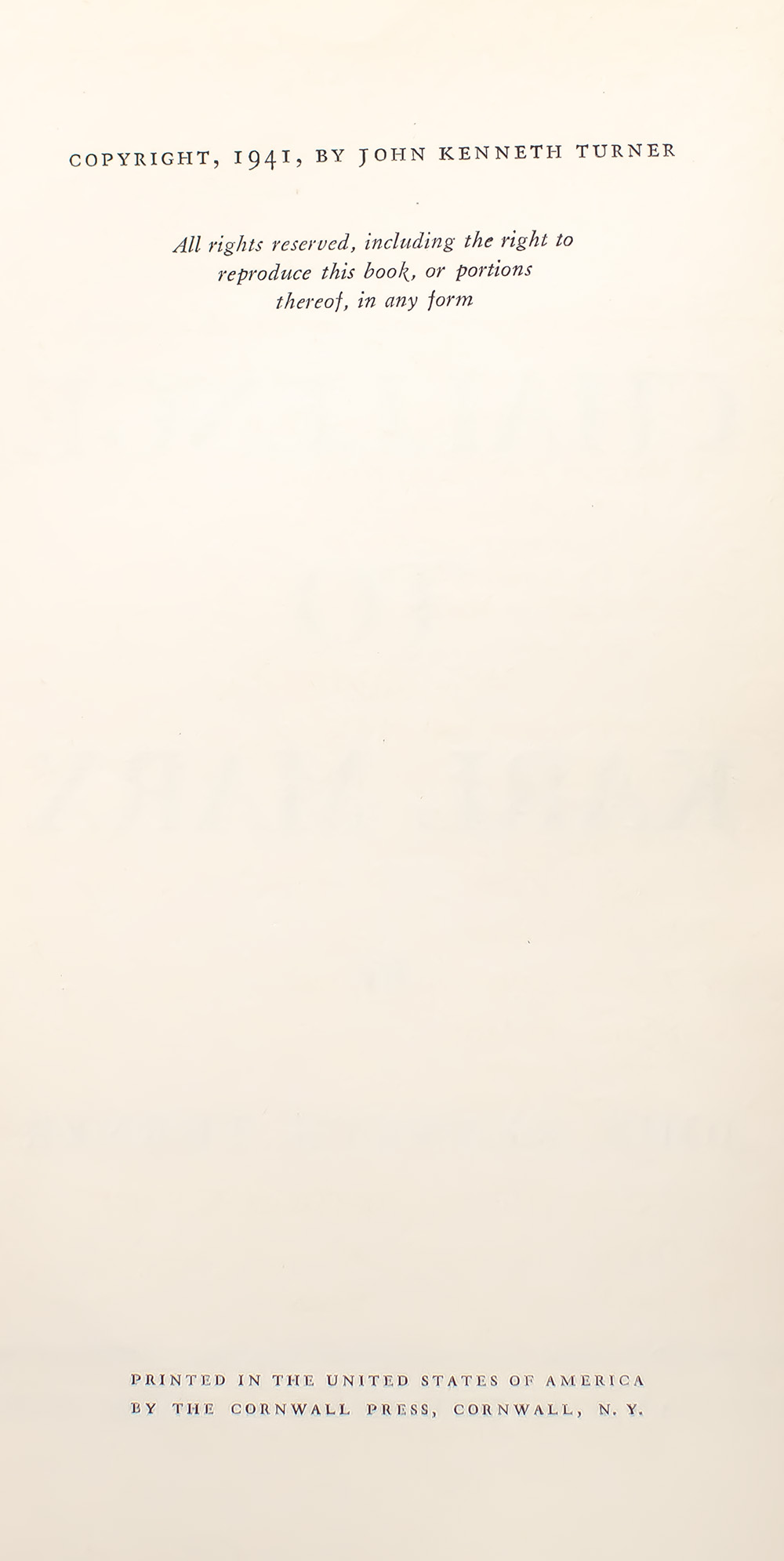
New York: Reynal & Hitchcock, 1941.
$22,500.00
In Stock
Item Number: RRB-148644
* Custom Clamshell Boxes are hand made by the Harcourt Bindery upon request and take approximately 60 days to complete
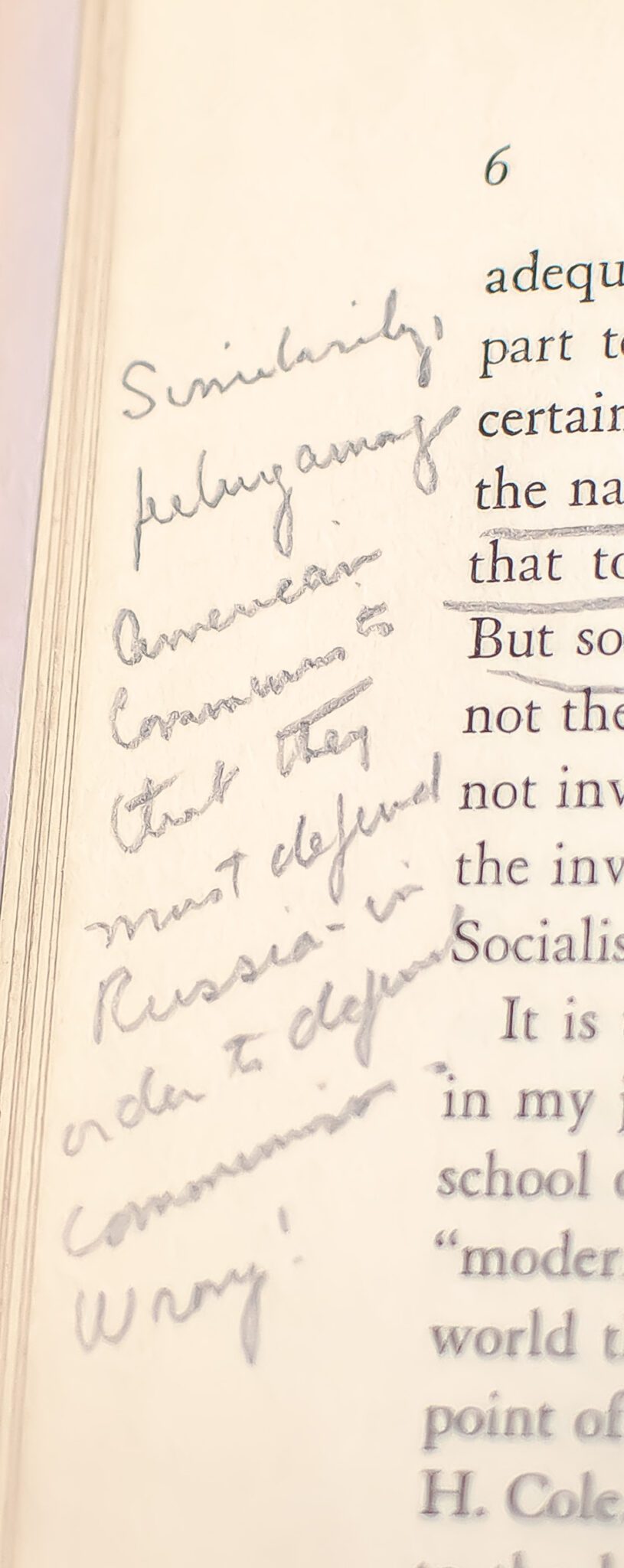
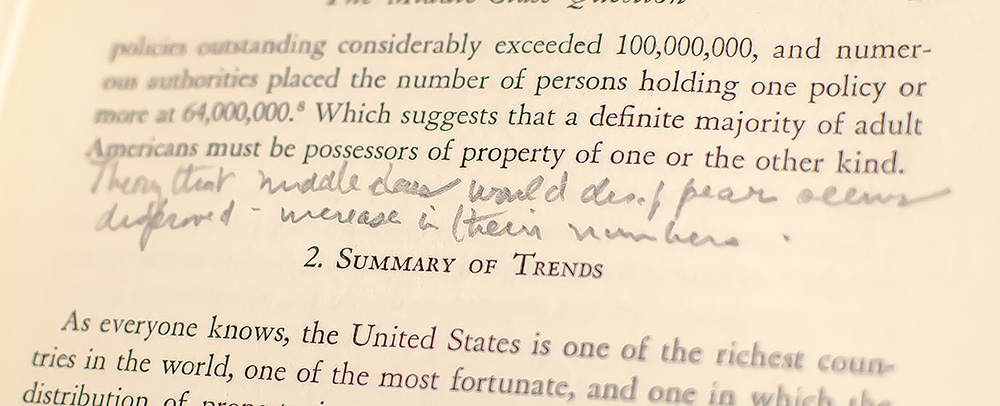
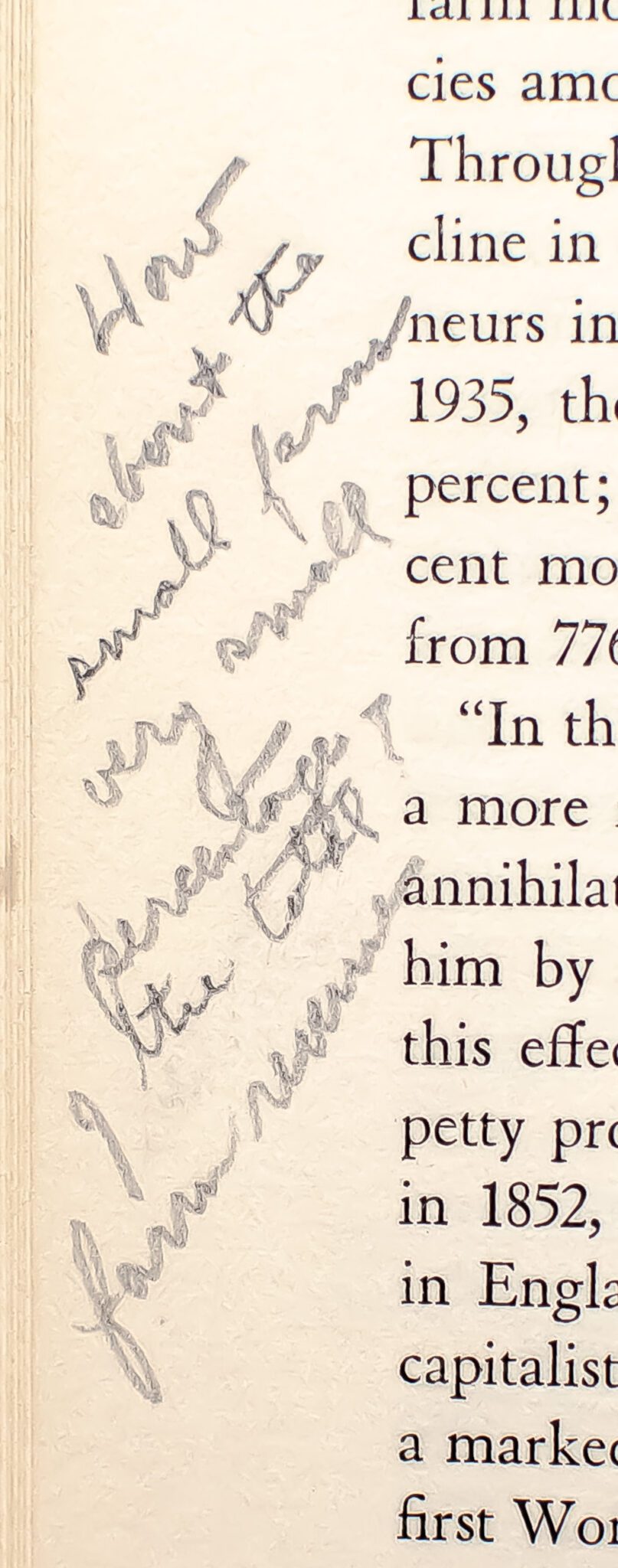
First edition of Turner's landmark analysis of Marx and Marxist theory from the library of John F. Kennedy with his ownership signatures and annotations throughout. Octavo, original publisher's cloth. From the library of John F. Kennedy, signed by him on three separate occasions above his ownership stamp in black ink, "John F. Kennedy 1941," John F. Kennedy 1949," and in blue ink, "John F. Kennedy 50." With Kennedy's annotations throughout the first 44 pages on a total of 20 pages, including, "Similarly, feeling among American Communists that they must defend Russia, in order to defend Communism - Wrong!" (page 6); "Theory that middle class would disappear seems disproved - increase in their numbers" (page 29); "How about the small farms, very small percentage of the total, farm revenue?" (page 38); "After this war, America, if victorious, will be faced with the problem of trying to compete for markets where the buying power is low, and still keeping standards high at home" (page 41); and "Seems a little weak here" (page 43). John F. Kennedy’s engagement with communism was notably complex, shaped by both firm ideological convictions and pragmatic Cold War strategy. From early in his political career, he framed communism as a formidable adversary and championed a strong containment approach that integrated military preparedness with economic and political assistance to at-risk nations. As president, he codified this stance through what became known as the Kennedy Doctrine—an approach aimed at halting communist expansion in the Western Hemisphere and beyond. His administration’s “flexible response” strategy expanded beyond the threat of nuclear retaliation to include a range of tailored options—military aid, covert operations, and diplomacy—enabling calibrated responses to global crises. This approach was tested in the Bay of Pigs, the Berlin standoff, and most acutely, the Cuban Missile Crisis, after which Kennedy pursued nuclear de-escalation through the 1963 Partial Test Ban Treaty. Simultaneously, he invested in diplomatic and developmental initiatives—such as the Alliance for Progress, AID, and the Peace Corps—to counter communism’s ideological appeal in the Global South. Thus, Kennedy’s response to communism was neither purely confrontational nor entirely conciliatory, but rather a sophisticated fusion of deterrence, diplomacy, and development underpinned by a belief in America’s global leadership role. Near fine in a very good price-clipped dust jacket. Ownership signatures and stamps of John F. Kennedy to the front pastedown and front free endpaper. A desirable triple-signed book held by Kennedy on three separate occasions, including twice as a Massachusetts congressman. The first time Kennedy signed this book, and ostensibly added the annotations, was prior to his joining of the United States Naval Reserve on September 24, 1941. The book's subject is particularly significant given JFK's unwavering public stance against the ideology of communism, which peaked during his presidency when tensions with communist states were at an all-time high. A marvelous Kennedy keepsake of considerable autographic and historical interest.
Challenge to Karl Marx.
$22,500.00
In Stock
Other Books by this Author