In the study of rare books, age alone is seldom the decisive measure of significance. Far more consequential is provenance — the documented history of ownership that situates a volume within lived experience. A book becomes meaningful not simply because it has survived, but because it has been held, read, annotated, exchanged, and preserved within particular intellectual and cultural contexts.
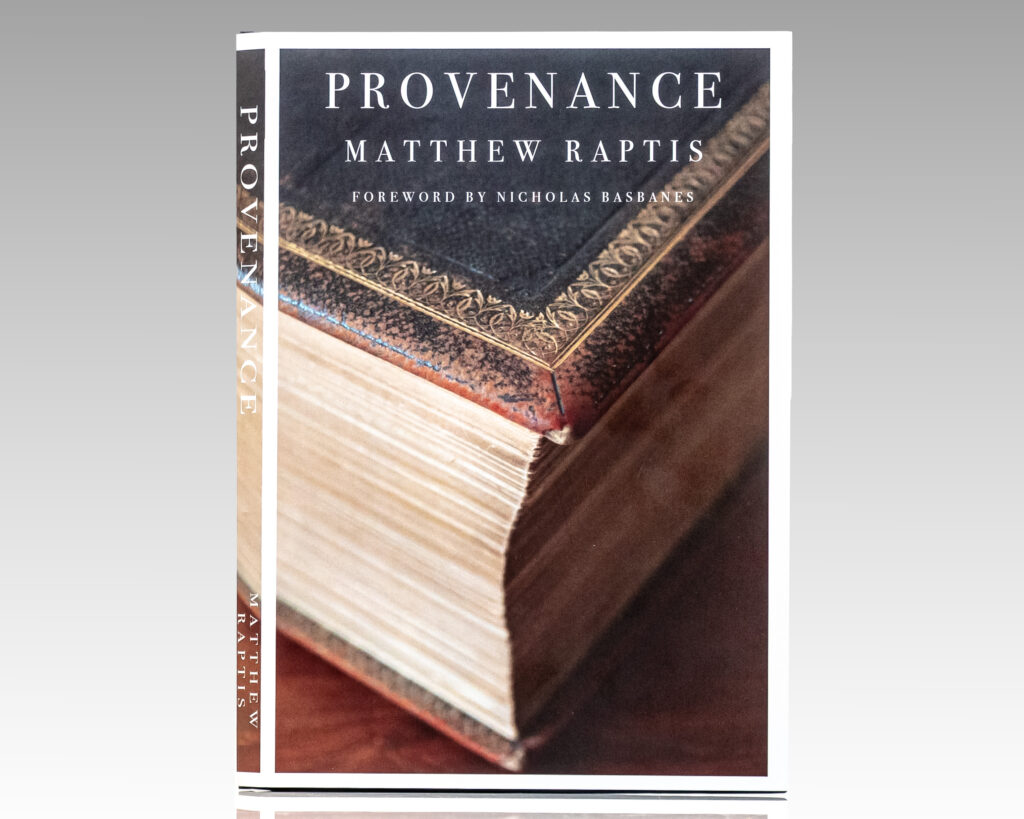
Provenance: The Hidden Lives of Books marks the debut work of nonfiction by Matthew Raptis, drawing upon decades of professional experience in the rare book trade. The work advances a central thesis: that the material evidence of prior ownership constitutes a vital, though often overlooked, archive of intellectual history.
The Book as Historical Artifact
Bibliographical scholarship has long emphasized the physical book as artifact — its binding, typography, paper, and condition. Provenance extends this inquiry further. Inscriptions, marginalia, bookplates, presentation copies, association copies, inserted correspondence, and institutional markings transform a printed text into a layered historical document.
What may appear at first glance to be an ordinary volume can, upon closer inspection, reveal a network of relationships. A dedication in a familiar hand may signal friendship, mentorship, rivalry, or intellectual exchange. Marginal notes can illuminate patterns of reading and interpretation. A private library, examined collectively, maps the intellectual formation of its owner.
Raptis’s study situates these traces not as curiosities but as evidence — fragments of social and intellectual history embedded within the codex form.
Circulation and Cultural Memory
Books are inherently migratory objects. They move across generations, geographies, and social strata, accumulating marks of possession as they travel. In this sense, they function as carriers of cultural memory.
Each successive owner inscribes — literally or figuratively — an additional layer of meaning. The result is a palimpsest of readership. A volume once situated on the shelves of a statesman, artist, or writer does not merely reflect the ideas printed within it; it reflects the intellectual environment in which those ideas were encountered.
By tracing these movements, Provenance demonstrates how the history of a single copy can illuminate broader patterns of influence and transmission. The focus shifts from abstract authorship to concrete readership, from the production of texts to their reception and lived engagement.
Marginalia as Intellectual Evidence
Particular attention is given to marginalia — annotations that reveal active dialogue between reader and text. Far from being incidental marks, such notations can expose interpretive strategies, disagreements, emphases, and moments of revelation. They offer insight into how significant figures processed, internalized, or contested the ideas before them.
Similarly, presentation inscriptions and association copies reveal the social dimensions of intellectual life. Books often functioned as tokens of esteem, instruments of persuasion, or markers of affiliation. To study provenance, therefore, is to study networks — literary, political, philosophical — that shaped historical discourse.
Reframing Value
One of the more compelling contributions of Raptis’s work is its reframing of value within the rare book world. Monetary worth, while not irrelevant, becomes secondary to narrative depth. A modestly bound volume may possess extraordinary significance if it bears witness to a formative intellectual relationship or pivotal historical moment.
In this framework, rarity is not defined solely by scarcity of printing, but by singularity of story.
An Invitation to Scholarly Attention
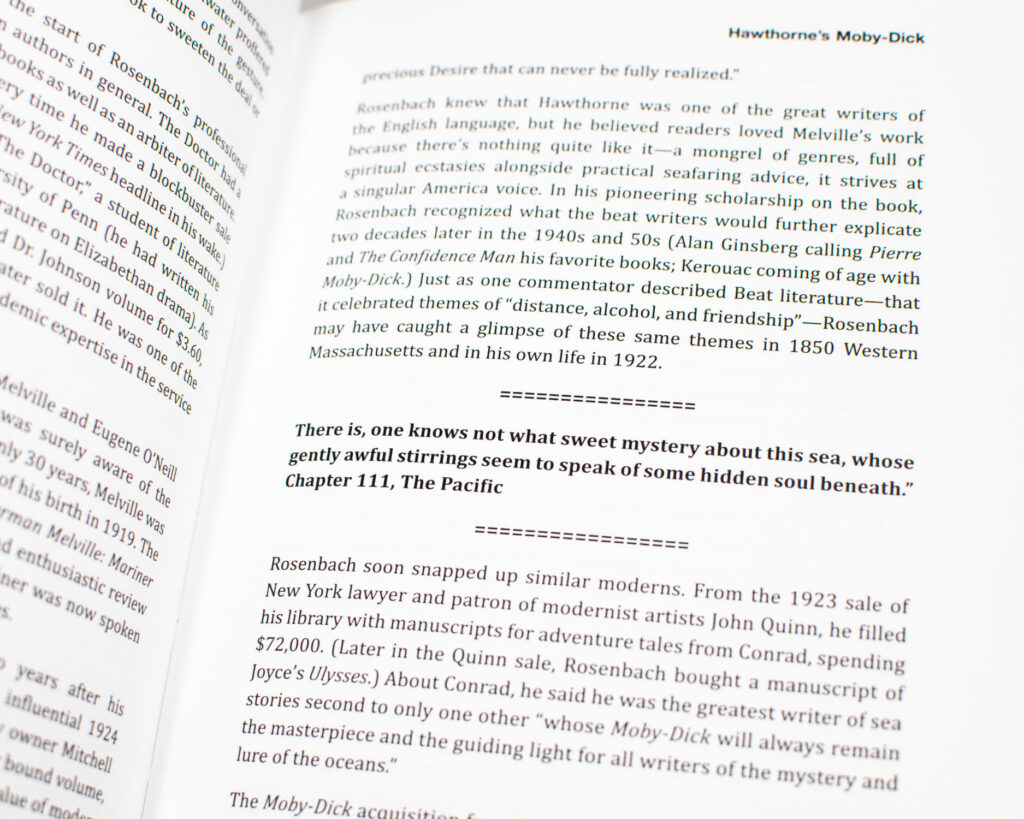
Provenance: The Hidden Lives of Books invites collectors, historians, and bibliographers to reconsider the evidentiary potential of ownership marks. It argues for a more attentive reading of the book as object — one that acknowledges the cumulative human presence embedded within its pages.
Books do not merely preserve ideas in typographic form. They preserve encounters: between author and reader, between gift-giver and recipient, between past and present. To study provenance is to recover those encounters and to recognize the book as a vessel of lived intellectual history.
In doing so, Raptis positions provenance not as a peripheral curiosity, but as a central discipline within the study of cultural heritage — where the hidden life of books becomes inseparable from the history of thought itself.