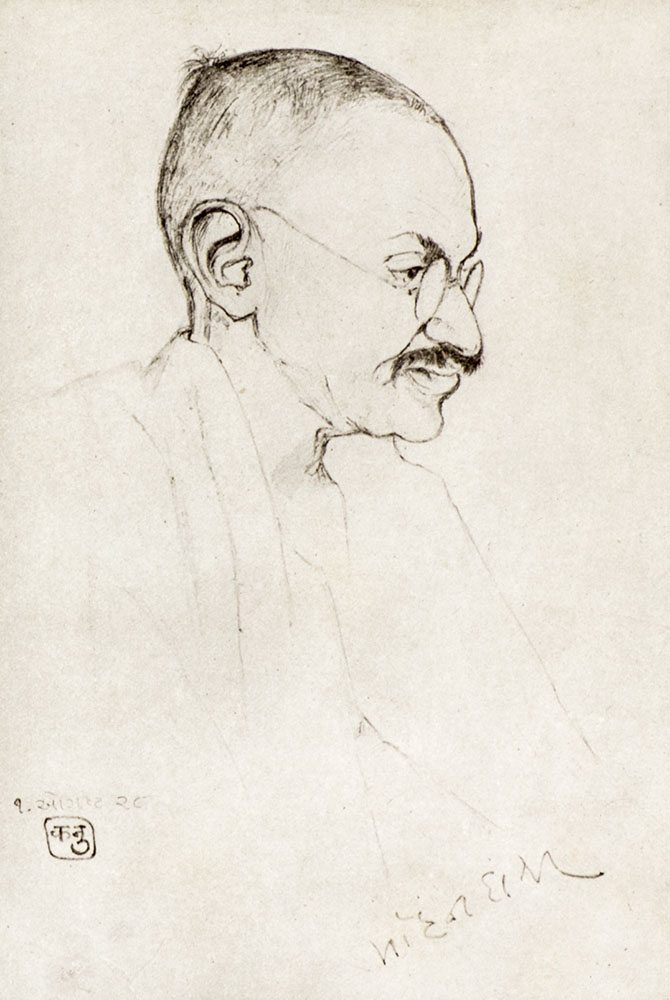
GANDHI, Mohandas K.
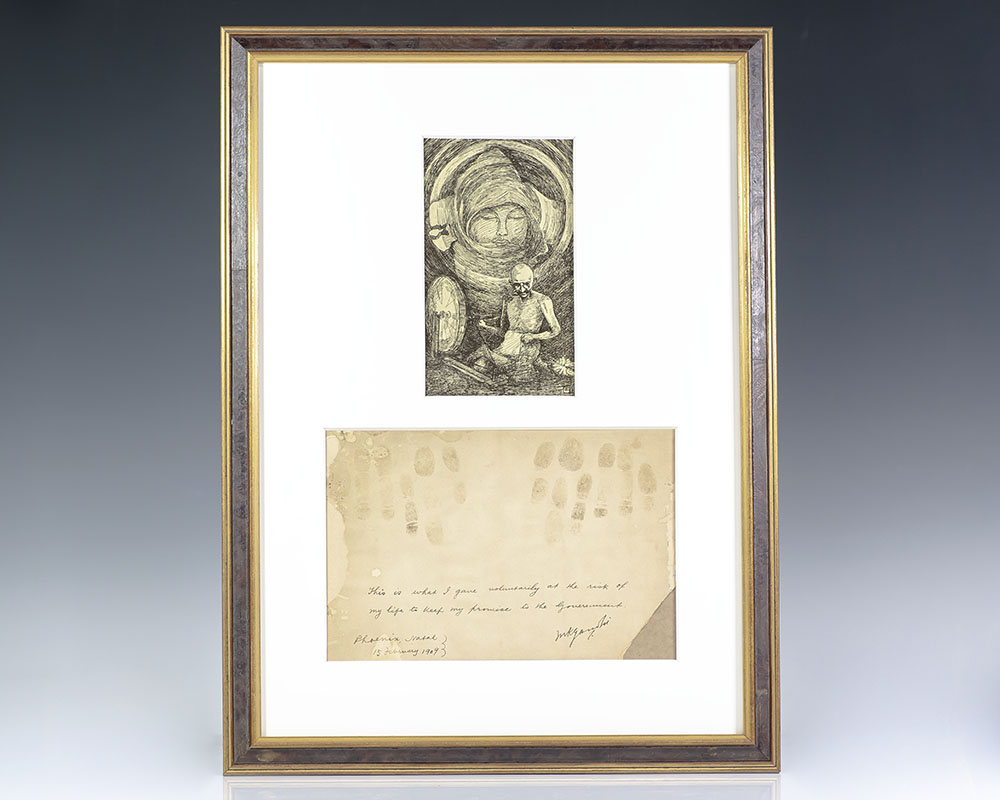
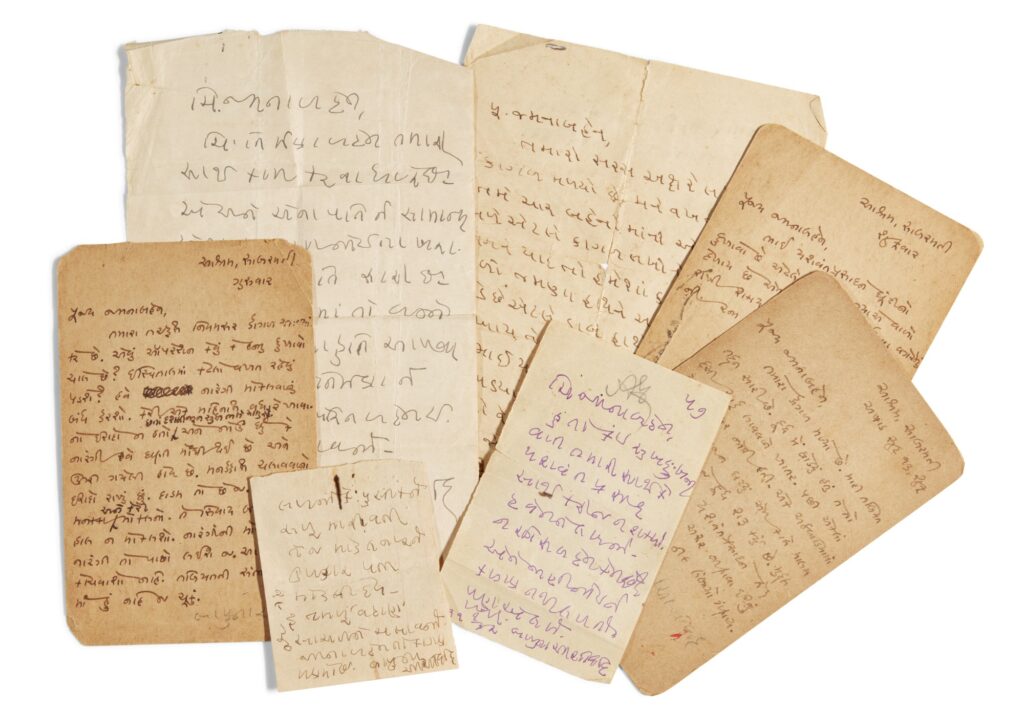
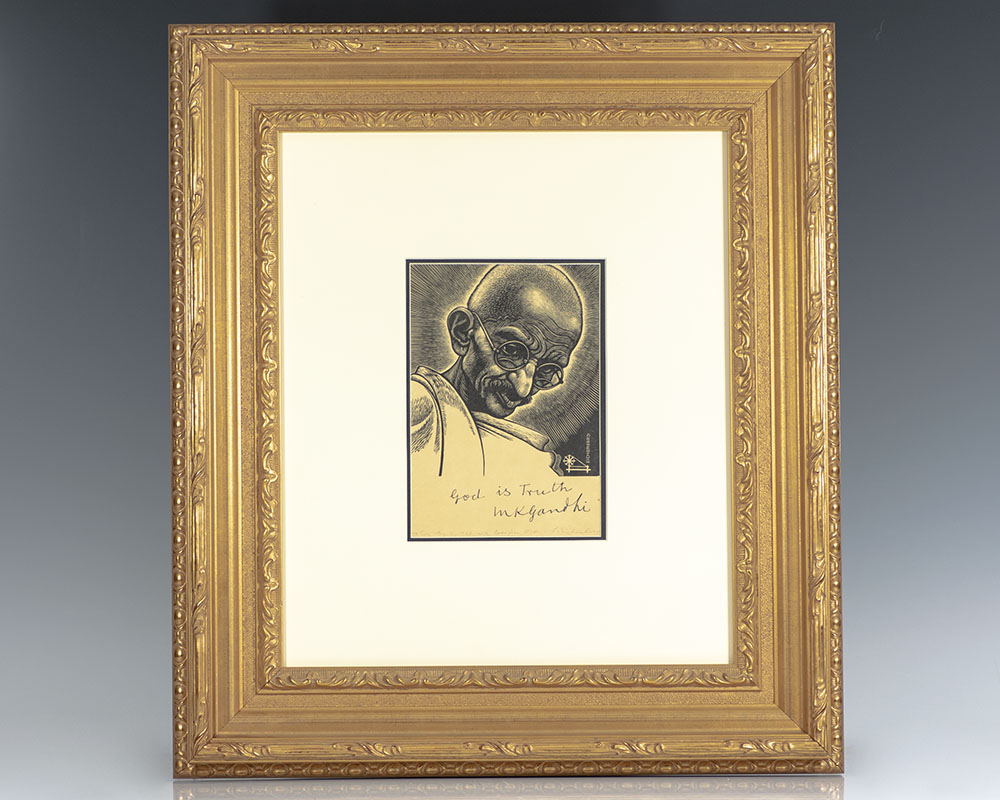
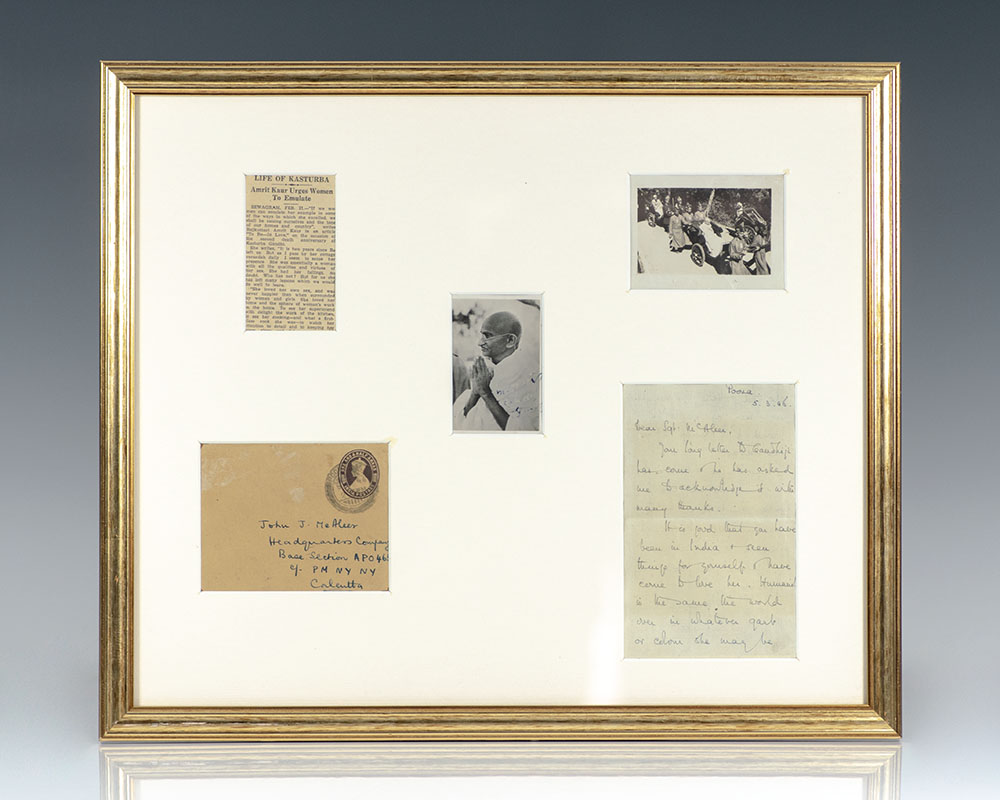
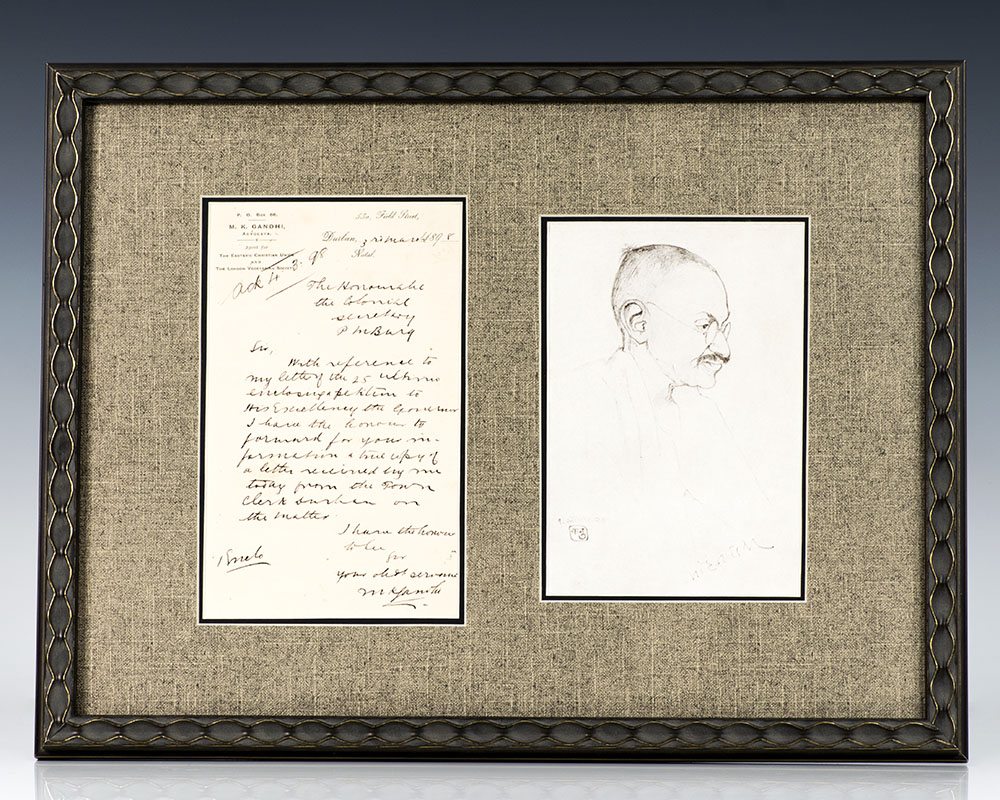
Mohandas K. Gandhi Autographed Signed Letter.
We're sorry, this item has sold.
+$450
Mohandas K. Gandhi Autographed Signed Letter
Mohandas K. Gandhi, at age 22, was called to the bar in June 1891 and then left London for India, where he learned that his mother had died while he was in London and that his family had kept the news from him. His attempts at establishing a law practice in Bombay failed because he was psychologically unable to cross-examine witnesses. He returned to Rajkot to make a modest living drafting petitions for litigants, but he was forced to stop when he ran foul of a British officer. In 1893, a Muslim merchant in Kathiawar named Dada Abdullah contacted Gandhi. Abdullah owned a large successful shipping business in South Africa. His distant cousin in Johannesburg needed a lawyer, and they preferred someone with Kathiawari heritage. Gandhi inquired about his pay for the work. They offered a total salary of £105 plus travel expenses. He accepted it, knowing that it would be at least one year commitment in the Colony of Natal, South Africa, also a part of the British Empire. In April 1893, Gandhi aged 23, set sail for South Africa to be the lawyer for Abdullah's cousin. He spent 21 years in South Africa, where he developed his political views, ethics and politics. Immediately upon arriving in South Africa, Gandhi faced discrimination because of his skin color and heritage, like all people of color. He was not allowed to sit with European passengers in the stagecoach and told to sit on the floor near the driver, then beaten when he refused; elsewhere he was kicked into a gutter for daring to walk near a house, in another instance thrown off a train at Pietermaritzburg after refusing to leave the first-class. He sat in the train station, shivering all night and pondering if he should return to India or protest for his rights.[59] He chose to protest and was allowed to board the train the next day.[60] In another incident, the magistrate of a Durban court ordered Gandhi to remove his turban, which he refused to do. Indians were not allowed to walk on public footpaths in South Africa. Gandhi was kicked by a police officer out of the footpath onto the street without warning. When Gandhi arrived in South Africa, according to Herman, he thought of himself as "a Briton first, and an Indian second".[63] However, the prejudice against him and his fellow Indians from British people, that Gandhi experienced and observed deeply bothered him. He found it humiliating, struggling to understand how some people can feel honor or superiority or pleasure in such inhumane practices.[59] Gandhi began to question his people's standing in the British Empire. The Abdullah case that had brought him to South Africa concluded in May 1894, and the Indian community organised a farewell party for Gandhi as he prepared to return to India. However, a new Natal government discriminatory proposal led to Gandhi extending his original period of stay in South Africa. He planned to assist Indians in opposing a bill to deny them the right to vote, a right then proposed to be an exclusive European right. He asked Joseph Chamberlain, the British Colonial Secretary, to reconsider his position on this bill. Though unable to halt the bill's passage, his campaign was successful in drawing attention to the grievances of Indians in South Africa. He helped found the Natal Indian Congress in 1894, and through this organisation, he molded the Indian community of South Africa into a unified political force. In January 1897, when Gandhi landed in Durban, a mob of white settlers attacked him[66] and he escaped only through the efforts of the wife of the police superintendent. However, he refused to press charges against any member of the mob.
Mohandas K. Gandhi Autographed Signed Letter.
$15,000.00
Out of Stock
Other Books by this Author