
CAIN, Alfred E. [Martin Luther King Jr.] [Sammy Davis.
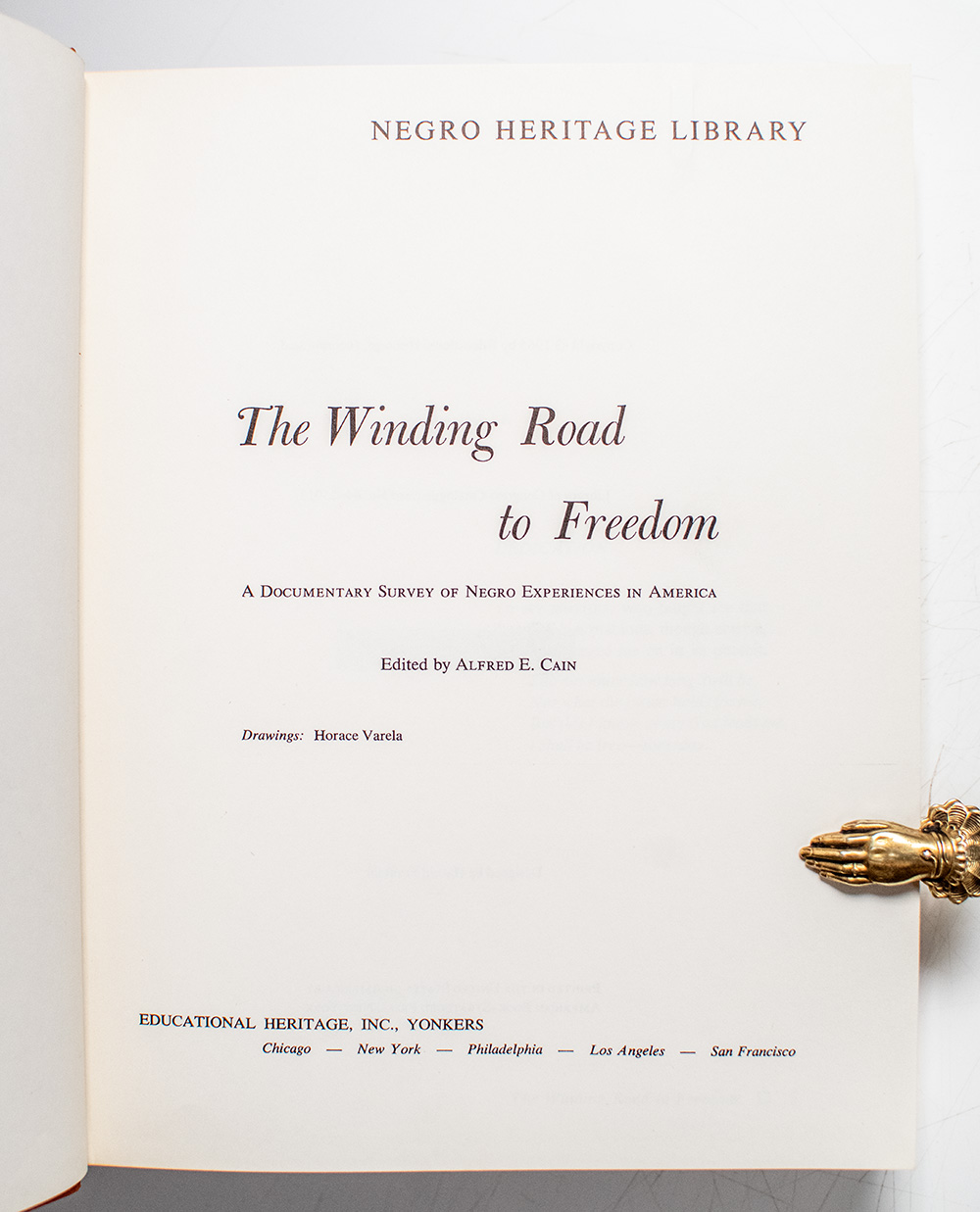
The Winding Road to Freedom: A Documentary Survey of Negro Experiences in America.
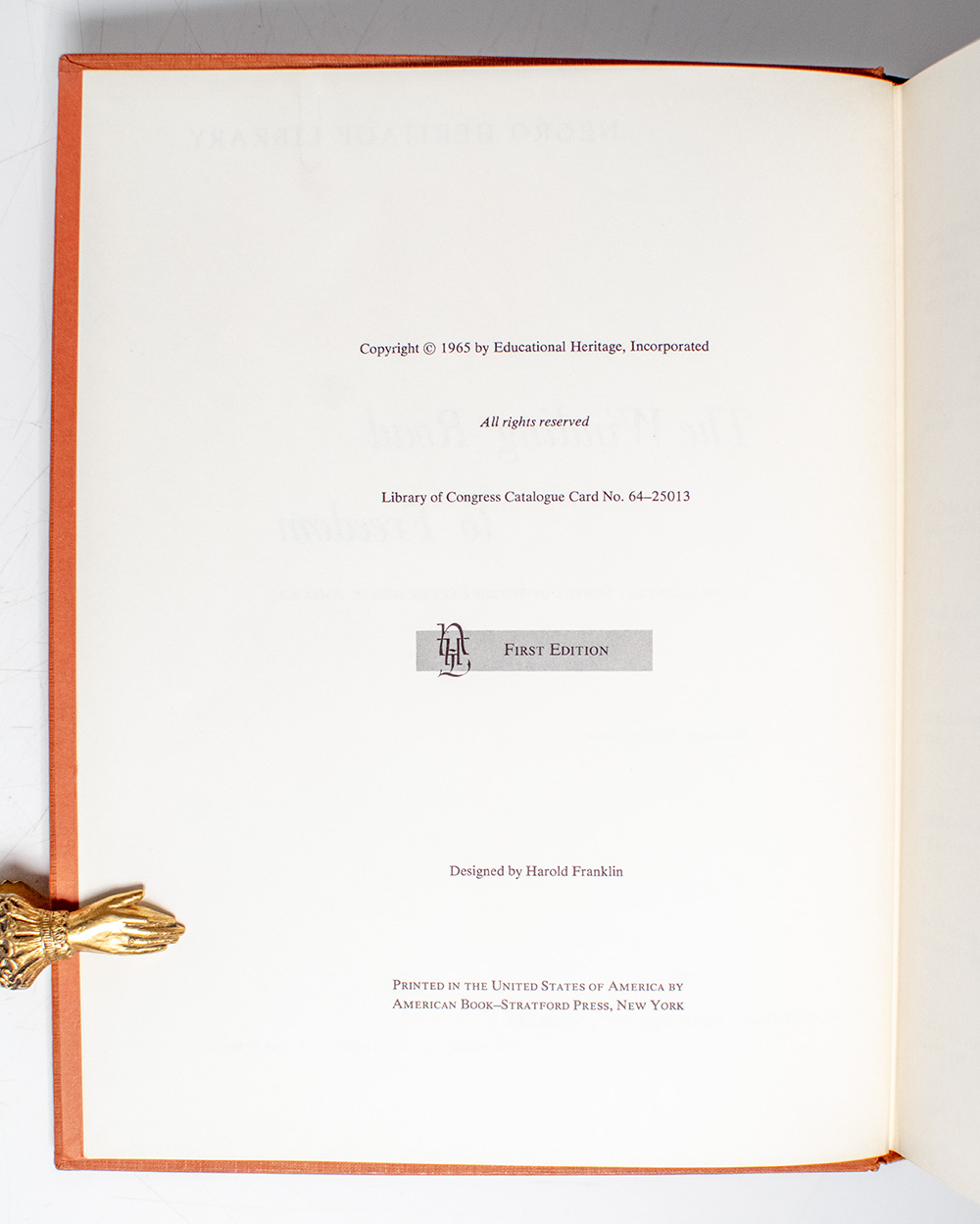
Yonkers: Educational Heritage, Inc , 1965.
$40,000.00
In Stock
Item Number: RRB-149476
+$450
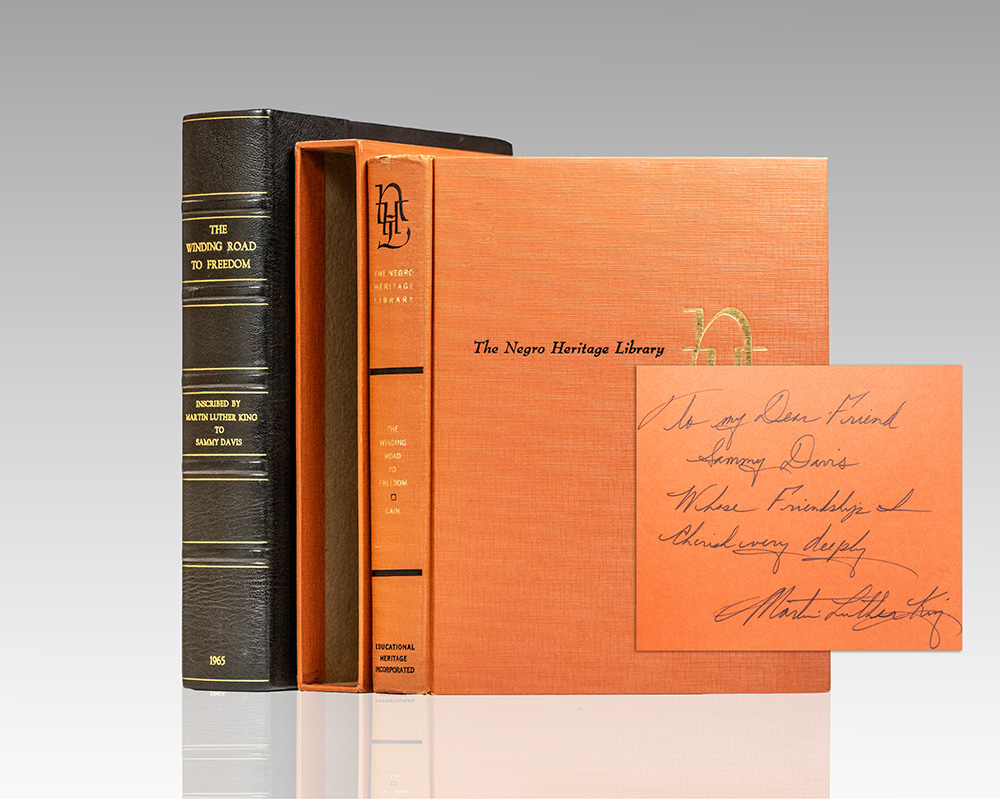
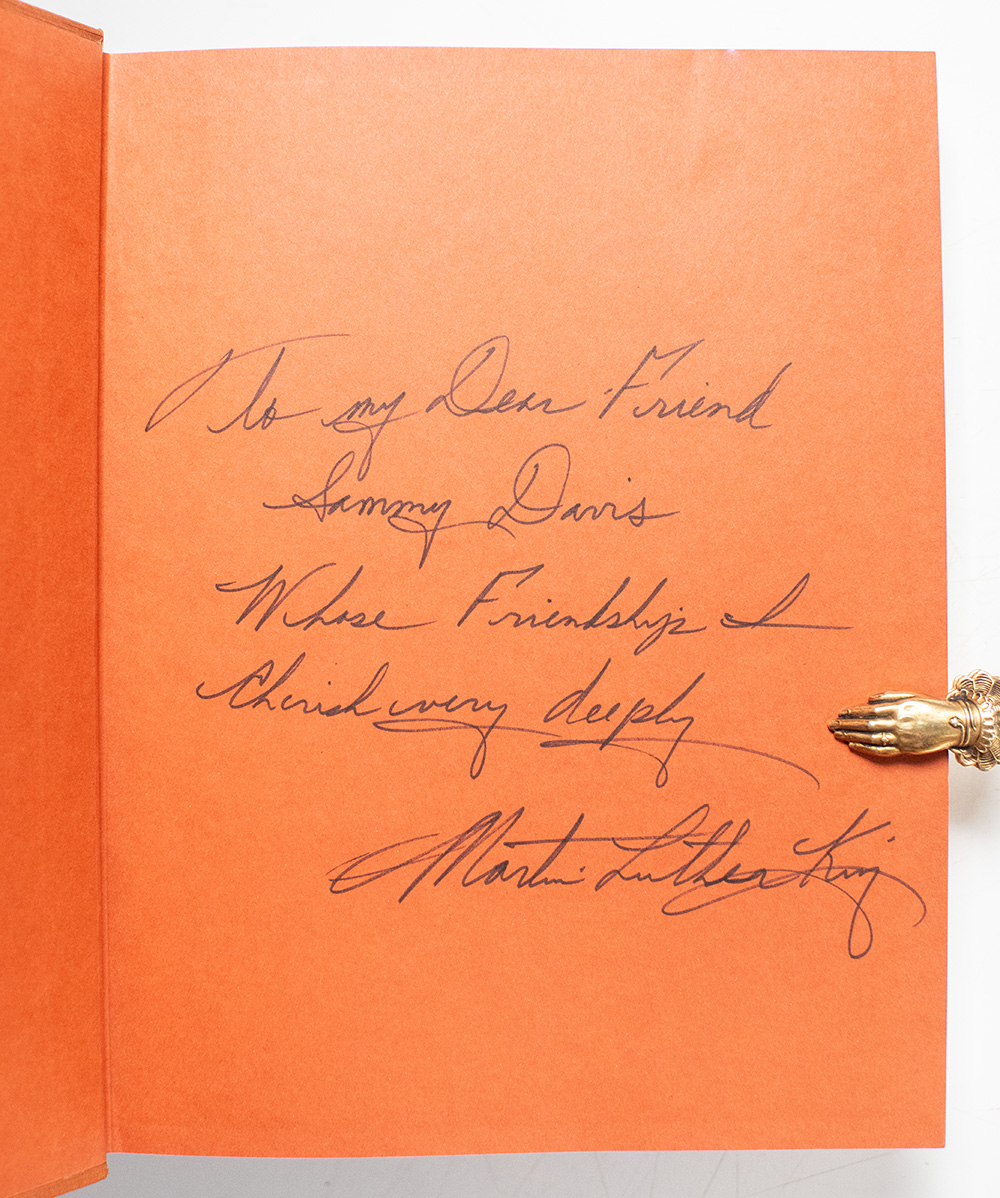
First Edition of Alfred E. Cain's The Winding Road to Freedom; warmly inscribed by Martin Luther King Jr. to American singer, dancer, and actor Sammy Davis Jr.
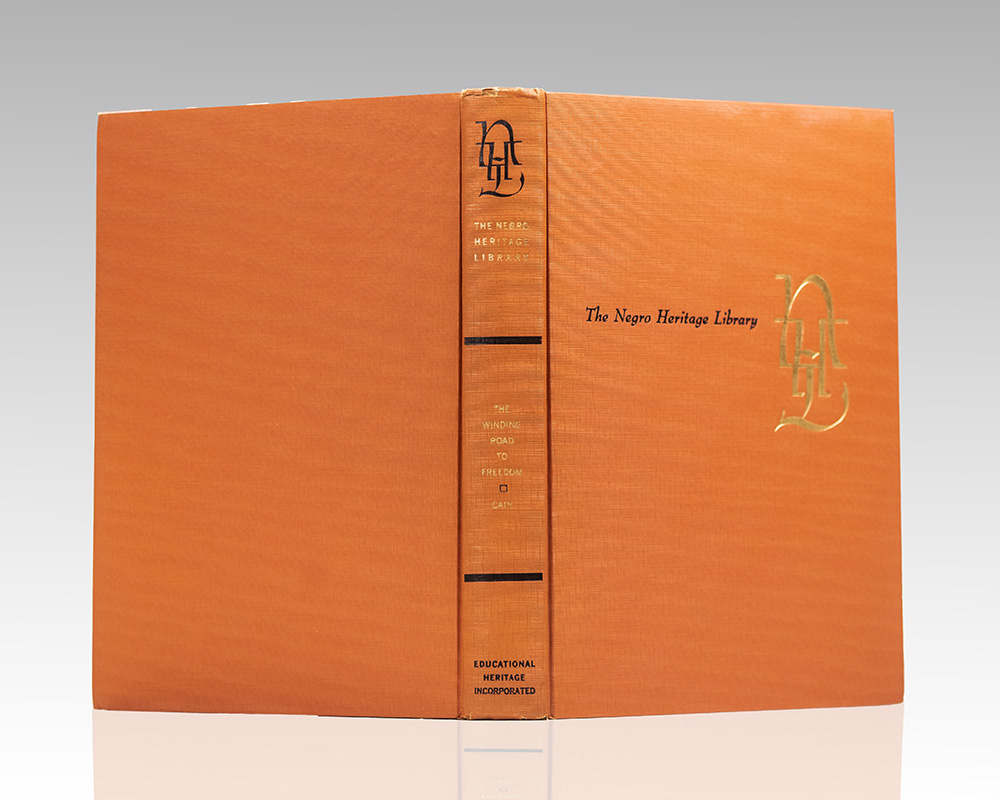
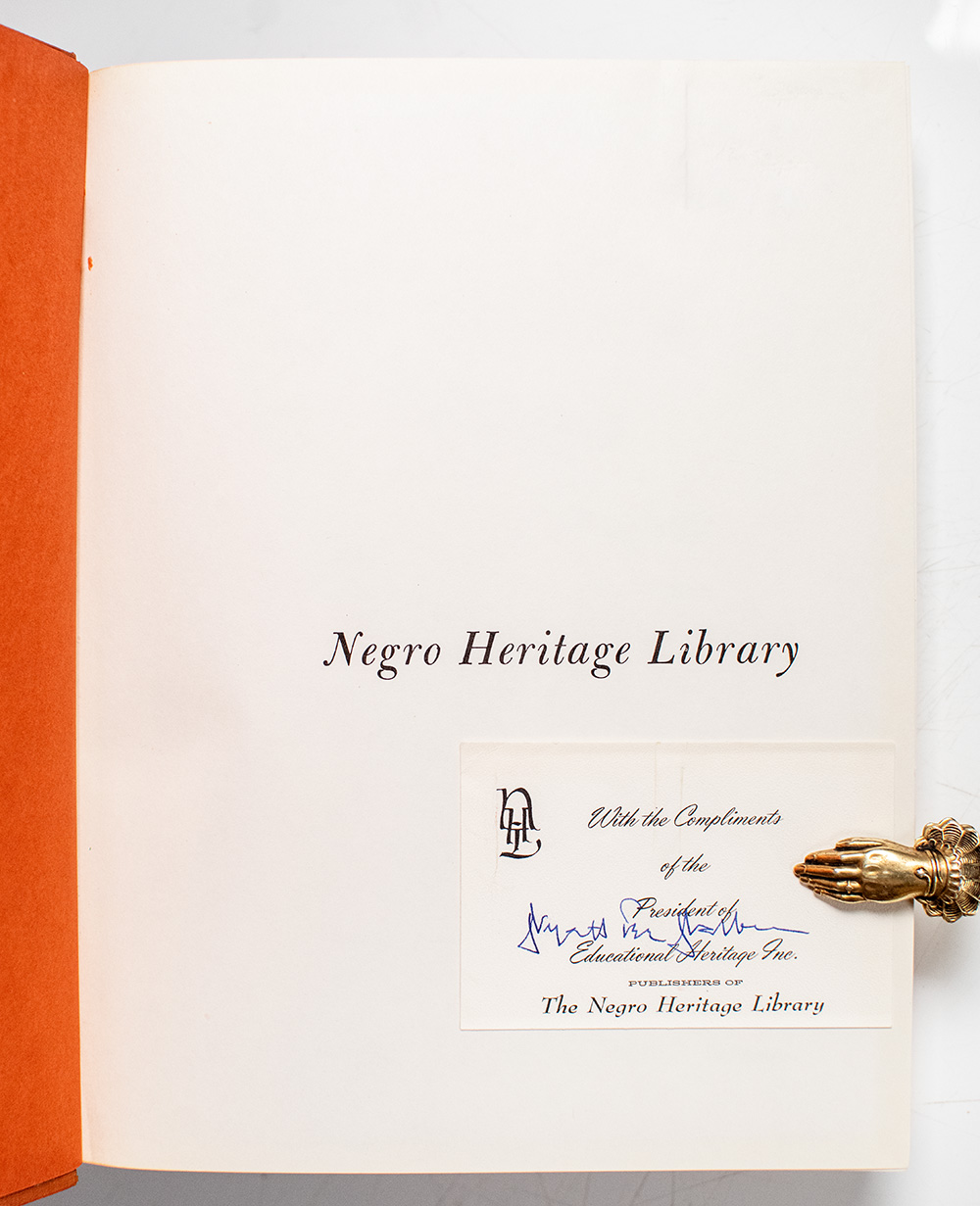
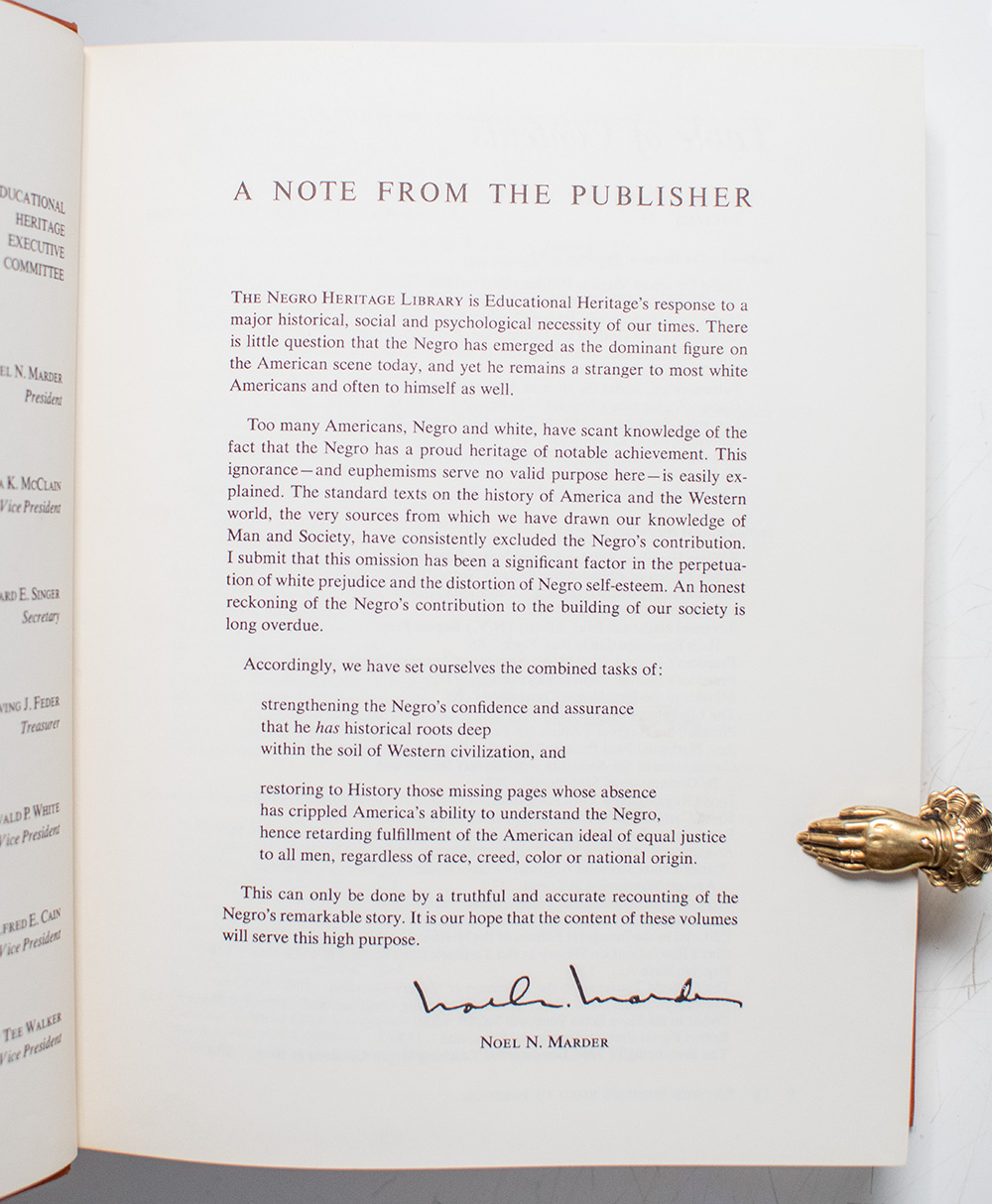
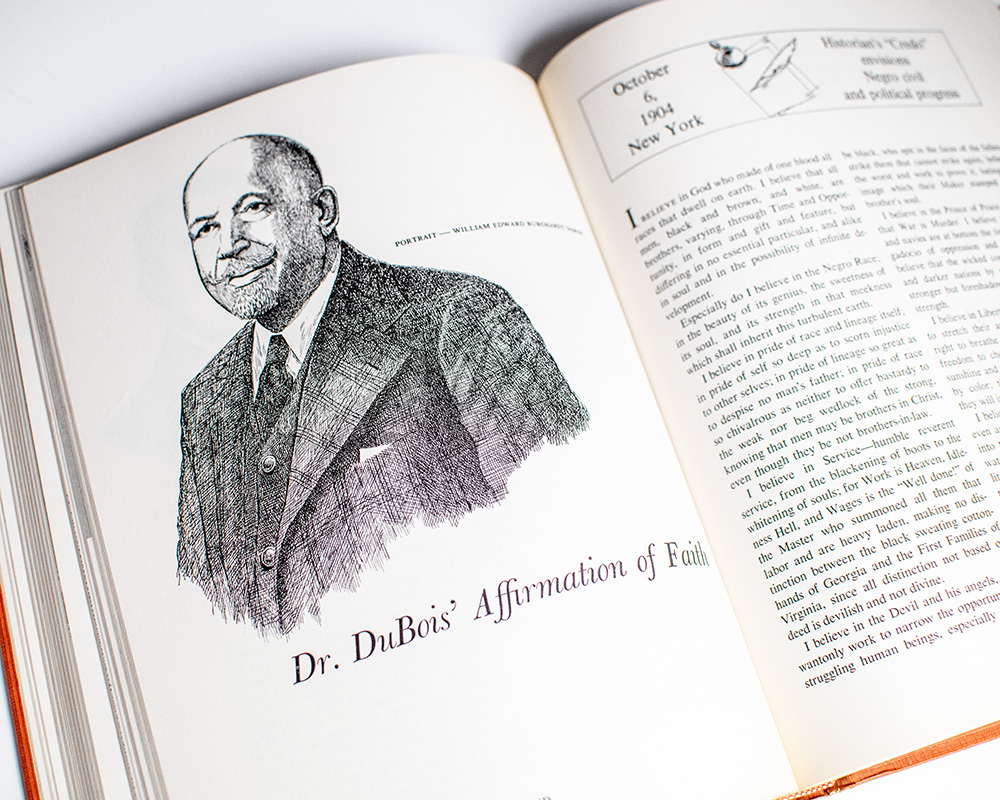
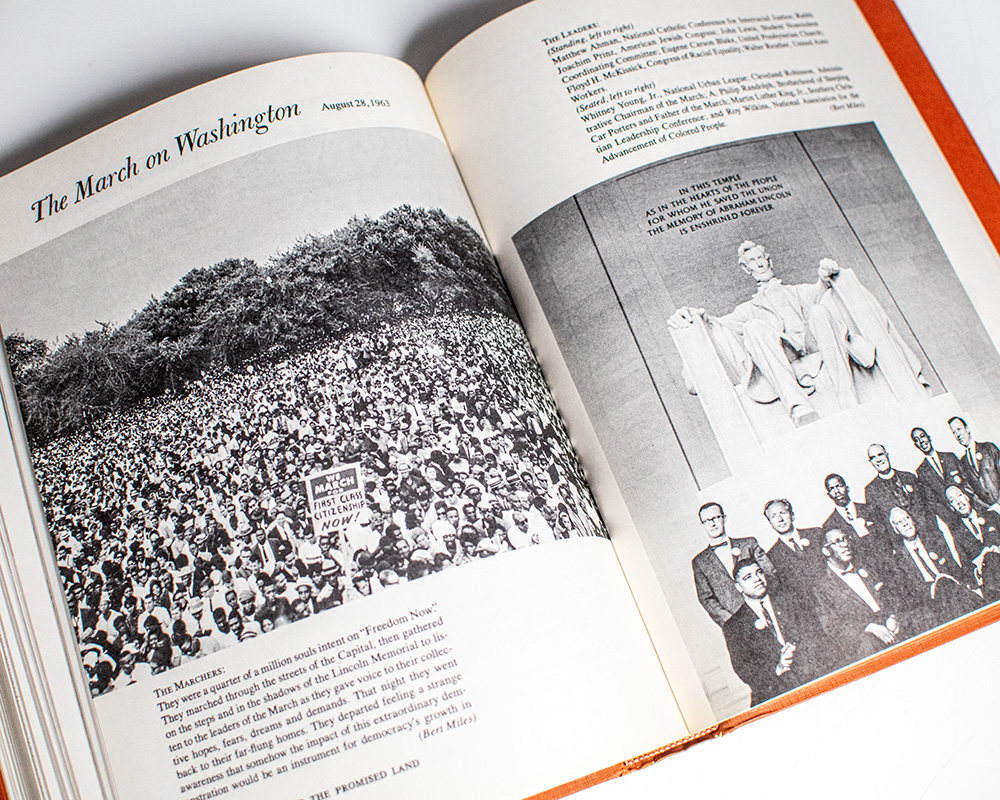
First edition of this comprehensive anthology that compiles historical documents, speeches, and firsthand accounts to trace the evolving struggle for African American freedom and equality. Quarto, original publisher's orange cloth boards, with black and white illustrations. Association copy, inscribed by Martin Luther King Jr. to Sammy Davis Jr. on the front free endpaper, "To my Dear Friend Sammy Davis Whose Friendship I Cherish very deeply Martin Luther King." Sammy Davis Jr. (1925–1990) was an American singer, dancer, and actor whose extraordinary versatility made him one of the most celebrated entertainers of the twentieth century. As the only Black member of the Rat Pack, Davis broke racial barriers in entertainment while confronting segregation both on and off stage. His friendship with Dr. Martin Luther King Jr. began through Davis’s activism and fundraising for King’s civil-rights efforts and deepened during the Civil Rights Movement. Davis used his fame to raise awareness and funds for King’s initiatives, performing at civil rights benefits and supporting the 1963 March on Washington. In near fine condition with a small loss to the crown of the spine. Edited by Alfred E. Cain. Illustrated by Horace Varela. Housed in the original orange cloth slipcase within a custom folding chemise within a custom half morocco slipcase with gilt titles to the spine.
Martin Luther King Jr. was a Baptist minister and activist who became the most visible spokesperson and leader in the civil rights movement from 1954 through 1968. He is best known for his role in the advancement of civil rights using the tactics of nonviolence and civil disobedience based on his Christian beliefs and inspired by the nonviolent activism of Mahatma Gandhi. King led the 1955 Montgomery bus boycott and in 1957 became the first president of the Southern Christian Leadership Conference (SCLC). With the SCLC, he led an unsuccessful 1962 struggle against segregation in Albany, Georgia, and helped organize the nonviolent 1963 protests in Birmingham, Alabama. He also helped organize the 1963 March on Washington, where he delivered his famous "I Have a Dream" speech. On October 14, 1964, King received the Nobel Peace Prize for combating racial inequality through nonviolent resistance. In 1965, he helped to organize the Selma to Montgomery marches, and the following year he and the SCLC took the movement north to Chicago to work on segregated housing. In his final years he expanded his focus to include opposition towards poverty and the Vietnam War, alienating many of his liberal allies with a 1967 speech titled "Beyond Vietnam". In 1968, King was planning a national occupation of Washington, D.C., to be called the Poor People's Campaign, when he was assassinated on April 4 in Memphis, Tennessee. He was posthumously awarded the Presidential Medal of Freedom and the Congressional Gold Medal. Martin Luther King Jr. Day was established as a holiday in numerous cities and states beginning in 1971, and as a U.S. federal holiday in 1986. The Martin Luther King Jr. Memorial on the National Mall in Washington, D.C., was dedicated in 2011.
The Winding Road to Freedom: A Documentary Survey of Negro Experiences in America.
$40,000.00
In Stock