
Armorial Binding.
[France]: , c. 1690.
$2,000.00
In Stock
Item Number: RRB-149153
+$450
Rare Original Armorial binding
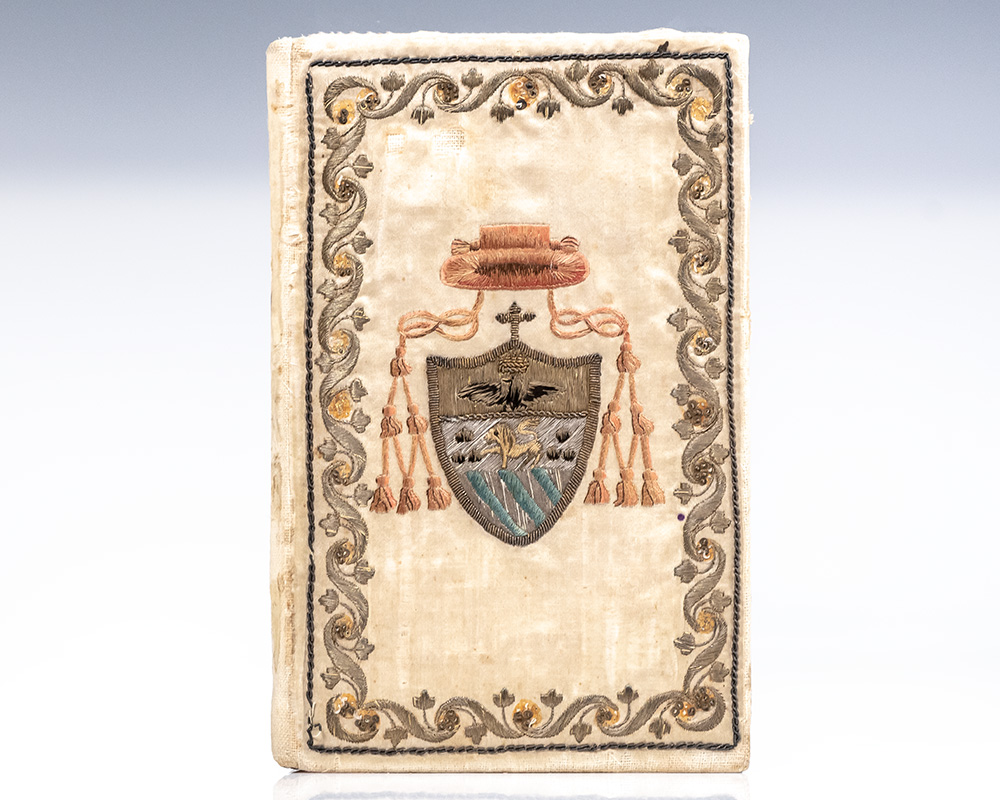
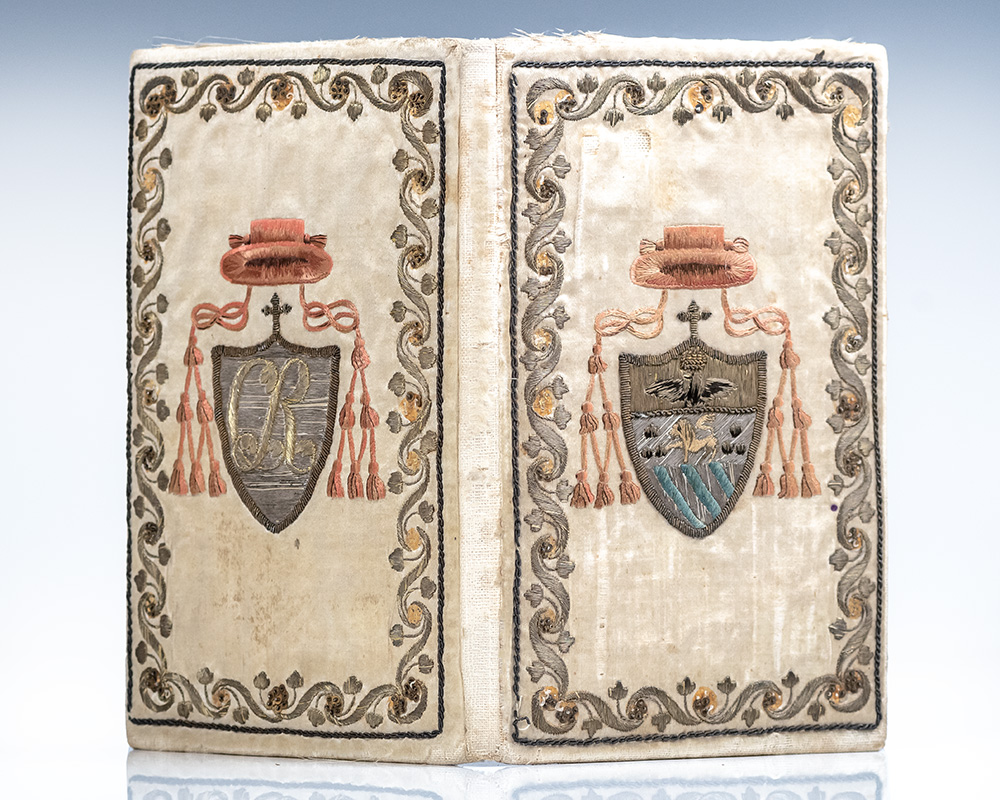
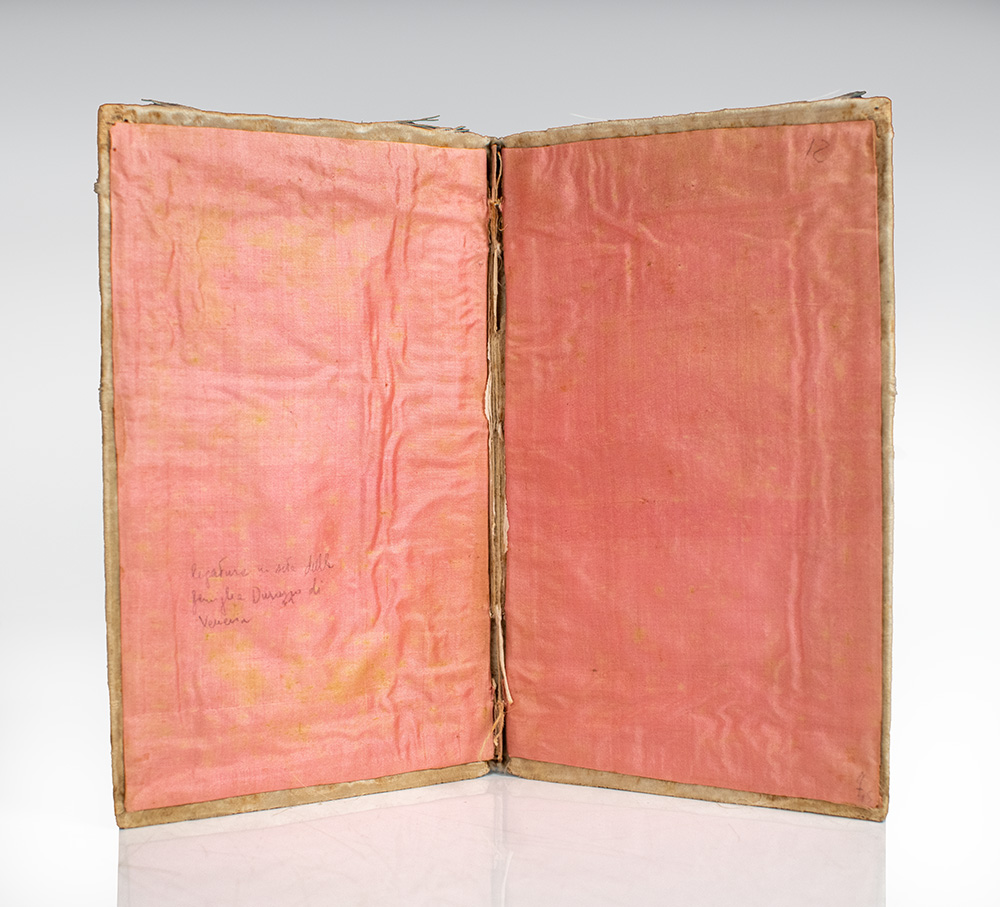
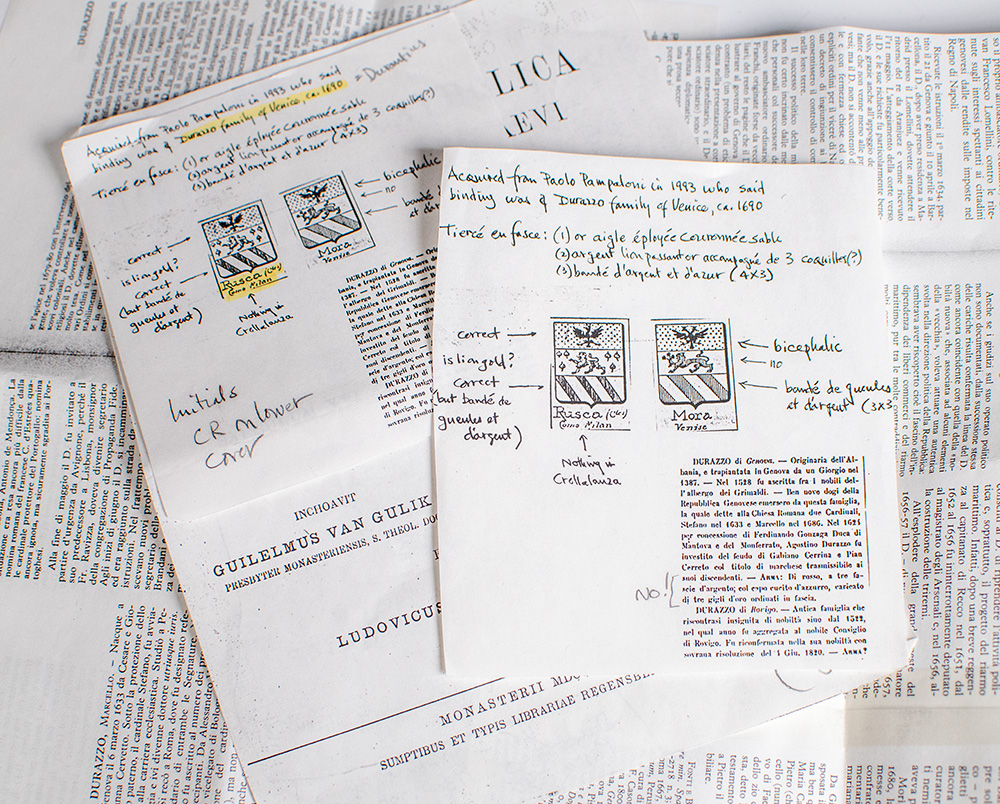
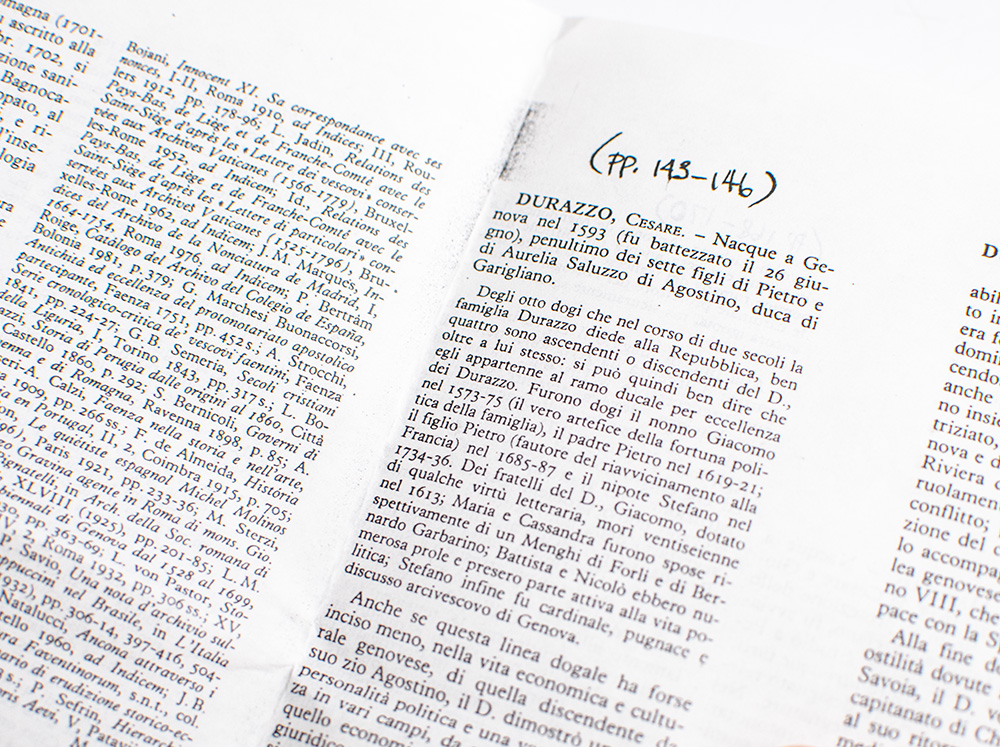
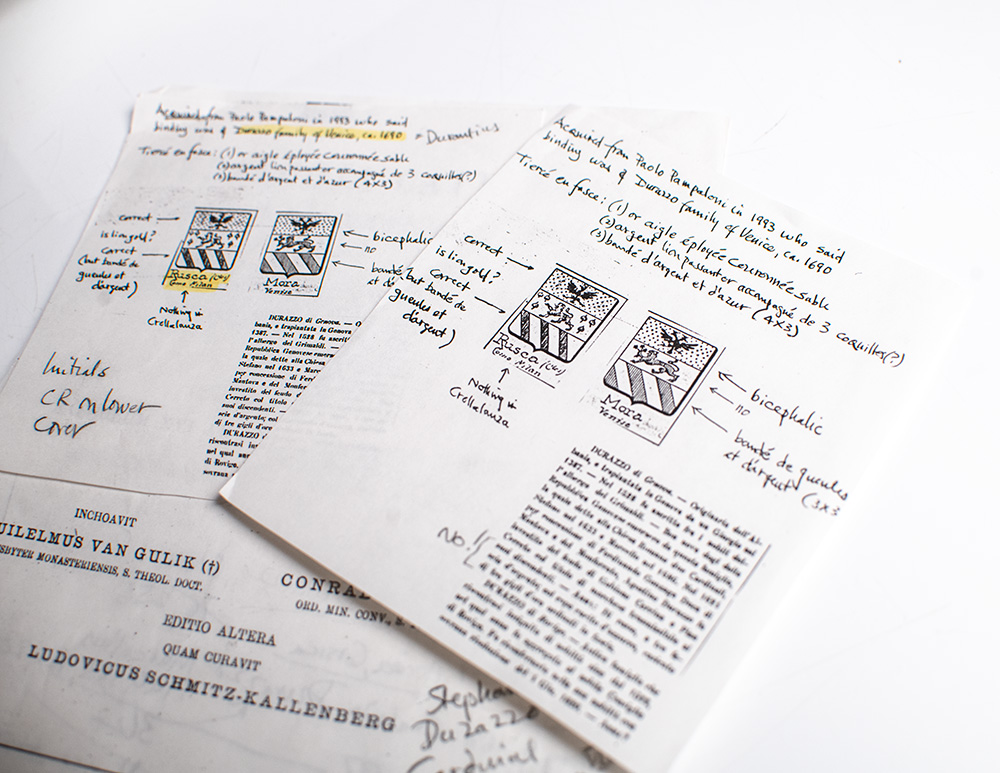
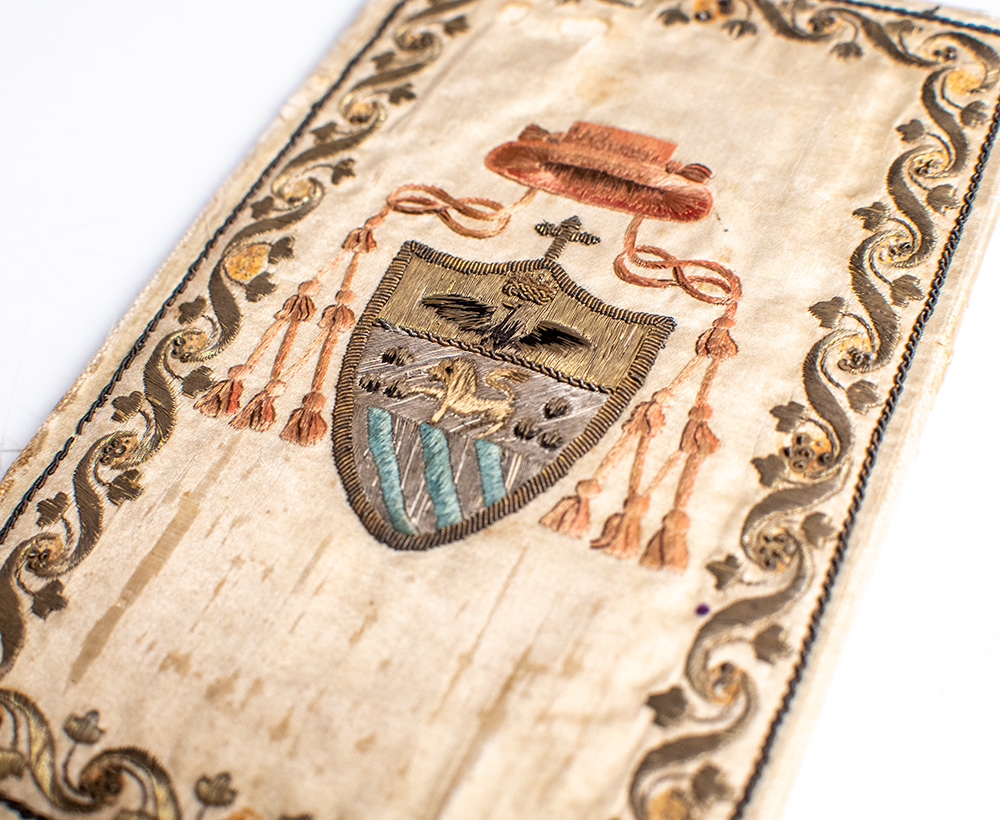
Rare original armorial binding in gold and silver thread bearing a coat of arms reminiscent of the Durazzo family of Venice. Small octavo, empty, white silk with pink silk pastedowns, the outer border decorated with floral repeating motives in silver and green foil leaves, and the escutcheon crowned by a pink hat with six tassels on either side designating the rank of Apostolic Prothonotary. This distinguishes the owner of the binding as member of the highest college of prelates in the Roman curia, and also marks him as honorary prelate to whom the pope conferred this specific title and its privileges. The escutcheon on the front panel is embroidered with a shield of three bands: the first depicting an aigle éployée couronnée or a heraldic eagle shown with wings spread and surmounted by a crown, the second an argent lion passant accompagné de trois coquilles or a heraldic lion with one paw raised on a silver background accompanied by three scallop shells, and the third a banté d’argent et d’azure or the background of a shield with diagonal stripes of silver and blue. The escutcheon on the rear panel is embroidered with a shield with a silver background and the initials CR. In very good condition. Accompanied by clippings regarding the meaning to the armorial shield and the Durazzo family laid in.
French coats of arms are a central component of heraldic tradition, combining symbolic imagery, codified colors, and precise terminology to represent lineage, authority, and identity. Typical elements include the escutcheon (shield), which bears charges such as lions, eagles, or scallop shells, and is described in formalized blazonry using French heraldic vocabulary—for example, argent lion passant or accompagné de trois coquilles (“a gold lion passant on a silver field, accompanied by three scallop shells”) or banté d’argent et d’azur (“a shield striped diagonally in silver and blue”). These designs were not merely decorative but functioned as visual markers of nobility, kinship ties, and feudal allegiance, while also incorporating religious and cultural symbolism, such as the scallop shell for pilgrimage. Over centuries, French heraldry developed strict rules of color (tincture) and form, ensuring both clarity and continuity, and contributed significantly to the broader European heraldic system by codifying a language that combined artistry with social and political meaning.
Armorial Binding.
$2,000.00
In Stock