
FLANDERS, Steven [Ruth Bader Ginsburg] Foreword by Stephen Breyer.
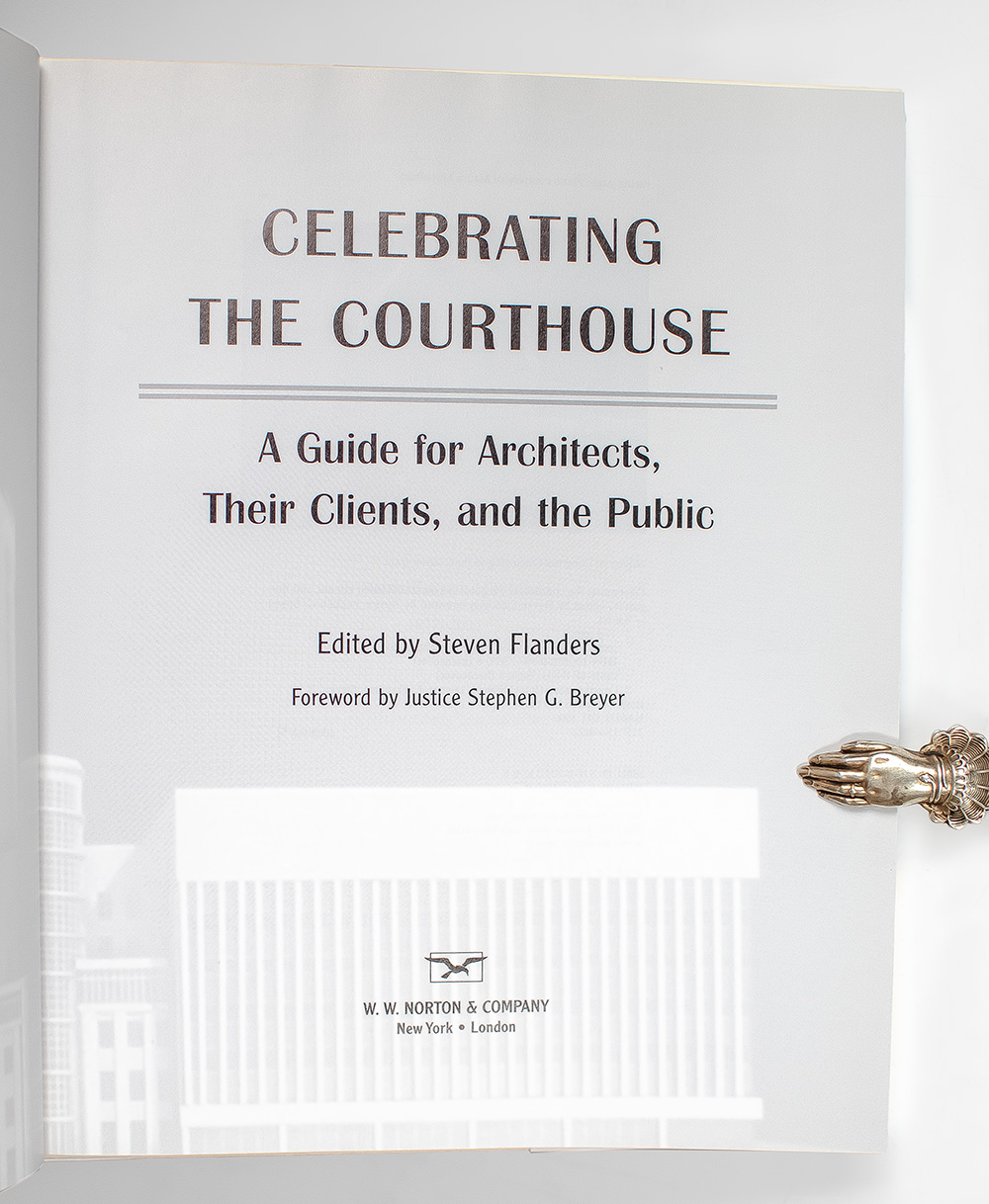
Celebrating the Courthouse: A Guide for Architects, Their Clients, and the Public.
New York: W.W. Norton & Company , 2006.
$6,000.00
In Stock
Item Number: RRB-148154
+$450
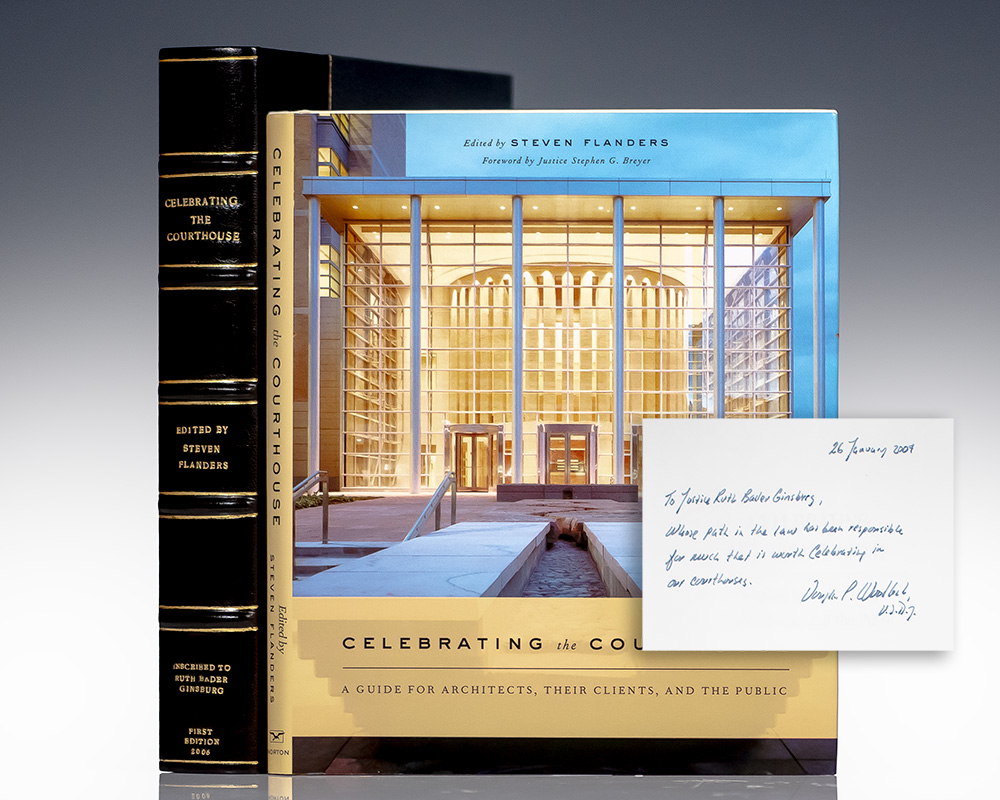
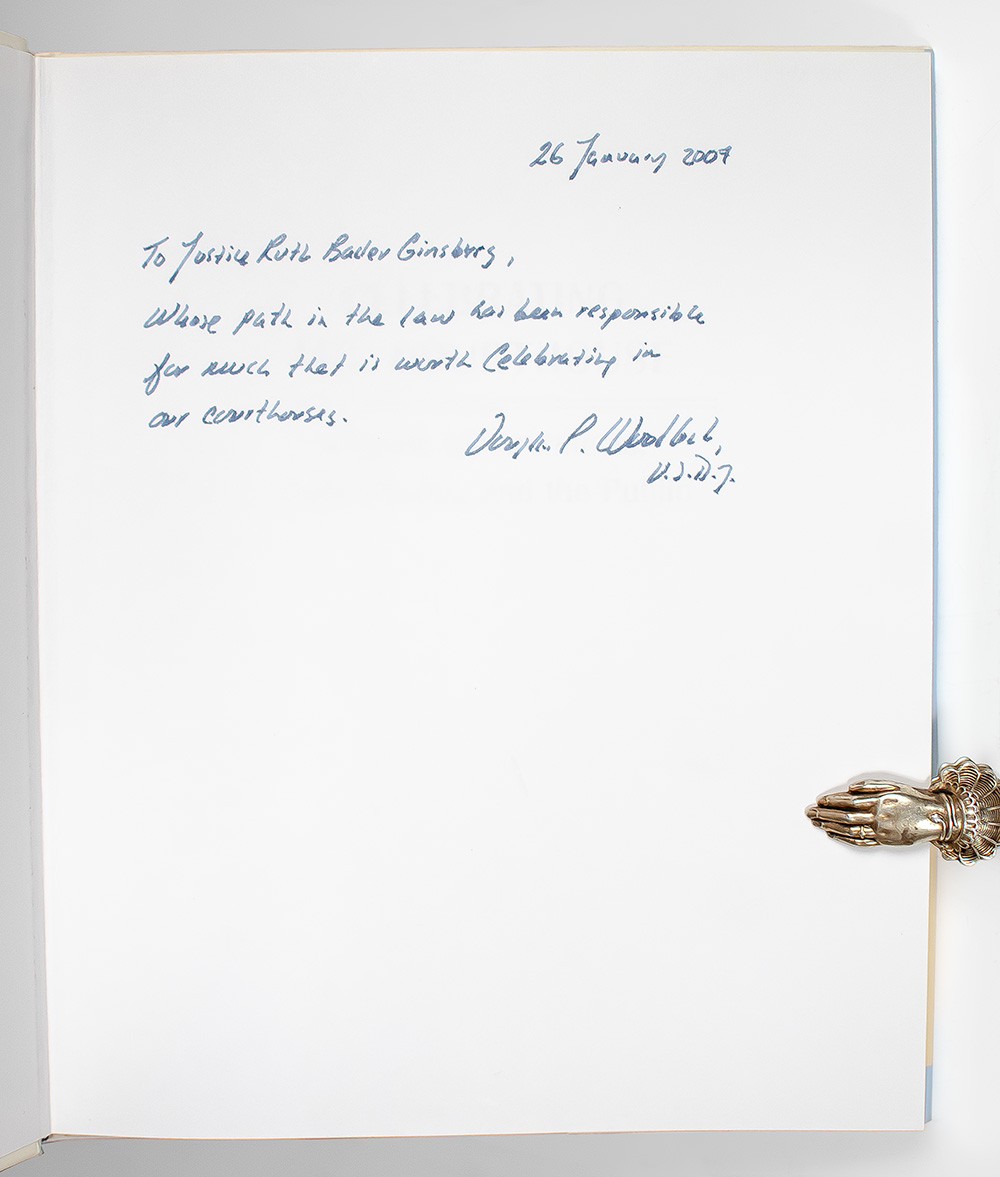
"Whose path in the law has been responsible for much that is worth Celebrating in our courthouses": First Edition of Celebrating the Courthouse; Lengthily inscribed to Ruth Bader Ginsburg
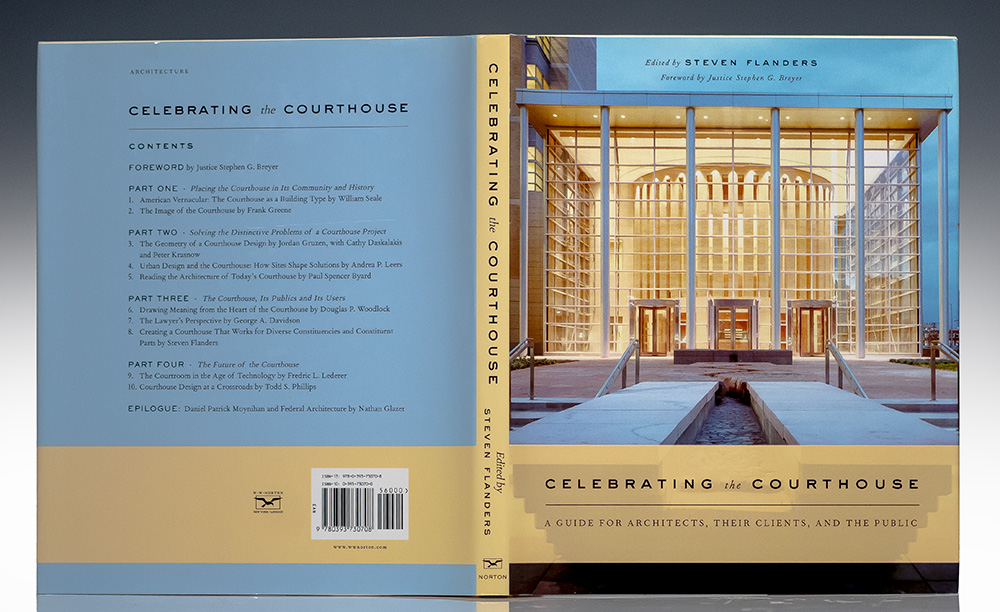
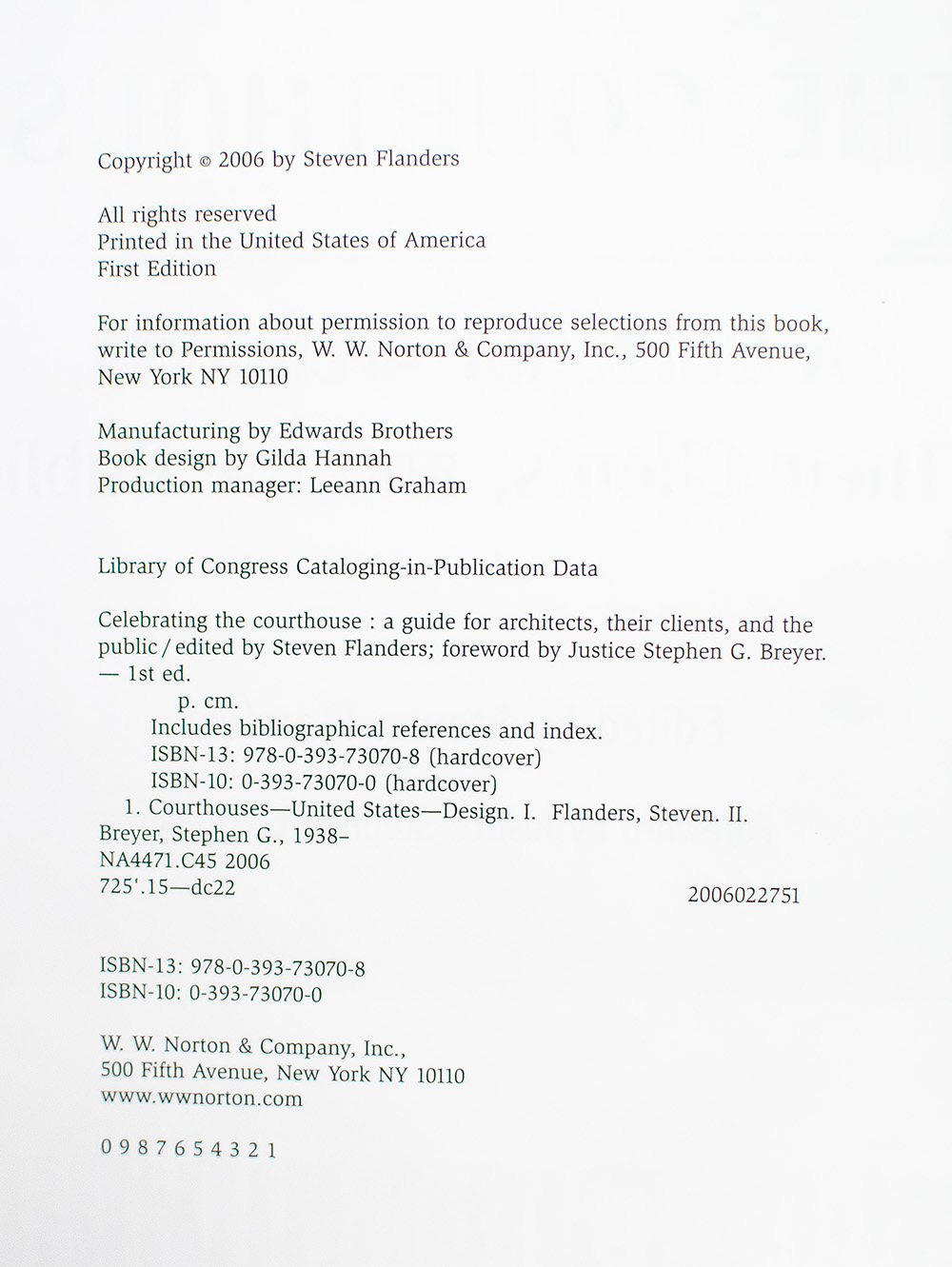
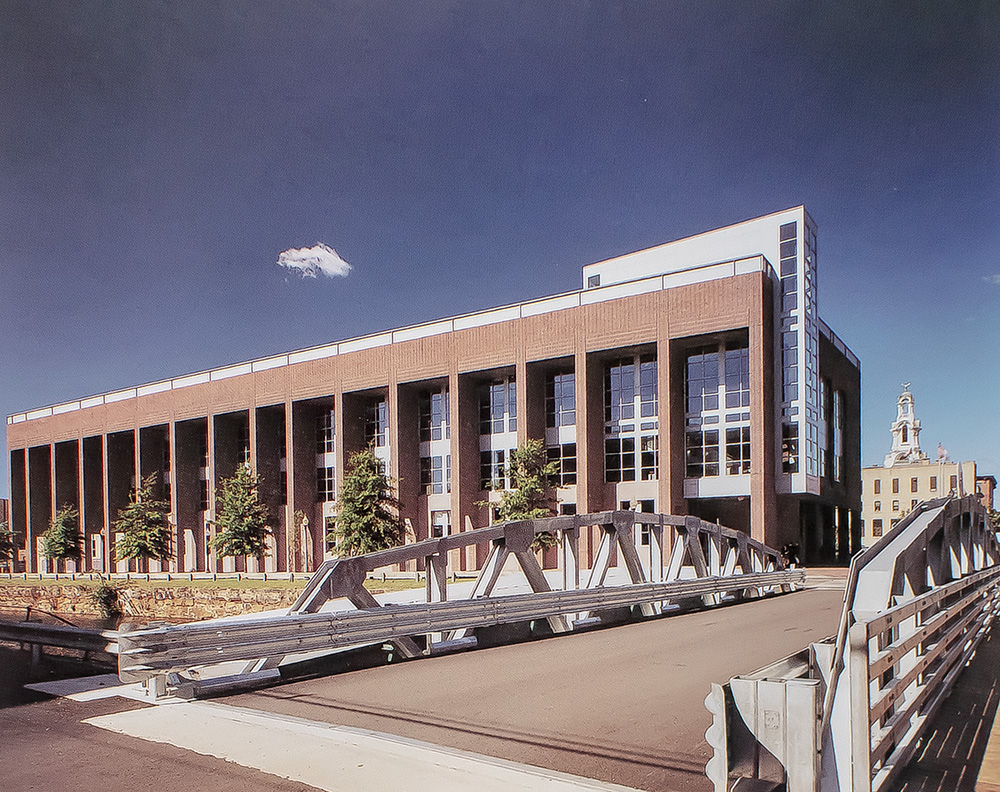
First edition of this exploration of the architectural, historical, and civic significance of courthouses. Quarto, original publisher's boards, illustrated with photographs throughout. Presentation copy, lengthily inscribed by contributor Douglas P. Woodlock on the front free endpaper recto, "26 January 2007, To Justice Ruth Bader Ginsburg, Whose path in the law has been responsible for much that is worth Celebrating in our courthouses. Douglas P. Woodlock, U.S.D.J." Judge Douglas P. Woodlock serves as a Judge for the U.S. District Court, District of Massachusetts. Judge Woodlock contributed chapter six of the present work, "Drawing Meaning from the Heart of the Courthouse." American lawyer and jurist, Ruth Bader Ginsburg served as an associate justice of the Supreme Court of the United States from 1993 until her death in 2020 and was responsible for some of the most eventful legal decisions of the past half-century. Nominated by President Bill Clinton in 1993 to replace retiring justice Byron White, Ginsburg became the first Jewish woman and the second woman to serve on the Court, after Sandra Day O’Connor. Ginsburg spent much of her legal career as an advocate for gender equality and women’s rights, winning many arguments before the Supreme Court. During her tenure as associate justice of the Supreme Court, Ginsburg received attention for her fiery and passionate dissents that reflected liberal views of the law. She was popularly dubbed “the Notorious R.B.G.”, a moniker she later embraced. She authored several important majority opinions related to gender discrimination, voting rights, and affirmative action in cases such as United States v. Virginia (1996) which struck down the Virginia Military Institute’s male-only admissions policy as violating the Equal Protection Clause of the Fourteenth Amendment, Olmstead v. L.C. (1999) in which the Court ruled that mental illness is a form of disability covered under the Americans with Disabilities Act of 1990, and Friends of the Earth, Inc. v. Laidlaw Environmental Services, Inc. (2000) in which the Court held that residents have standing to seek fines for an industrial polluter that affected their interests and that is able to continue doing so. Fine in a fine dust jacket. Foreword by Justice Stephen G. Breyer. Jacket design by Georgia A. Liebman. Housed in a custom half morocco clamshell box by the Harcourt Bindery.
"Both in function and in design, the buildings architects design will embody and reflect principles that tell the public who use or see them something about themselves, thier government, and their nation. In so doing, those buildings can help us live together better as a community. Indeed, the story that a building tells through its design may be as important to the community it serves as is its function" (from the foreword by Justice Stephen G. Breyer).
Celebrating the Courthouse: A Guide for Architects, Their Clients, and the Public.
$6,000.00
In Stock