
GRANT, Ulysses S. [U.S.] [William Tecumseh Sherman].
General William Tecumseh Sherman's Annotated Personal Memoirs of Ulysses S. [U.S.] Grant.
New York: Charles L. Webster & Company , 1885-86.
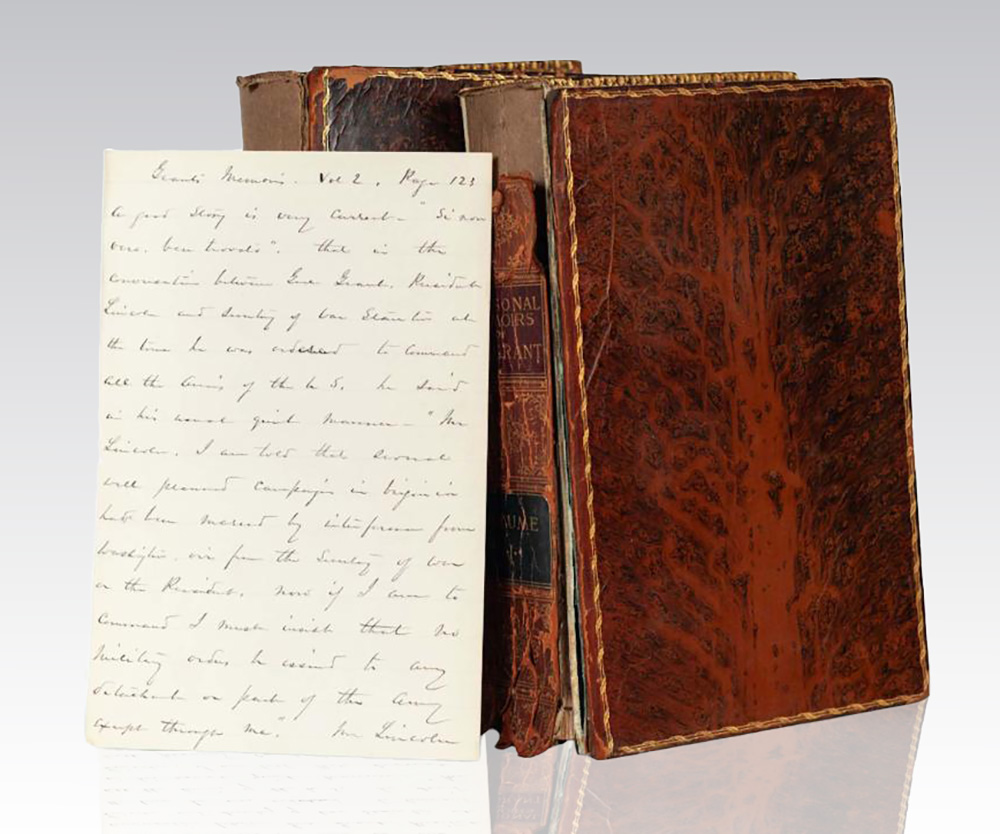
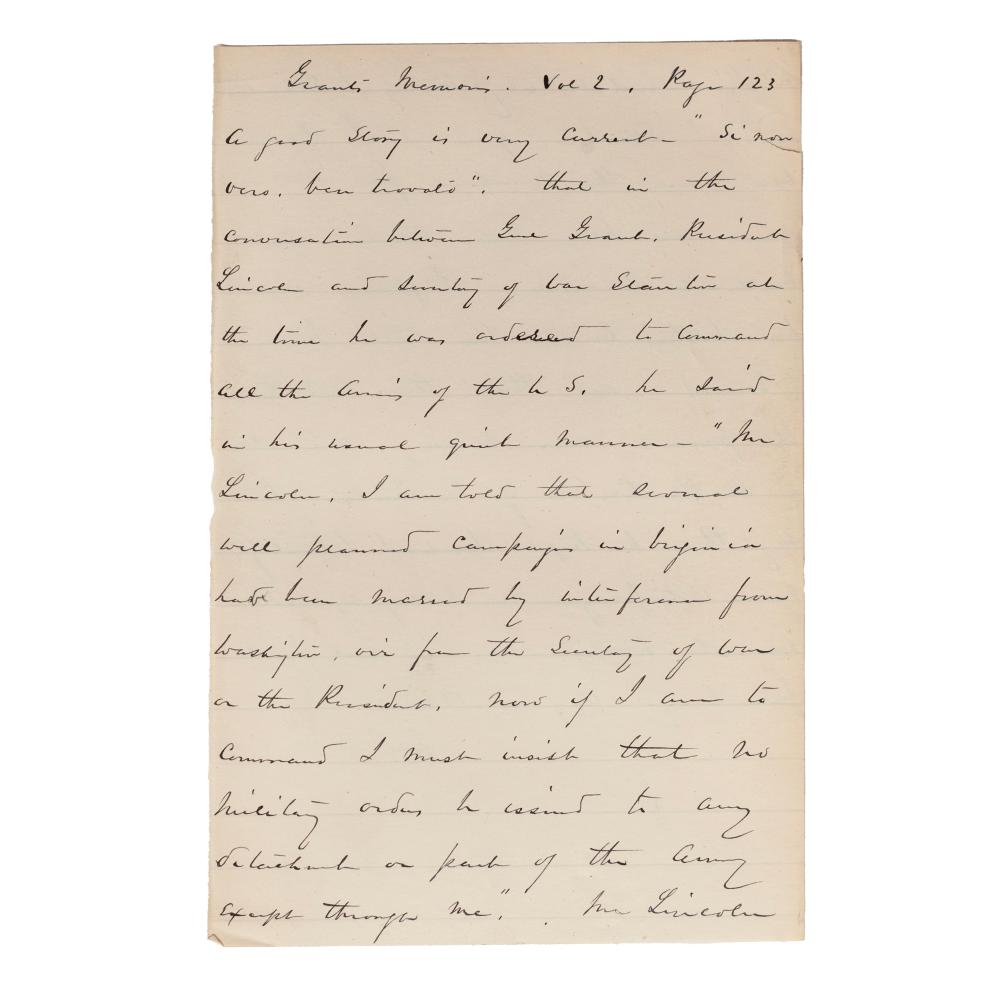
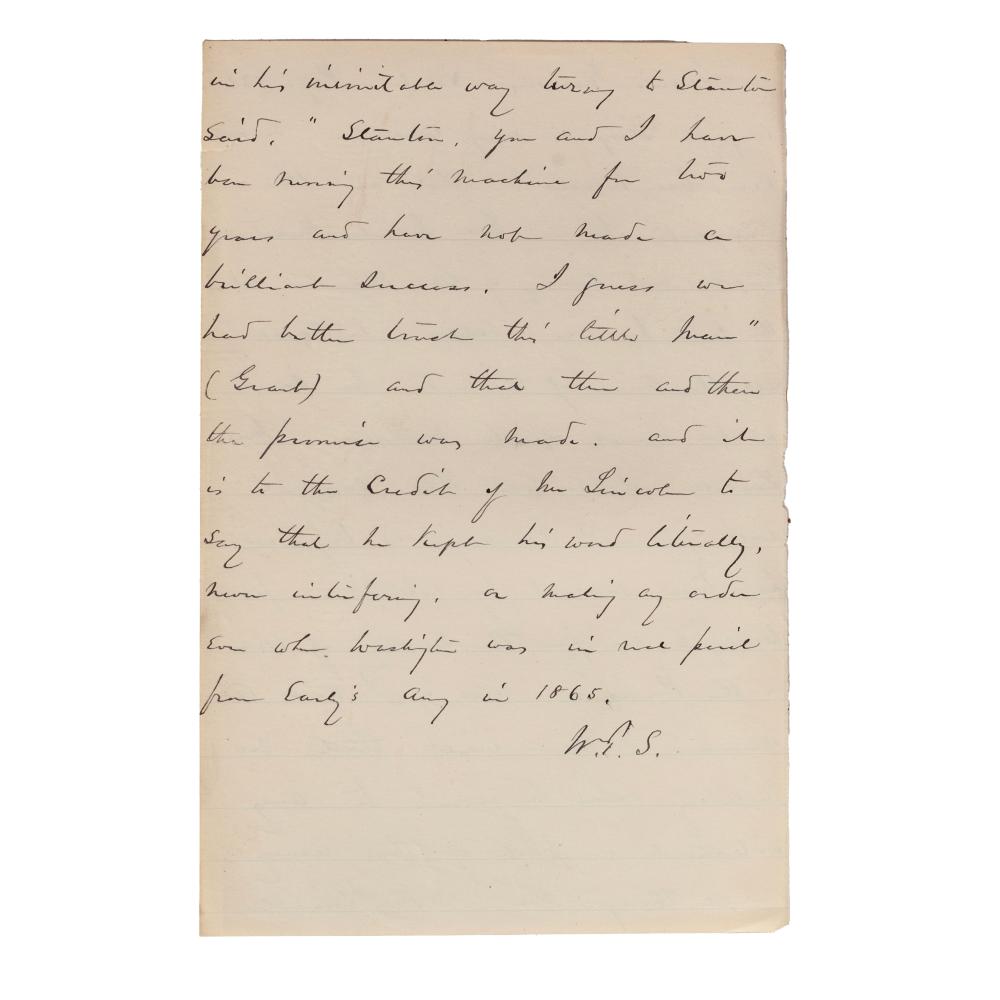
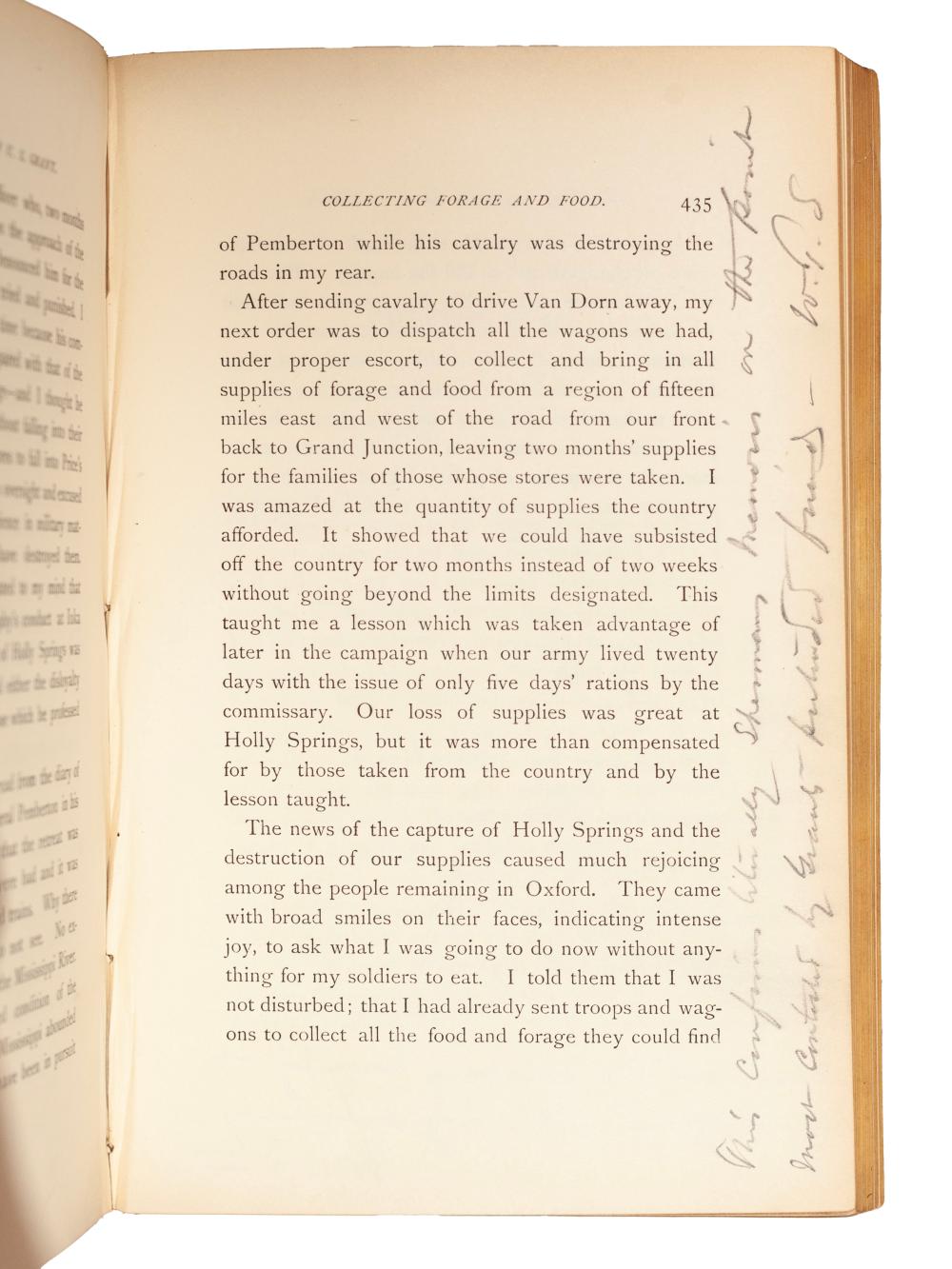
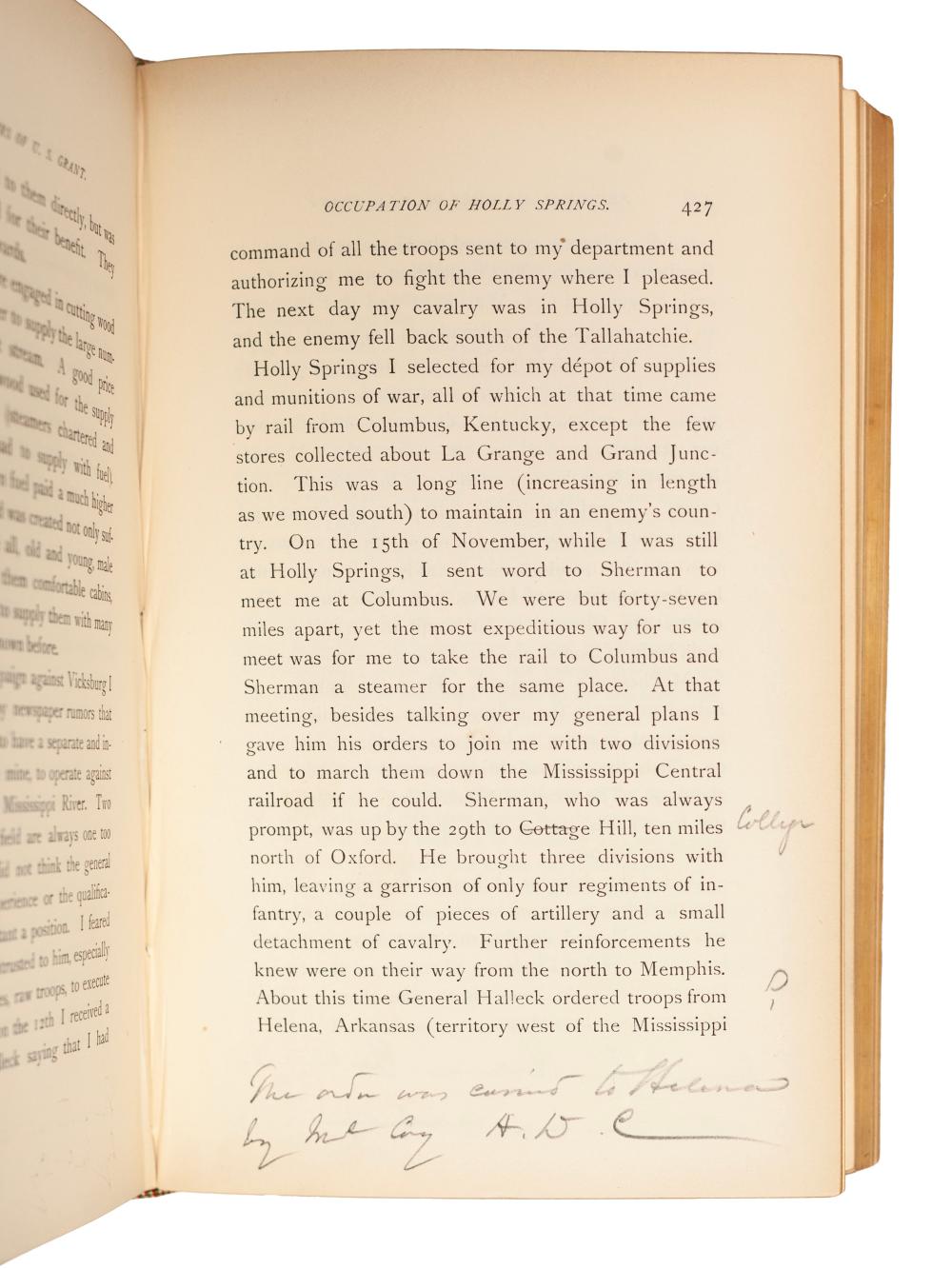
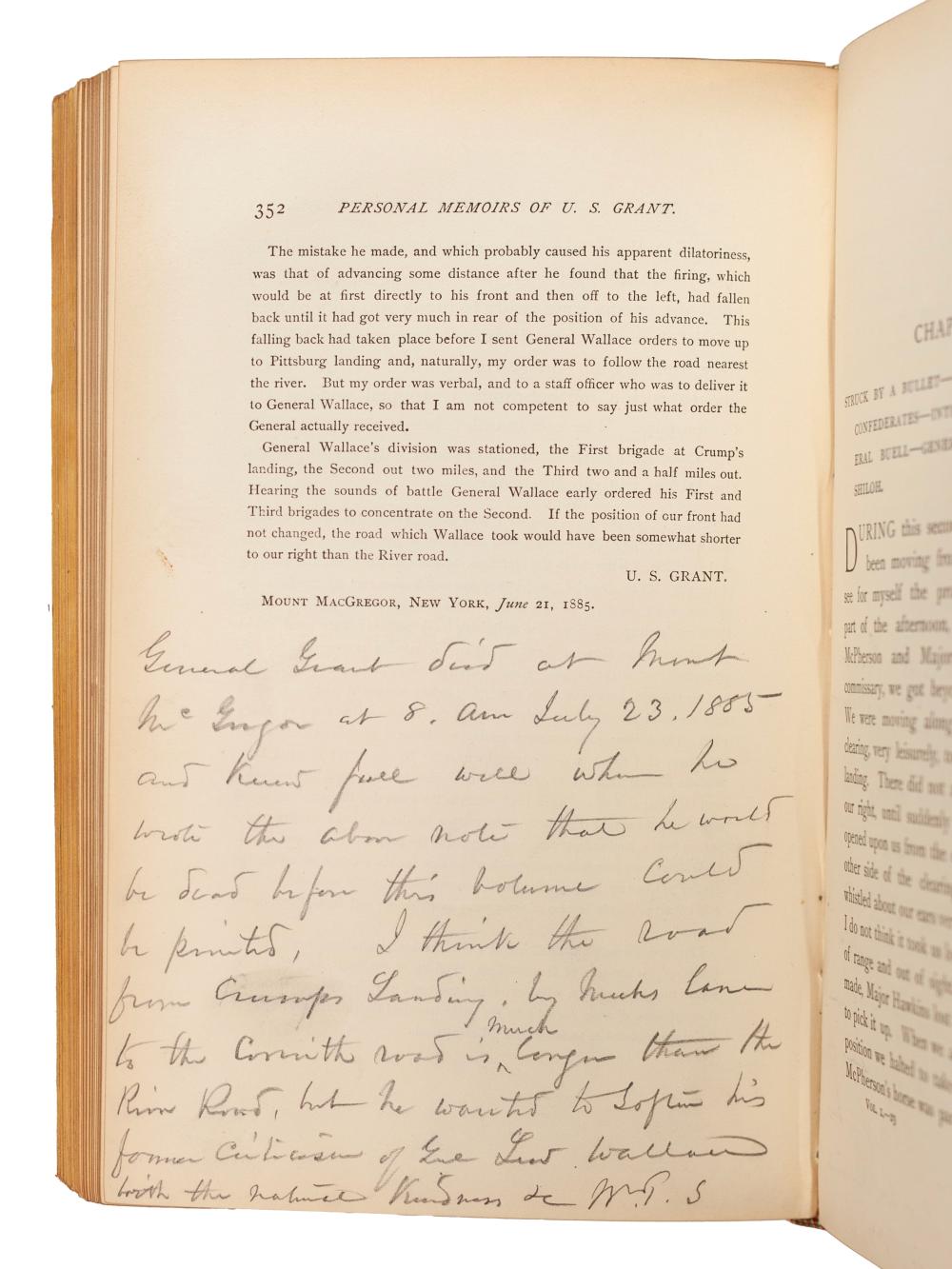
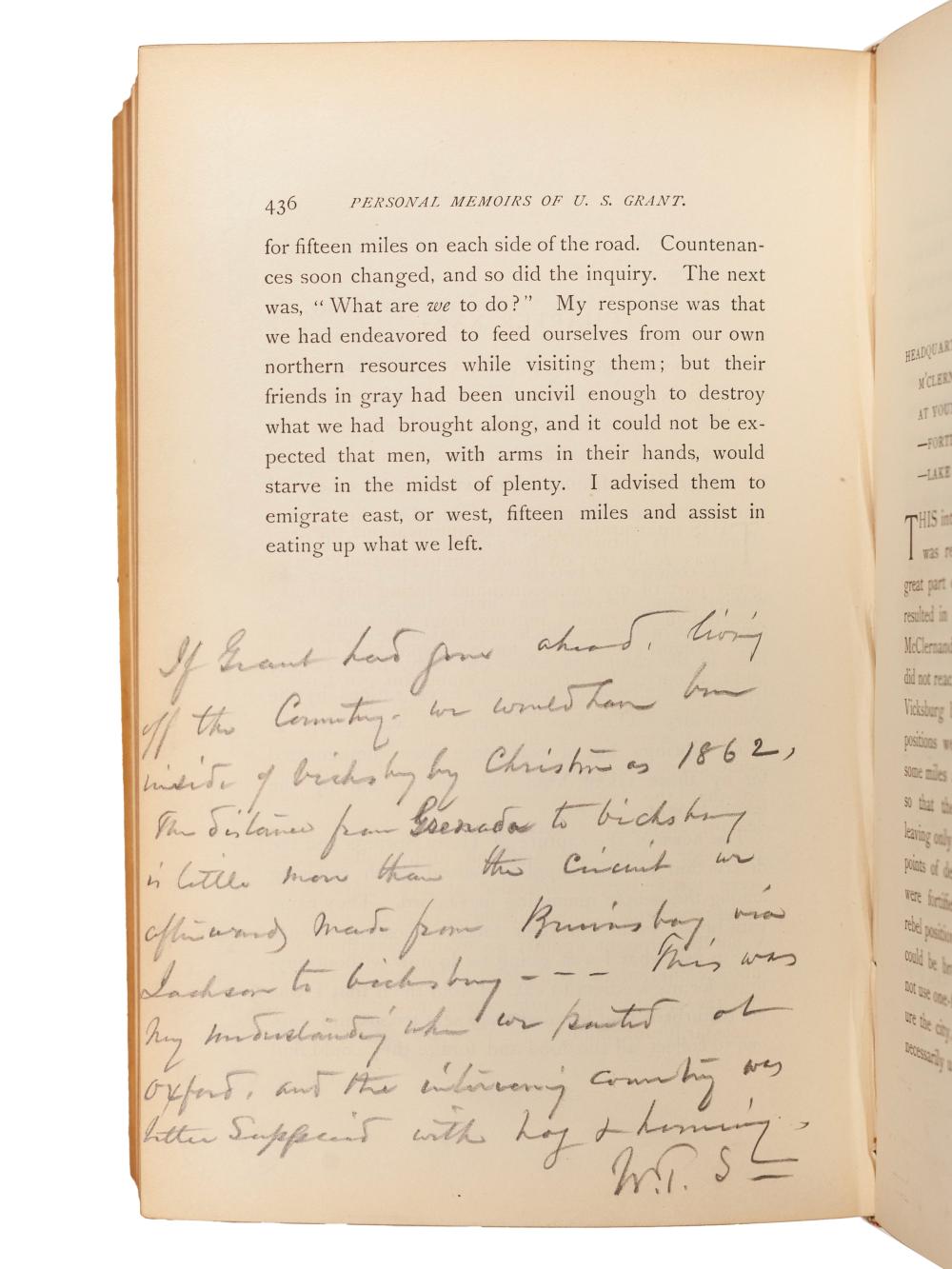
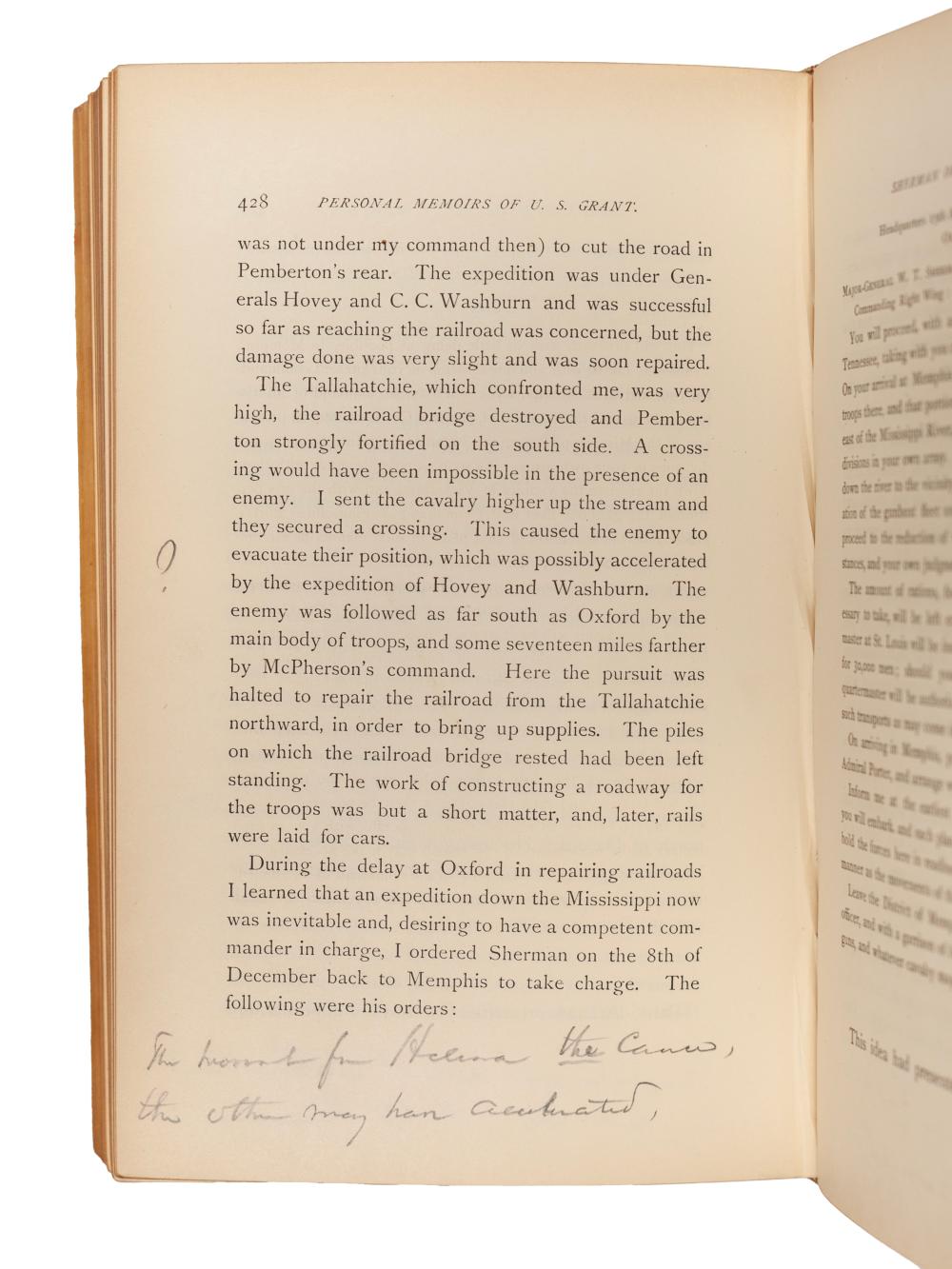
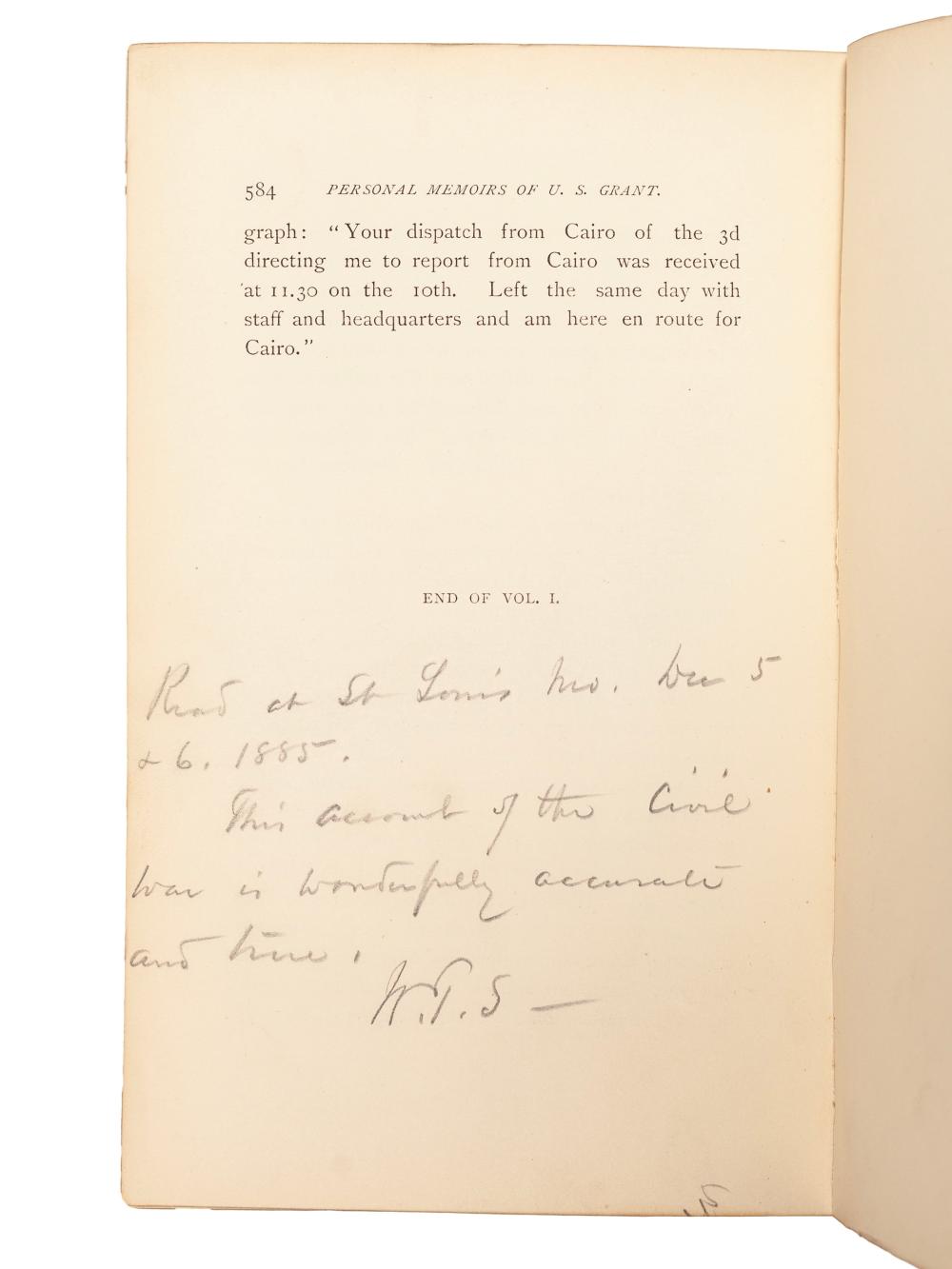
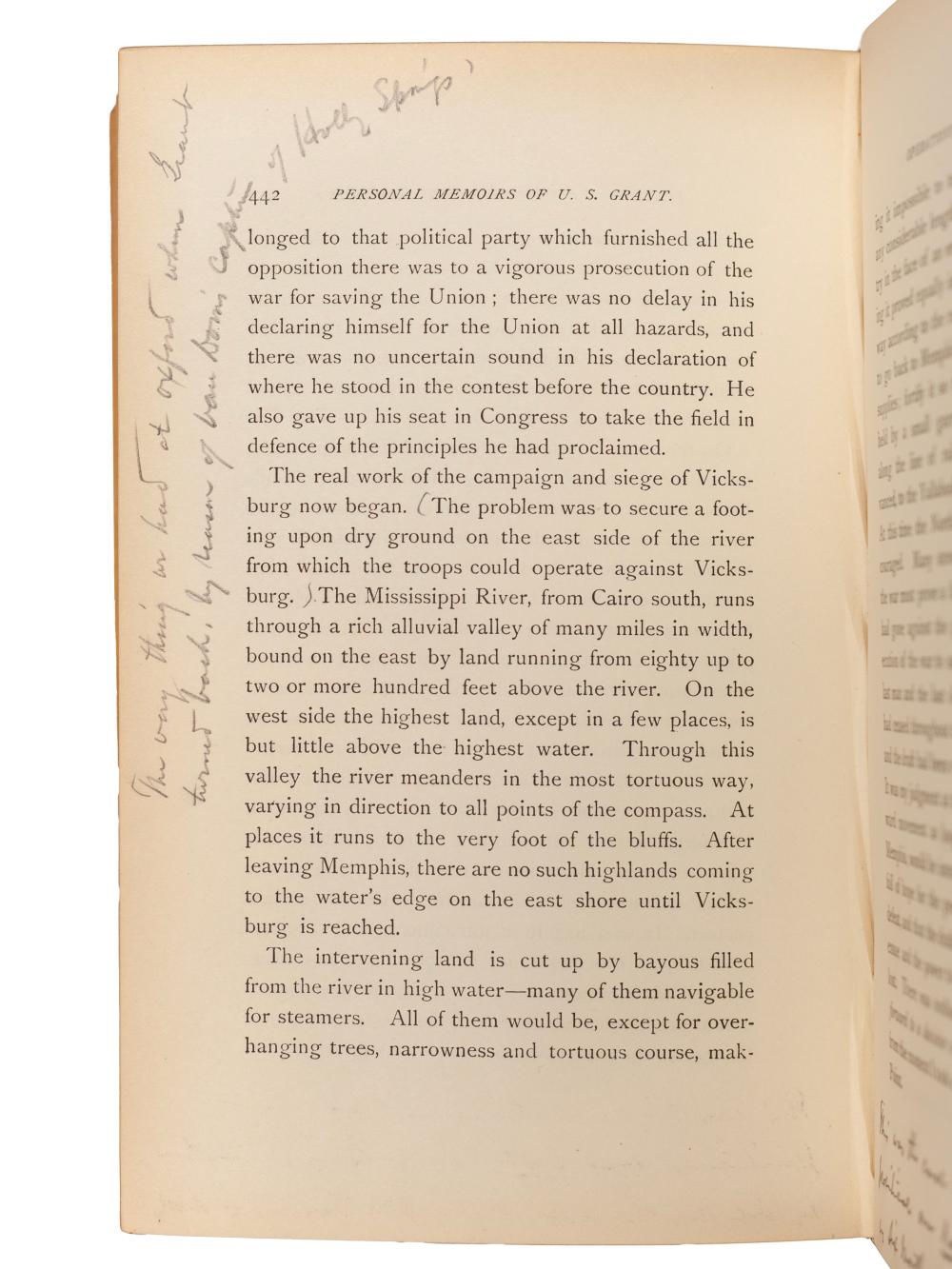
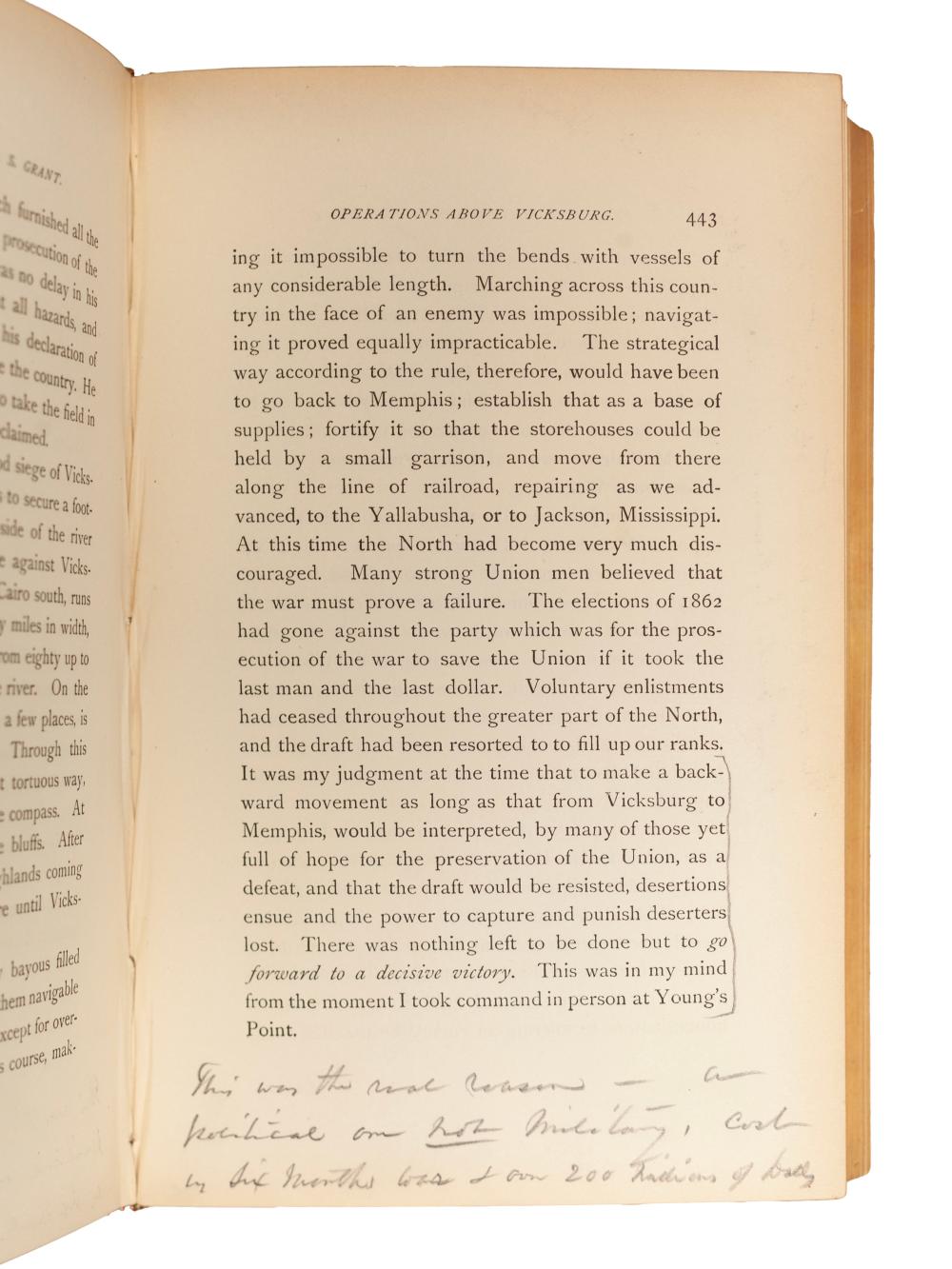
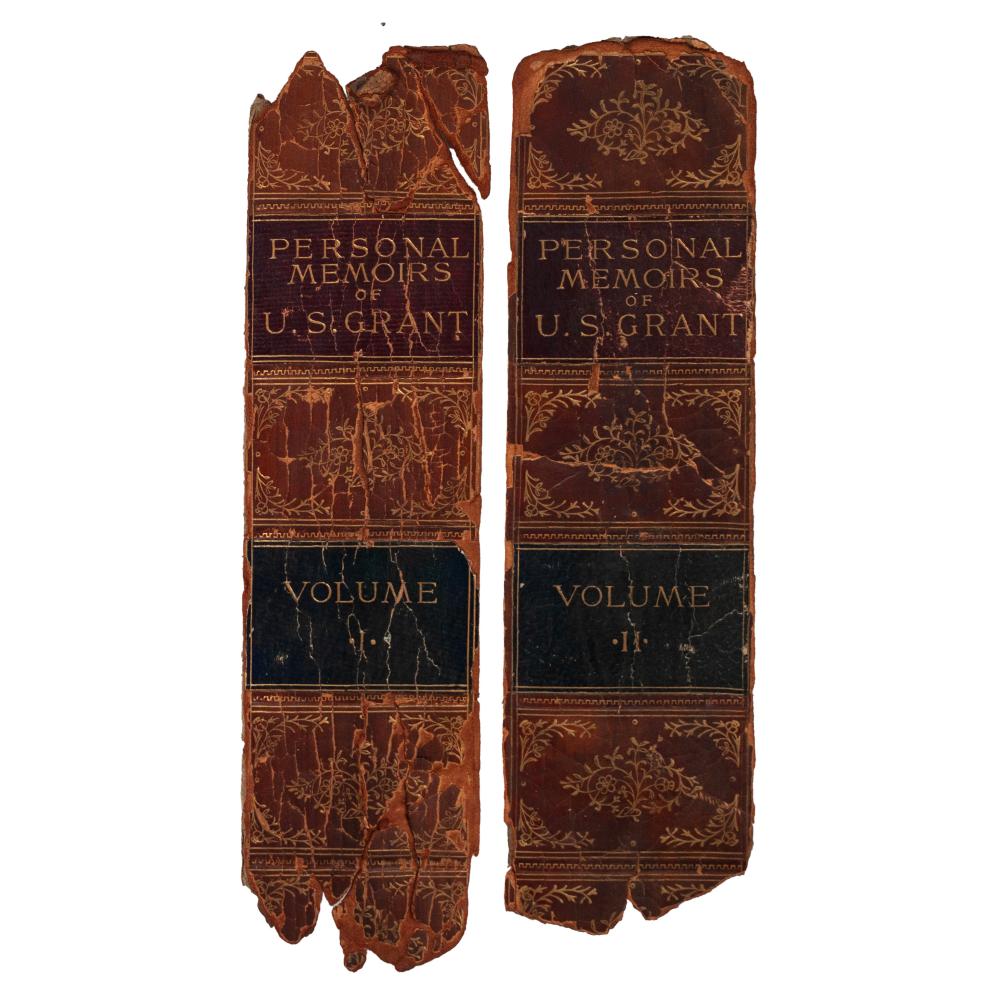
Exceedingly rare first edition of the autobiography of Ulysses S. Grant, the 18th President of the United States, which focusing mainly on his military career during the Mexican War and the Civil War, entirely singular, owned and annotated by Grant's close friend and most esteemed general: William Tecumseh Sherman. Octavo, 2 volumes, bound in the original full deluxe tree calf with gilt titles and elegant tooling to the spine, gilt ruled borders to the front and rear panels, gilt inner dentelles, all edges gilt, engraved portrait frontispieces, illustrated with numerous facsimile letters [2 folding], maps, and wood engravings. William Tecumseh Sherman evidently read thes volumes in great detail, making marginal notes on at least 18 pages in Vol. I, several of them signed with his initials. On the last page of Vol. I, Sherman wrote: "Read at St. Louis Mo. Dec 5 + 6, 1885. This account of the Civil War is wonderfully accurate and him. W.T.S." Many of the notes are small corrections and additions by Sherman. On a passage regarding the Yazoo Pass Expedition on page 435 of Vol. I, Sherman pointedly writes: "This conforms literally [to my] memoirs on the point most contested by Grant's pretended friends. W.T.S." He provides further thoughts regarding political interference on the next page: "If Grant had gone ahead, living off the country, we would have been inside of Vicksburg by Christmas 1862, the distance from Grenada to Vicksburg is little more than the circuit we afterward made from Bruinsberg via Jackson to Vicksburg --- This was my understanding when we parted at Oxford, and the intervening country was better supplied with hay + hominy. W.T.S." On p. 440-441, Grant wrote about the need to assign politically-connected John McClernand as Corps Commander: "I would have been glad to put Sherman in command, to give him an opportunity to accomplish what he had failed in the December before; but there seemed no other way out of he difficulty, for he was junior to McClernand. Sherman's failure needs no apology." In the margins, Sherman's distinctive hand writes passionately: "because it was no failure at all." There is only one marginal annotation in Vol. II; however, an autograph note is laid in at p. 123, supplying Sherman's recollection of Grant's first meeting with Lincoln, which corroborates Grant's account. While Sherman was not present at the meeting between Grant and Lincoln, he almost certainly heard about what transpired from Grant himself. The note reads in full: "Grants Memoirs Vol 2, Page 123 A good story is very correct. 'Si non vero, ben trovalo.' [Even if it is not true, it is well conceived]. This is the conversation between Genl. Grant, President Lincoln and Secretary of War Stanton at the time he was addressed to command all the Armies of the U.S. [Grant] said in his usual quiet manner 'Mr. Lincoln, I am told that several well planned campaigns in Virginia have been marred by interference from Washington, viz from the Secretary of War or the President, now if I am to command I must insist that no military order be issued to any detachment or part of the Army except through me,' Mr. Lincoln, in his inimitable way, turning to Stanton said, 'Stanton, you and I have been running this machine for two years and have not made a brilliant success. I guess we had better trust this little man' (Grant) and then, then and there, the promise was made. And it is to the credit of Mr. Lincoln to say that he kept his word literally, never interfering, or making any order even when Washington was in real peril from Early's Army in 1865." Grant's insistence that there would be no political interference was likely particularly important to General Sherman, who famously hated politicians. In good condition with detaching of the front boards and spines of each volume, detaching of the rear board and separation of the folding facsimile letter at p. 312-313. Copies bound in highly polished gilt tree calf are extremely rare, with only three other copies known. The first prospectus of Grant's Memoirs listed only 4 bindings: fine cloth, full sheep, fine half morocco, and full Turkey morocco. The only other copy of Grant's Memoirs bound in tree calf was sold at auction - a copy presented to Mark Twain by Julia Grant and inscribed by both. Only two other known copies are located in private collections. To date, no copies bound in the tree calf have been traced to institutional collections. As Grant died before publication was complete, the only copy that he saw before his death was a prospectus bound in cloth; the extant tree calf copies suggest that the binding was perhaps reserved exclusively for presentations made by Julia Grant. Even the copies presented by publisher Mark Twain to his friends and colleagues were bound in one of the other available bindings. Though this copy bears no presentation inscription by Julia Grant, Mark Twain, or anyone else, it is plausible that one of these figures would have sent the copy directly to General Sherman.