The Legacy of Ernest Hemingway: Master of Modern American Literature.
Few writers shaped American literature as profoundly as Ernest Hemingway. A Nobel and Pulitzer Prize winner, Hemingway was known for his stark, economical prose, his deeply human characters, and his focus on themes such as courage, loss, and masculinity. He developed what he called the “iceberg theory” of writing—the idea that the most important elements of a story should lie beneath the surface, implied rather than directly stated. This principle shaped his minimalist style and helped redefine modern American fiction. In his 1932 masterwork on the magnificence of the art of bull-fighting, Death in the Afternoon, Hemingway remarked: “If a writer of prose knows enough about what he is writing about, he may omit things that he knows and the reader, if the writer is writing truly enough, will have a feeling of those things as strongly as though the writer had stated them. The dignity of movement of an iceberg is due to only one-eighth of it being above water.”
After his reputation was established with the publication of The Sun Also Rises in 1926, Hemingway emerged as the definitive voice of the post–World War I generation. His influence on 20th century fiction is unparalleled and his adventurous lifestyle and public image brought him admiration from later generations.
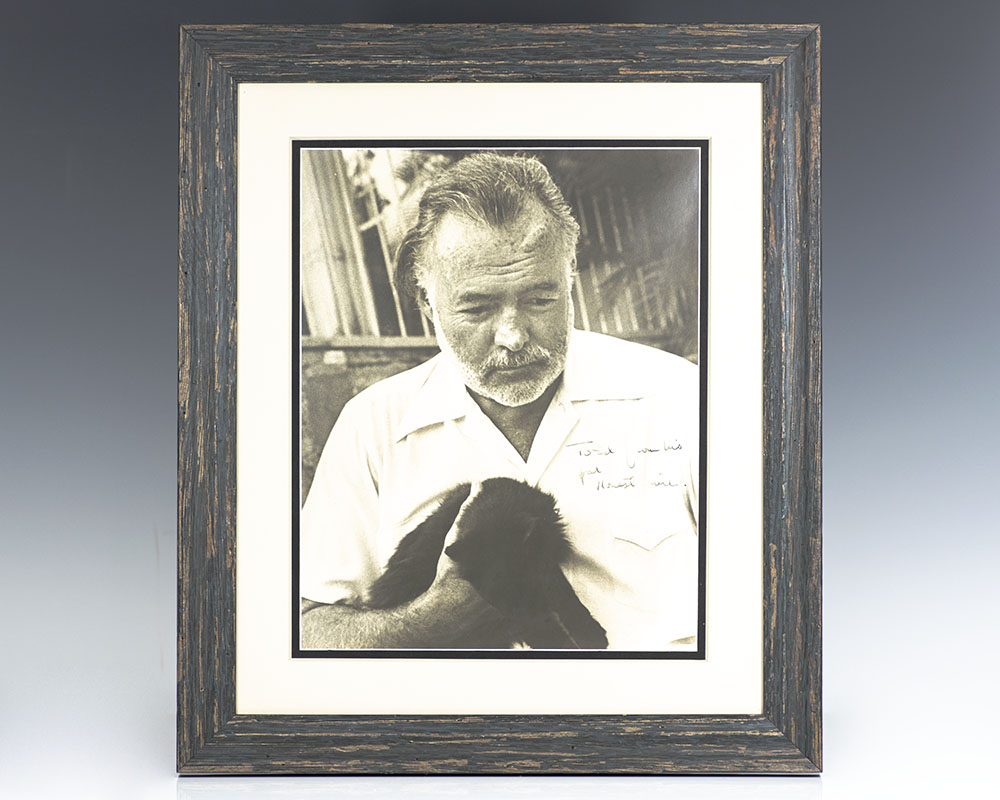
Rare large format photograph of Ernest Hemingway with one of his kittens at his Key West home.; inscribed by Hemingway to his best friend and biographer A.E. Hotchner
Over the course of his career, Hemingway published seven novels and was awarded the Pulitzer Prize for Fiction in 1953 and the Nobel Prize in Literature in 1954. As Gore Vidal famously observed, “There are two kinds of writers: those who try to write like Hemingway, and those who try not to.” Hemingway was born in Oak Park, Illinois, in 1899. During World War I, he served as an ambulance driver for the Red Cross in Italy, an experience that influenced much of his later writing. Hemingway wrote many of his major works while living in Paris in the 1920s, Key West and Cuba in the 1930s and 1940s, and later in Idaho. These varied settings deeply shaped the themes and settings of his fiction. Below is a survey of his major works, featuring some of the rarest and most significant examples we have handled.
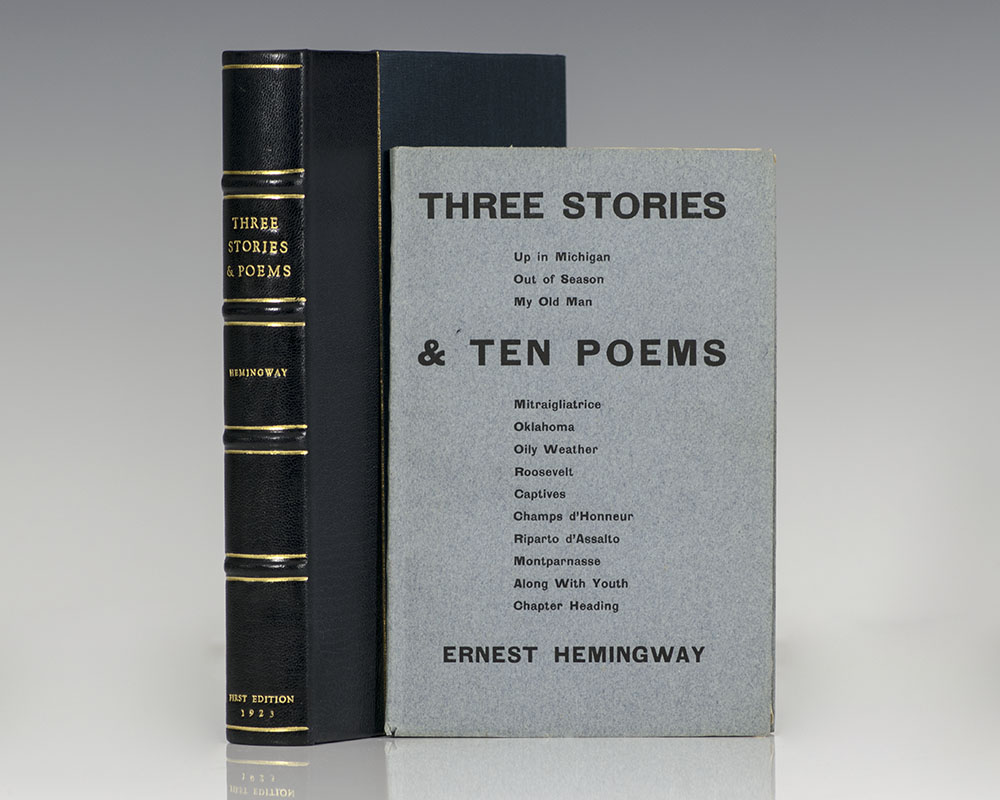
First edition of Ernest Hemingway’s first published collection Three Stories & Ten Poems; one of only 300 copies published
Three Stories and Ten Poems (1923)
Hemingway’s first published work, Three Stories & Ten Poems was printed by Maurice Darantière of Dijon, who the year before had printed the first edition of Joyce’s Ulysses for Sylvia Beach. Written during his time in Paris, the collection reflects Hemingway’s early experiments with form and content, as he began developing his distinctive voice influenced by modernism and the postwar disillusionment of the Lost Generation. Though modest in scope, these early works, including “Up in Michigan,” revealed his nascent narrative technique and psychological subtlety. This is one of the scarcest of Hemingway’s works, with only 300 copies printed in the first edition.
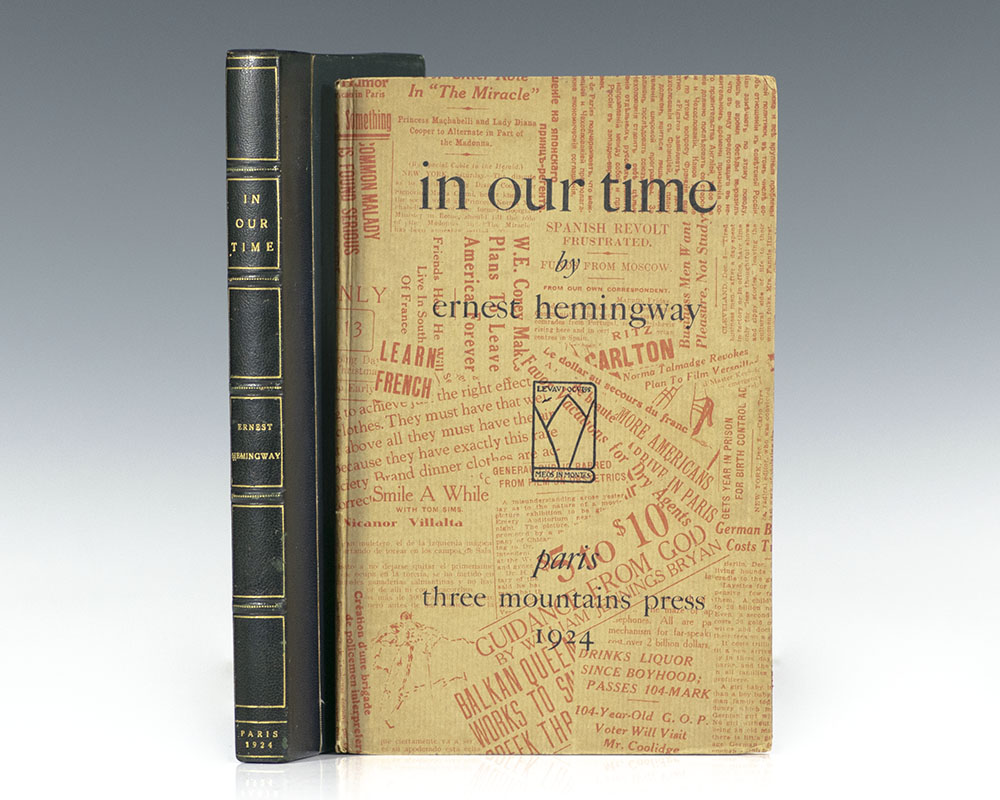
First edition of Ernest Hemingway’s second published work, In Our Time
In Our Time (1925)
With In Our Time, Hemingway established himself as a serious literary figure. This collection of short stories and interchapters blended modernist fragmentation with recurring themes of war, masculinity, and alienation. Through characters like Nick Adams, he conveyed a stark emotional landscape marked by trauma and stoicism. One of Hemingway’s rarest works, there were only 170 numbered copies printed (at the Three Mountains Press and for sale at Shakespeare & Company) in the first edition.
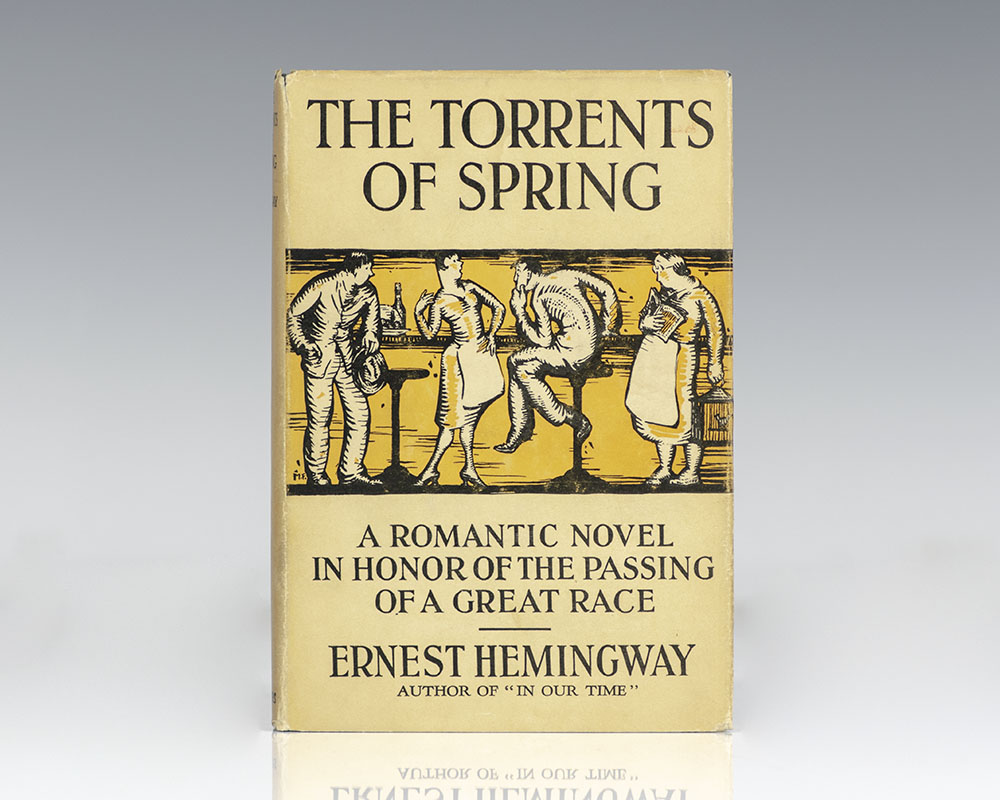
First edition of Ernest Hemingway’s first novel The Torrents of Spring
The Torrents of Spring (1926)
A satirical novella, The Torrents of Spring parodied the stylistic affectations of contemporaries like Sherwood Anderson. Though often dismissed as minor, the work played a strategic role in Hemingway’s career by allowing him to break his publishing contract with Boni and Liveright and sign with Scribner’s, the firm that would champion his major novels.
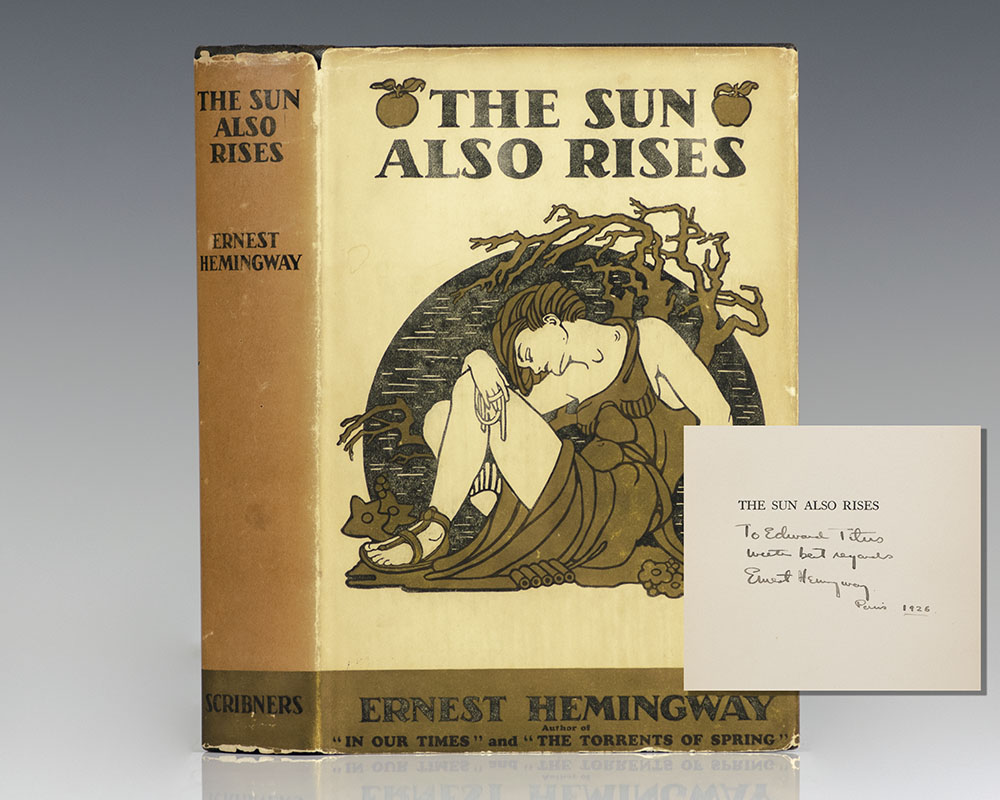
First edition of The Sun Also Rises; inscribed by Ernest Hemingway
The Sun Also Rises (1926)
The Sun Also Rises established Hemingway as a major figure in modern literature. Drawing from his expatriate experiences, the novel follows a group of Americans and British traveling from Paris to Pamplona, capturing their emotional restlessness and search for meaning in a fragmented postwar world. Through the restrained narrative of Jake Barnes and his complex relationship with Lady Brett Ashley, Hemingway examined themes of dislocation, lost ideals, and the erosion of traditional social values.
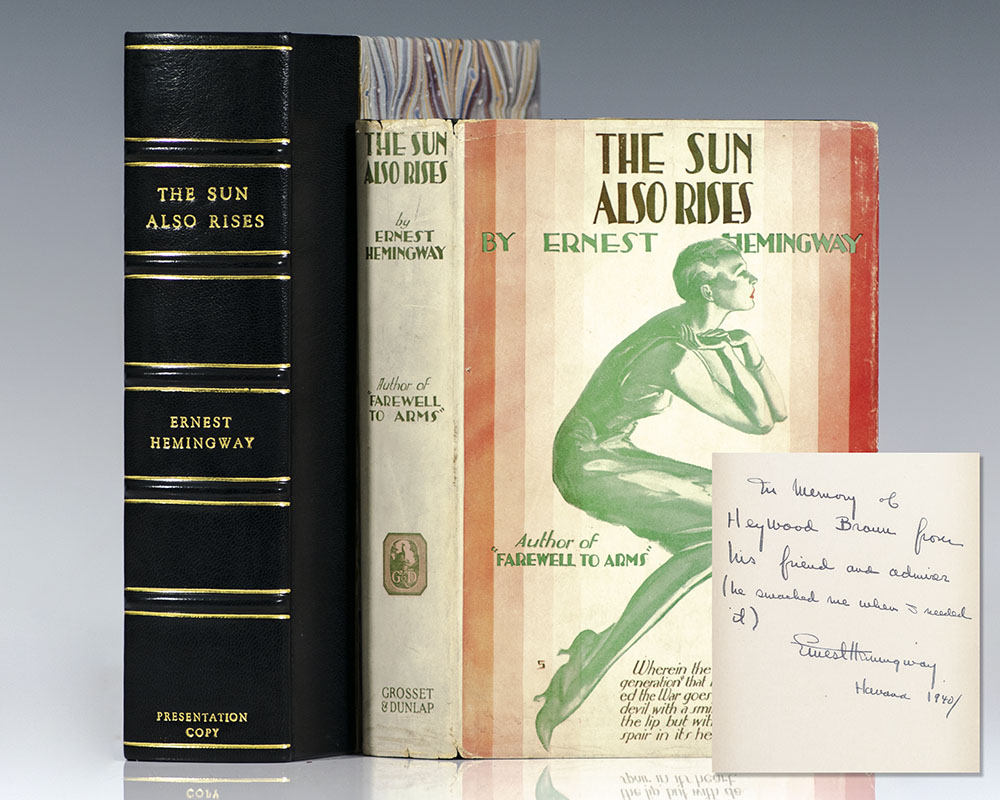
First Grosset and Dunlap edition of The Sun Also Rises; inscribed by Ernest Hemingway
The novel’s precise prose, sharp dialogue, and vivid descriptions of settings like the bullfighting festival contributed to its critical acclaim. Upon publication, it was praised for its innovative style and psychological depth, and it remains widely regarded as one of Hemingway’s most important and enduring works.
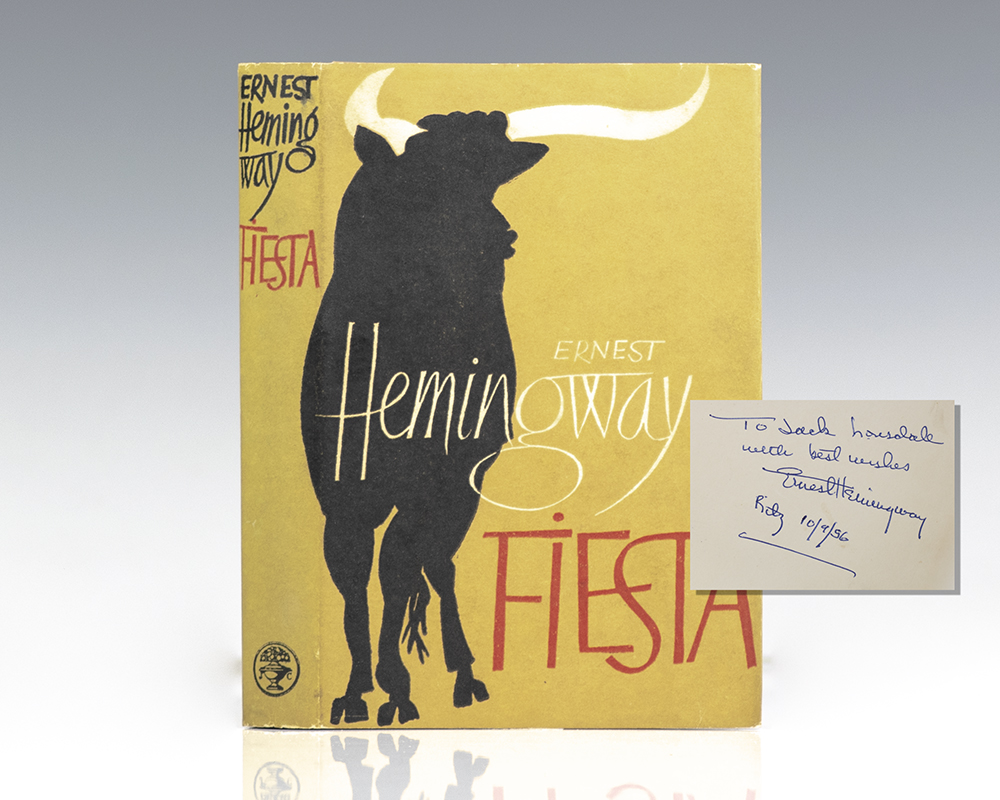
1955 English printing of Fiesta; inscribed by Ernest Hemingway
“The Sun Also Rises is Hemingway’s masterpiece–one of them, anyway–and no matter how many times you’ve read it or how you feel about the manners and morals of the characters, you won’t be able to resist its spell. This is a classic that really does live up to its reputation” (David Laskin).
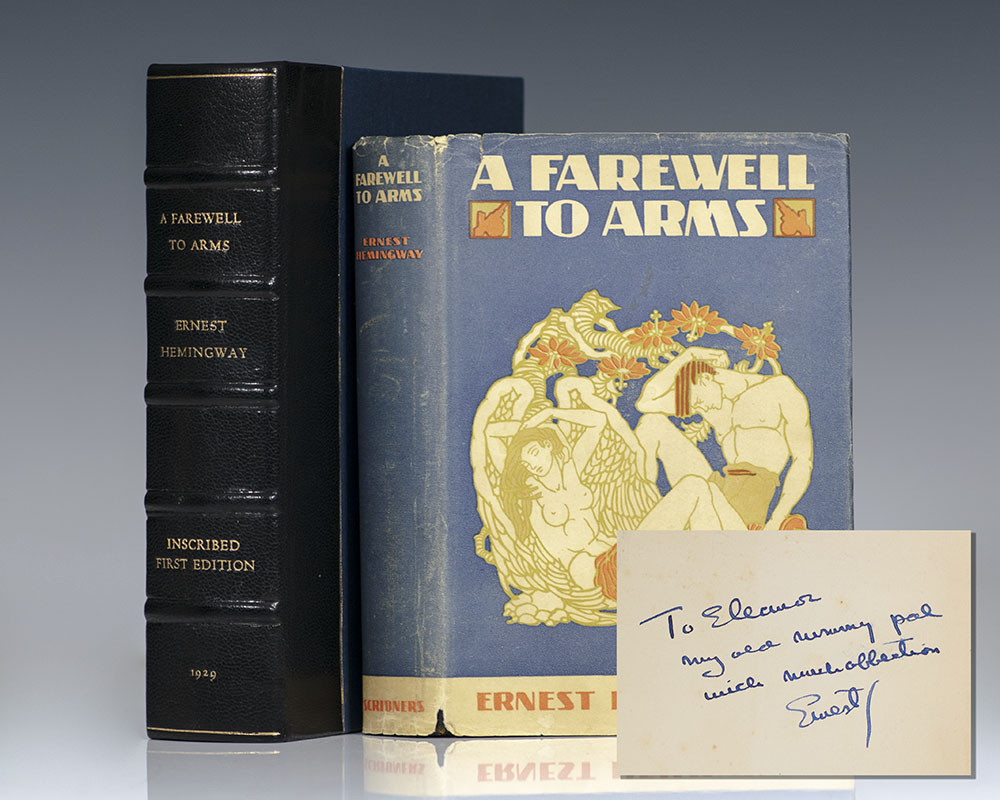
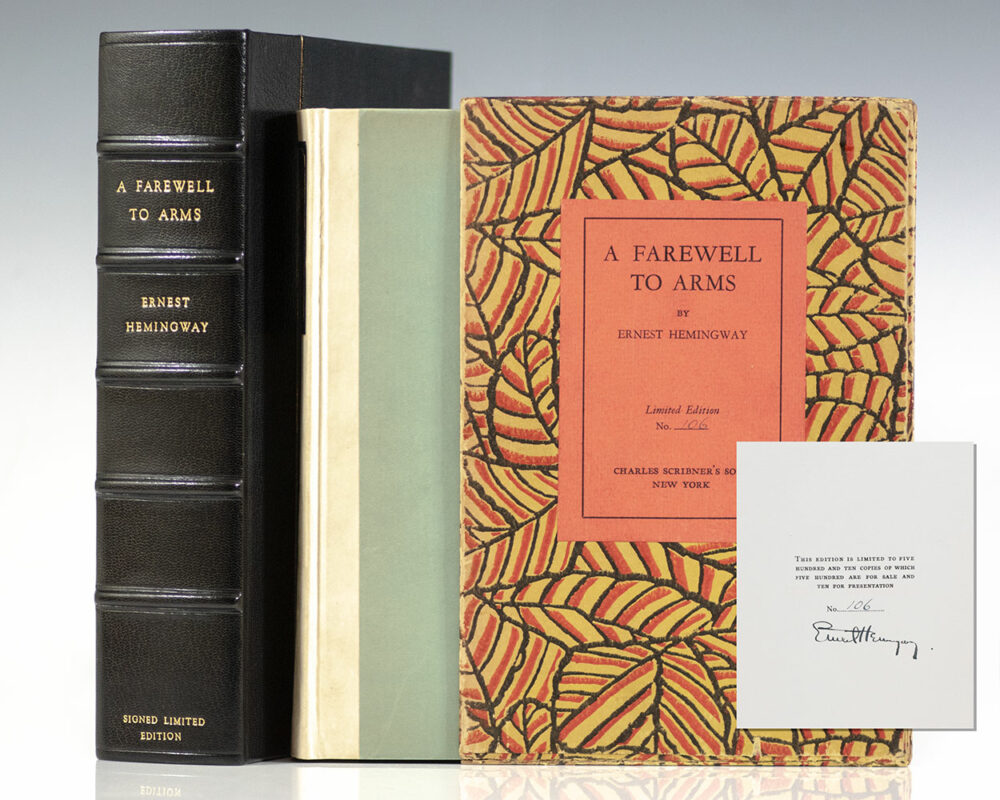
First trade edition of A Farewell to Arms; inscribed by Ernest Hemingway
A Farewell to Arms (1929)
Based on Hemingway’s own experiences during World War I, A Farewell to Arms fused romance and war in a tragic narrative. The story of Frederic Henry and Catherine Barkley illuminated the futility of conflict and the impermanence of love, while its spare prose solidified Hemingway’s international reputation.
Signed limited edition of Ernest Hemingway’s A Farewell to Arms
Set against the looming horrors of the battlefield—weary, demoralized men marching in the rain during the German attack on Caporetto; the profound struggle between loyalty and desertion—this gripping, semiautobiographical work captures the harsh realities of war and the pain of lovers caught in its inexorable sweep. Ernest Hemingway famously said that he rewrote the ending to A Farewell to Arms thirty-nine times to get the words right.
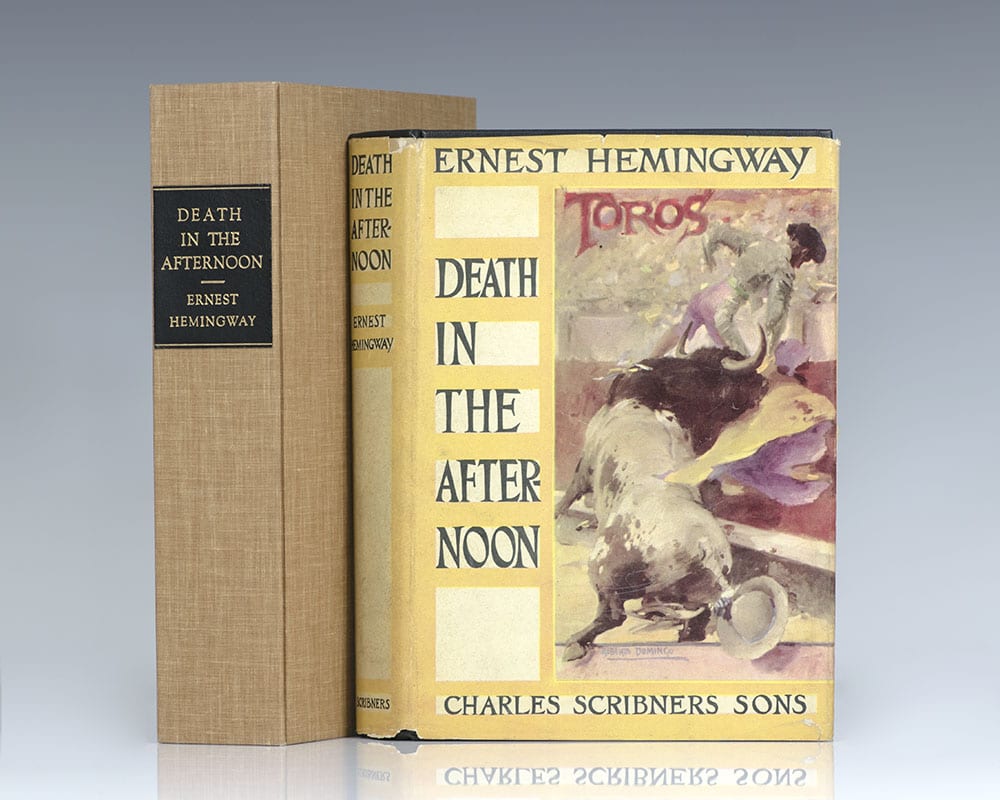
First edition of Ernest Hemingway’s Death in the Afternoon
Death in the Afternoon (1932)
In this nonfiction exploration of bullfighting, Hemingway reflected on bravery, aesthetics, and mortality. While detailing the rituals of the Spanish corrida, he also used the subject as a broader meditation on artistic and existential values, further articulating his philosophy of “grace under pressure.” John Dos Passos praised the book as “an absolute model for how that sort of thing ought to be done,” and a contemporary review in The New York Herald Tribune described it as “full of the vigor and forthrightness of the author’s personality, his humor, his strong opinions—and language… In short, it is the essence of Hemingway” (Mellow, 415).
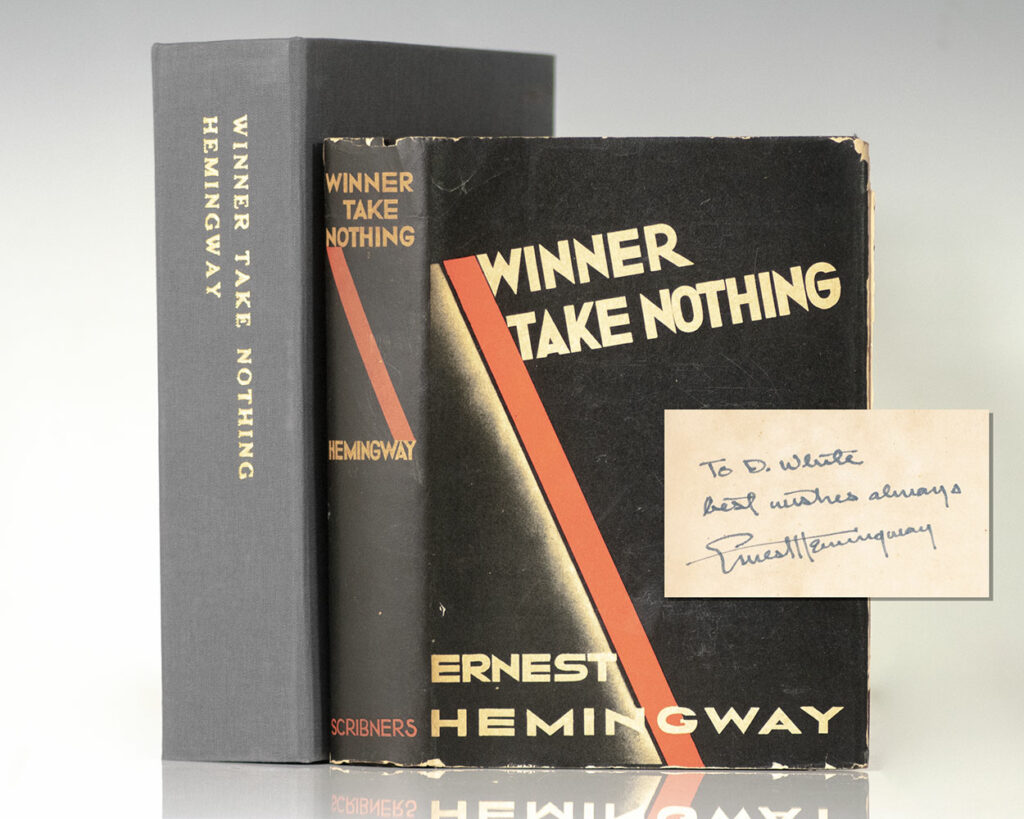
First edition of Winner Take Nothing; inscribed by Ernest Hemingway
Winner Take Nothing (1933)
Written when Hemingway was at the height of his creative powers, the stories in Winner Take Nothing reflected the distinct qualities of his mature style. Hunters, waiters, fighters, and disillusioned lovers populated the collection, each confronting loss, isolation, or the inevitability of death. The characters, terse dialogue, and stripped-down settings conveyed themes Hemingway would expand upon in his novels, while offering a concentrated glimpse of his worldview. As both an introduction to his work and a synthesis of recurring motifs, the collection was widely regarded as a compelling and artistically successful achievement.
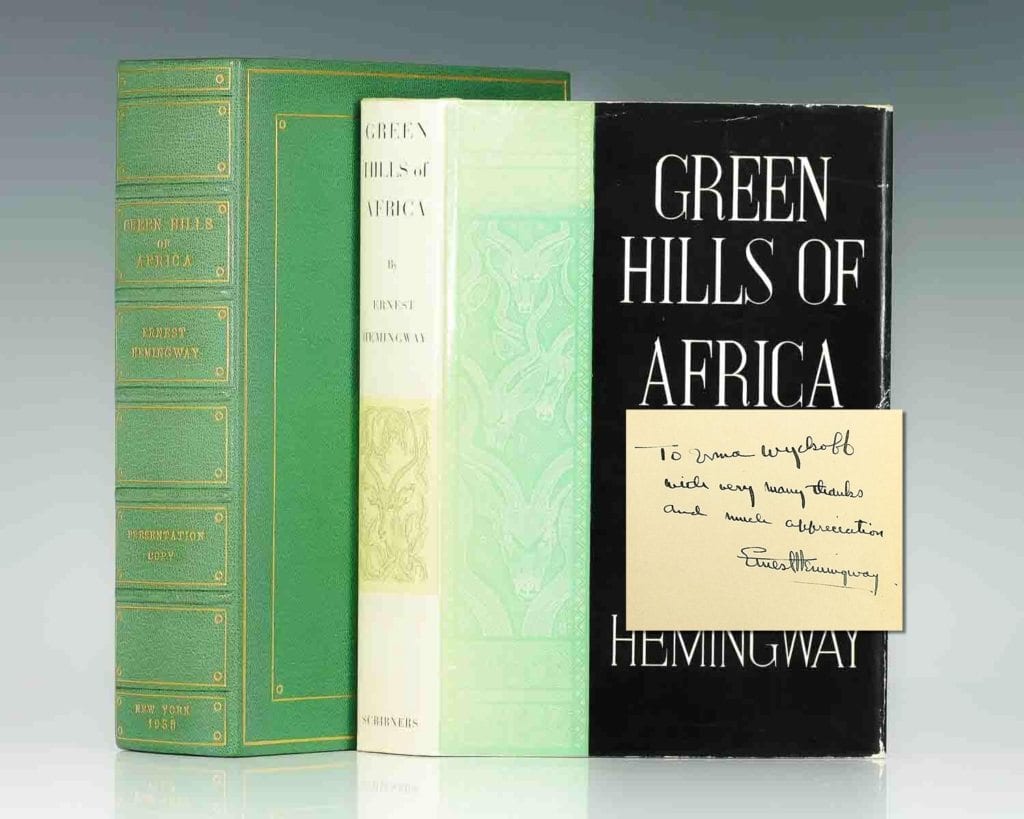
First edition of Green Hills of Africa; inscribed by Ernest Hemingway to his editor, Maxwell Perkins’ secretary
Green Hills of Africa (1935)
A nonfiction account of Hemingway’s African safari, Green Hills of Africa blended travel narrative, literary criticism, and personal reflection. The work chronicled his obsession with hunting while offering insights into the writing process and his rivalry with other authors, all within the landscape of colonial East Africa. The first edition stated that this was Hemingway’s attempted “to write an absolutely true book to see whether the shape of a country and the pattern of a month’s action can, if truly presented, compete with a work of the imagination.” This intention was quickly validated when the initial print run sold a popular 10,500 copies. The New York Times aptly praised the work as “a fine book on death in the African afternoon… The writing is the thing; that way he has of getting down with beautiful precision the exact way things look, smell, taste, feel, sound.”
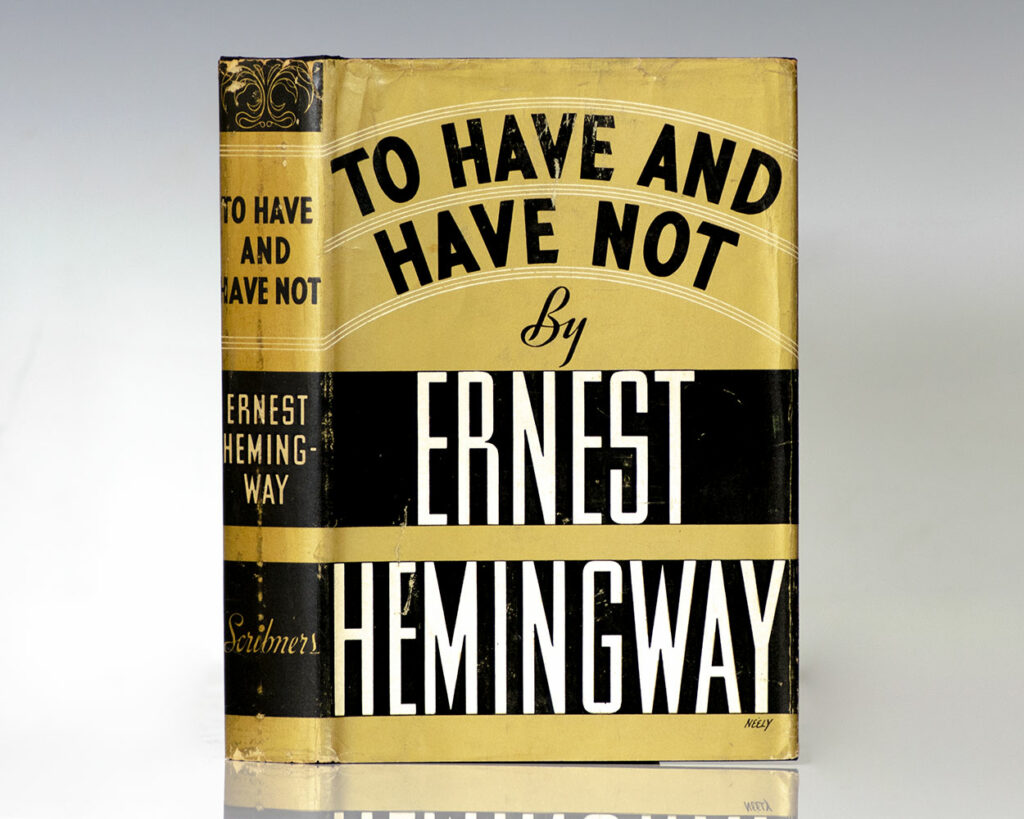
First edition of Ernest Hemingway’s To Have and Have Not
To Have and Have Not (1937)
Set in Depression-era Key West and Cuba, To Have and Have Not depicted a working-class man caught in cycles of poverty and violence. Hemingway employed multiple narrative voices and engaged more directly with economic injustice, marking a stylistic and thematic departure from his earlier fiction. Brimming with criticism directed at American capitalism and the bureaucracy of the Roosevelt administration, the novel explored social circumstances and situations in Key West, “that paradise of the ‘haves’ and purgatory of the ‘have nots’.” “In To Have and Have Not, Hemingway for the first time showed an interest in a possible solution of social problems through collective action” (Hart, 327).
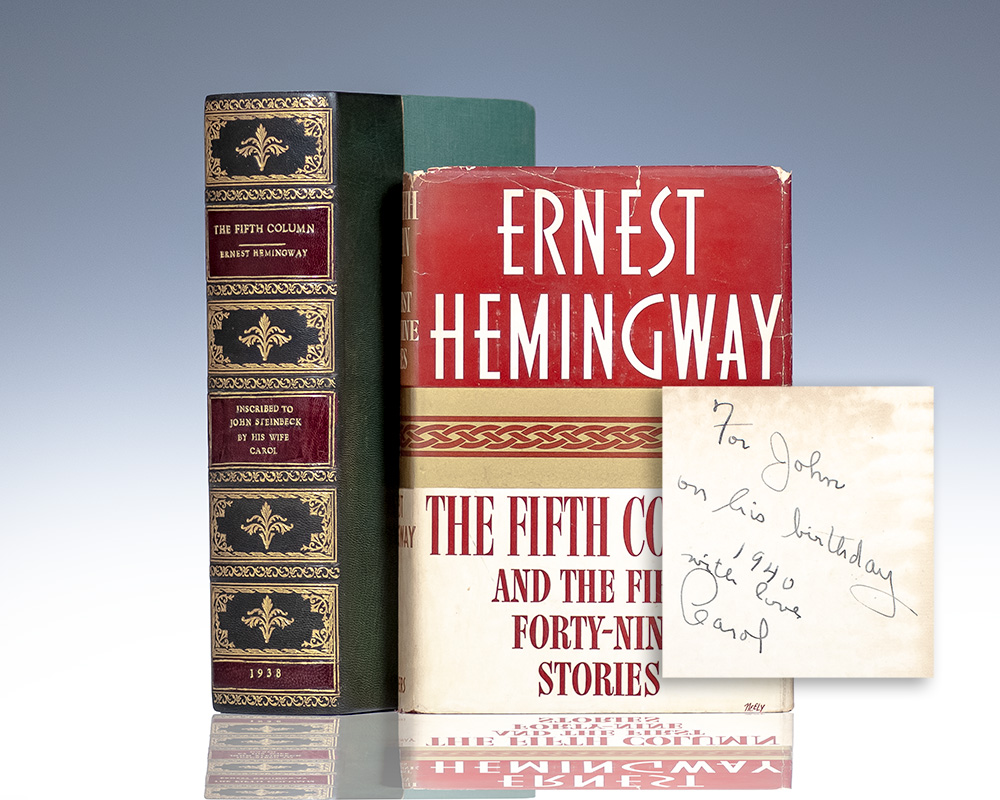
The Fifth Column and the First Forty-Nine Stories; inscribed by Carol Brown Steinbeck to her husband, John Steinbeck
The Fifth Column and the First Forty-Nine Stories (1938)
This volume combined Hemingway’s most acclaimed short stories with The Fifth Column, his only full-length play set during the Spanish Civil War. Although the play received mixed reviews, the collection as a whole highlighted Hemingway’s mastery of the short story form and featured works that significantly influenced modern American literature.
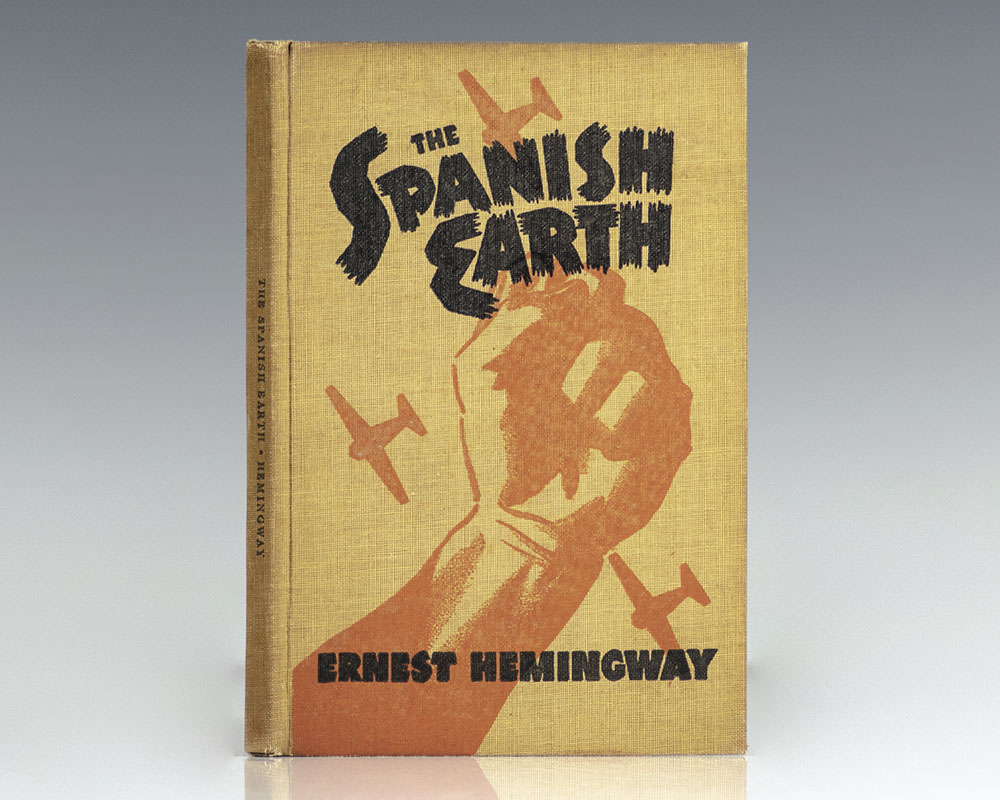
First edition of Ernest Hemingway’s The Spanish Earth
The Spanish Earth (1938)
While in Spain covering the Spanish Civil War for the North American Newspaper Alliance, Hemingway agreed to take part in the funding of a to raise money for the Loyalist (Republican) cause in the war, in collaboration with several other literary figures including John Dos Passos, Lillian Hellman, Archibald MacLeish, and. Dorothy Parker. The resulting film, The Spanish Earth, was directed by Joris Ivens, based upon commentary by Hemingway and Dos Passos, and narrated by Orson Welles. Cleveland Heights High School student Jasper Wood acquired the rights to publish 1,000 copies of Hemingway’s commentary for the film in 1938.
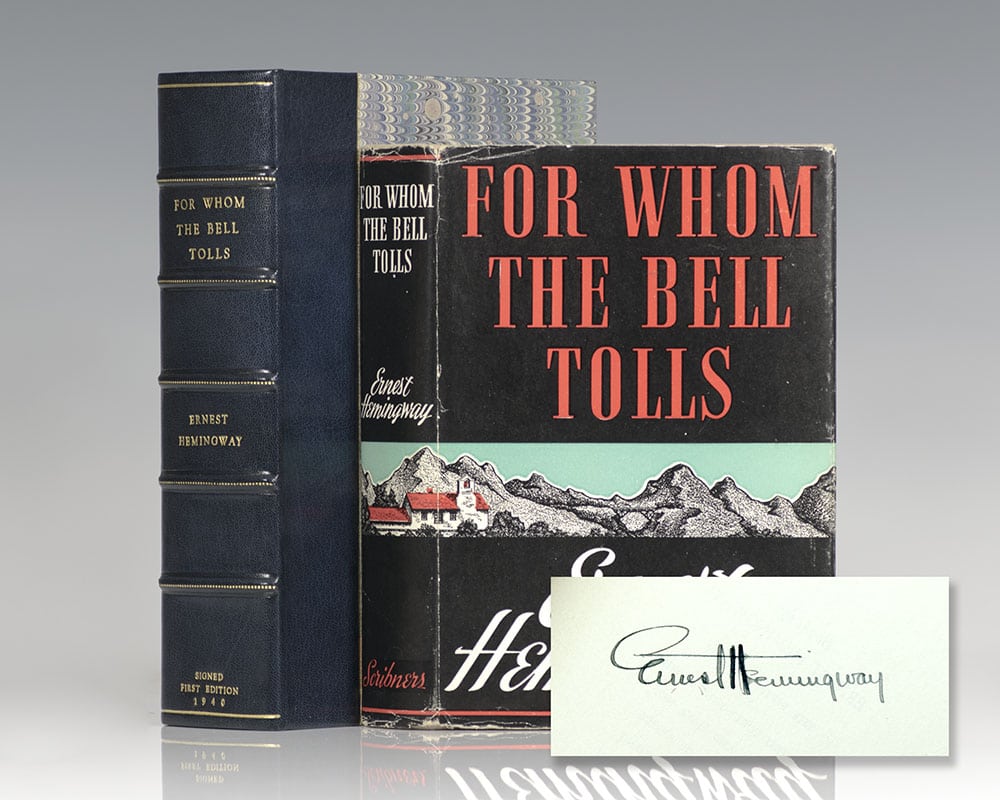
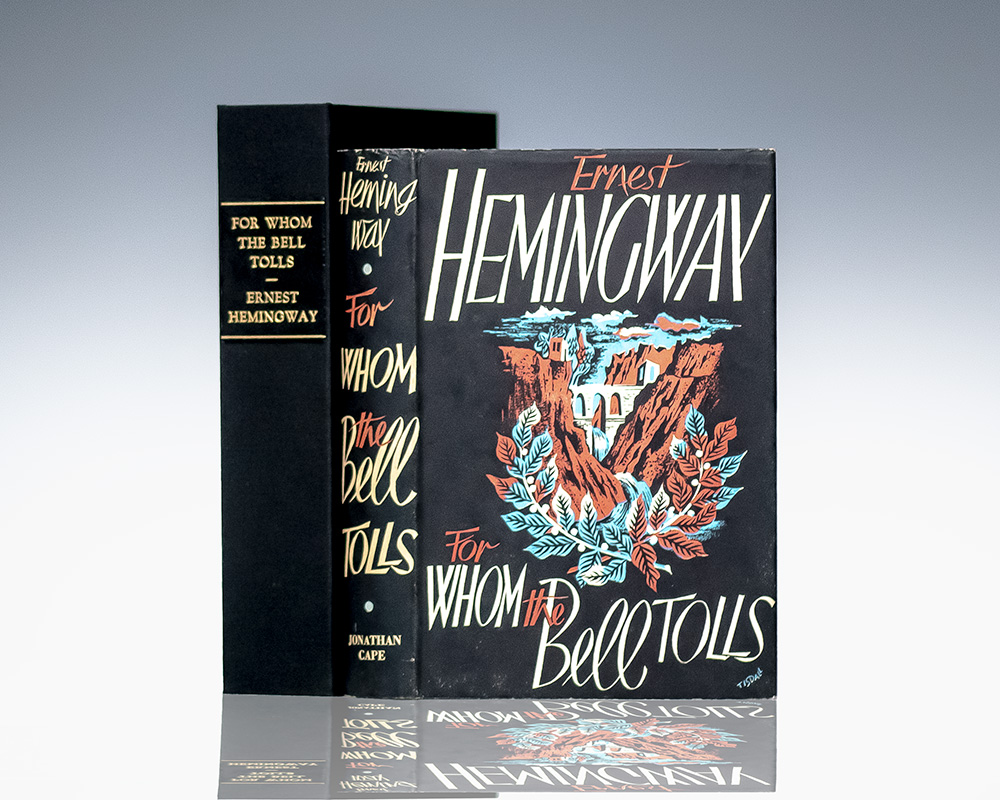
For Whom the Bell Tolls; signed by Ernest Hemingway
For Whom the Bell Tolls (1940)
Set during the Spanish Civil War, For Whom the Bell Tolls followed Robert Jordan, an American dynamiter working with Republican guerrillas. The novel explored the complexities of political idealism and personal sacrifice, blending lyrical passages with philosophical depth in what many regarded as Hemingway’s most ambitious work.
First English edition of Ernest Hemingway’s The Old Man and the Sea
“This is the best book Ernest Hemingway has written, the fullest, the deepest, the truest. It will, I think, be one of the major novels of American literature Hemingway has struck universal chords, and he has struck them vibrantly” (J. Donald Adams).
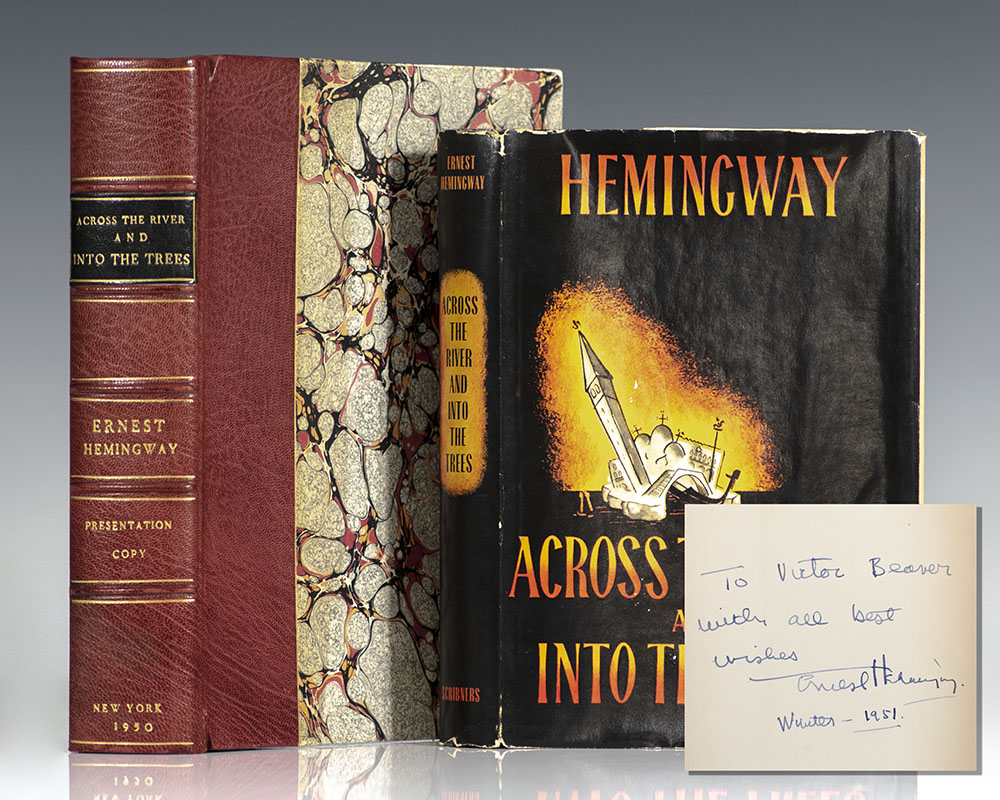
First edition of Across the River and Into the Trees; inscribed by Ernest Hemingway
Across the River and Into the Trees (1950)
This late novel centered on a dying American colonel reflecting on war, love, and loss in postwar Venice. While critics often viewed it as one of Hemingway’s weaker works, it nevertheless revealed his continued preoccupation with memory, aging, and personal failure.
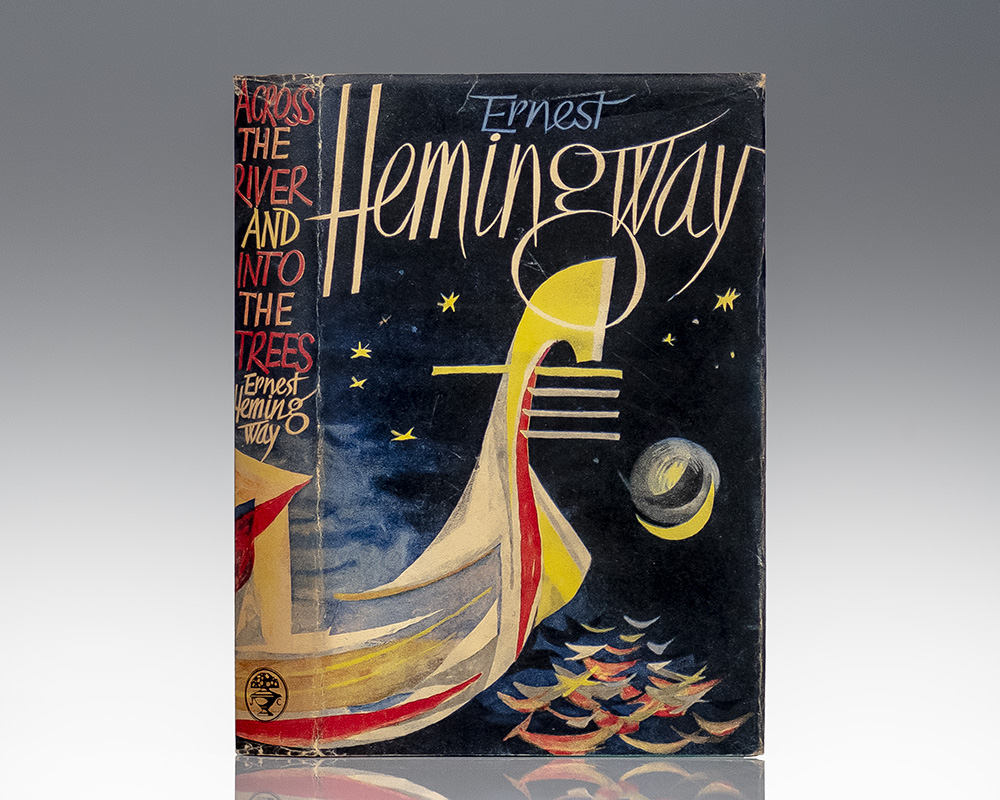
First English edition of Ernest Hemingway’s Across the River and Into the Trees
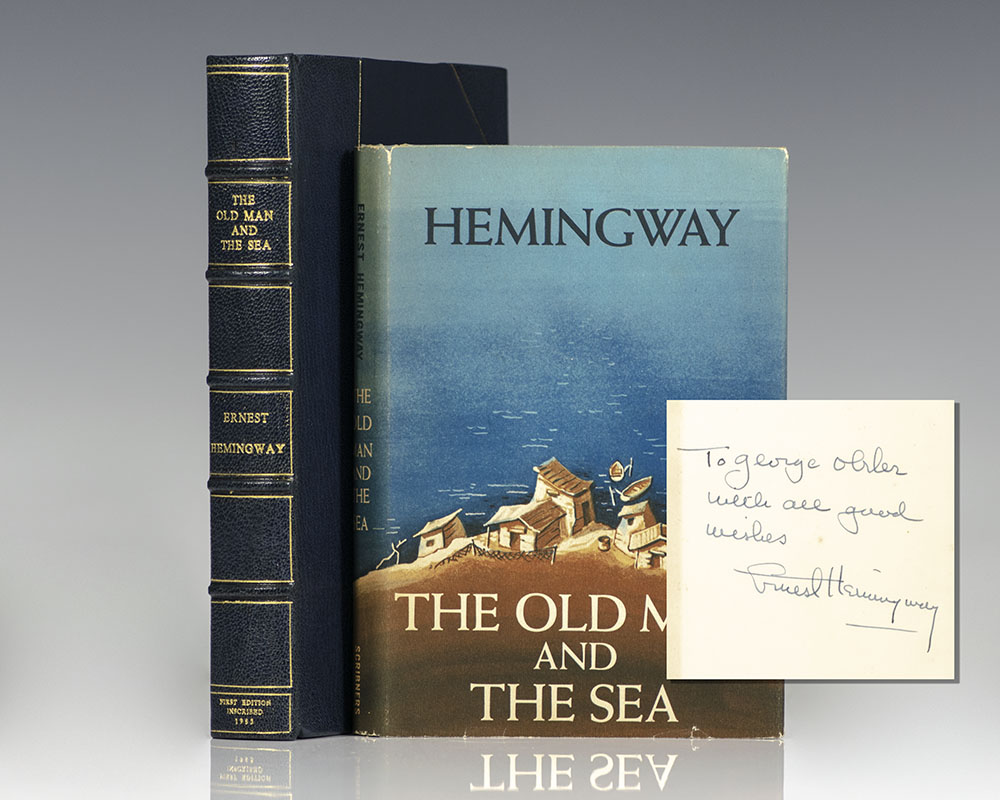
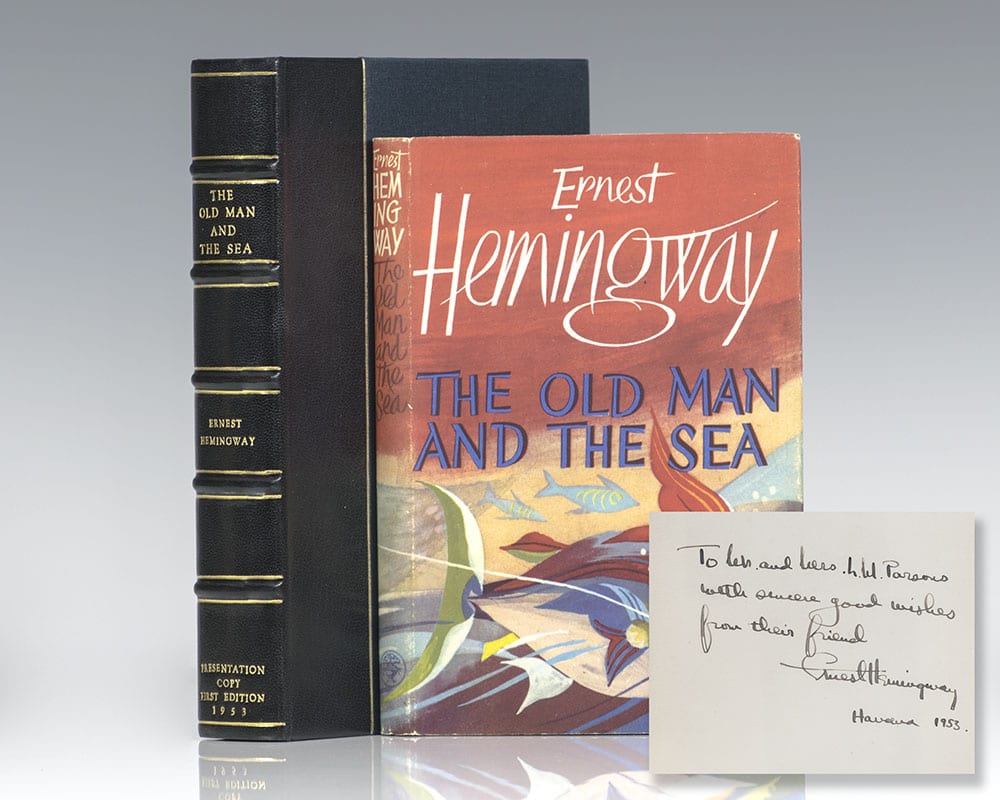
First edition of The Old Man and the Sea; inscribed by Ernest Hemingway
The Old Man and the Sea (1952)
Upon its publication in 1952 by Charles Scribner’s Sons, The Old Man and the Sea quickly garnered critical acclaim and was awarded the Pulitzer Prize for Fiction in 1953. The novella marked a significant resurgence in Hemingway’s literary reputation after a period of mixed critical reception for some of his earlier works. Centered on the epic struggle between an aging Cuban fisherman, Santiago, and a giant marlin, the narrative distilled Hemingway’s enduring themes of perseverance, dignity, and the human condition into a powerful, symbolic tale.
First English edition of The Old Man and the Sea; inscribed by Ernest Hemingway
The Nobel Committee explicitly cited The Old Man and the Sea as a key contribution in awarding Hemingway the Nobel Prize in Literature in 1954, highlighting its artistic mastery and profound impact. The novella’s spare, evocative prose and allegorical depth inspired renewed scholarly interest and led to a widespread reevaluation of Hemingway’s entire oeuvre, reinforcing his position as one of the foremost literary figures of the twentieth century.
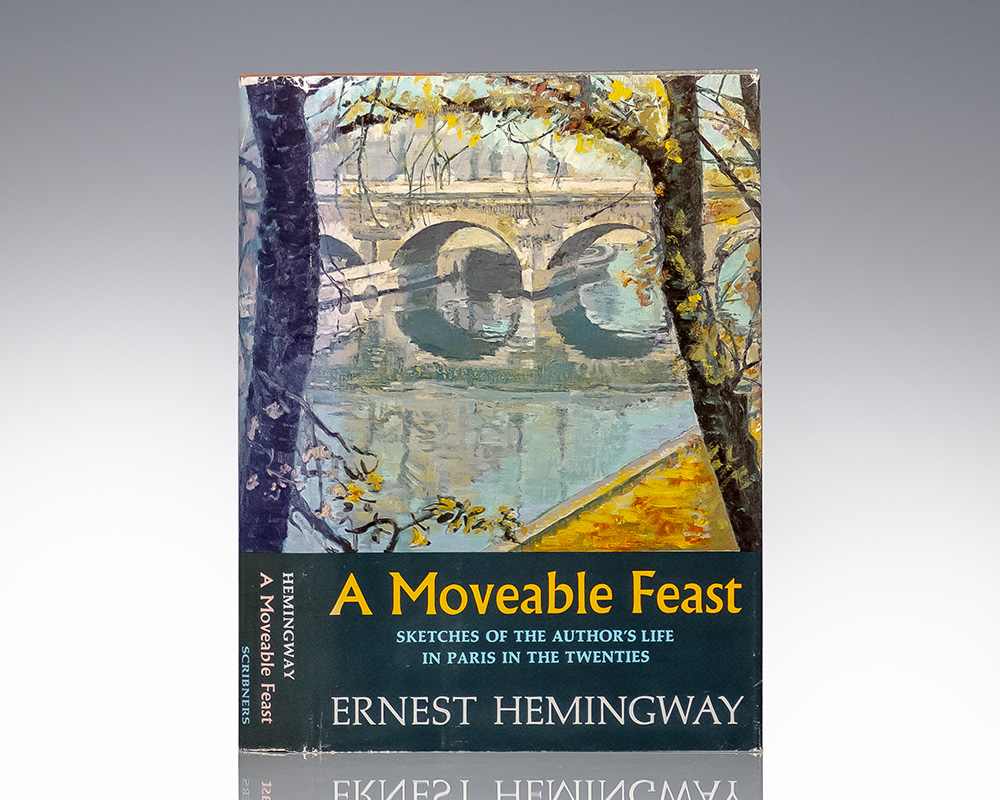
First edition of Ernest Hemingway’s A Moveable Feast
A Moveable Feast (1964)
Published posthumously, A Moveable Feast recounted Hemingway’s years as a young writer in 1920s Paris. Through vignettes of encounters with literary figures like Gertrude Stein and F. Scott Fitzgerald, he reflected nostalgically on his formative years while also constructing his mythic image as a writer.
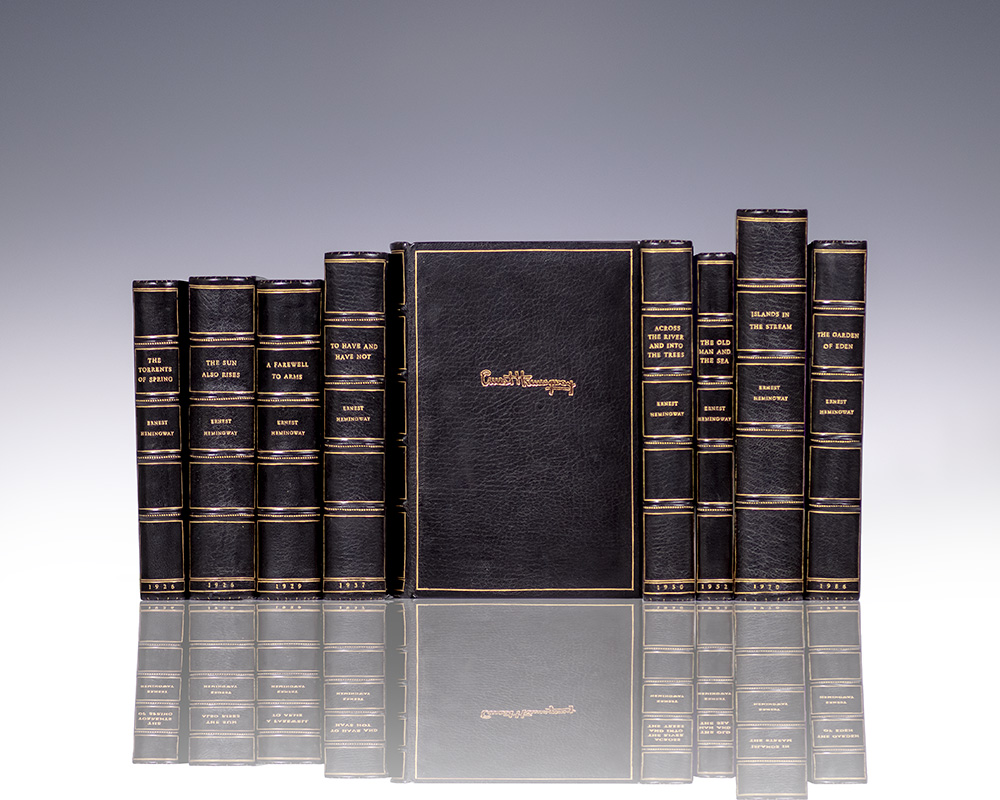
Complete first edition set of The Novels and Novellas of Ernest Hemingway; uniformly bound by the Harcourt Bindery
In the spring of 2026, PBS’s Emmy Award-winning Made With Love series turned its attention to a question that has rarely felt more timely: in a country marking the 250th…
On May 14, 2026, Raptis Rare Books and Churchill Cigar Company had the extraordinary privilege of hosting legendary musician, musical director, and rock icon Mark Rivera for an…
May 18, 2026 BY VALERIE STAGGS FLORIDA WEEKLY CORRESPONDENT Inside Raptis Rare Book Store on Worth Avenue, stacks of FOX News Commentator Dana Perino’s new book, “Purple…
Join our growing list of satisfied clients who have leveraged
our multi-cloud and hybrid cloud strategies to achieve greater
agility and efficiency in their operations.