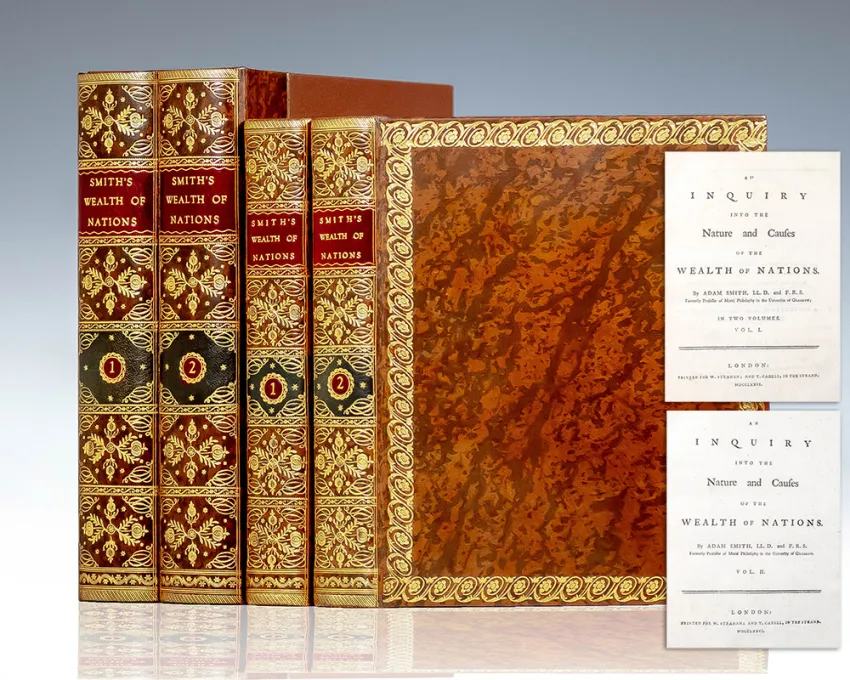
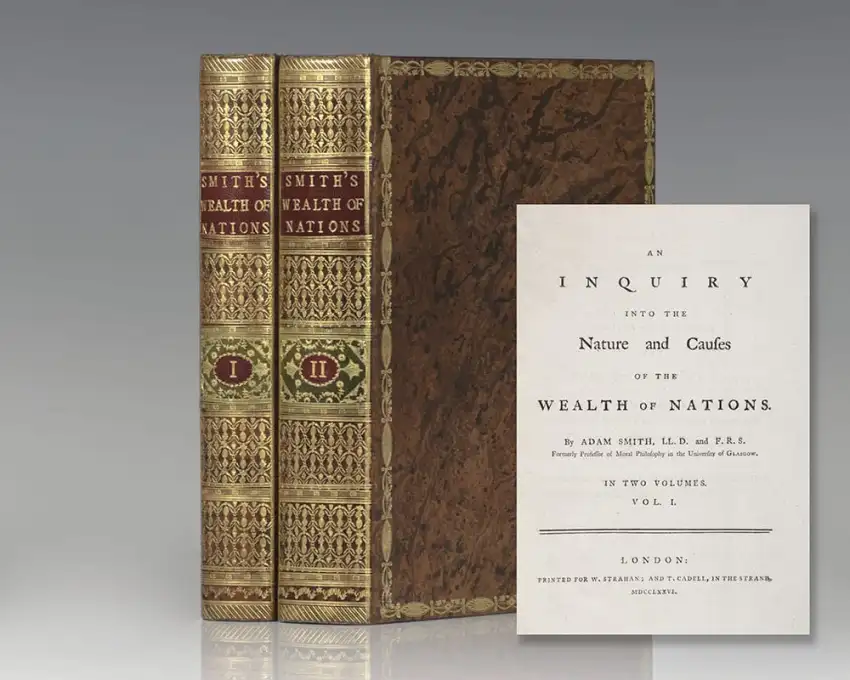
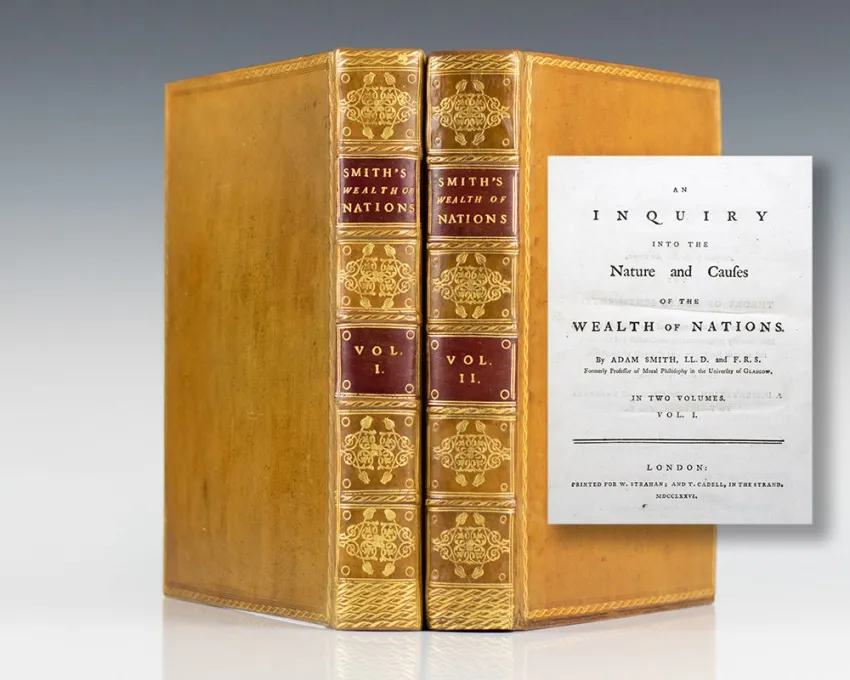
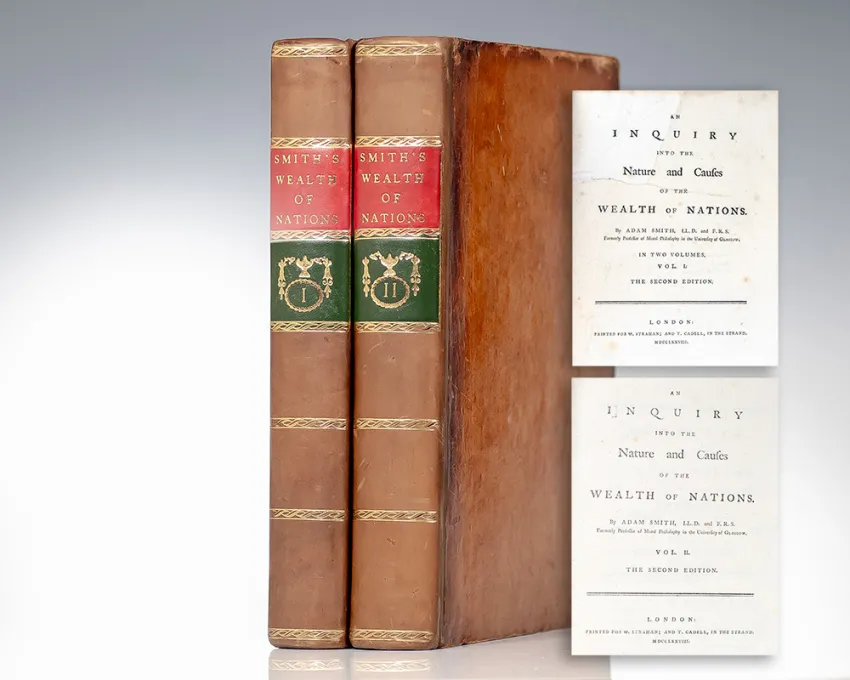
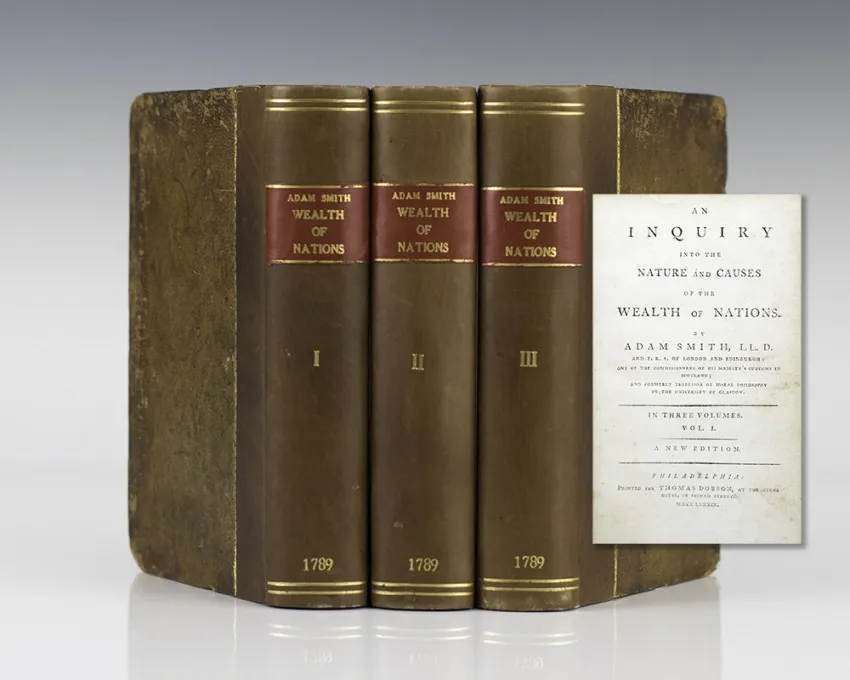
An Inquiry into the Nature and Causes of the Wealth of Nations by Adam Smith: A Timeless Exploration of Economic Principles
Adam Smith’s seminal work, “An Inquiry into the Nature and Causes of the Wealth of Nations,” remains a cornerstone in economic literature, offering profound insights into the nature of wealth, commerce, and the functioning of economies. Published in 1776, Smith’s magnum opus laid the foundation for modern economic thought and continues to influence scholars, policymakers, and economists globally.
At the heart of Smith’s philosophy is the concept of the “invisible hand.” He argued that individuals pursuing their self-interest unintentionally contribute to the overall prosperity of society. The market, when left to its own devices, operates as if guided by an unseen force, efficiently allocating resources and generating wealth.
Smith’s examination of the division of labor underscores its pivotal role in economic development. He famously used the example of a pin factory to illustrate how specialization and division of tasks enhance productivity, leading to increased output and economic growth.
While a proponent of free markets, Smith recognized the necessity of government intervention in certain situations. He believed that governments should focus on maintaining a stable legal and economic environment, enforcing contracts, and protecting national defense – crucial aspects for a thriving economy.
“The Wealth of Nations” emphasizes the significance of capital accumulation in fostering economic progress. Smith argued that savings and investments are vital for capital formation, leading to increased production, technological advancements, and higher living standards over time.
Smith’s insights into international trade challenged prevailing mercantilist views of his time. He advocated for unrestricted trade, asserting that countries should specialize in producing goods where they have a comparative advantage. This, he argued, leads to a more efficient allocation of resources and benefits all trading partners.
Adam Smith’s “An Inquiry into the Nature and Causes of the the Wealth of Nations” remains a cornerstone in economic theory, addressing fundamental concepts that continue to shape our understanding of wealth, commerce, and the role of government in economies. Its enduring relevance is a testament to the enduring wisdom of Smith’s insights, making it a must-read for anyone seeking a deeper understanding of economic principles.
See our full collection of Adam’s Smith’s “An Inquiry into the Nature and Causes of the Wealth of Nations” here.
In the spring of 2026, PBS’s Emmy Award-winning Made With Love series turned its attention to a question that has rarely felt more timely: in a country marking the 250th…
On May 14, 2026, Raptis Rare Books and Churchill Cigar Company had the extraordinary privilege of hosting legendary musician, musical director, and rock icon Mark Rivera for an…
May 18, 2026 BY VALERIE STAGGS FLORIDA WEEKLY CORRESPONDENT Inside Raptis Rare Book Store on Worth Avenue, stacks of FOX News Commentator Dana Perino’s new book, “Purple…
Join our growing list of satisfied clients who have leveraged
our multi-cloud and hybrid cloud strategies to achieve greater
agility and efficiency in their operations.